







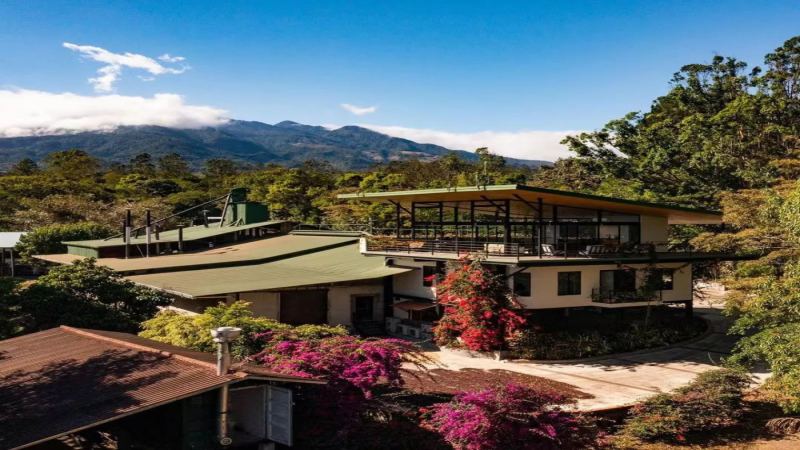
How Does Panama Geisha Coffee From Boquete Get Its Flavor?
Panama geisha coffee from Boquete grows beside the Baru Volcano at roughly 1,000 to 2,000 meters, where a microclimate and volcanic soil produce a distinctive cup. Butterfly coffee, sold as a blend of Geisha, Caturra, and Catuai with Geisha lineage near 70%, is naturally processed and shows tea aroma, fermented fruit, and citrus-orange sweetness at an accessible price.
Boquete sits in Chiriqui Province near the Costa Rican border and holds estates such as Hacienda La Esmeralda, Elida, and Kotowa Duncan, whose coffees earn attention at BOP competitions. One side of the valley takes warm, moist Caribbean monsoon air while the other is moderated by colder Atlantic currents. Front Street offers this naturally processed Butterfly so more drinkers can try Geisha flavors affordably.
Boquete is one of Panama's most renowned specialty coffee regions, adjacent to the Baru Volcano and blessed with a unique microclimate and volcanic soil. It is not only home to top-tier estates like Hacienda La Esmeralda, but also the birthplace of the exceptionally cost-effective Butterfly Coffee. Butterfly is cultivated as a mix of three varieties—Geisha, Caturra, and Catuai—with Geisha lineage accounting for as much as 70%. Processed using the natural method, it presents a rich layering of tea aroma, fermented fruit notes, and citrus-orange sweetness. Front Street Coffee (FrontStreet Coffee) offers this naturally processed Butterfly at an affordable price, allowing more coffee enthusiasts to experience Geisha flavors in an accessible way. This article will provide a comprehensive analysis of this coffee's unique charm, from regional terroir and varietal origins to processing methods and brewing recommendations.
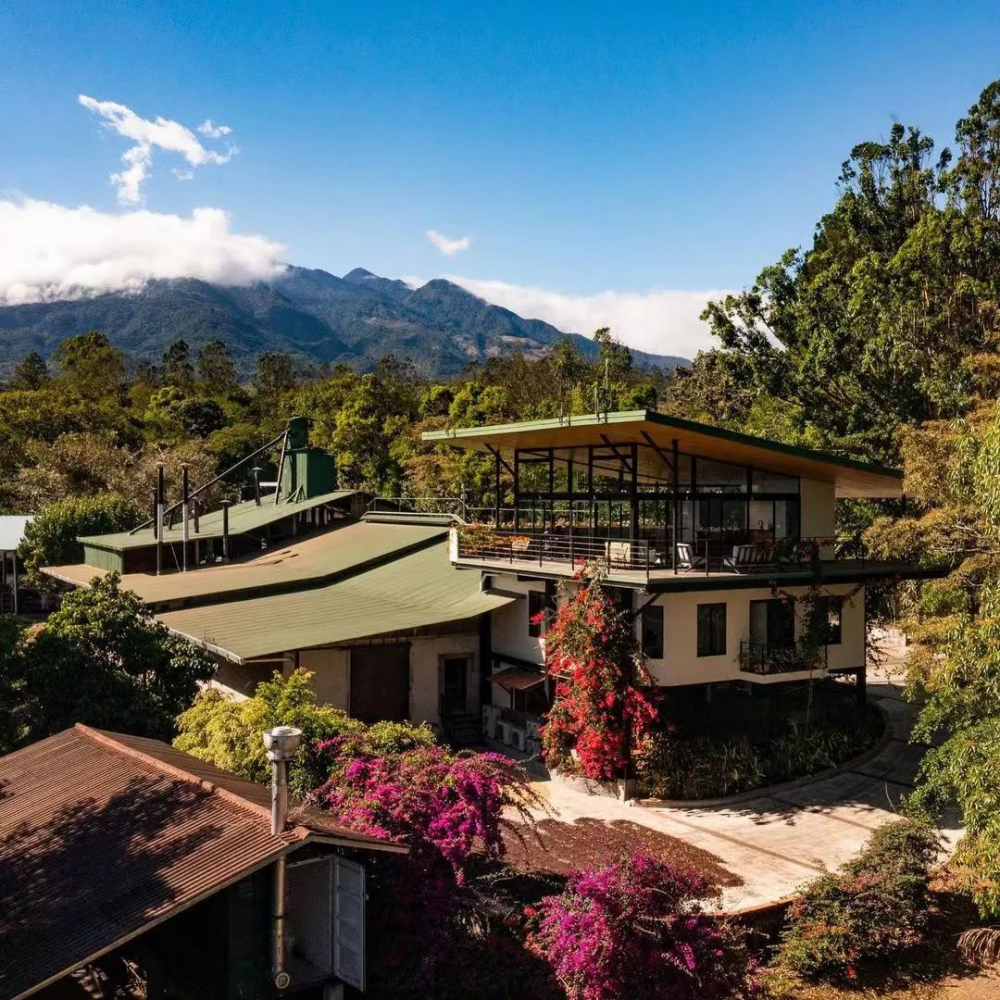
When it comes to Geisha, Front Street believes that the first thing many coffee enthusiasts think of is Panama's Hacienda La Esmeralda. This estate is located in the renowned specialty coffee origin of Boquete and has won numerous honors at BOP competitions. Today, Front Street will use this region as a starting point to introduce a highly cost-effective "Geisha-flavored" coffee.
Boquete, Panama (BOQUETE) is located in Chiriqui Province (CHIRIQUI), bordering neighboring Costa Rica, and is a small town near the Baru Volcano (Baru). The local scenery is pleasant, the soil is fertile, and both the climate and soil conditions are very suitable for growing high-quality coffee.
Front Street often discusses with customers that coffee quality is closely tied to a region's geographical environment and climate characteristics. As one of Panama's oldest and most well-known regions, Boquete is situated on the eastern side of the Baru Volcano, at an altitude of roughly 1,000 to 2,000 meters. In addition to Hacienda La Esmeralda, Boquete is also home to many outstanding estates, such as Elida Estate and Kotowa Duncan Estate. These names are highly regarded in the specialty coffee world, and the coffees they produce are equally excellent.
Although Boquete's growing area is limited, it enjoys extremely favorable natural conditions. One side is influenced by the warm, moist Caribbean monsoon, while the other is moderated by cold currents from the Atlantic, with towering and steep mountain terrain. Volcan Baru National Park, as a national ecological reserve, is rich in biodiversity and encompasses seven microclimates. In addition, year-round mist, abundant rainfall, and moderate altitude together create an excellent coffee-growing environment, and have also made possible the Geisha coffee that is now widely acclaimed internationally.
It is often said that Geisha coffee is expensive. But if there were a coffee that also carried Geisha flavors and came from the same region as Hacienda La Esmeralda's Geisha, and most importantly, was very affordable, would you be tempted?
Panama Butterfly
At first glance, there are three varieties listed on the packaging. Does that mean this coffee is a blend? Front Street explains: although three varieties are listed, in the early days Geisha, Caturra, and Catuai were planted together in the same coffee field, and for harvesting convenience, farmers did not reclassify them. The three varieties contained in Butterfly all come from the same origin and the same region, so it is a single-origin coffee!
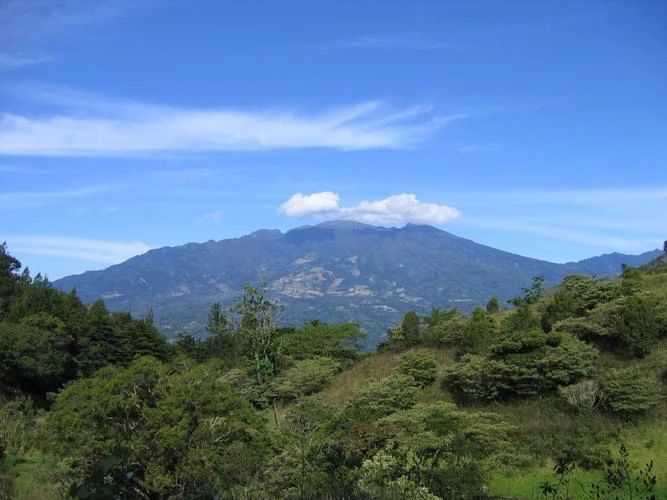
Butterfly possesses as much as 70% high-quality Geisha lineage and is composed of three varieties—Geisha, Caturra, and Catuai—planted in the Baru Volcano area of Boquete at an altitude of about 1,600 meters. The significant temperature difference between day and night, together with the distinctive texture of volcanic rock soil and meticulous harvesting and processing, makes this coffee quite outstanding in body, acidity, and floral expression.
What is even more gratifying is that despite such excellent quality, Front Street Coffee's (FrontStreet Coffee) Butterfly is very affordably priced, with exceptional value for money. The special thing about this bean is that it contains the Geisha variety, and therefore carries obvious Geisha flavor characteristics.
Geisha
With its unique floral and fruity aroma, bright floral and citrus notes, high cleanliness, soft and elegant acidity, long and silky sweetness, and a refined black tea-like mouthfeel, Geisha has won the favor of many coffee enthusiasts.
After reviewing materials, Front Street learned that Geisha was first collected in 1931 in the Kaffa forest of southern Ethiopia, at that time in search of new disease-resistant varieties, and its name comes from the nearby Geisha Mountain. Geisha was later sent to research stations in Kenya, Uganda, Tanzania, and elsewhere for trial planting. In 1953, the Geisha variety was introduced to CATIE, the Tropical Agricultural Research and Higher Education Center in Costa Rica, and recorded under the number T2722. Although there were planting records on several local farms, Geisha trees are fragile and low-yielding, so they were not favored by farmers and were not widely promoted.
In the 1960s, CATIE gave T2722 Geisha to coffee farmers in Panama, and only then did Geisha truly take root in Panama. In the 1990s, the Peterson family, owners of Hacienda La Esmeralda, began to focus on coffee production and bought a new high-altitude farm—Jaramillo. Many coffee trees on the farm were infected with leaf rust, but Daniel Peterson observed that the Geisha trees were not seriously affected, so he decided to transplant Geisha, which had originally been interplanted with other varieties, to more areas of the farm while also increasing its growing altitude.
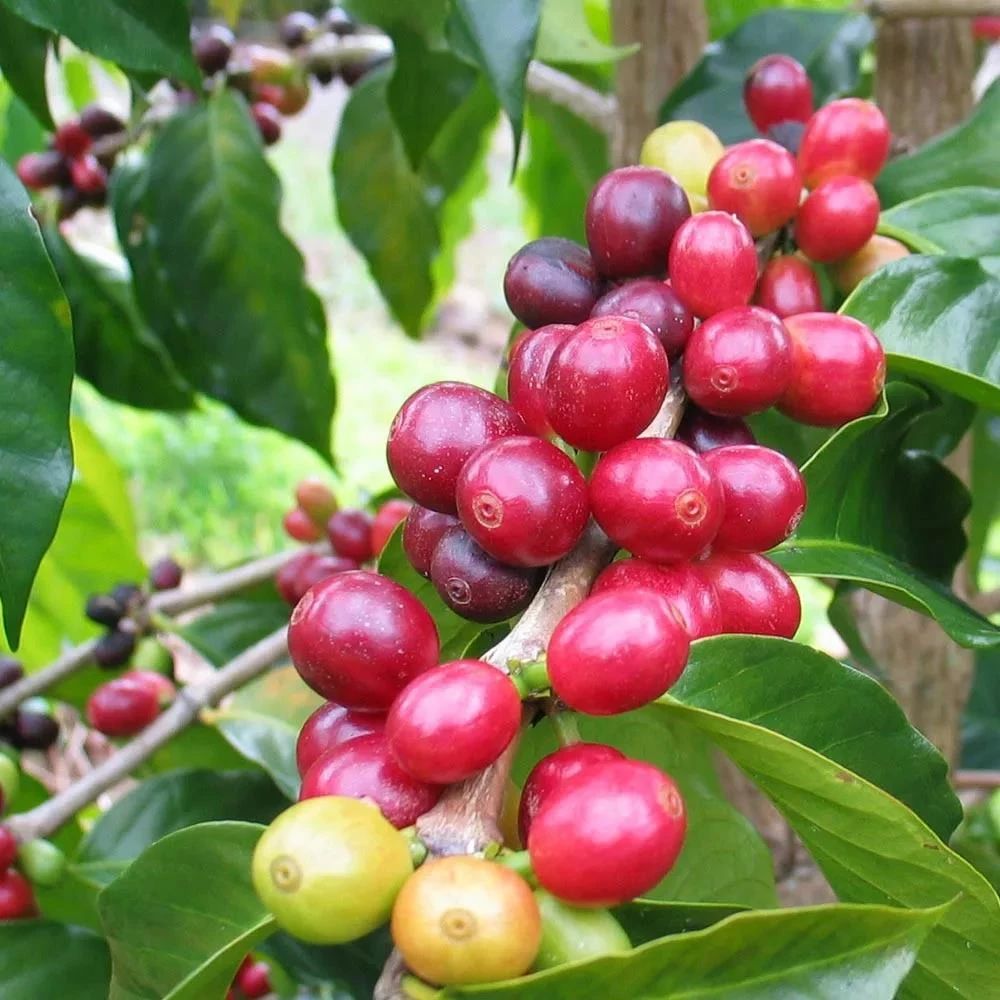
In 2003, the Peterson family finally discovered Geisha's potential. In the first cupping, it displayed intense white floral aromatics, an extremely clean texture, and a finish reminiscent of berries, citrus, and bergamot, thus establishing the classic Panama Geisha flavor profile. Amazed by this, they decided to enter this bean in the 2004 BOP (Best of Panama) competition and named it "Geisha." So today's Panama Geisha that astonishes the world is precisely the T2722 variety from back then.
Caturra
Caturra is a mutation of Bourbon and was discovered in Brazil in 1937. Its tree shape is shorter than Bourbon. Although it inherits Bourbon's weaker disease resistance, it has higher yields than Bourbon and is easier to harvest. Even under direct sun exposure, Caturra can remain vigorous, so farmers also call it Sun Coffee. Caturra is suitable for growing between 700 and 1,700 meters above sea level and is highly adaptable, but the higher the altitude, the better the flavor, while yields decrease accordingly. Caturra's flavor is mainly fruit-oriented, with berry-like acidity. The "Diamond Mountain Coffee" on Front Street's bean list uses the Caturra variety, from the famous Hacienda La Esmeralda.
Catuai
Catuai is a hybrid of Mundo Novo and Caturra, so it also inherits Caturra's short tree shape, but with stronger disease resistance, especially good resistance to wind and rain, and its fruit is firm and not easy to fall off. In terms of flavor, Catuai is more one-dimensional than Caturra, mainly nutty, with less complexity than Caturra. In Panama, these two varieties are usually planted together and harvested together once ripe.
Butterfly Natural Processing Method
Butterfly uses a relatively old processing method that still exists today, namely natural drying. Natural processing reduces coffee's moisture content through extensive drying. After sorting the coffee cherries, the whole coffee cherries—with pulp, skin, and seeds—are spread directly on concrete patios or drying beds to dry naturally to a moisture content of about 12%. The time required is about two to four weeks, depending on the climate of the origin, and the drying process usually lasts around 4 weeks. The coffee cherries themselves still contain quite a high moisture content, and leaving the coffee cherries in place for more than twenty days naturally leads to fermentation. If fermentation goes too far, spoilage easily occurs; if the coffee cherries pile up too thickly in one place and ventilation is poor, spoilage becomes even more serious. Therefore, a large amount of labor is needed to frequently turn the coffee cherry pile to ensure ventilation.
Front Street Coffee (FrontStreet Coffee) Brewing Method
Dripper: Hario V60, water temperature: 90°C, dose: 15 grams, coffee-to-water ratio: 1:15, grind size: medium-fine (80% passing a Chinese standard No. 20 sieve)

Front Street Coffee (FrontStreet Coffee) uses staged extraction: first bloom with 30 grams of water for 30 seconds, then pour in a small stream in circles until 125 grams for a stage break, and when the water level drops and is about to expose the coffee bed, continue pouring until 225 grams and stop. After the dripper stops dripping, remove it. Timing starts from the beginning of pouring, and the extraction time is 2'00".
Butterfly coffee has relatively high sweetness and a soft sweetness, and naturally processed coffees usually carry fermented flavors. Front Street's brewing method here is for reference only; everyone can fine-tune it according to their preferred taste.
Front Street Naturally Processed Butterfly brewing flavor: on entry, there are tea aromas, fermented fruit notes, and nutty creamy flavors, with a rich mouthfeel; after the temperature drops slightly, sweet-and-sour fruit flavors such as citrus, black plum, and sweet orange emerge, with a sweet honey-like aftertaste.
Of course, for coffee brewing, Front Street always recommends using freshly roasted coffee beans, as this allows you to experience coffee's rich flavors to the greatest extent. The coffee beans shipped by Front Street Coffee (FrontStreet Coffee) are all within 5 days of roasting, because Front Street knows very well that freshness has a huge impact on flavor. Front Street's roasting philosophy is "freshly roasted good coffee," so that every customer who places an order can receive the freshest possible state when the coffee arrives. Coffee's resting period is about 4 to 7 days, so when customers receive it, it is at its best flavor.
Of course, some customers need Front Street to help grind the coffee, and that is no problem either, but Front Street reminds you: once coffee beans are ground into powder in advance, they need to be brewed promptly. If it has already been ground into coffee powder, there is no need to rest it anymore, because during transportation the pressure from carbon dioxide inside the packaging can also round out the coffee's flavor, so once you receive the coffee powder, you can immediately brew a cup and drink it.
However, after coffee powder contacts air, it oxidizes relatively quickly, meaning the coffee's flavor dissipates faster and the taste becomes less ideal. Therefore, Front Street recommends buying whole beans and grinding fresh right before brewing, so you can better taste the coffee's flavor.
For professional coffee knowledge exchange and more coffee bean information, please follow Coffee Workshop (WeChat public account: cafe_style)
For more specialty coffee beans, please add the private WeChat of Front Street Coffee (FrontStreet Coffee), WeChat ID: qjcoffeex
The above content is compiled by CoffeeHunters, a coffee news website.


