







What makes Yirgacheffe the mark of Ethiopian specialty coffee?
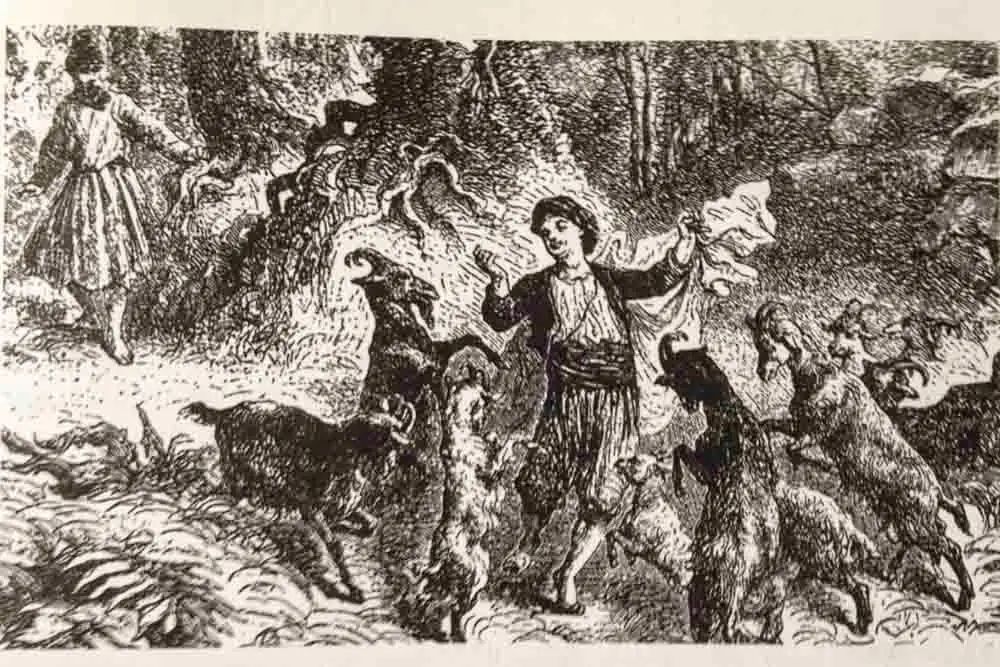
Yirgacheffe earned its reputation through high-altitude growing conditions that produce citrus acidity and jasmine aroma. Ethiopian coffee culture traces back to the legend of the shepherd Kaldi, whose goats grew lively after eating red coffee cherries. The name itself links to Kaffa, the region many consider coffee's birthplace, and to the word bunn used locally for coffee.
The Gotiti Cooperative, which became independent, shows how washed processing spread through Ethiopia and lifted cup clarity. Light-roasted Yirgacheffe brewed as V60, with standard pour-over parameters, brings out that clean, sweet, floral character. Knowing what altitude does ethiopian coffee grow at? helps explain the intensity: high plateaus slow cherry ripening, concentrating acidity and aroma.
Why has Yirgacheffe become the hallmark of Ethiopian specialty coffee? From the legend of the shepherd Kaldi discovering coffee cherries to the journey of the Gotiti Cooperative establishing itself independently, this high-altitude growing region has nurtured the citrus acidity and jasmine aroma that captivate countless coffee lovers. This article will guide you through Ethiopia's coffee cultivation system, the background behind the introduction of washed processing techniques, and the complete flavor expression of Gotiti Cooperative coffee from dry aroma to aftertaste. At the same time, Front Street Coffee will share V60 brewing parameters and extraction approaches for light-roasted Yirgacheffe, helping you recreate that clean, sweet, and floral cup of washed Yirgacheffe at home.
Anyone with even a little knowledge of coffee has probably heard the saying: coffee's homeland is Ethiopia. The coffee culture in this land is incredibly rich, and the local obsession with coffee is known the world over. Walking through the streets and alleys of Ethiopia, coffee shops of every kind can be seen everywhere, as if silently telling every visitor—this is where coffee was first born.
The Legend of the Shepherd and Coffee
According to legend, on the Ethiopian highlands, a shepherd named Kaldi noticed during his grazing that his goats became unusually lively after eating some kind of wild red fruit. Out of curiosity, Kaldi also picked some of the fruit and took it home to try. After eating it, he felt refreshed and especially energized, so he told the people of his village about it. Word gradually spread, and coffee beans were later introduced to the Arabian Peninsula, where cultivation and trade also rose, thus beginning coffee beans' centuries-long journey of global dissemination.
In the local Ethiopian language, coffee is called "bunn" or "buna." The birthplace of coffee is Kaffa, so coffee is sometimes also called "Kaffa bunn," meaning coffee from Kaffa. For this reason, the term "coffee bean" is generally believed to have evolved into an English expression from "Kaffa bunn." The English word for coffee (coffee) originates precisely from the Ethiopian place name "Kaffa" (kaffa). In Ethiopia, coffee is more like a cultural belief woven into daily life. Local people perfectly preserve coffee's most authentic purity. They use the simplest iron pestle to pound charcoal-roasted coffee beans into powder, drop it into a brewing pot, add water, and boil it. The unique aroma of coffee then slowly disperses, and it is enjoyed together with traditional bread.
Yirgacheffe—The Synonym for Ethiopian Specialty Coffee
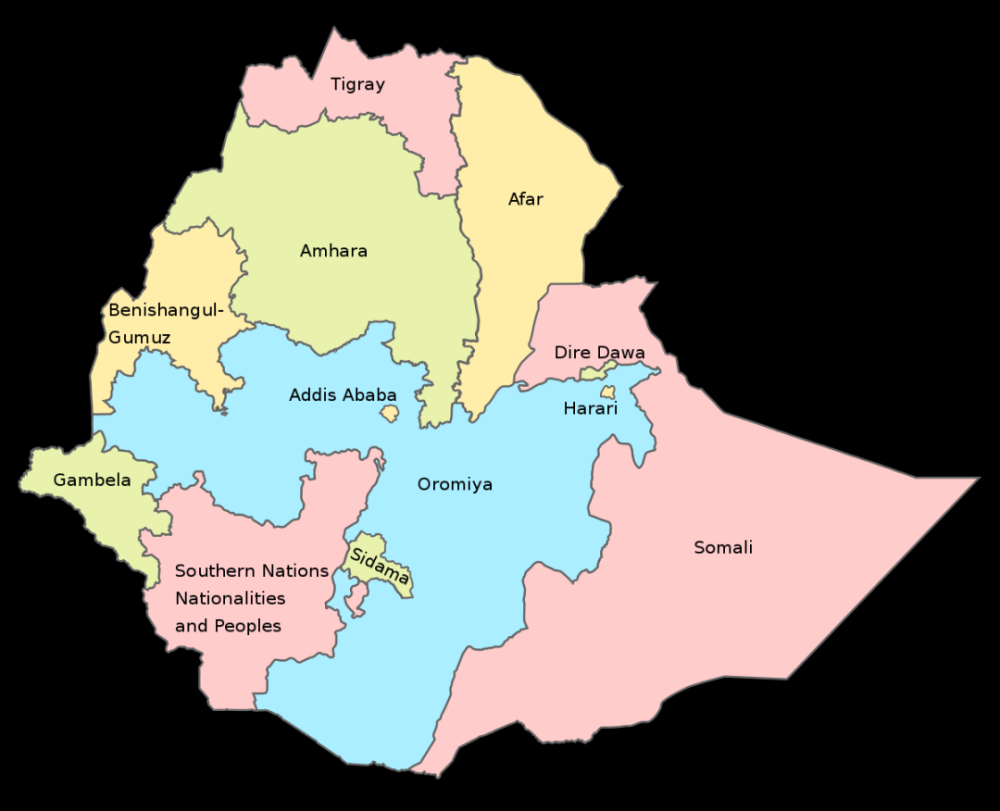
Ethiopia's coffee cultivation is mainly concentrated in the western and southern regions, with smallholder family operations accounting for 90% of overall cultivation. About 1.2 million smallholder families depend on coffee cultivation for their livelihoods. From an administrative division perspective, all five major regions of Ethiopia produce coffee, with Harar coffee, Yirgacheffe coffee, and Sidamo coffee being the most famous. Yirgacheffe itself is only a small town, but the specialty coffee exported from here each year reaches as much as over a thousand tons, fully demonstrating the importance of the Yirgacheffe producing region in Ethiopia's coffee landscape.
Ethiopia's coffee production system can be divided into four types: forest coffee, semi-forest coffee, garden coffee, and large plantations. Among these, garden coffee is the most common, with each household cultivating no less than 4 hectares. Because smallholder cultivation is limited in scale and relatively low in yield, coffee cooperatives and processing stations of various sizes have formed locally, specifically responsible for processing raw coffee beans in their areas. Farmers send the coffee beans harvested from their own plots to nearby processing stations built near water sources for unified processing, after which they are sold externally under the processing station's name.
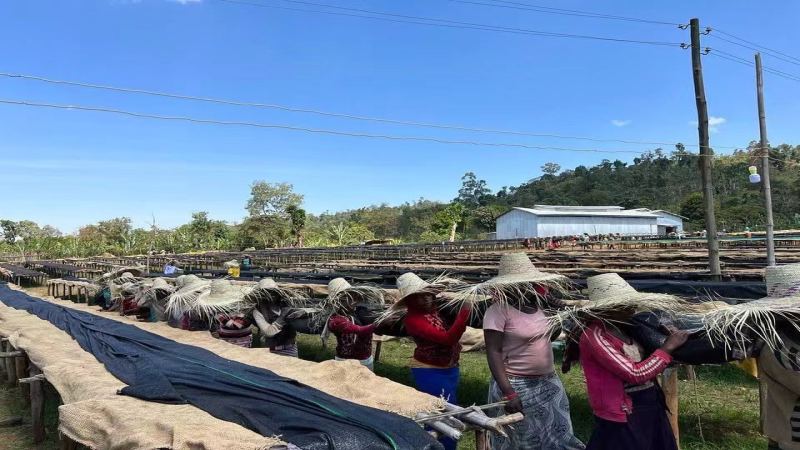
The Gotiti Cooperative was originally part of the Worka Cooperative under the Yirgacheffe Coffee Farmers' Cooperative Union (YCFCU). Later, as the market's demand for traceability of raw coffee beans continued to rise, more and more independent "single-origin" lots were discovered one by one by coffee hunters around the world. Thus, in 2012, a production team with about 300 farmer members broke away and officially began operating independently under the name "Gotiti Cooperative." Among the guests drinking coffee at Front Street, if they want to taste coffee with a washed fruity profile, Front Street baristas usually first recommend the Gotiti Cooperative coffee on the bean shelf. This washed-process Gotiti Cooperative coffee does not have the heavy bitterness of traditional black coffee. Instead, it offers fresh, bright citrus and lemon acidity, as well as jasmine-like fragrance, making many coffee people fall in love with it upon their first taste.
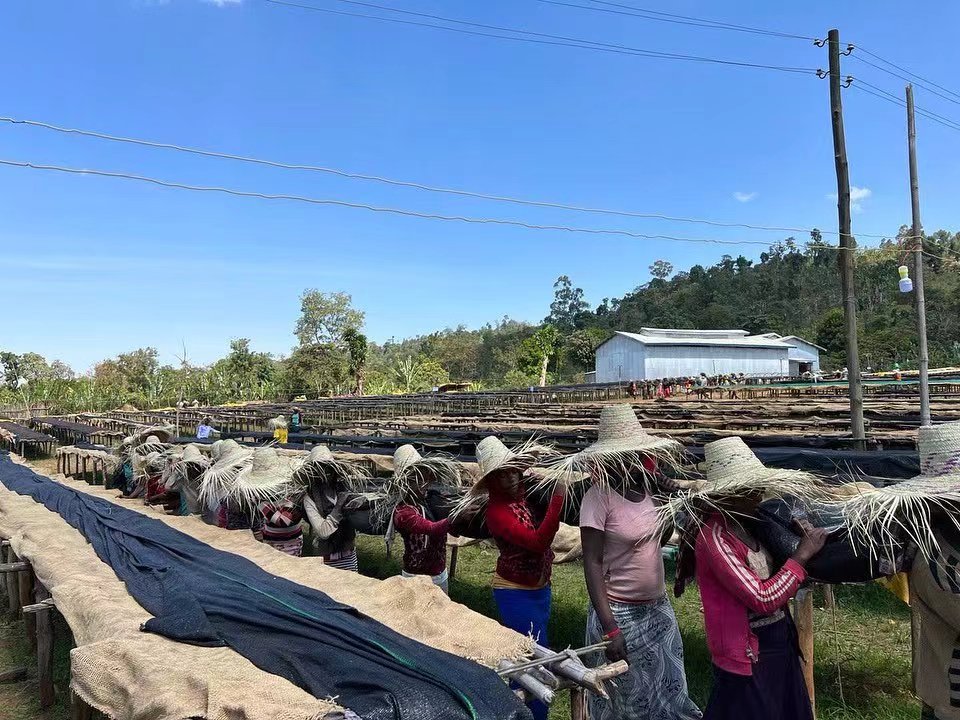
In traditional practice, farmers harvest coffee cherries and spread them directly on patios or the ground, relying on sun exposure to dry them. When the moisture content of the coffee cherries drops to about 12%, they can be hulled and bagged. However, this sun-dried method easily brings earthy flavors, over-fermentation, and defective flavors like rotten fruit to the coffee beans. In order to improve the flavor defects caused by sun exposure, Ethiopia introduced washed processing technology from Central and South America. During the washed process, multiple steps can effectively remove defective beans, presenting cleaner acidity in flavor and taking Yirgacheffe's aroma expression to an even higher level.

Pour-Over Flavor Description of Gotiti Cooperative Coffee
Front Street believes that Yirgacheffe's fruity acidity is its core representative flavor, so it is relatively suitable for light roasting to highlight its bright fruity acidity. For freshly roasted Yirgacheffe, Front Street will arrange cupping and tasting as soon as possible. The dry aroma of washed Gotiti Cooperative coffee gives off fresh passion fruit, citrus, and berry acidity; the wet aroma presents notes of citrus and berries. On the palate, one can feel citrus acidity and berry sweetness, accompanied by almond and tea notes, with honey-like sweetness in the aftertaste. The body is low, the acidity is bright, and the overall cup is clean and refreshing.
After roasting is completed, coffee beans need a 4-to-7-day degassing and resting period before entering their optimal tasting stage. As storage time lengthens, coffee's aroma dissipates more quickly, and the flavor and mouthfeel also decline noticeably. In order to ensure that everyone drinks coffee in its best-flavored state, Front Street only ships fresh beans within 5 days after roasting, so that when you receive them, the coffee beans' aroma is at its best level.
Because Yirgacheffe is grown at high altitudes and the roast level is relatively light, the internal texture of the coffee beans has not changed much. In order to release a richer aroma, Front Street uses a higher water temperature and a finer grind for extraction, paired with a V60 dripper. The V60 dripper's body features spiral ribs connecting the top and bottom as well as a large central hole, which can accelerate the flow rate of water downward; the spiral-shaped vent groove design extends the water flow path and increases the contact time between coffee grounds and hot water. Each stream of water converges along the grooves toward the center point of the dripper, the pressure on the coffee grounds is more concentrated, and the brewed coffee has a richer layering.
Yirgacheffe Brewing Parameters:
Dripper: V60 Water temperature: 92-93°C Dose: 15g Coffee-to-water ratio: 1:15 Grind size: fine sugar size (20号筛碗筛粉到78%)
For the first pour, add 30 grams of water and bloom for 30 seconds, then pour 95 grams (the electronic scale shows about 125 grams), finishing the pour in about 1 minute. When the water level drops to 2/3 of the coffee bed, pour the remaining 100 grams (the electronic scale shows about 225 grams), finishing the pour in about 1 minute 35 seconds. Dripping is completed at 2 minutes 10 seconds. Remove the dripper, and extraction is finished.
Washed Gotiti Cooperative flavor: On the palate there are jasmine, lemon, citrus, and green tea; as the temperature changes, it presents berry, cream, and sugarcane in the aftertaste, with obvious sweetness returning and a clean, sweet mouthfeel.
The above content is compiled by CoffeeHunters, a coffee news website.


