







What is the geisha coffee variety and how does it differ from gesha?
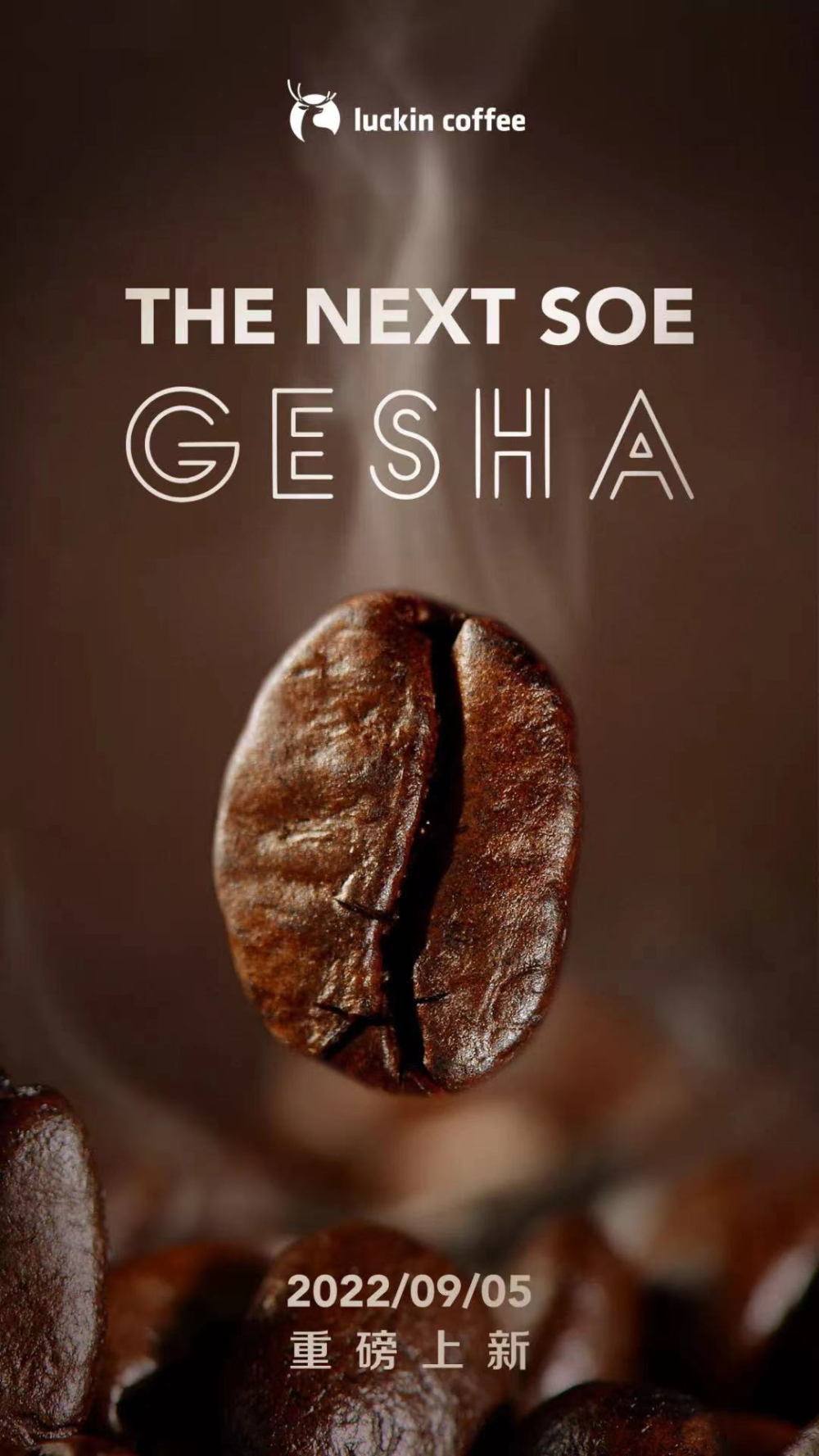
Geisha and Gesha name two related but distinct lineages. Panama Geisha is the T2722 selection, domesticated over generations and known for delicate floral aromas. Ethiopian native Gesha grows near Gesha Mountain and shows rougher, more varied flavors. When Luckin launched a Gesha SOE in 2022, it used the Ethiopian type, not the Panamanian one.
The one-letter split traces back to a British collector who gathered mixed samples near Gesha Mountain in Ethiopia, labeled them Gesha, and shipped them to a plantation in Kenya. Today the Panama geisha name marks carefully cultivated lots, while Ethiopian gesha coffee often carries the country's native, less uniform character and lower cultivation cost.
After Luckin launched Gesha SOE in 2022, Gesha coffee once again became a hot topic. But many people don't know that although Geisha and Gesha differ by just one letter, they represent completely different genetic lineages, cultivation costs, and flavor profiles. Panama Geisha is the T2722 variety that has been cultivated and domesticated over generations, famous for its delicate floral aroma; Ethiopian native Gesha comes from the homeland of Gesha Mountain, with a rougher and more varied flavor. This article will comprehensively sort out the past and present of Gesha coffee from naming origins, variety distinction, roasting logic to the red label grading system, and retain the flavor descriptions of corresponding Front Street Coffee products, helping readers understand this most talked-about coffee variety in one go.
For professional coffee knowledge exchange and more coffee bean information, please follow Coffee Workshop (WeChat public account: cafe_style)
For more specialty coffee beans, please add private WeChat Front Street Coffee (FrontStreet Coffee), WeChat ID: qjcoffeex
In September 2022, after Luckin Coffee launched its Gesha SOE (Single Origin Gesha Espresso) series, it sparked heated discussions among netizens. In the impression of many coffee enthusiasts, Gesha coffee always has delicate floral aromas and a pleasant rich acidity.
As a chain coffee brand, Luckin Coffee wants to ensure consistent output between stores, so the coffee beans will definitely be dark roasted, thus "ruining" the rich flavors of Gesha coffee beans. At the same time, in recent years, Gesha coffee beans have become increasingly expensive, and Luckin's entry may further affect the price of Gesha coffee .
But! Although Luckin Coffee has launched Gesha, it is not the Gesha everyone thinks. The Gesha coffee beans with rich floral and fruity aromas that most people remember come mostly from the Panama region, with a small portion from Central and South America, named Geisha. What Luckin Coffee uses is native Gesha from the Ethiopia region, named Gesha.
Is there a difference between Geisha and Gesha?
Yes! Although it's just a one-letter difference, there are relevant records indicating that a British person collected mixed coffee samples near Gesha Mountain in Ethiopia, marked them as Gesha and shipped them to a British plantation in Kenya, but in the letter sent back after completing the task, it was written as Geisha. Later, European literature about Gesha all used the term Geisha.
Also, because the word Geisha has the same pronunciation and transliteration as the Japanese word for "geisha," Gesha is also called "geisha." But actually, there have been opportunities to correct it back to Gesha over the years, but it hasn't been done—one reason is that it's just a transliteration issue and there was originally no written form; another is actually to distinguish the two.
Rather than saying Gesha is a variety, it's better to say Gesha is a lineage
Whether it's Panama's Geisha or Ethiopia's Gesha, their place of origin is all from the deep forests near Gesha Mountain in the Bench Maji region of Ethiopia. But the difference is that Geisha is just one member of the Gesha lineage, numbered T2722, a Gesha coffee bean that has been continuously cultivated and "tamed" by several generations. Therefore, its flavor expression is extremely refined, but the cultivation cost is also very high. Coupled with low yield and everyone's love for it after Gesha became famous, a small portion of Gesha in the Panama region is extremely expensive.
Gesha represents the native variety of Ethiopia's Bench Maji region. Because this is the hometown of Geisha, the native varieties here are more or less genetically related to the "tamed" Gesha, but the flavor, cultivation cost, and yield are completely different.
According to Mr. Hsu Bao-Lin's book "The Bean Seeker 2," Bench Maji is the hometown of Gesha coffee, but the Gesha coffee produced here has a completely different flavor from the well-known Panama Gesha. Under dark roasting (removed after second crack), the native Ethiopian Gesha variety exhibits coffee flavors of berries, nuts, spices, and plant roots, unlike the refined flavors of Panama Gesha.
Although in most cases, to preserve light-molecular flavors (such as floral and fruity aromas), many roasters prefer to use light roasting for Gesha coffee to retain more acidity. But for Ethiopian Gesha, after dark roasting it can still exhibit plant root flavors; if light roasting is used, it tends to develop grassy and astringent flavors.
Therefore, Front Street Coffee (FrontStreet Coffee) believes that the degree of roasting should be determined based on the flavor quality of the coffee beans themselves. Gesha is not necessarily light-roasted, nor is dark roasting unsuitable for Gesha coffee beans. Being able to roast coffee beans that ensure quality output is what matters most. Of course, the native Ethiopian Gesha can be carefully distinguished and well cultivated, and its coffee flavor can also be very appealing~
For example, the "Ethiopia Gesha Village Red Label Gori Gesha Coffee Beans" sold by Front Street Coffee (FrontStreet Coffee) has a very pleasant berry acidity, red floral aroma, roasted nuts, and fermented tea notes.
Gori Gesha (Gori Gesha) is a place called Gori Gesha Forest that the owner of Gesha Village found through historical tracing. He believed that the British back then took Gesha seeds from here, so they also sampled here and finally selected Gesha 1931. It was selected not through genetic identification, but by observing plant morphology, bean shape, and cupping flavor. From the samples, they believed this coffee variety was similar to Panama's Geisha.
Gori Gesha was brought back by the estate owner when he entered Gori Forest again in 2011. Even if they found the right place, with tens of thousands of varieties in Gesha Forest, they cannot guarantee that the varieties they found are exactly the Gesha (T2722) from back then. So it's normal for bean shape characteristics to be different—after all, they are not the same variety.
Doesn't Panama also have a Red Label Gesha coffee bean?!
Yes, but the grading distinctions are quite different! The Red Label (Reserve) of Ethiopia's Gesha Village is not the highest grade~ Red Label batches of coffee beans from Gesha Village account for about 15% of the estate's annual production, are fully traceable batches, score over 88 points in cupping (SCA standard), have typical Gesha Village flavors, and are slightly weaker in flavor intensity and complexity than Gold Label batches. They are single-origin batches with very high cost-performance.
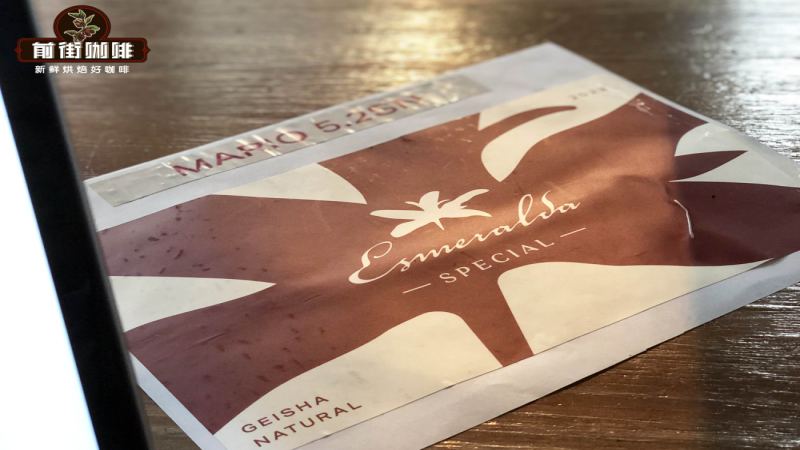
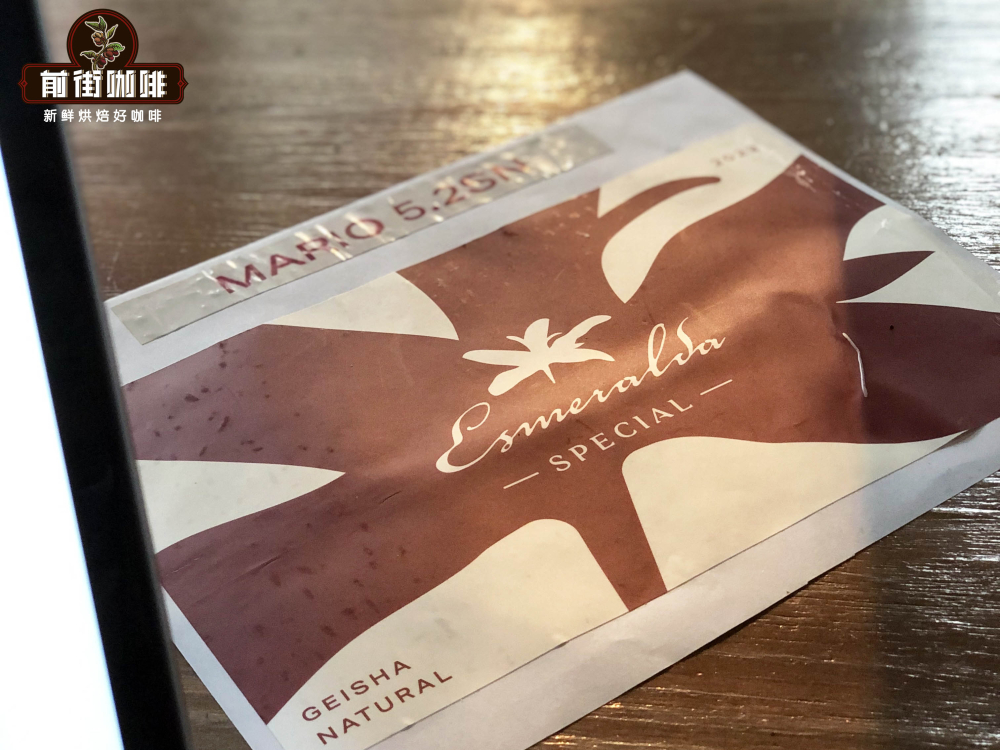
The Red Label of Hacienda La Esmeralda is officially called "Esmeralda Special," translated into Chinese as "Emerald Special Selection." The Esmeralda Special series is the highest quality Gesha coffee bean sold by Hacienda La Esmeralda. It grows at specific plots at altitudes of 1600-1800 meters, and each batch must score over 90 points in cupping. Usually this series comes from the two sub-estates of Jaramillo and Cañas Verdes (Mario's estate has also produced Red Label series, but this estate plot is mainly for exploring commercial viability and has planted many coffee varieties).
Another feature of Red Label batches is that each batch has an independent number, and all coffee beans in a batch come from a single small plot. For example, this year's Red Label from Front Street comes from the Mario plot. This allows buyers to choose batches that suit their preferences based on subtle flavor differences.
The " Panama Hacienda La Esmeralda Red Label Gesha Coffee Beans " sold by Front Street Coffee (FrontStreet Coffee) has very full berry acidity, rose floral aroma, honey sweetness, and black tea notes.
The above content is compiled by CoffeeHunters, a coffee news website.


