








What Is Cuban Crystal Mountain Coffee?
Cuban Crystal Mountain coffee is not named after a growing region. Crystal Mountain is a grade inside the official grading system of Cuba's coffee association, applied to beans that meet its criteria. The coffee is Typica variety, washed processed, and drinks delicate and clean with balanced acidity and sweetness plus a faint smoky note.
Cuba's coffee boom began in the early 18th century, when a French naval officer planted the first Typica mother tree on Martinique and Jamaica, Cuba and nearby islands followed into cultivation, selling to European markets for about two hundred years. The 20th century brought political and economic change, shrinking Cuba's area, output and quality; today the Japanese market helps sustain it.
Cuban coffee is widely known among enthusiasts for the name "Crystal Mountain," but Crystal Mountain is not a producing region—it is a grade within the official grading system of Cuba's coffee association. The Cuban coffee industry experienced its glory in the 18th century and decline in the 20th century, and today it continues its unique charm supported by the Japanese market. From the perspective of Front Street, this article systematically sorts out Cuba's coffee-producing regions, Typica variety characteristics, washed processing method, nine-tier grading system, and its delicate and clean island-type flavor with balanced acidity and sweetness and a faint smoky note, taking you through a comprehensive understanding of the past and present of this Caribbean coffee-producing country.

When people mention Cuban coffee, the first thing that comes to many people's minds is Crystal Mountain coffee. However, it should be noted that "Crystal Mountain" is not the name of a certain producing region in Cuba; it is actually a grade set within the grading system of Cuba's official coffee association.
According to information available to Front Street, the golden age of Cuban coffee can be traced back to the early 18th century. At that time, a French naval officer planted the first Typica mother tree on the French island of Martinique in the eastern Caribbean. After that, Jamaica, Cuba, and other nearby islands successively joined the ranks of coffee cultivation, setting off a planting boom and successfully selling their products to European markets, enjoying a period of prosperity that lasted for two hundred years.
But after entering the 20th century, the international political and economic landscape underwent drastic changes, and some island-type coffee-producing countries gradually lost their original market advantages. The coffee industries of Cuba, Puerto Rico, Haiti, and other countries fell into serious difficulty, with both cultivated area and output shrinking sharply and quality declining as well. After the revolution led by Castro succeeded, although the government tried to revive the coffee industry, constrained by multiple factors such as insufficient cultivation experience, the gradual withdrawal of the older generation of coffee farmers, and the economic shock brought by the collapse of the Soviet Union, Cuba's coffee industry ultimately fell into a trough.
Even so, Cuban coffee still has a group of loyal supporters. Fortunately, the Japanese market has shown great enthusiasm for Cuban coffee and has become an important buyer. However, as Japanese demand continued to rise, Cuba's coffee output instead showed a year-by-year decline—from nearly 3,000 tons in 2004 down to 500 tons in 2008. To fill the market gap, Cuba turned to planting relatively ordinary Arabica and Robusta varieties, which also led to Cuban coffee becoming increasingly rare in the specialty coffee field.
Cuban Coffee-Producing Regions
The name "Cuba" comes from the language of the long-vanished Taíno indigenous people of the West Indies, meaning "fertile land everywhere."
And when it comes to Cuban coffee, Front Street thinks of Crystal Mountain coffee. The flavor of Crystal Mountain coffee is quite similar to the famous Blue Mountain coffee, so it is often called "Cuban Blue Mountain," a name used to enhance the popularity of Cuban Crystal Mountain coffee.
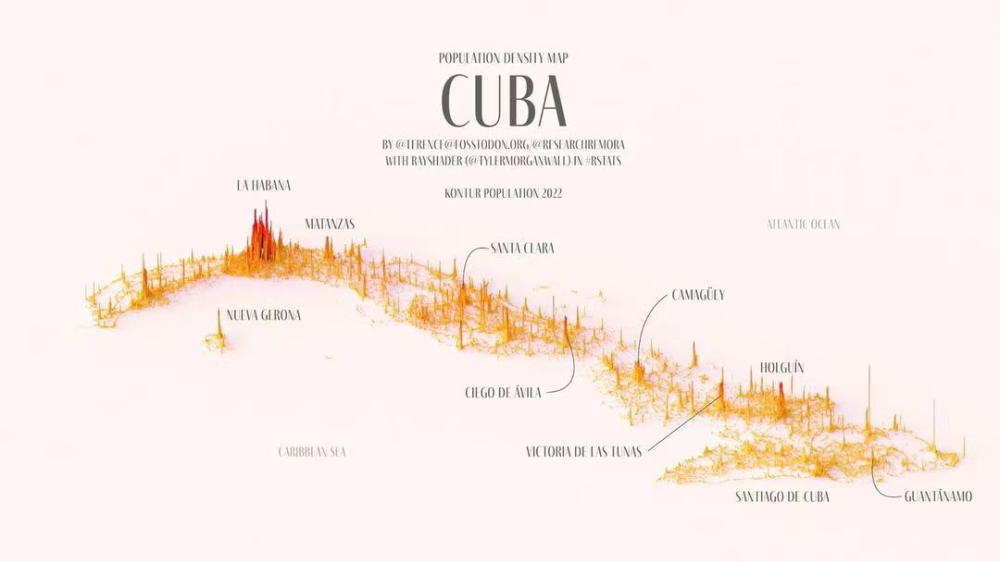
Crystal Mountain is located in northeastern Cuba, at an altitude of 900 to 1,200 meters, and is Cuba's second-highest mountain range. Together with the main mountain range in the southeast and the Escambray Mountains in south-central Cuba, it is known as one of Cuba's three major coffee-producing regions. However, it should be noted that not all Crystal Mountain coffee circulating on the market comes from the Crystal Mountain area; it may also come from the other two producing regions. The reason Crystal Mountain coffee got this name is that its export destinations are mainly Japan, France, Italy, and Germany. Japanese people are especially fond of Crystal Mountain coffee, regard it as the top representative of Cuban coffee, and named it "Crystal Mountain coffee," an elegant name that has continued to be used to this day.
Cuban Coffee Varieties
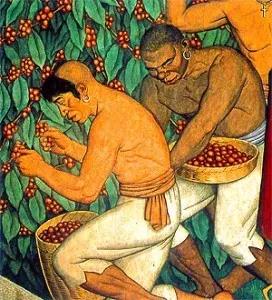
The main coffee variety grown in Cuba is Typica. As a classic high-quality Arabica variety, the Typica coffee tree is famous for the unique bronze color of its top leaves, and some also call it "red-top coffee." Typica beans are relatively large, with a pointed-conical or slender pointed shape, clearly different from the round beans of the Bourbon variety. Typica coffee has a fresh, clean flavor, a balanced mouthfeel, and excellent cleanliness. Although the Typica tree is relatively delicate and susceptible to leaf rust, its elegant flavor and unique quality give it an irreplaceable position in Cuban coffee.
Cuban Coffee Bean Processing Method
The processing method for Cuban coffee is mainly washed processing. Front Street believes that traditional washed processing best showcases the typical flavor of a producing region—more pronounced acidity, higher cleanliness, a moderate mouthfeel, and the most consistent green bean quality.
The core difference between the washed method of processing coffee beans and the natural method lies in using fermentation to remove the mucilage layer. After fermentation and removal of the mucilage are completed, fermentation bacteria and impurities may still remain on the surface of the coffee beans, so another washing is required. This step consumes a large amount of clean water, after which the fruit is dried and hulled.
Cuban Coffee Grading System
Based on bean size and flavor performance, the Cuban Coffee Association divides Cuban coffee into nine grades:
Crystal Mountain
Extra Turquino
Turquino
Altura
Montana
Cumbre
Serrano Superior
Serrano Corriente
Caracolillo
The grades of coffee beans from this producing region are mainly divided by size and can be categorized into three types: ETL (extra grade), TL (middle grade), and AL (ordinary grade). Cuba's most prized high-quality large premium coffee beans are precisely Crystal Mountain coffee beans.
Description of Cuban Coffee Flavor Characteristics
Cuban coffee is a typical island-type coffee, known for its delicate, clean mouthfeel and distinctive flavor. In this coffee bean, Front Street perceives an excellent balance between bitterness and acidity, with a delicate taste and smooth texture. Its color is bright and elegant, its aroma is fragrant and rich, and it also reveals a faint hint of smoke, as if placing one in a small village and enjoying simple, natural beauty.
For professional coffee knowledge exchange and more coffee bean information, please follow Coffee Workshop (WeChat public account: cafe_style)
For more specialty coffee beans, please add the private WeChat of Front Street Coffee (FrontStreet Coffee), WeChat ID: qjcoffeex
The above content is compiled by CoffeeHunters, a coffee news website.


