







What does Blue Mountain coffee taste like and why does it cost so much?
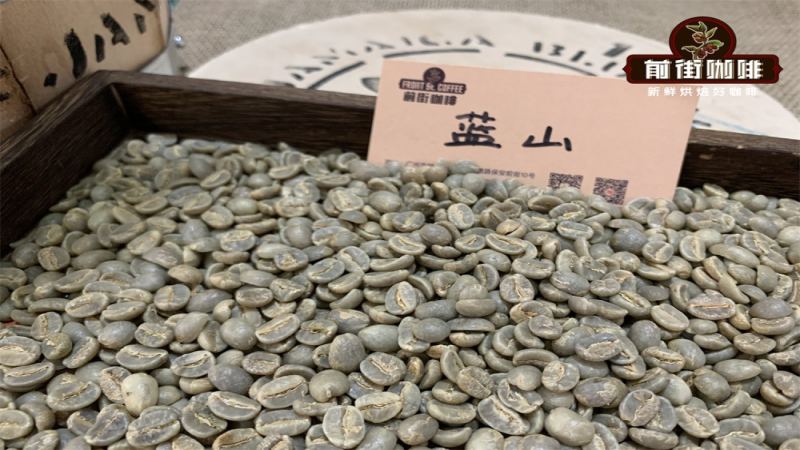
Jamaica Blue Mountain coffee tastes mellow, balanced, smooth, and clean, with a long finish and low bitterness. Opinions split because taste is personal, but the refinement and clarity of the cup are consistent and widely recognized. It remains one of the highest-priced coffee categories, and No. 1 is the top grade, based on bean size, defects, and cup quality.
Prices stay high partly because early imports into some markets were scarce, which let sellers pass off flavored blends as authentic Blue Mountain. Legitimate imports now have a long history, and estate owners have visited buyers directly, so understanding of the beans has grown. Both washed and natural versions are sold; washed tends cleaner and brighter, natural heavier and fruitier, so brewing should follow the process.
Blue Mountain coffee is often called the best of the best. Some people are captivated by its mellow, balanced taste, while others think it is nothing special. Front Street believes that taste preferences vary from person to person, but the refinement, smoothness, and cleanliness of Jamaican Blue Mountain coffee are indeed world-renowned. This article discusses the true flavor of Blue Mountain coffee, its growing environment, grading, price composition, and brewing parameters. It also introduces the Clifton Mount Blue Mountain No. 1 sold by FrontStreet Coffee, as well as the flavor differences brought by washed and natural processing methods, to help coffee lovers gain a more comprehensive understanding of this legendary coffee.
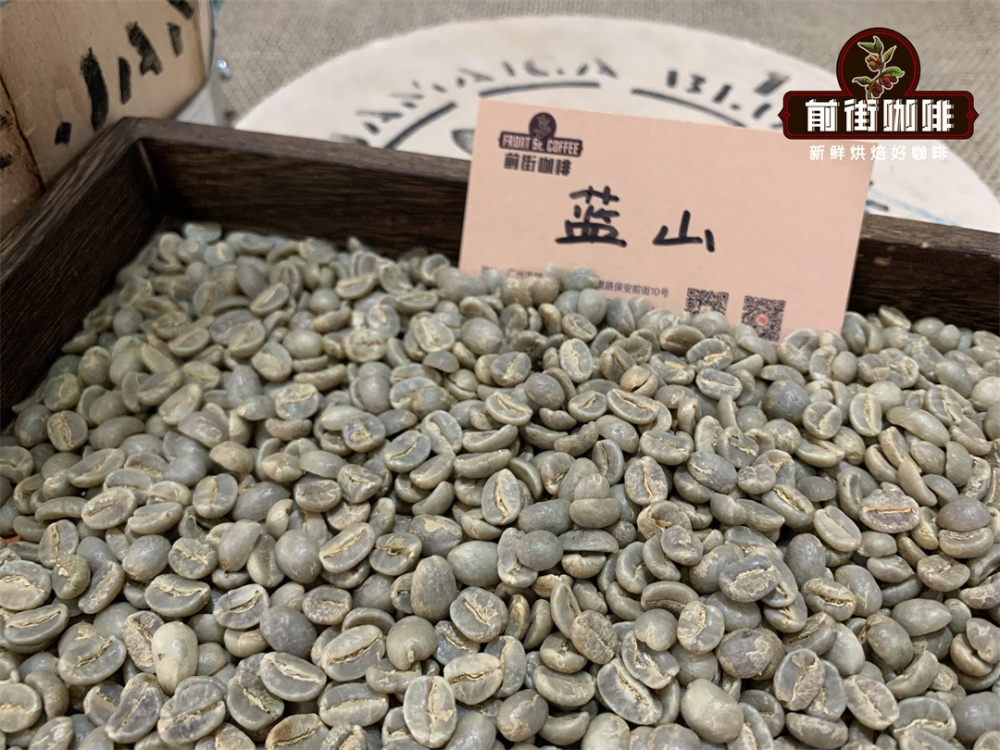
Opinions about whether Blue Mountain coffee tastes good have always been polarized. Some find it rich, balanced, and with a long finish; others think it is merely average. Front Street's view is that this is just like some people preferring acidity and others preferring sweetness—it is purely a difference in personal taste. But it cannot be denied that Blue Mountain coffee itself is outstanding in quality, a superior example of specialty coffee, and one of the highest-priced coffee categories in the world. The core reason it has built such a high reputation is still that the refined, smooth, clean taste of Jamaican Blue Mountain coffee has won over the world.
So is the famous Blue Mountain coffee prohibitively expensive?
Front Street thinks that in the past, Blue Mountain coffee did give the impression of being expensive and hard to find in authentic form. The reason was that in the early years, very little Blue Mountain coffee entered the Chinese market, yet its price remained high, so some merchants got clever and used so-called "Blue Mountain flavor" coffee to pass off as authentic Blue Mountain. Consumers paid a high price but might not have been drinking real Blue Mountain, and because they lacked understanding of Blue Mountain, they had no way to tell the difference at all.
Today, the price of Blue Mountain coffee is still not low. But the situation has changed: China's market demand is huge, legitimate imports of Blue Mountain have a history of many years, and Blue Mountain coffee estate owners have visited China multiple times in recent years, promoting domestic consumers' understanding of Blue Mountain coffee beans. Blue Mountain on the Chinese market is far from being so scarce that everything is fake. In addition, the Jamaican Blue Mountain production area has expanded compared with the past, while Japanese consumption power has weakened recently, so quite a lot of genuine Jamaican Blue Mountain coffee is also sold in China. As long as you know how to identify it, you can buy the real thing.
What kind of environment is needed to cultivate such a mellow flavor?
Front Street has talked with everyone before about how coffee is essentially an agricultural crop, and its growing environment directly shapes its flavor. In the strict sense, Blue Mountain coffee refers to coffee produced in the Blue Mountains of Jamaica, and only beans grown at elevations above 800 meters count as authentic. The Blue Mountain coffee on FrontStreet Coffee's bean list comes from Clifton Mount at an elevation of 1,310 meters.
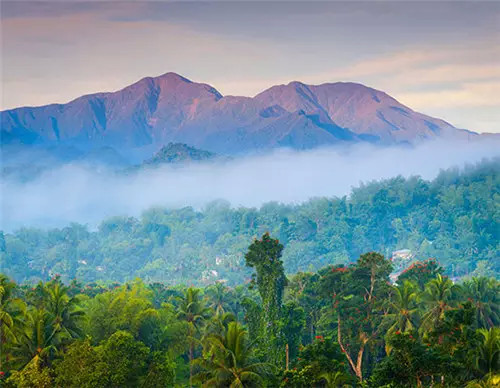
The Blue Mountains are located in the eastern part of the island of Jamaica, surrounded by the Caribbean Sea. On clear days, sunlight shines directly on the azure sea, and the peaks reflect the brilliant blue glow of the seawater, which is how the Blue Mountains got their name. The highest peak of the Blue Mountains is 2,256 meters above sea level, the highest peak in the Caribbean region and also a famous tourist destination. This area lies within the coffee belt and has fertile volcanic soil, fresh and pollution-free air, and a humid climate with fog and rain year-round, with average annual rainfall of about 1,980 millimeters and a temperature of about 27 degrees Celsius. It is precisely these climatic conditions that have created the world-renowned Jamaican Blue Mountain coffee and also one of the highest-priced coffees in the world.
Blue Mountain coffee has a relatively low caffeine content, less than half that of other coffees, which fits modern people's health concepts. The same coffee tree species, no matter whether planted in Hawaii, Kenya, Papua New Guinea, or elsewhere with a similar climate, cannot replicate the unique taste of Blue Mountain coffee.
How much is a cup of Blue Mountain coffee?
Blue Mountain coffee is not the most expensive coffee in the world, but its mellowness can be considered second to none. Authentic imported roasted Blue Mountain beans generally cost around 1,200 RMB per pound (450 grams). A 45cc cup of coffee requires about 7 grams of coffee beans to grind and brew, and one pound of beans can roughly make 50 to 60 cups. Calculated this way, the raw material cost per cup of Blue Mountain coffee is between 20 and 24 RMB. Adding the cafe's operating costs, doubling to 50 RMB per cup is within the normal range.
In the early years, the Blue Mountain sold domestically at over 100 RMB per cup was mostly fake. Even now, although there is a lot of genuine Blue Mountain in China, the price is still expensive, while Front Street's authentic Blue Mountain sells for only 60 RMB per cup, allowing you to experience an excellent flavor. Blue Mountain coffee's most beloved characteristic is its delicate aroma, clear sweetness, and almost complete lack of bitterness. The fruity aroma spreads as it enters the mouth, followed by the sweetness and lingering finish of cocoa and nuts.
There is so much Blue Mountain coffee on the market—does it all taste the same? Front Street wants to remind everyone that many coffees on the market labeled "Blue Mountain" are not all Jamaican Blue Mountain coffee, because the production of true Blue Mountain coffee is limited. There is also a historical reason for the high price of Blue Mountain coffee beans: in the early years, Blue Mountain coffee was monopolized 85% by Japan, leaving only 15% circulating globally, so it naturally seemed especially precious. According to the 2013 export statistics of the Jamaica Coffee Board, of the limited Blue Mountain coffee bean quota, 85% went to Japan, 5% to the United States, 5% to Europe, and 5% to other countries. However, according to statistics from the International Coffee Association, in the global consumption distribution of authentic Jamaican Blue Mountain coffee, China accounts for 15% of consumption. This is because part of the Jamaican Blue Mountain share from Japan, Australia, and Europe was exported to Taiwan through directly operated branch companies.
Blue Mountain Coffee Grading Let us look at how many grades Blue Mountain coffee is divided into and what the classification is based on. Coffee from Jamaica's Blue Mountain region is divided into three grades: Blue Mountain Coffee, Jamaica High Mountain Supreme Coffee Beans, and Jamaica Prime Coffee Beans.
Among them, Blue Mountain Coffee and High Mountain Coffee are each further divided into two grades. From highest to lowest quality, they are: Blue Mountain No. 1, Blue Mountain No. 2, High Mountain No. 1, High Mountain No. 2, and Jamaica Coffee.
From highest to lowest quality, they are: NO.1, NO.2, NO.3, and PB, with PB meaning peaberry. According to CIB standards, the basic requirements for NO.1 Blue Mountain green beans are 17 screen size or above, a defect rate below 3%, and a moisture content of about 13%. The highest-quality Blue Mountain coffee beans are NO.1 peaberry, also called pearl beans, carefully selected small round beans from products grown at an elevation of 2,100 meters, truly the best of the best. The aroma is very rich, with a lasting fruity note, and the beans are plump.
Blue Mountain coffee has a very low caffeine content, less than half that of other coffees, which fits modern people's health concepts. The same coffee tree species, no matter whether planted in Hawaii, Kenya, Papua New Guinea, or elsewhere with a similar climate, cannot produce the taste of Blue Mountain coffee beans. The Jamaican Blue Mountain No. 1 coffee sold by FrontStreet Coffee holds a certificate issued by the Jamaica Coffee Board. In addition, the wooden barrels packaging Jamaican Blue Mountain coffee beans bear a green frog logo. This is why FrontStreet Coffee specifically chose Clifton Farm, a Jamaican Blue Mountain No. 1 coffee estate with Rainforest Alliance certification. Jamaica is also the only producing region that uses wooden barrels to pack green beans.
Blue Mountain Coffee Variety
Ethiopia is the gene bank of coffee, and the Blue Mountain coffee introduced by FrontStreet Coffee belongs to the Typica variety. Typica is the oldest Arabica subspecies, with bronze-colored leaf tips, oval or slender-pointed beans, a tall tree body, and slightly slanted branches at an angle of about 50 to 70 degrees; it is also called red-top coffee. The opposite leaves of the coffee tree are long oval-shaped, with smooth surfaces, long terminal branches, and few branches. The flowers are white and bloom where the leaf stalk meets the branch. The flavor is elegant, but the plant is weak, has poor disease resistance, and each tree has extremely low yield and bears few fruits. Ripe coffee cherries resemble cherries in appearance and are bright red.
Blue Mountain Coffee Bean Processing Methods
In the past, Blue Mountain coffee only used washed processing. Washing and fermentation are used to remove the skin, pulp, and mucilage. Farms using the washed method must build washing channels and be able to introduce a continuous supply of fresh water. During processing, the skin and pulp are first removed, then the beans are fermented for 12 to 18 hours. After fermentation is complete, the beans are placed in a channel and moved back and forth, using friction between the beans and the force of flowing water to wash the coffee beans until they are smooth and clean. After washing, the coffee beans are still wrapped in parchment, with a moisture content of about 50%, and must be dried in the sun to reduce the moisture content to 12% to 14%; otherwise, they will continue to ferment and become moldy and spoiled. After that, the coffee beans are sorted and then stored in special warehouse stacks. These steps must be strictly controlled, or the coffee quality will be affected.
Today's Blue Mountain coffee is no longer only washed; there is also natural processing. Front Street has launched a batch of naturally processed Blue Mountain coffee, also certified for export by the Jamaica Coffee Board.
The production of this naturally processed Blue Mountain coffee is actually quite difficult. The reason only washed processing was used in the past is that washing best expresses the essence of Blue Mountain flavor, and changing the processing method will inevitably change its flavor structure. This is also why almost all of Front Street's daily-drink bean series use washed processing—washing best represents the flavor of the producing region. The use of natural processing for Blue Mountain coffee is more about responding to market development, just as FrontStreet Coffee previously also added a naturally processed Mandheling coffee bean, different from the traditional wet-hulled method.
Front Street's recommended brewing parameters for Blue Mountain coffee:
Dripper: Kono dripper
Water temperature: 88°C
Dose: 15g
Coffee-to-water ratio: 1:15
Grind size: medium grind (75% passing a Chinese standard No. 20 sieve)
Brewing method: three-stage extraction. Bloom with 30 grams of water for 30 seconds, then pour in a small stream in circles until 125 grams, pause, and when the water level drops and is about to expose the coffee bed, continue pouring to 225 grams and stop. After the coffee in the dripper has finished dripping, remove the dripper. Start timing from the beginning of pouring; the total extraction time is 2 minutes 00 seconds.
Flavor Description
[Front Street Natural Blue Mountain Coffee] Slight berry acidity, reminiscent of smoked plum and mulberry, with good overall balance, rich dark chocolate and nutty flavors, and a slight fermented note.
[Front Street Washed Blue Mountain Coffee] Rich dark chocolate and nutty flavors, a creamy smooth mouthfeel, and a balance of acidity, sweetness, and bitterness.
Regarding coffee brewing, Front Street recommends using freshly roasted coffee beans, as this allows you to experience coffee's rich flavors to the greatest extent. The coffee beans shipped by FrontStreet Coffee are all within 5 days of roasting, because Front Street knows well that freshness has a great impact on flavor. Front Street's roasting principle is "freshly roasted good coffee," so that every customer who places an order receives coffee in its freshest state. Coffee resting period is about 4 to 7 days, so when customers receive it, it is exactly at its best flavor.
Front Street has more than 50 single-origin coffees from different producing regions, all quite representative coffee beans, with varying prices that can bring different experiences.
For professional coffee knowledge exchange and more coffee bean information, please follow Coffee Workshop (WeChat public account: cafe_style)
For more specialty coffee beans, please add the private WeChat of Front Street Coffee (FrontStreet Coffee), WeChat ID: qjcoffeex
The above content is compiled by CoffeeHunters, a coffee news website.


