







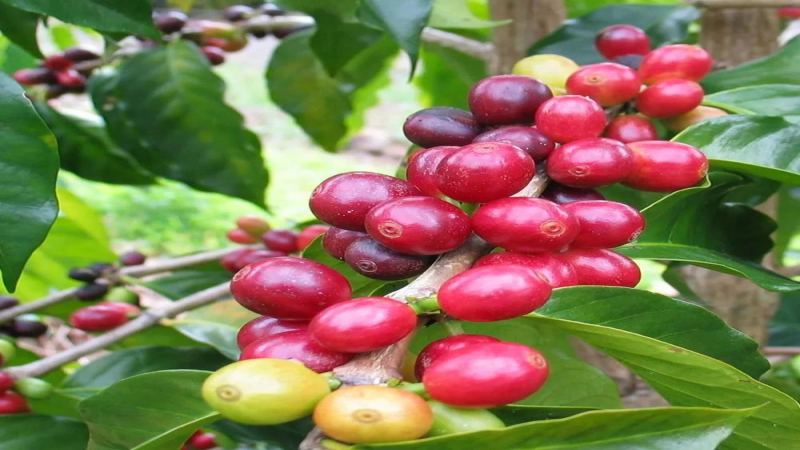
How does coffee bean processing shape Mozart coffee?
Costa Rica Mozart coffee comes from the Canet Estate and the H1 variety, released as part of a Musician Series named after classical composers. The bean is known for high sweetness and strong floral and fruity aromas. Two methods are compared here: raisin honey processing and anaerobic honey processing, which differ in how the fruit mucilage and fermentation are handled.
The name nods to Mozart, a devoted coffee drinker. Origin already sets a baseline before coffee bean processing begins: Ethiopia shows floral and citric acidity, Colombia softer fruit and floral notes, Brazil nutty caramel, Panama citrus and tropical fruit. For arabica beans like this H1 lot, the honey-style methods concentrate sweetness, and brewing parameters are tuned to preserve the aromatics.
Black coffee is not just bitter—it represents a pure beverage that presents coffee's true flavor without embellishment. Different origins give coffee distinctly different personalities: Ethiopia's floral and lemon acidity, Colombia's soft fruity acidity, Brazil's nutty caramel, Panama's citrus and tropical fruit. The Costa Rica Musician Series launched by Front Street Coffee is a classic line named after classical musicians. This article focuses on Front Street Mozart Coffee, from its origin at Canet Estate and the H1 variety, to the differences between raisin honey processing and anaerobic honey processing, and then to brewing parameters and flavor performance, taking you through a complete understanding of this coffee with outstanding sweetness and exceptional floral and fruity aromas.
When it comes to black coffee, many people's first reaction is bitterness, even bitter like Chinese medicine. But what exactly is the black coffee everyone often talks about? Front Street wants to say that, taken literally, black coffee might be regarded as thick and bitter espresso, but that is only one form of black coffee. The deeper meaning of black coffee refers to pure coffee with no seasoning added to change coffee's original flavor and mouthfeel; it best reflects the terroir of an origin.
Different origins and producing regions naturally give coffee different flavors. Ethiopia has bright floral notes and citric acidity; Colombia shows soft fruity acidity and floral aromas; Brazil leans toward nutty and caramel notes; Panama has citrus, floral, and tropical fruit aromas... Front Street Coffee (FrontStreet Coffee) carries more than 50 single-origin beans from different countries and regions, all worth tasting one by one. Among them, Front Street has two coffees from the world-renowned Musician Series: Front Street Costa Rica Mozart and Front Street Costa Rica Bach.
Today Front Street will introduce Front Street Mozart Coffee from the Costa Rica Music Series.
Why is this coffee called Mozart?
Front Street tells everyone: among classical musicians, Wolfgang Amadeus Mozart is famous for bringing great joy to the world. He composed many world-famous works, including The Magic Flute and Eine kleine Nachtmusik. At the same time, Mozart was also an avid coffee lover, addicted to coffee as if it were his life. Coffee provided this genius musician with an endless stream of inspiration and motivation, and also enriched the spiritual world of people around the globe. Mozart's music becomes more charming the more you listen to it, and this Front Street Mozart coffee bean likewise becomes more charming the more you drink it.
The name of the Costa Rica Musician Series comes from the owner of Canet Estate loving classical music, so the coffee beans produced by the estate are all named after musicians. Canet Estate is located in the highest-altitude area of coffee cultivation in Tarrazu, Costa Rica. The estate uses Caturra and Catuai beans for raisin honey processing and washed processing, producing the world-renowned Musician Series coffee beans named "Beethoven," "Bach," and "Mozart." The altitude ranges between 1,700 and 1,950 meters, and they are all SHB-grade high-altitude strictly hard beans with sweet flavor and rich fruit aromas, wine-like notes, and tea-like notes.
How could Front Street Coffee (FrontStreet Coffee) pass up this highly charming coffee bean? This Front Street Mozart coffee bean comes from a famous producing region—Costa Rica's Tarrazu region. Although today's Front Street Costa Rica coffee is sought after by many veteran coffee enthusiasts and coffee novices alike as a representative of "sweet as honey," more than 300 years ago there were likewise no coffee trees here. Coffee trees came to the Americas because of the arrival of Europeans; the Americas became another homeland of coffee.
History of Costa Rican Coffee
Coffee first appeared in Costa Rica in 1729, when it was introduced from Cuba. This made Costa Rica the earliest country in Central America to cultivate coffee, and the first country to grow coffee for commercial value. By 1820, the first batch of coffee was exported to Colombia and Chile.
In 1729, coffee first appeared in Costa Rica, when it was introduced from Cuba. This made Costa Rica the earliest country in Central America to cultivate coffee, and the first country to grow coffee for commercial value. By 1820, the first batch of coffee was exported to Colombia and Chile.
In 1854, with the assistance of Captain William Lyon of the British merchant ship "Monarch," an import-export firm successfully shipped 100 pounds of coffee to London, where it became an instant hit and was praised by the British aristocracy as the "golden bean" from Costa Rica.
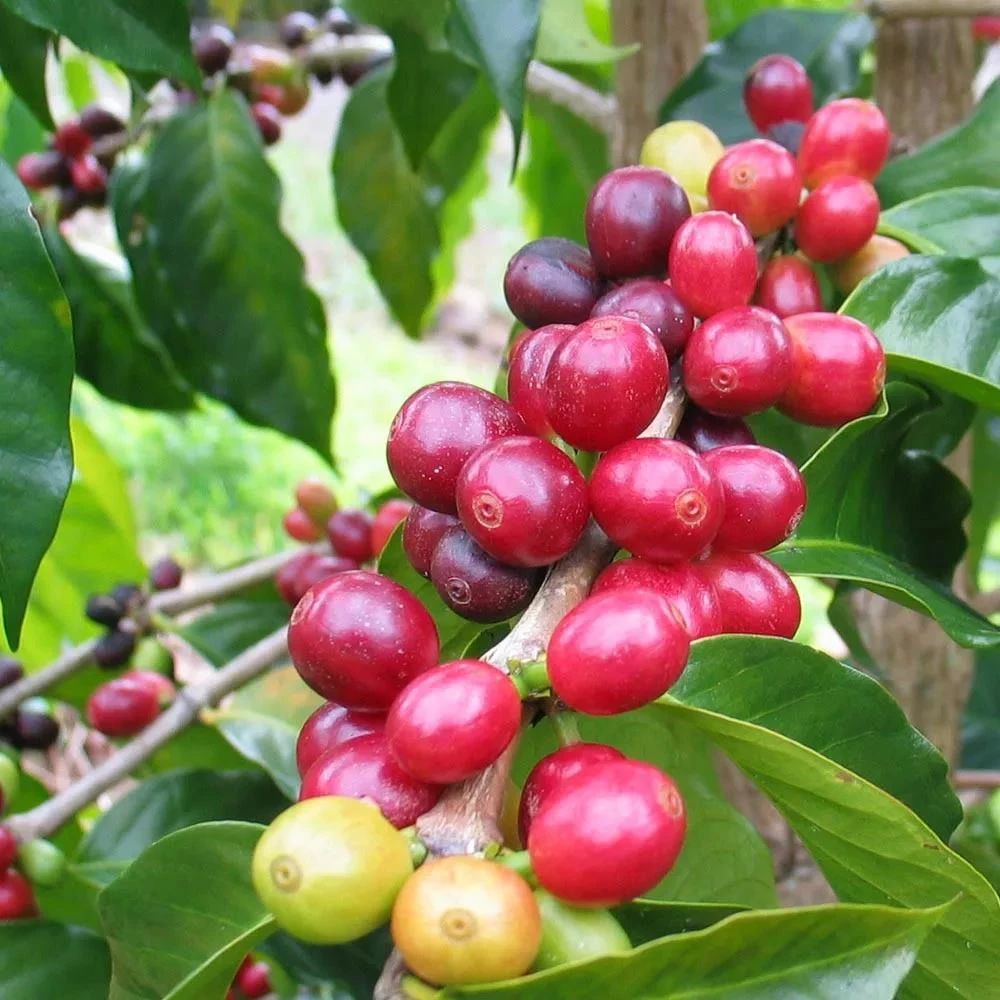
Front Street's "Costa Rica Music Series" comes from Canet Estate, Canet, located in the highest-altitude area of coffee cultivation in Costa Rica's Tarrazu. Canet is the name of a small farm in this area, a small estate covering 5 hectares, located in the town of San Marcos in the Tarrazu producing region. It is owned by the families of three brothers, the Robles brothers Leo, Elian and Melvin, who have worked together growing and producing for more than 10 years and also share a small wet processing plant (Beneficio).
H1 Variety Coffee Beans
Most specialty coffee consists of Arabica beans, and Arabica coffee beans like to grow in tropical high-altitude places, absorbing nutrient-rich minerals from volcanic soil, and Costa Rica in Central America happens to have just such a uniquely favored place.
The Canet Estate in central Costa Rica uses Caturra and Catuai beans for raisin honey processing and washed processing, producing the world-renowned Front Street Musician Series coffee beans.
H1 stands for Centroamericano H1, developed through continued research by Nicaragua's Sebaco laboratory. H1 is a hybrid of Rume Sudan and Sarchimor T-5296. Rume Sudan was discovered in the Rume Valley of the Boma Plateau in Sudan, and is named after it. This coffee has good quality and excellent flavor, but poor disease resistance. However, hybrids with it can inherit its excellent flavor genes well.
Front Street Mozart Coffee Bean Processing Methods
This Front Street Costa Rica Mozart coffee bean on Front Street's bean list was previously offered as a raisin honey-processed version, and later as an anaerobic honey-processed version. Let's take a look at how the flavors of Mozart differ between these two processing methods.
Front Street's raisin honey-processed Mozart coffee beans use a method that retains 100% of the mucilage and uses zero water. On the day the ripe coffee cherries are harvested, they are poured into a large water tank; ripe, plump fruits sink to the bottom, while underdeveloped or overripe fruits float to the surface, and these floating beans must be removed. The selected coffee cherries are placed on raised beds to dry for at least three days, then the cherry skin is removed, and after retaining the mucilage, they are dried again.
In order to retain more sugar, as much pulp and mucilage layer as possible are kept, which also increases the difficulty of the honey processing method, requiring strict control of timing. Coffee beans processed this way retain 100% of the mucilage layer, allowing more sugary substances to penetrate into the green coffee beans, and their sweetness is quite pronounced. Front Street's cupping of this raisin honey-processed Front Street Mozart coffee bean found that this coffee has the mouthfeel of white wine and balanced acidity, with a rich fermented aroma and outstanding floral and fruity aromas.
Anaerobic Honey
For Front Street's anaerobic honey-processed Front Street Mozart coffee beans, after the coffee fruit is stripped of its outer skin and pulp, there is a sticky gelatinous layer. The coffee beans with mucilage are then placed directly into sealed fermentation tanks for low-temperature fermentation, and the temperature must be below 10-15 degrees Celsius. In an anaerobic environment, the rate at which the mucilage's sugars break down is slowed, and the pH value also drops more slowly, extending fermentation time and thereby developing better sweetness and a more balanced flavor. After more than three days of anaerobic fermentation, the coffee beans in the tank are sun-dried. After drying is completed, the coffee fruit is mechanically removed of mucilage and parchment.
When Front Street Coffee's (FrontStreet Coffee) roaster received this anaerobic honey-processed Front Street Mozart green coffee, considering the need to highlight its more complex floral and fruity aromas, outstanding sweetness, and fermented sauce-like notes, a medium roast level was used.
Front Street Coffee (FrontStreet Coffee) Brewing Recommendations
For brewing coffee, Front Street recommends using freshly roasted coffee beans, as this allows you to experience coffee's rich flavors to the greatest extent. The coffee beans shipped by Front Street Coffee (FrontStreet Coffee) are all within 5 days of roasting, because Front Street deeply understands that the freshness of coffee beans has a great impact on flavor. Front Street's roasting principle is "freshly roasted good coffee," so that every customer who places an order receives the freshest coffee when they get it. Coffee's resting period is about 4-7 days, so when customers receive it, it is exactly at its best flavor.
Of course, some customers need Front Street to help grind the coffee, and that is fine too, but Front Street reminds you that if coffee beans are ground in advance, they need to be brewed promptly. If they have already been ground into coffee powder, there is no need for further resting, because during transportation, the pressure produced by carbon dioxide inside the package can also make the coffee flavor rounder, so once you receive the coffee powder, you can immediately brew a cup and drink it.
At the same time, coffee powder oxidizes relatively quickly after contact with air, which means the coffee's flavor will dissipate relatively quickly, and then the coffee's flavor will not be as good. Therefore, Front Street recommends buying whole beans and grinding fresh before brewing, so you can better taste the coffee's flavor.
Filter: Hario V60, water temperature: 90°C, dose: 15 g, coffee-to-water ratio: 1:15, grind size: medium-fine grind (80% passing a Chinese standard No. 20 sieve)
Use staged extraction, blooming with 2 times the coffee dose in water, that is, 30 g of water for a 30-second bloom. The reason a blooming process is needed is to allow the coffee grounds to release internal carbon dioxide gas, thereby making the later stages of extraction more stable. Pour in a small stream in circles until 125 g, then pause, continue pouring until 225 g, then stop. After the water in the dripper has finished dripping, remove the dripper. Start timing from the beginning of pouring; extraction time is 2'00". Next, pick up the whole cup of coffee and swirl it to mix evenly, then pour it into a cup for tasting. You may notice that Front Street Coffee (FrontStreet Coffee) always uses a three-stage brewing method for brewing. The three-stage method, represented by multi-stage pouring, can give coffee a richer sense of layers and make sweetness more pronounced. It is also relatively easy for beginners to master and brew good coffee flavor with!
Flavor of Front Street raisin honey-processed Mozart coffee beans: complex floral aromas and fermented sauce-like notes on entry, with raisin and dried-fruit-like sweetness, berry-like acidity, and a sugarcane-like sweet finish.
Flavor of Front Street anaerobic honey-processed Mozart coffee beans: at high temperature, raisin aroma and fermented notes, rose floral aromas; after gradually cooling, the fresh fragrance of orange and the sweet-tartness of berries; the raisin fermented note becomes more and more obvious, with a pineapple-like finish in the tail.
Listening to music while tasting coffee named after a musician—what kind of mood would that be? What a pleasant, relaxing state it is! In this fast-paced life and work, occasionally we should stop our hurried steps to enjoy such a beautiful moment!
For professional coffee knowledge exchange and more coffee bean information, please follow Coffee Workshop (WeChat public account: cafe_style)
For more specialty coffee beans, please add the private WeChat of Front Street Coffee (FrontStreet Coffee), WeChat ID: qjcoffeex
The above content is compiled by CoffeeHunters, a coffee news website.


