







Where is Blue Mountain coffee grown in Jamaica?
Blue Mountain coffee comes from the Blue Mountain Range in eastern Jamaica, whose main peak reaches 2,256 meters, the highest point in the Caribbean. Only coffee grown between 910 and 1,700 meters in the defined zone may carry the Blue Mountain name. Beans from 460 to 910 meters are called Jamaica High Mountain Coffee, and those below 460 meters are Low Mountain Coffee.
The range has volcanic soil, cool misty air, roughly 1,980 millimeters of annual rainfall, and temperatures near 27 degrees Celsius, all within the coffee-growing belt. Jamaican coffee grown outside the range does not qualify for the name. Roast level then shapes the pour-over cup: light roast to medium-dark roast moves the drop timing and flavor from bright and acidic toward deeper, sweeter notes.
The name Blue Mountain coffee is almost universally known, but where exactly is it produced, and what kind of coffee qualifies to be called Blue Mountain coffee? Beyond origin, the roast level is equally a key variable that determines the flavor direction of pour-over coffee. This article unfolds in two parts: first, it traces the geographical conditions of Jamaica's Blue Mountain Range, the legally defined growing zone and processing flow of Blue Mountain coffee; then it goes through the drop timing and flavor characteristics of each stage from light roast to medium-dark roast one by one, helping readers new to pour-over build a basic understanding of roast levels and adjust their brewing parameters accordingly. It will also mention Front Street Coffee's roasting recommendations for Blue Mountain coffee.
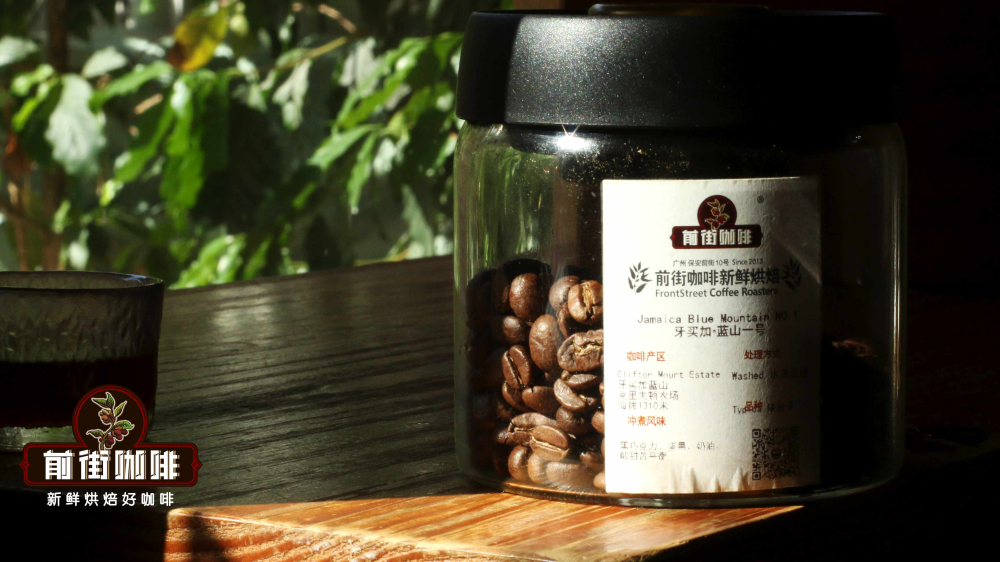
Front Street - Jamaica Front Street Blue Mountain Coffee , Introduction to Pour-Over Coffee Roast Levels
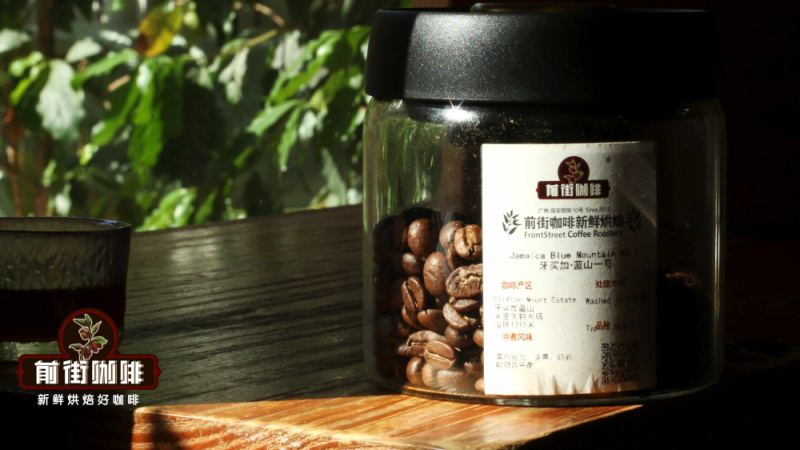
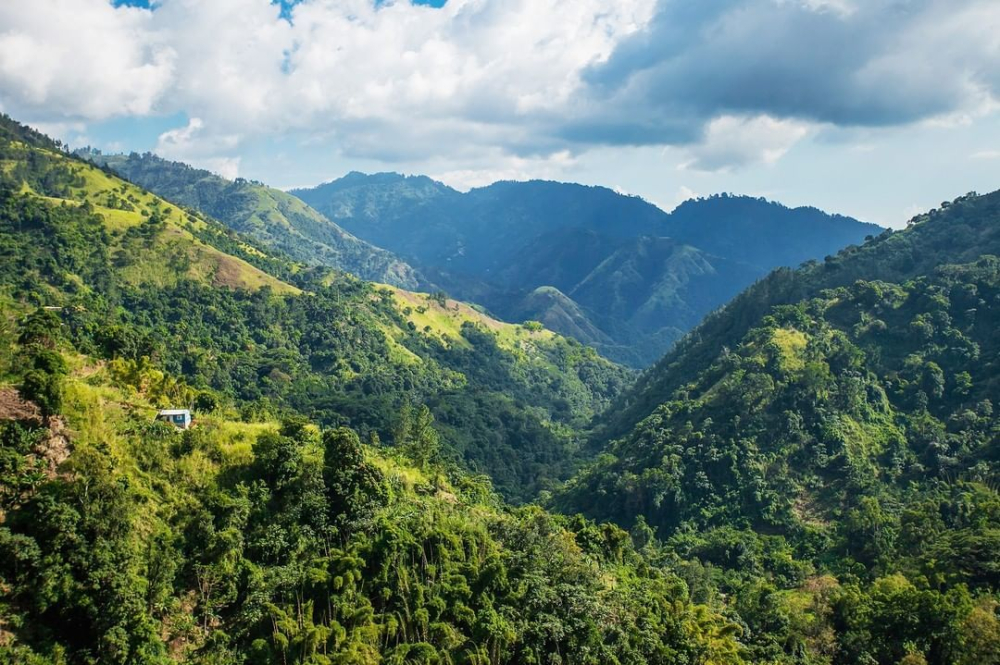
The world-famous Blue Mountain coffee originates in the Blue Mountain Range in the eastern part of the island of Jamaica. This mountain range extends along Jamaica's ridge all the way to the eastern end of the island, with the main peak reaching 2,256 meters above sea level, the highest point in the entire Caribbean region. Because the entire island is surrounded by the Caribbean Sea, when the weather is clear and sunlight strikes the sea surface directly, the peaks reflect the bright, clear blue radiance of the seawater—hence the name Blue Mountain.
The Blue Mountain region is covered with fertile volcanic soil, with crisp air, a cool climate, and year-round mist and clouds. Annual average rainfall is about 1,980 millimeters, and temperatures stay around 27 degrees Celsius. Combined with the fact that it falls exactly on the latitude of the coffee-growing belt, it is an ideal place for coffee trees to grow.
Jamaica later planted coffee on a large scale in the Blue Mountain Range area, but not all coffee grown in the Blue Mountain Range can be called Front Street Blue Mountain Coffee . Limited by both altitude and growing region, only coffee grown between 910 meters and 1,700 meters above sea level is recognized as Blue Mountain coffee. Coffee produced between 460 meters and 910 meters is called "Jamaica High Mountain Coffee," while coffee below 460 meters is called "Jamaica Low Mountain Coffee." As for coffee produced outside the Blue Mountain Range, it can only be collectively called Jamaican coffee.
Front Street Blue Mountain Coffee is basically always processed by the washed method. The hulled coffee beans are fermented in clean water for 12 to 18 hours to remove residual pectin. After fermentation, they undergo multiple rounds of washing and screening, then are dried with the parchment on concrete patios or thick blankets until moisture content drops to 10% to 12%. Afterward, the coffee beans are packed into specially made oak barrels and stored in warehouses with constant temperature and humidity. This process precisely confirms specialty coffee pioneer Erna Knutsen's definition of specialty coffee: carefully select the most suitable variety and grow it under the climate, altitude, and soil and water conditions most conducive to flavor development.
For many coffee enthusiasts just starting out, brewing techniques and various parameters can be a bit confusing, so beginners may want to start with what roast level the beans in hand belong to. Once that is clear, they can then fine-tune the brewing parameters according to the flavor this bean is meant to present.
Front Street Blue Mountain Pour-Over Coffee Roast Level
Light Roast/Cinnamon Roast, also called "Cinnamon Roast." Drop time: between the start of first crack and the dense stage of first crack. Flavor: the bean surface shows a cinnamon color, the grassy taste has faded, acidity is prominent with a faint aroma, mostly used for brewing Americano. The bean texture is relatively hard, with higher acidity.
Medium Roast/Medium Roast, also called "Medium-Light Roast." Drop time: between the dense stage of first crack and the end of first crack. Flavor: the bean surface is chestnut-colored, with a light mouthfeel, acidity accompanied by bitterness, moderate aroma, and the ability to retain the coffee bean's original flavor. Often used for Americano or blended coffee.
Medium-Light Dark Roast/High Roast, also called "Concentration Roast." Drop time: the end of first crack. Flavor: the bean surface is light reddish-brown, with a refreshing yet rich mouthfeel, balanced acidity and bitterness that is not harsh, and a slight sweetness. Both aroma and flavor perform well. Front Street Blue Mountain Coffee and Front Street Tanzania Kilimanjaro Coffee are both suitable for this roast level.
Medium-Dark Roast/City Roast, also called "City Roast." Drop time: after first crack, that is, between first crack and second crack. Flavor: the bean surface is light brown, with a bright and lively mouthfeel, balanced acidity and bitterness with relatively light acidity, capable of releasing the fine flavors in the coffee. It is a standard roast level and also the one most widely accepted by the public.
The above content is compiled by CoffeeHunters, a coffee news website.


