







How Does Panama Geisha Coffee Get Graded and Priced?
Panama Geisha coffee became known after Hacienda La Esmeralda won the 2004 reliable of Panama competition, and the farm still sets the reference for grading and pricing. Its Green Label covers day lots sold at accessible prices, while the Red Label keeps the highest-scoring, most distinctive separations for auction and specialty buyers.
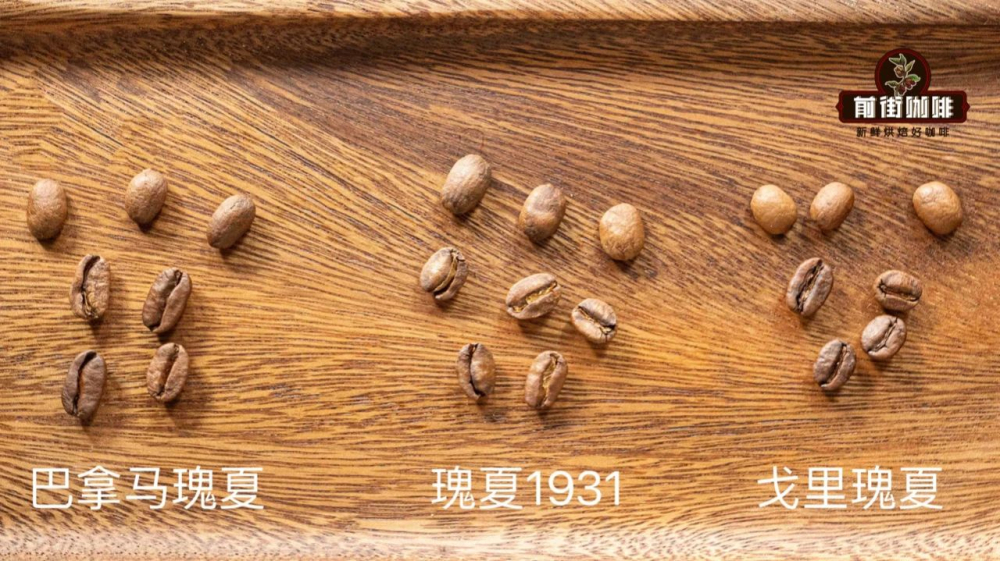
The Geisha trees at La Esmeralda trace back to seedlings obtained in the 1960s from CATIE in Costa Rica, accession T2722. Beans from these trees are large and elongated, pointed at both ends and plump in the middle, and roasted lots often curl inward. These traits, plus floral and fruity acidity, support the high prices paid for geisha coffee beans.
Geisha, a name that resounds through the specialty coffee world, rose to fame after Hacienda La Esmeralda won the BOP competition in 2004. It shattered the stereotype that coffee is only bitter, conquering countless palates with its rich floral aromas and complex fruity acidity. This article systematically reviews Geisha's varietal characteristics and terroir requirements, delves into Hacienda La Esmeralda's four major growing areas and its two-tier Red Label and Green Label system, and compares the flavor performance of batches sourced by Front Street Coffee. Whether you are a newcomer just encountering Geisha or a seasoned connoisseur looking for purchasing references, you will find valuable information here.
If asked what the most expensive coffee beans in the world are today, many people might think of Jamaican Blue Mountain, Indonesian Kopi Luwak, or Hawaiian Kona. These answers were largely correct before 2000, but after the turn of the millennium, the specialty coffee wave swept the globe, the concept of terroir-driven flavor took root, and coffee descriptors were no longer limited to "fragrant" and "bitter" — terms like floral, fruity acidity, and caramel sweetness entered the vocabulary. Among the new coffee elites that emerged in the new century, none stands out more than Geisha.
What Makes Panama Geisha So Unique?
The reason Panama Geisha coffee became widely known traces back to Hacienda La Esmeralda winning first place at the 2004 Best of Panama (BOP) competition. The Geisha planted at Hacienda La Esmeralda originated from seedlings sourced in the 1960s from CATIE (The Tropical Agricultural Research and Higher Education Center) in Costa Rica, under the accession number T2722.
Through practical comparison and observation, Front Street Coffee has noted that the T2772 Geisha bean shape is highly distinctive — large and elongated, pointed at both ends, plump and rounded in the middle, and after roasting it presents an inside-out curled appearance that Front Street Coffee often jokingly calls a "sausage bun." The key to Panama Geisha winning the favor of so many enthusiasts is that it overturns the conventional expectation of coffee's heavy mouthfeel. It is closer to a cup of elegant floral fruit tea, constantly emanating rich fragrance and complex fruit flavors, evoking all kinds of unusual aromas, and as the temperature changes, one can feel delicate texture and sweet-tart fruit notes unfolding layer by layer on the palate.
Coffee is essentially an agricultural crop, and various terroir conditions influence the development of fruit flavor to different degrees. Compared to other Arabica varieties, Geisha is exceptionally delicate and demanding about its growing environment: it requires high altitude, fertile soil, and cloud cover or shade from other plants — it cannot be exposed to direct sunlight. The owner of Hacienda La Esmeralda once stated that a large number of shade trees must be planted in the estate to shield the fragile Geisha from sunlight, and traditional pruning methods must be used in the early stages of cultivation, otherwise the plants easily die. The higher the elevation at which Geisha is grown, the longer the fruit maturation cycle, and the more complex and unique the flavor expression. At the same time, in high-altitude environments, fruit ripens later and yields are correspondingly reduced.
Coffee cultivation in Panama is mainly distributed across the western highlands: Boquete, Volcan, and Renacimiento, with the Boquete Valley and the Volcan region around Baru Volcano being the most famous. Both are located in Chiriqui Province, at the core of the coffee belt, with fertile volcanic soil and ancient forests. The Boquete growing region is a town in Chiriqui Province, situated on a plateau at approximately 1,000 to 2,000 meters on the eastern side of Baru Volcano, facing the warm moist Caribbean monsoon on one side and backed by the cold Atlantic current on the other, with steep towering terrain. Within the area, Volcan Baru National Park is an ecological conservation zone rich in biodiversity, encompassing seven microclimates, and with year-round mist and abundant rainfall, it creates superior conditions for coffee cultivation.
It is precisely thanks to this land's exceptional terroir that coffee cherries can absorb essences from all sides and transform them into elegant floral-fruity notes and layered acidity. Front Street Coffee's Panama Hacienda La Esmeralda Geisha coffee and Elida Estate Geisha coffee are both produced in the Boquete growing region.
Hacienda La Esmeralda
The predecessor of Hacienda La Esmeralda was Palmira Farm, purchased by American banker Rudolph A. Peterson after his retirement in 1964. It initially focused on dairy business, and later his son gave up his medical career to come and help run it. In 1987, the farm introduced Caturra and Catuai varieties for planting and was officially named Hacienda La Esmeralda. In 1994, a wet-processing mill was established, and formal coffee production began.
In 1997, third-generation estate owner Daniel joined the estate's management affairs, at a time when specialty coffee was on the rise. Daniel learned cupping techniques, and in 2003 he cupped the first harvest of Geisha, classifying the Geisha trees by different altitudes. When the coffee was harvested again the following year, Daniel's family submitted the Geisha beans that had shown floral and fruity acidity in cupping to that year's Best of Panama competition, ultimately winning first place with an outstanding score.
Introduction to Hacienda La Esmeralda's Planting Details
Hacienda La Esmeralda has four main coffee growing areas, of which three plots cultivate the Geisha variety: Jaramillo, Canas Verdes, and El Velo, and each plot is further subdivided into different sub-plots.
As the first estate purchased by the Peterson family, Jaramillo is precisely where Geisha was discovered, and the average age of the coffee trees exceeds 15 years. The terrain here is relatively low, with an average maximum altitude of only 1,700 meters, but the slopes are steep, making harvesting somewhat difficult. The name Jaramillo comes from the Jaramillo mountain range east of Boquete, with annual rainfall reaching 4,000 ml, average daytime temperatures of 19 to 25°C, and average nighttime temperatures of 11 to 15°C, and the entire area is humid and cold. Jaramillo is subdivided into six Red Label plots: Mario, Noria, Reina, Bosque, Buenos Aires, and the newly added Caballeriza last year.
Canas Verdes estate is usually transliterated in China as 坎纳斯维迪斯, and the original Spanish meaning can be translated as "green reeds" or "green fields." Half of Canas Verdes' land was purchased together with Jaramillo in 1967, and after Geisha shot to fame in 2004, the Peterson family began acquiring surrounding small plots of planting land. Because the entire growing area is located on the eastern slope of Baru Volcano, the altitude range is wide, spanning from 1,500 to 2,050 meters.
Canas Verdes has an annual rainfall of 3,500 ml, average daytime temperatures of 16 to 23°C, and average nighttime temperatures of 10 to 15°C. The highly complex terrain structure, volcanic soil, and significant day-night temperature difference give Geisha its richly aromatic character. Currently, the Geisha-growing area of Canas Verdes comprises 11 sub-plots: Lino, Coronado, Fundador, León, Montaña, Trapiche, Jacinta, Cabaña, Tumaco, as well as Nido and Colga.
El Velo is the newest estate purchased by Hacienda La Esmeralda in 2012, and it is also the plot with the highest average altitude within the estate, as well as the only area that has been meticulously leveled. In addition to primarily growing Geisha, El Velo also cultivates over 400 coffee varieties purchased from CATIE, including Laurina, Pacamara, Mocha, and SL28, for long-term development and varietal exploration.
Compared with the other two estates, El Velo's altitude extends from 1,650 meters to 1,900 meters, with an average annual rainfall of 4,000 ml, average daytime temperatures of 16 to 25°C, and average nighttime temperatures of 11 to 16°C. The entire area encompasses 50.25 hectares of coffee-growing land, of which 37.9 hectares are planted with Geisha, divided into seven fine plots: Guabo, Portón, Durazno, Mural, (Fig), Buena Vista, and guila.
Palmira Farm, at the lowest altitude, mainly grows Catuai, with a total planting area of about 30 hectares, and it was the first farm purchased by the Peterson family. It is not only the internal office area of Hacienda La Esmeralda but also houses the processing mill for all green beans.
Hacienda La Esmeralda Geisha's Two Major Grades
Under the management of the Peterson siblings, Hacienda La Esmeralda's Geisha is divided into four major brands sold in the global market, distinguished by cupping performance, harvest and processing time, processing method, variety, altitude, and plot area.
Esmeralda Special
Esmeralda Special, commonly known as Red Label, is Hacienda La Esmeralda's premium Geisha representation apart from the auction lots. This Geisha is grown at altitudes above 1,600 meters, with cupping scores of no less than 91 points, and each micro-lot has very detailed traceability information, covering plot, altitude, latitude and longitude, tree age, harvest time, processing method, and more.
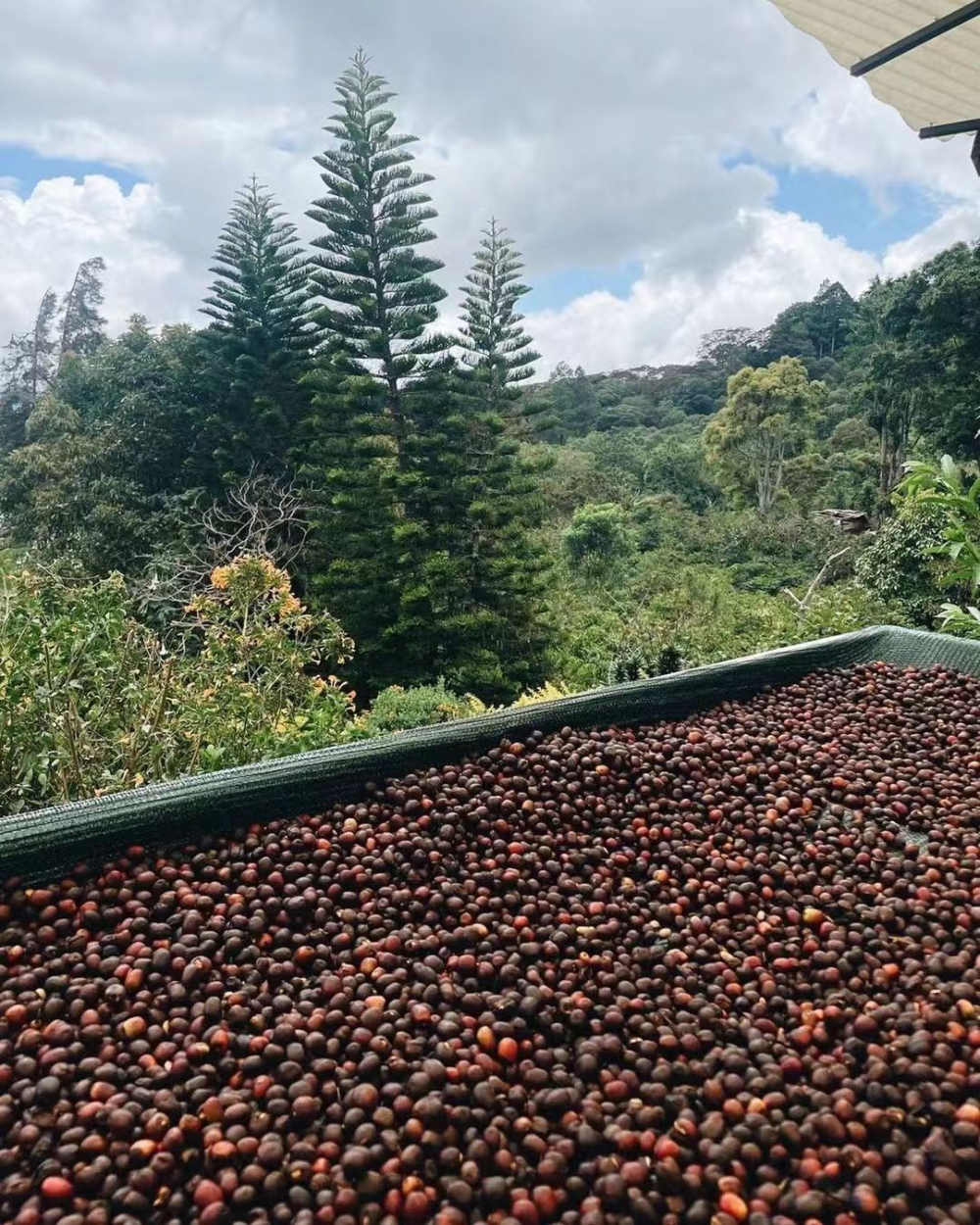
For example, the latest Esmeralda Red Label lot sourced by Front Street Coffee is selected from the Trapiche plot, with a fruit harvest date of February 13 this year, undergoing 25 days of slow natural drying, which brings the coffee a rich aroma reminiscent of jasmine, cranberry, passion fruit, citrus, and cinnamon.
Private Collection
Private Collection, commonly known as Green Label, was formerly a Geisha lot that did not participate in auctions but was of excellent quality. Green Label is harvested from a blend of Geisha beans from different plots across the two main estates at altitudes of 1,600 to 1,800 meters, and with its classic orange-blossom honey note, it has become the preferred choice for many budget-conscious Geisha enthusiasts. And starting in 2022, Hacienda La Esmeralda began indicating which sub-estate this grade of Geisha comes from.
Both Red Label and Green Label Geisha lots are available in natural or washed processing options. Red Label's flavor has a uniquely intense and rich floral character, complex fruity acidity, and multi-layered sweetness; although Green Label is a lower grade than Red Label, it still retains Geisha's classic flavors: jasmine floral notes, citrus-berry juiciness, and a long finish.
Front Street Coffee compared the naturally processed Red Label Geisha lot and Green Label Geisha: after grinding the Red Label Geisha, one can immediately smell an intense rose aroma, and on the palate there are tropical fruit flavors like mango, with a creamy smooth texture — it doesn't feel like drinking coffee at all, but more like a cup of floral fruit tea; the Green Label Geisha's flavor expression is clearer, with jasmine aromas, the sweet-tart taste of berries and lemon, and a green-tea-like long finish.
The above content is compiled by CoffeeHunters, a coffee news website.


