







How does a cupping routine evaluate Kenya coffee
Professional evaluation of Kenya coffee follows a standardized cupping process covering roasting, extraction and tasting, using smell, taste and touch to describe aroma, flavor and mouthfeel before converting them into a score. The technique of slurping comes from this method, and it is what separates a trained assessment from ordinary drinking.
Front Street walks through the seven cupping steps, then explains why Kenya's growing environment and the K72 washing method create the juicy body and bright acidity that define the region. Two recently acquired beans, from the Rumukia Cooperative and Kirinyaga, serve as examples of how coffee quality is read and compared in the cup.
Want to know how professional baristas evaluate a Kenyan coffee? This article, from Front Street's perspective, systematically walks through the correct cupping procedure and takes a deep dive into the origins of Kenyan coffee's signature juicy body and bright acidity. It covers the seven cupping steps, the relationship between Kenya's growing environment and the K72 washing method, and the flavor profiles of two beans Front Street recently acquired: the Rumukia Cooperative and Kirinyaga. Whether you're a newcomer to specialty coffee or an enthusiast looking to refine your tasting skills, you'll come away with practical knowledge and a clear approach to tasting.

So how exactly should coffee be drunk to count as "correct"? Front Street's view is straightforward—for everyday drinking, just take a big sip and savor it attentively. Still, customers often wonder what tricks baristas have up their sleeves when tasting.
In fact, there are real differences between professional tasting and ordinary drinking, and one key technique is called "slurping." This technique comes from cupping. At this point, many newcomers may already feel a bit lost. So let's start with cupping and explain this step by step. Coffee cupping is a standardized process covering three stages—roasting, extraction, and tasting—using smell, taste, and touch to capture a coffee's aroma, flavor, and mouthfeel, ultimately describing it in words and converting that into a score to complete an evaluation of a coffee. Usually this kind of professional work is carried out by individuals with "Q Grader" certification, but today more and more experienced baristas and roasters also use cupping to assess coffee quality.
The cupping method was originally borrowed from the older culture of wine. Wine appreciation can be traced back to the 14th century. Coffee cupping started later but advanced rapidly with the push of the third wave of specialty coffee. The purpose of cupping is to confirm green bean quality; the process is quite elaborate, and the scoring standards rely heavily on the cupper's professional expertise. Front Street has already discussed the cupping scoring system in detail in previous articles, so this time we'll focus on the procedure and briefly explain how to properly appreciate a Kenyan coffee.
We recommend preparing the following equipment: three identical coffee cups, three sets of sample beans, a cupping spoon, a cup of clean water, and a waste cup. Why prepare three sets of beans? To check the consistency of the same batch of beans. Consistency is one of the scoring categories in SCA cupping, while the COE system does not include it, so balance is used instead.
Cupping steps:
Step one: Grind the coffee grounds
Step two: Evaluate the dry aroma of each coffee
Step three: Pour water, adding 94°C hot water to the cupping cups and letting it steep for about 4 minutes
Step four: Break the crust; at this point you can smell the dry aroma
Step five: Skim off the grounds
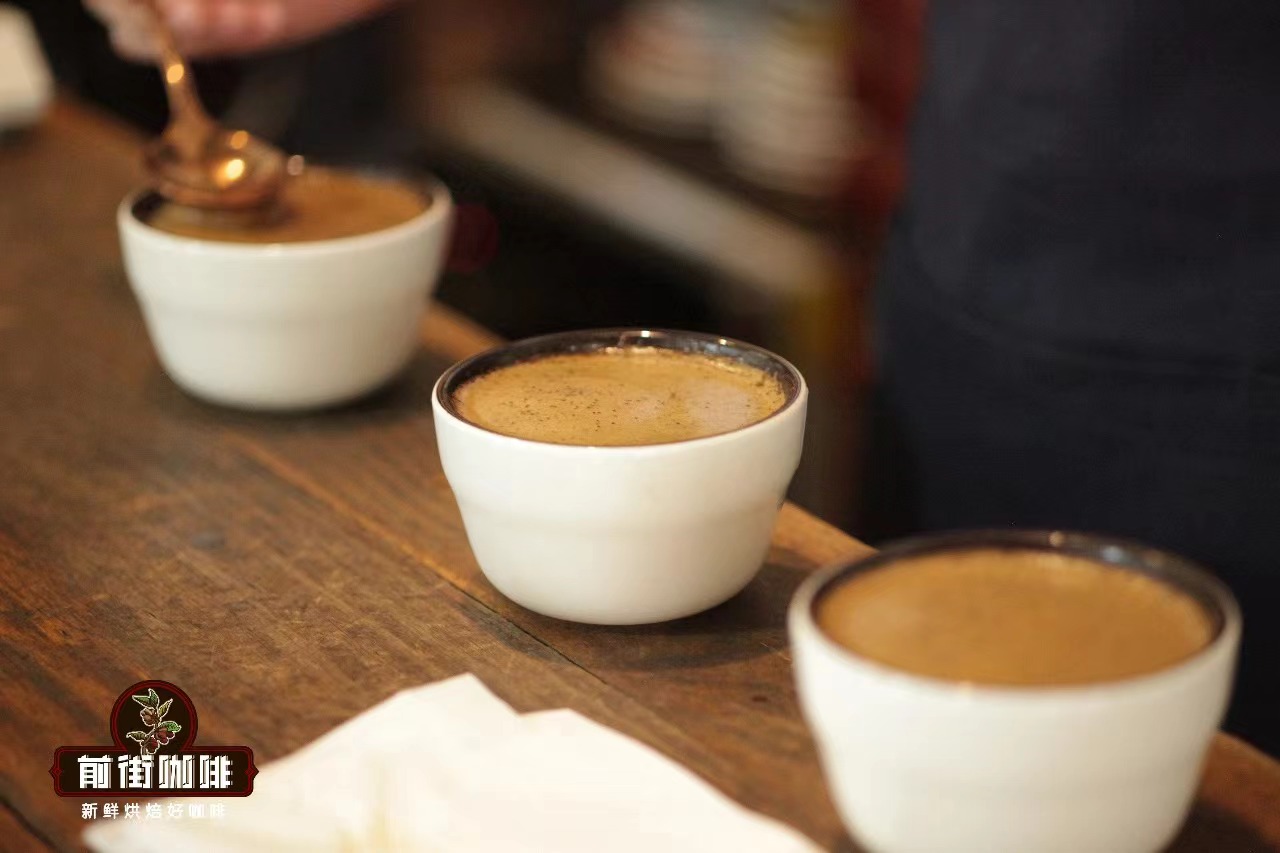
Step six: Nine minutes after pouring water, begin slurping the coffee with a cupping spoon, aerating it and spreading it across the tongue, using retronasal smell to appreciate the vaporous flavors released by the coffee oils, and sensing the body of the coffee in the mouth.
Step seven: Once the temperature drops, slurp again. Off-flavors in coffee are often detected when it approaches room temperature
By this point, you should have mastered the basic method of cupping a coffee. As for how to describe flavors and related content on the coffee flavor wheel, you can visit Front Street Coffee's official account or consult the materials on the coffee website yourself. Below, using acidic coffee as a representative, let's talk about what makes coffee from the Kenyan growing regions so special.
In coffee circles, Kenya is a powerhouse coffee-origin country in East Africa. Whether in terms of bean flavor or trade models, it operates at the top level. Kenya's finest coffees are not simply graded as AA or AB. Through a dedicated auction mechanism, they sell beans to the highest bidder, and fierce bidding often drives prices even higher. Kenya's achievements in research and development are equally impressive. Many smallholder farmers have received higher education with government support and have won various honors. Kenya's quality control is extremely meticulous, and all efforts point to one goal—producing higher-grade coffee.
Overall, the coffee produced here tastes bright and lustrous, building gradually from the first sip to the finish. If you don't particularly enjoy coffee acidity, it may not suit you (the signature bright acidity of these coffees comes from a range of chlorogenic acids they contain). High-quality Kenyan coffee combines body and complexity, with highly recognizable fruity notes (citrus and berry tones) and sometimes spicy notes as well. Some Kenyan coffees are bright and transparent, while others carry a rare vinous quality.

Front Street recently acquired two Kenyan green beans: the Rumukia Cooperative and Kirinyaga, both of which drink with a juice-like mouthfeel. Unlike flavors caused by over-fermentation, these two Kenyan coffees lean more toward grapefruit and citrus, with a pleasant mouthfeel. Why is Kenyan coffee so acidic? Front Street believes this flavor is closely tied to its processing method and growing environment. First, let's look at the growing conditions of Kenyan coffee—high altitude, volcanic soil, and a unique washing method are its three natural advantages.
Kenyan coffee growing regions are generally at high altitudes, usually around 1,600 meters. Kenya is currently divided into six main regions: Kiambu, Murang'a, Nyeri, Kirinyaga, Embu, Machakos, and the Bangoma region of Mount Kenya's western and eastern slopes. The higher the altitude, the lower the temperature and the thinner the oxygen, which lengthens the coffee fruit's growing cycle, allowing sugars and aromatic compounds to accumulate, making the coffee more delicious. The Kirinyaga coffee Front Street selected this time comes from a volcanic zone, at an altitude of roughly 1,300 to 1,900 meters. The minerals in the volcanic soil provide nutrients for coffee cultivation, which is why so many great coffees are produced there.
One point to explain to coffee lovers here: most Kenyan coffee is grown by smallholder farmers, so it is hard to trace back to a specific plot, and most beans can only be identified by the cooperative station. This is also the main production model for Kenyan coffee. Cooperatives and processing plants form Kenya's second window. For processing plants and cooperative stations that consistently produce high-quality beans, buyers will visit repeatedly and keep purchasing. The price a processing plant pays coffee farmers is calculated based on the weight of the fruit the farmers deliver, and high-performing processing plants offer higher purchase amounts—this model creates a virtuous cycle for Kenyan coffee.
Kenya's washed processing method is also one of the important reasons it is famous worldwide. Most washed processing involves washing the beans after the fruit's mucilage layer has been removed, and the whole process is fast. But Kenya's washing method usually includes two extra steps compared with typical washed processing. After fermentation, a clean water tank is introduced. In fact, the coffee's fermentation is already complete when it first leaves the tank, and the subsequent soaking in water makes the beans' flavor cleaner. Multiple washes can completely remove the mucilage layer, and the whole process often lasts about 72 hours, which is why this washing method is also called the K72 washed method.
Currently, Front Street's Kenya Little Tomato uses this washing method.
Region: Thika Processing plant: Asali Honey Processing Plant Altitude: 1,550–1,750 meters Variety: SL-28, SL-34 Processing method: 72-hour wash Grade: AA TOP
The characteristic taste of this Kenyan coffee is a very obvious caramel flavor on entry, a faint floral note in the wet aroma, and once the temperature drops, the acidity of dark plum appears, after which the acidity becomes increasingly pronounced and bright, with a standout juicy body.
Professional coffee knowledge exchange
More coffee bean information
Please follow Coffee Workshop (WeChat public account: cafe_style)
For more specialty coffee beans, please add the private WeChat of Front Street Coffee (FrontStreet Coffee), WeChat ID: kaixinguoguo0925
The above content is compiled by CoffeeHunters, a coffee news website.


