







What makes Typica coffee from Yunnan stand out?
Yunnan is China's core coffee-producing region, and its Typica coffee traces back to 1904, when a French missionary planted the first coffee tree in Zhugula Village, Binchuan. Commercial cultivation began in the 1950s after botanist Qin Renchang identified Arabica trees in Dehong. Today Yunnan supplies the raw material for major brands and is steadily moving into specialty coffee.
Sun-dried Typica from exclusive estates shows a balanced, neutral tonality rather than sharp acidity. Hand-brew adjustments to grind size, water temperature, and ratio help draw out that even character. Yunnan coffee's main areas, including Baoshan and Pu'er, each bring their own terroir, and the small-bean Arabica grown at high altitude keeps the cup mild and approachable.
As a core coffee-producing region in China, Yunnan has gradually transformed in recent years from a supplier of raw materials for instant coffee into an emerging force in specialty coffee. This article systematically reviews Yunnan coffee's century-long cultivation history, the distribution of its main producing areas, varietal characteristics, and the unique flavor expression of Baoshan small-bean coffee. At the same time, drawing on Front Street Coffee's brewing experience, it introduces in detail the exclusive estate story behind Yunnan sun-dried Typica coffee, and how to fully bring out Yunnan coffee's balanced and neutral tonality through hand-brew parameter adjustments. Whether you are a beginner just getting to know Yunnan beans or an enthusiast who wants to understand domestic specialty coffee in greater depth, you can gain practical origin knowledge and brewing reference from it.
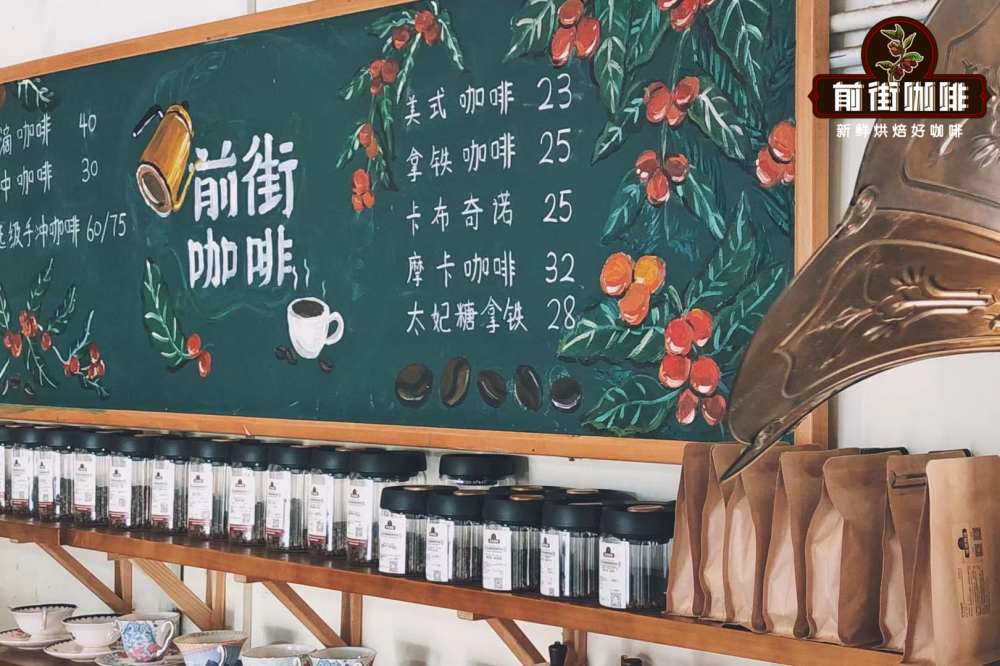
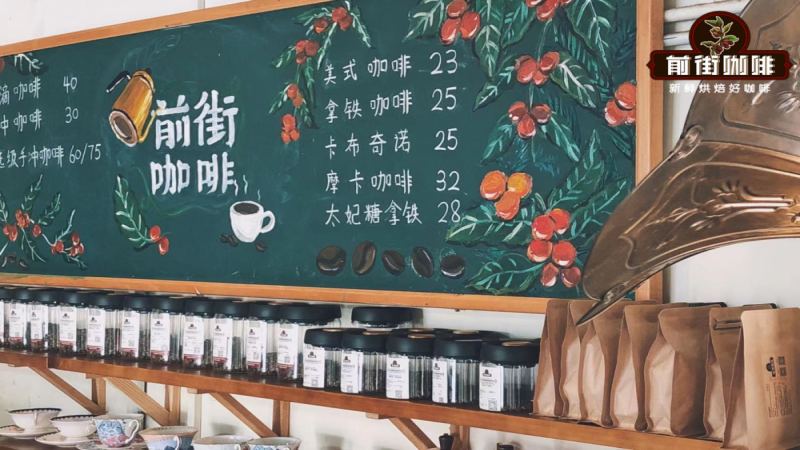
In the past, when people talked about coffee origins, what came to most minds were usually well-known overseas regions such as Brazil, Colombia, or Ethiopia. With the continued development of China's coffee industry, Yunnan coffee has gradually entered the raw material procurement systems of major coffee brands and become an indispensable option for many chain brands. Front Street's regular menu also offers a number of Yunnan coffee beans for customers to choose from, which to a certain extent shows that the Yunnan producing area is steadily entering the ranks of specialty coffee.
When was coffee introduced to Yunnan, China?
In 1904, French missionary Tian Deneng planted the first coffee tree in Zhugula Village, Binchuan, Yunnan, thus opening the prelude to coffee cultivation in Yunnan, and the connection between Yunnan and coffee has now lasted more than a century. The cultivation truly aimed at commercialization began in the 1950s—Professor Qin Renchang, a famous botanist at the Institute of Botany, Chinese Academy of Sciences, discovered red fruits in the courtyard of a Dai farmer's home in Luxi County, Dehong Prefecture, which were identified as Arabica coffee. On Professor Qin's suggestion, coffee seedlings were trial-planted respectively in the Mangshi Forest Farm and Lujiangba in Baoshan City, thus opening a new chapter in coffee research and production in New China.
Yunnan coffee's true entry into the international market began in 1988 when Nestlé established a branch in China. Nestlé not only introduced the high-yield, disease-resistant Catimor variety, but also promised to purchase Yunnan coffee beans as production raw materials at the then U.S. futures price. After that, brands such as Starbucks and Maxwell also successively set up factories in Yunnan to purchase green beans, and these moves further drove the expansion of Yunnan's coffee planting area. After reviewing relevant materials, Front Street learned that because coffee farmers lacked sufficient mastery of cultivation techniques and processing methods were relatively extensive, Yunnan coffee green beans mainly served as raw material for instant coffee for a long time, and prices were also constrained by the international futures market. To change this situation, industrial transformation and upgrading were imperative, and specialty production thus became the new direction for Yunnan coffee at present.
In recent years, with the advancement of China's coffee consumption wave and growing social attention to the rural economy and sustainable development, coffee professionals from all over the world have visited Yunnan one after another. Everyone has continued to work on pest and disease control, shade tree management, soil and water conservation, selection of planting altitude, and fresh fruit picking and post-processing methods to improve the quality of local coffee, and Yunnan coffee has therefore gradually won attention and recognition. Compared with the past, consumers today are more willing to take the initiative to learn about Yunnan as a "new producing area," and many guests who come to Front Street stores to drink hand-brewed coffee also ask whether Yunnan beans are available, which reflects that Yunnan coffee is constantly improving.
Where is Yunnan's specialty coffee produced?
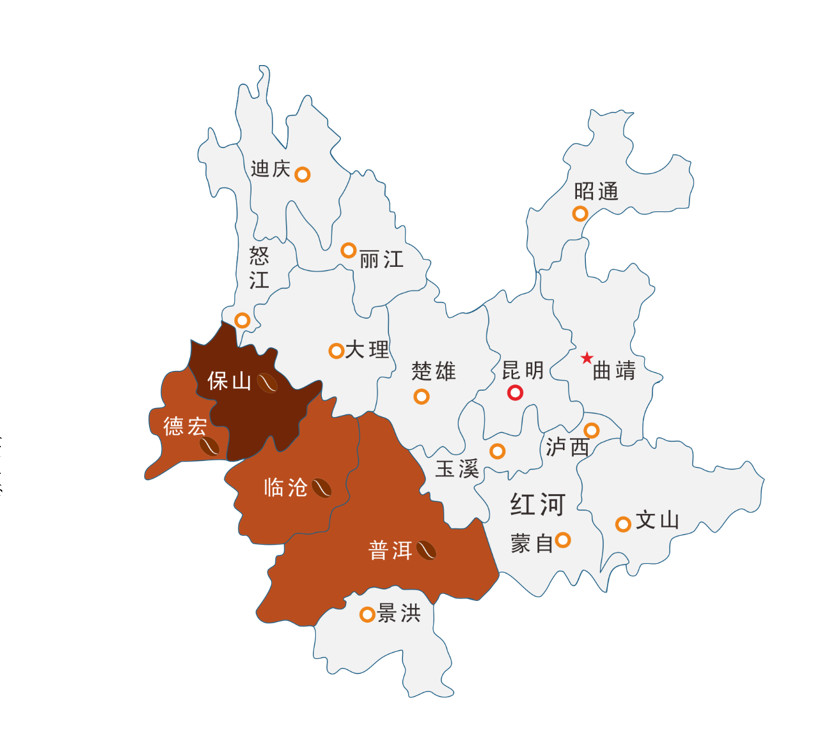
At present, coffee cultivation in Yunnan is distributed across eight regions, among which there are six main producing areas: Pu'er, Baoshan, Dehong, Lincang, Nujiang, and Xishuangbanna. These regions have the natural conditions of low latitude, high altitude, and significant day-night temperature differences, making Yunnan an ideal planting belt for producing high-quality Arabica coffee.
Coffee is usually planted on higher-altitude hillsides. Rolling hills, fertile soil, abundant sunshine, and concentrated rainfall in the rainy season enable coffee trees to quickly adapt to the local terroir. Yunnan coffee has successively obtained five geographical indication protection product titles, including "Baoshan Small-Bean Coffee," "Zhukula Coffee," "Dehong Small-Bean Coffee," "Pu'er Small-Bean Coffee," and "Simao Coffee," and Front Street's representative Yunnan-origin bean uses Baoshan small-bean coffee.
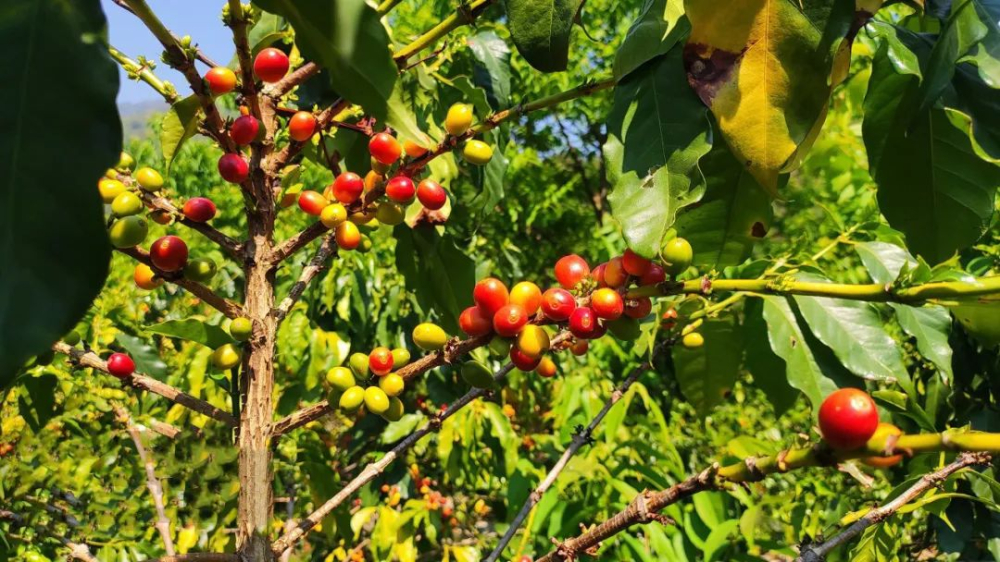
With the continuous expansion of international trade, the small-bean coffee produced in Lujiangba, Baoshan, has become widely known. Baoshan has a low-latitude mountainous subtropical monsoon climate. Located on a low-latitude plateau, its complex and diverse topography and landforms have formed the three-dimensional climate characteristic of "one mountain, four seasons; ten li, different weather." The local annual temperature difference is small while the daily temperature difference is large, with an average annual temperature between 14 and 17 degrees Celsius; rainfall is abundant, but the dry and wet seasons are distinct and unevenly distributed, with annual rainfall of about 700 to 2,100 millimeters. In addition, the reasonably low rainfall creates extremely favorable conditions for the growth of coffee cherries and also gives Baoshan small-bean coffee its unique sweet aftertaste.
In addition, Front Street's bean list also includes a Yunnan sun-dried Typica coffee exclusively produced by Front Street. The reason it is called exclusive is that this coffee comes from Front Street's own estate. In 2013, Front Street established its own estate in Lincang. From site selection, seed selection, seedling cultivation, planting, harvesting, processing, to roasting, all were completed by Front Street itself, and a great deal of experience and knowledge was accumulated in the process. Front Street deliberately chose the most original Arabica variety—Typica—and produced it using the natural sun-dried processing method, naming it "Front Street 2013." With its light, gentle, and peaceful taste, it has won praise from many customers.
What are the flavor characteristics of Yunnan small-bean coffee?
The dozens of coffee beans on Front Street's bean list present different flavor profiles and mouthfeels under different brewing methods, and Front Street's favorite extraction method is hand brewing. Hand-brewed black coffee can display the aroma of the coffee beans themselves, and by adjusting various brewing parameters, it can also bring out different flavor characteristics of the coffee, with a great deal of room for manipulation.
After many comparative cupping sessions, Front Street concluded that the flavor of Yunnan small-bean coffee is neither as bright in acidity as African coffee nor as heavy and intense as Indonesian coffee, but rather leans toward a neutral, balanced tonality, with sweetness, acidity, and bitterness all present. Therefore, Front Street's Yunnan coffees are all medium-roasted, highlighting chocolate and nutty roasting aromas while retaining some acidity. From cupping, Front Street sensed that the washed Yunnan small-bean daily coffee presents aromas of herbs, nuts, caramel, chocolate, and brown sugar, accompanied by melon-and-fruit-like sweetness and plum-like acidity, with an overall balanced mouthfeel.
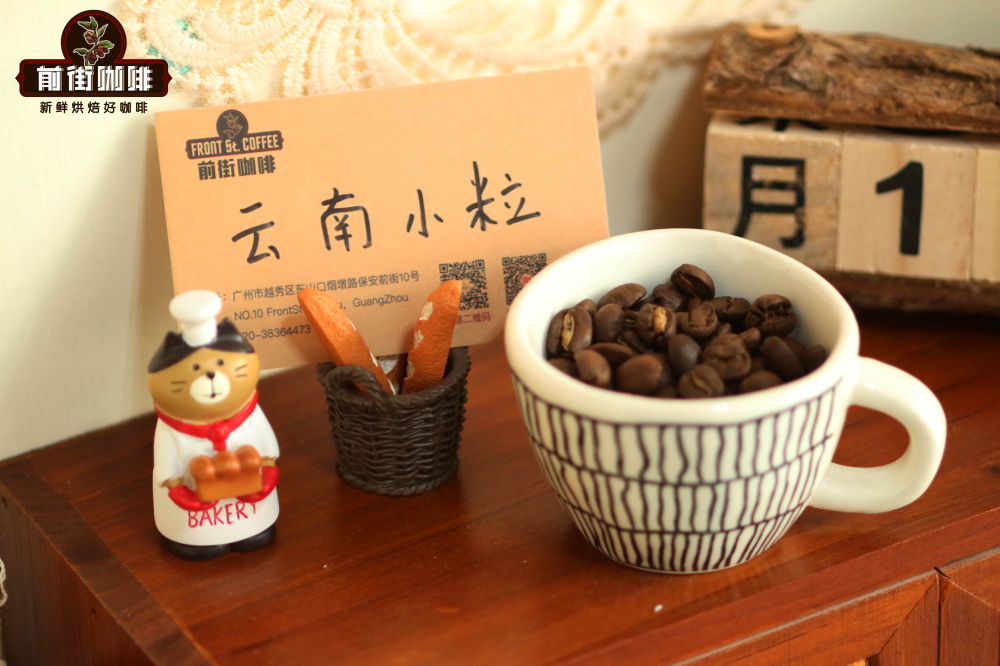
Before brewing, Front Street first confirms whether the coffee beans being used are fresh. If the coffee beans' roasting date is more than a month past, Front Street will not use them for service. This is because coffee beans have an optimal flavor period after roasting, and the aroma accelerates its loss with storage time, while dissipated flavors are difficult to restore during brewing. This is also why Front Street insists on shipping only coffee freshly roasted within 5 days. Front Street hopes every customer can enjoy the coffee beans' most complete flavor period.
Grind size and water temperature: precisely because Yunnan coffee's flavor profile leans neutral and balanced, excessively high water temperature and overly fine grinding can easily cause over-extraction, releasing too many bitter macromolecular flavor substances; while excessively low water temperature and overly coarse grinding lead to under-extraction, making the coffee prone to being weak and tasteless. Therefore, Front Street chooses a medium water temperature and grind size, using hot water at 90 degrees Celsius for extraction, with a coffee powder fineness of 70% passing through the China standard No. 20 sieve, and a store EK43s setting of 10.5.
Based on past brewing experience, Front Street recommends that beginners just starting out use a three-stage pouring method. Three-stage extraction helps dissolve flavor substances more fully during brewing, increases the layers of mouthfeel, and at the same time avoids over-extraction caused by too long a soaking time.
Front Street's hand-brew parameters:
Dripper: hario v60
Dose: 15g
Water temperature: 90 degrees Celsius
Grind size: 75% passing through No. 20 sieve
Water-to-coffee ratio: 1:15
Three-stage pouring: first use twice the coffee powder's weight in water to wet the coffee bed, forming a dome and blooming for 30 seconds, then pour in a small stream in circles from the inside out until 125 grams, then pause; wait for the coffee bed to drop to half the height of the dripper, continue pouring the third stage with the same fine stream until 225 grams, and once all the coffee liquid has finished filtering, remove the dripper. Total time is about 2 minutes.
For professional coffee knowledge exchange and more coffee bean information, please follow Coffee Studio (WeChat public account: cafe_style)
For more specialty coffee beans, please add the private WeChat of Front Street Coffee (FrontStreet Coffee), WeChat ID: qjcoffeex
The above content is compiled by CoffeeHunters, a coffee news website.


