







How Does Panamanian Geisha Differ From Costa Rican Geisha?
Panamanian Geisha built its reputation at Hacienda La Esmeralda, where the Boquete terroir of Chiriqui Province produces intense jasmine and citrus aromatics. Costa Rican Geisha, grown in a different climate and often handled as blends, tends toward softer rose, strawberry and raisin sweetness. Same variety, different soil, altitude and processing, so the cup diverges.
Geisha left Ethiopia's forests in 1931, reached Kenya's research institute, then Uganda and Tanzania in 1936, Costa Rica in 1953 and Panama around 1960. Hacienda La Esmeralda separated it from other varieties and won the 2004 BOP competition. Because coffee is an agricultural crop, climate and environment steer flavor more than the name alone.
Geisha went from the forests of Ethiopia to the world, Panama's Hacienda La Esmeralda made it famous, and Costa Rica, as a major coffee center in Central America, has also produced a uniquely styled Geisha. This article traces Geisha's path of spread, compares the terroir, variety composition, and processing methods of Panama and Costa Rica Geisha, and focuses on the Mirazu Estate Geisha blend selected by Front Street Coffee. The article also shares Front Street's roasting approach and three-stage brewing parameters to help coffee lovers understand how to bring out sweet, mellow flavors such as rose, strawberry, and raisin.
After Geisha made its name at Panama's Hacienda La Esmeralda, many producing origins around the world began to introduce this variety. However, Geisha from different countries still shows clear differences, and it is fair to say that it is constantly copied yet remains hard to surpass. Coffee is ultimately an agricultural crop, and climate and environment have a huge influence on flavor direction. The outstanding performance of Hacienda La Esmeralda's Geisha is inseparable from Panama's local terroir. Below is a comparison of how Geisha from several producing countries differs.
The Origin of Geisha Coffee
Geisha was originally just one variety in the coffee family and first appeared in the primitive forests of Ethiopia. In 1931, people discovered it in the Geisha forest of Ethiopia. After that, Geisha was sent to the Coffee Research Institute in Kenya, introduced to Uganda and Tanzania in 1936, brought to Costa Rica in 1953, and entered Panama around 1960. Later, Panama's Hacienda La Esmeralda selected it out separately from other varieties. In 2004, Hacienda La Esmeralda's Geisha became famous in the BOP competition and won the national coffee competition championship, establishing Hacienda La Esmeralda's place in the specialty coffee world.
Panama Geisha Coffee
Panama is located in Central America, bordered by Costa Rica to the west and Colombia to the east. Most people familiar with single-origin coffee know that Panamanian coffee became famous in the coffee world thanks to Hacienda La Esmeralda's Geisha. It can be said that this is a country that strives for excellence in coffee quality and where excellent coffees emerge one after another. Boquete is a town in Chiriqui Province, located near the border between Panama and Costa Rica, close to the famous Baru Volcano, with beautiful scenery, deep and fertile soil, and a climate and soil very suitable for growing high-quality coffee.
Boquete Producing Area
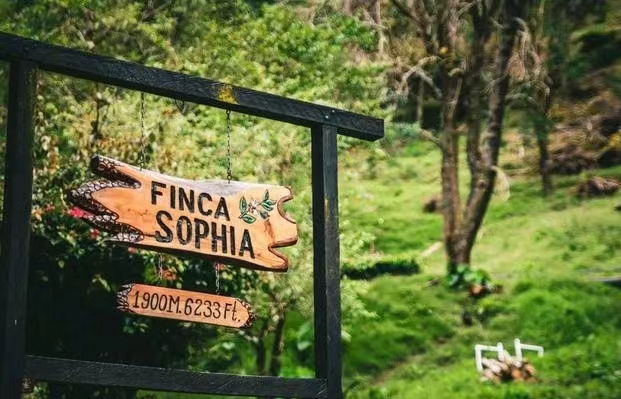
There are many excellent estates in the Boquete producing area. In addition to the renowned Hacienda La Esmeralda, there are also Elida Estate, Kotowa Duncan Estate, and others, all producing high-quality specialty coffee. This benefits not only from the superior ecological conditions of Panama's Boquete region and the fertile volcanic ash soil of Baru Volcano, but also from another key factor: the microclimates of the Panama Boquete highlands are a resource for Boquete specialty coffee that is difficult to replicate. Panama's topography from east to west causes cold air currents to converge along the central mountain range above 6,500 feet, thus forming multiple microclimates in the Boquete area, making temperature and rainfall very suitable for plant growth, so the coffee trees here grow in quite ideal conditions.
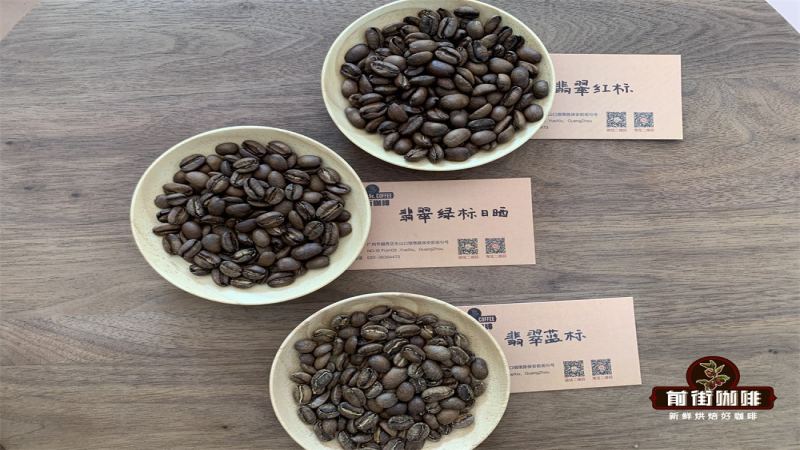
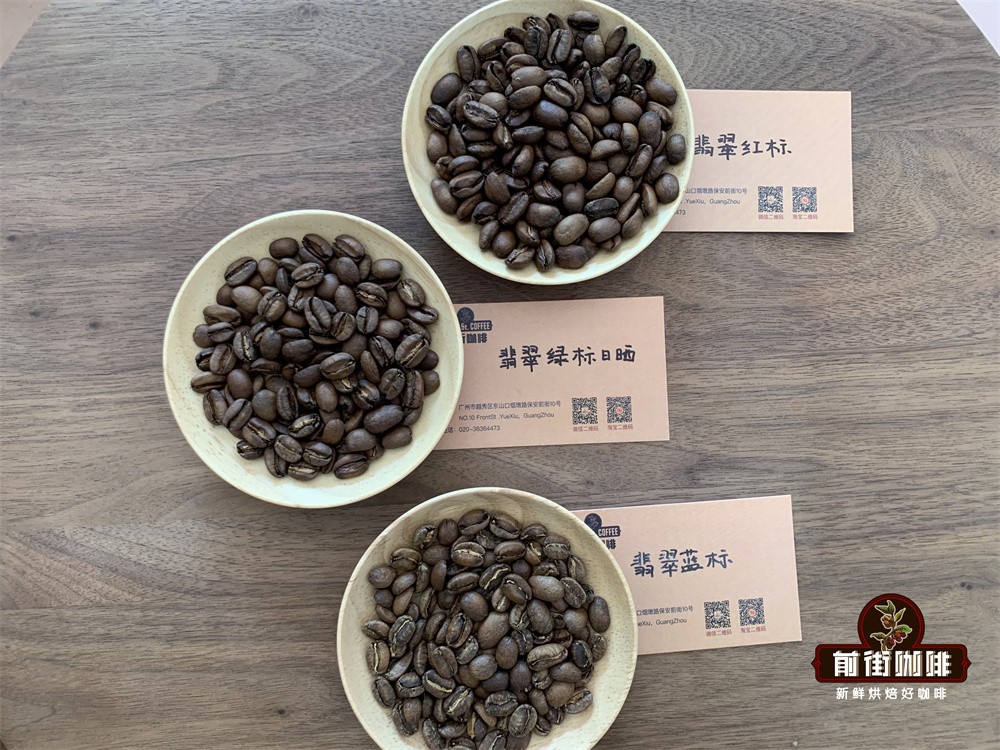
Hacienda La Esmeralda Geisha Coffee: The Red Label batch's Geisha is grown at an altitude of 1,600-1,800 meters, with a cupping score above 90, mainly from the Jaramillo and Canas Verdes producing areas. Front Street's Red Label Geisha coffee comes from Canas Verdes, uses the natural process, and has obvious rose aroma and the sweet-tartness of berries.
The Green Label batch does not participate in bidding, but its quality is still excellent. The Green Label batch's Geisha is grown at an altitude of 1,600-1,800 meters and mainly blends lots from different plots such as Jaramillo and Canas Verdes. Front Street's Green Label Geisha coffee is divided into natural and washed processes. The washed one has floral, fruity, and citrus acidity, with a fresh and clean mouthfeel; while the natural process, while retaining the base of the washed process, gives it a rich and juicy mouthfeel.
Many people may think Geisha coffee is simply too expensive. Considering this issue, Front Street specially selected Boquete Geisha coffee from Panama's Boquete producing area as one of its daily beans, making it easier for everyone to taste the noble flavor of Geisha coffee.
Costa Rica Geisha Coffee
As mentioned earlier when discussing Panama Geisha, Panamanian coffee was passed down from Costa Rica. Costa Rica has been growing coffee for nearly two hundred years, and coffee is an important cash crop for the country. The industry is quite mature, and today there are also many newly built estates. These estates often have resources and are willing to plant the Geisha variety, among which the better known one is Little Candle Estate's Geisha coffee beans.
Mirazu Estate is located in Costa Rica's Tarrazu specialty coffee producing area. The Tarrazu producing area is located in Central America's fertile volcanic region, with a humid climate, fertile volcanic rock soil, ample rainfall throughout the year, higher altitude, and dense forests providing natural shade, creating an exceptional environment for coffee growth. Although many coffee estates are built within the Tarrazu producing area, the microclimate, soil, and variety differences of each estate are fully revealed. These wonders bestowed by nature are precisely what drives Front Street to continuously seek different coffee beans from the same producing area for comparison.
Guatemala Geisha Coffee
World Coffee Estate — Injerto Estate
Injerto Estate is located on the Huehuetenango highlands, a famous producing area in Guatemala, and has been growing coffee since 1900 under the Aguirre family. The estate's name "Injerto" comes from the name of a local fruit. Injerto Estate places special emphasis on ecological environmental protection and organic cultivation techniques, and implements strict quality control to ensure the quality of green coffee beans. Through Aguirre's efforts, Injerto Estate also has Rainforest Alliance certification, and since 2002 it has been a frequent winner in many international coffee competitions. Injerto Estate has always played the role of a pioneer of Central American specialty coffee. About 50 years ago, it was one of the first estates to focus on single varieties and vertically integrated production of high-quality coffee.
Coffee Bean Varieties
Panama's Geisha coffee variety is Geisha. The Geisha variety was originally collected from Ethiopia's coffee forests in the 1930s. In 1953 it was brought to CATIE in Central America, where it was recorded as accession T2722.
Mirazu Estate's is a Geisha blend coffee bean. As long as the beans come from the same origin and the same estate/cooperative, they can be defined as single-origin coffee. The Mirazu Estate Geisha blend coffee beans obtained by Front Street use 50% Geisha, ET47, SL28, and Maico. It is worth mentioning the coffee variety ET47. ET47 is laboratory number 47; because many varieties were introduced during the same period, numbers were mostly used to distinguish and identify them.
Processing Methods
Costa Rica is famously a country of honey processing. The raisin honey process is a method that retains 100% mucilage and uses zero water, which increases the difficulty of the honey processing method and requires strict control of timing.
Panama Geisha coffee mainly uses natural washed and natural processes.
FrontStreet Coffee Roasting Analysis
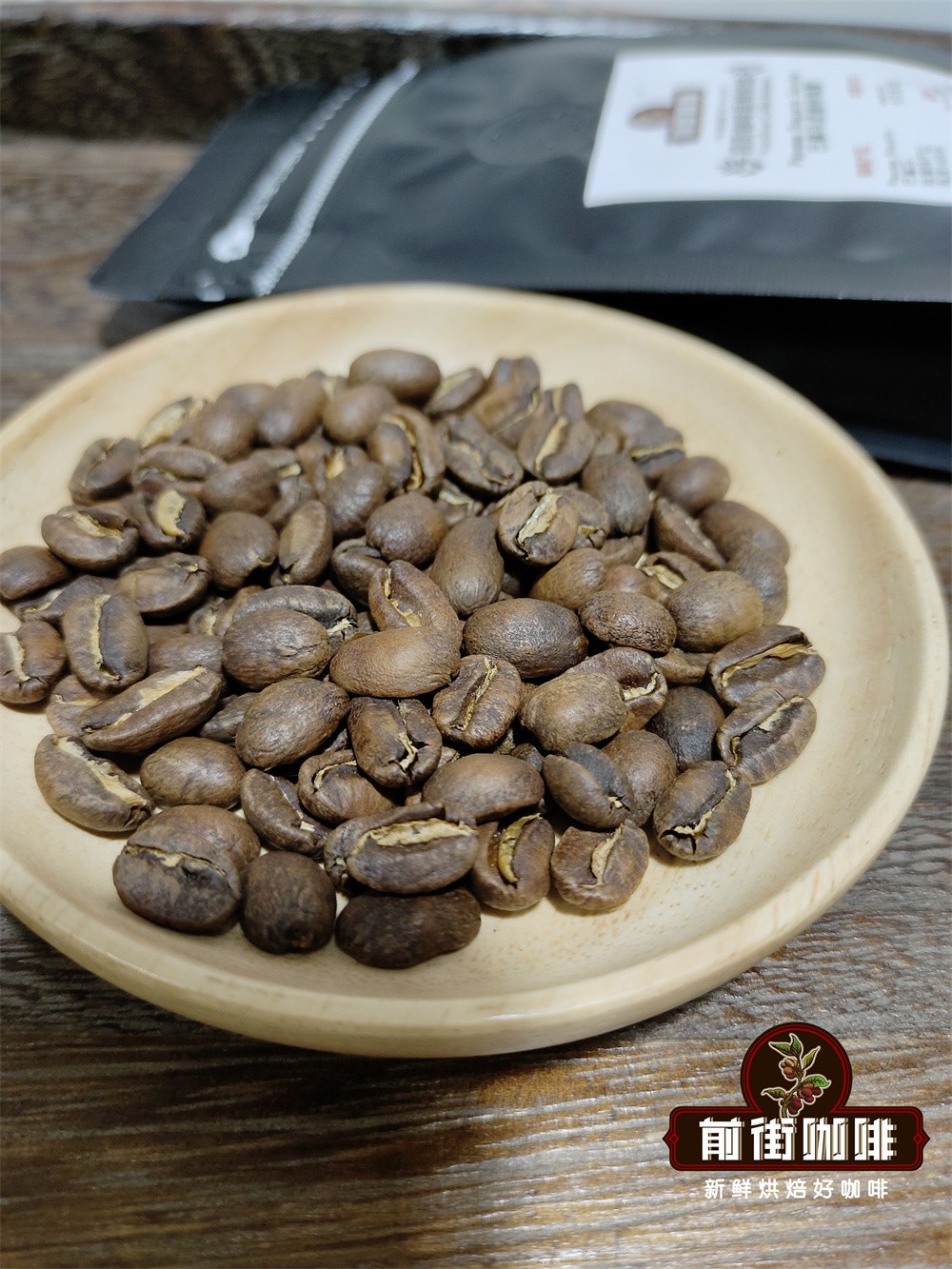
FrontStreet Coffee's roaster, considering the need to highlight the rich fruit aroma and floral aroma, as well as the strong sweetness, of Mirazu's raisin honey processed coffee, adopted a medium roast level when roasting. Geisha coffee is famous worldwide for its rich floral aroma and complex fruit profile. Front Street's roaster hopes to retain more of Geisha's high-quality acidity, so Front Street also chooses a medium-light roast for Geisha coffee.
Front Street's parameters for brewing Mirazu and Geisha coffee:
During brewing, in order to highlight the coffee's fruit aroma, floral aroma, and sweetness, Front Street uses higher-temperature water for brewing. Front Street uses a medium-fine grind / fine granulated sugar coarseness (80% passing through a Chinese No. 20 standard sieve). Use 15 grams of coffee grounds, then pair with a V60 dripper, 91°C water temperature, a 1:15 coffee-to-water ratio, and a three-stage pouring technique for brewing.
Using three-stage extraction, use twice the amount of water as the coffee grounds for blooming, that is, 30 grams of water for a 30-second bloom. The reason the blooming process is needed is to allow the coffee grounds to release internal carbon dioxide gas, thereby making the later extraction more stable. Pour in a small stream in circles until 125 grams, then pause; continue pouring until 225 grams and stop. After the water in the dripper has dripped through, remove the dripper. Start timing from the beginning of pouring; the extraction time is 2'00". Next, pick up the entire cup of coffee and swirl it to mix evenly, then pour it into a cup for tasting.
Panama washed Boquete Geisha coffee flavor characteristics: obvious clear acidity of citrus, lemon, and bergamot, with a creamy smooth mouthfeel when swallowing, and a finish of green tea and honey sweetness.
Costa Rica Mirazu coffee flavor characteristics: strong rose aroma, strawberry, raisin, with an almond note in the finish.
The above content is compiled by CoffeeHunters, a coffee news website.


