







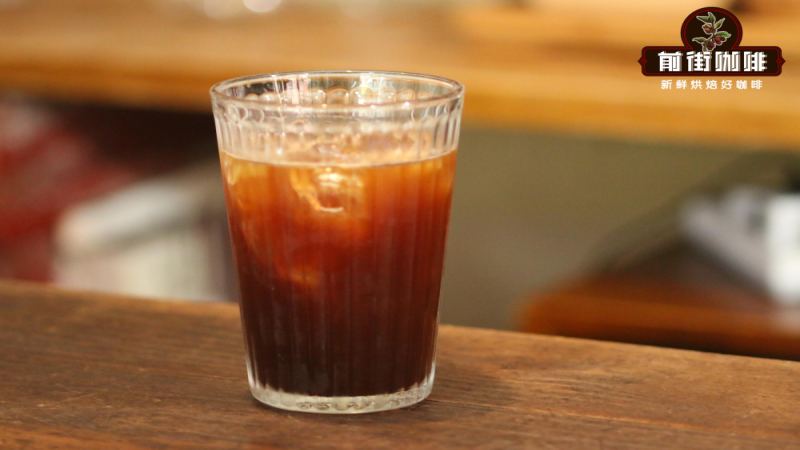
Is Arabica Coffee the Base for Americano?
Americano is normally made with Arabica beans, sometimes as a single origin and sometimes as a blend. Arabica dominates the specialty market because of its aroma and delicate mouthfeel, while Robusta is generally limited to blending roles such as adding crema to espresso. The two species differ in growing needs and cup quality.
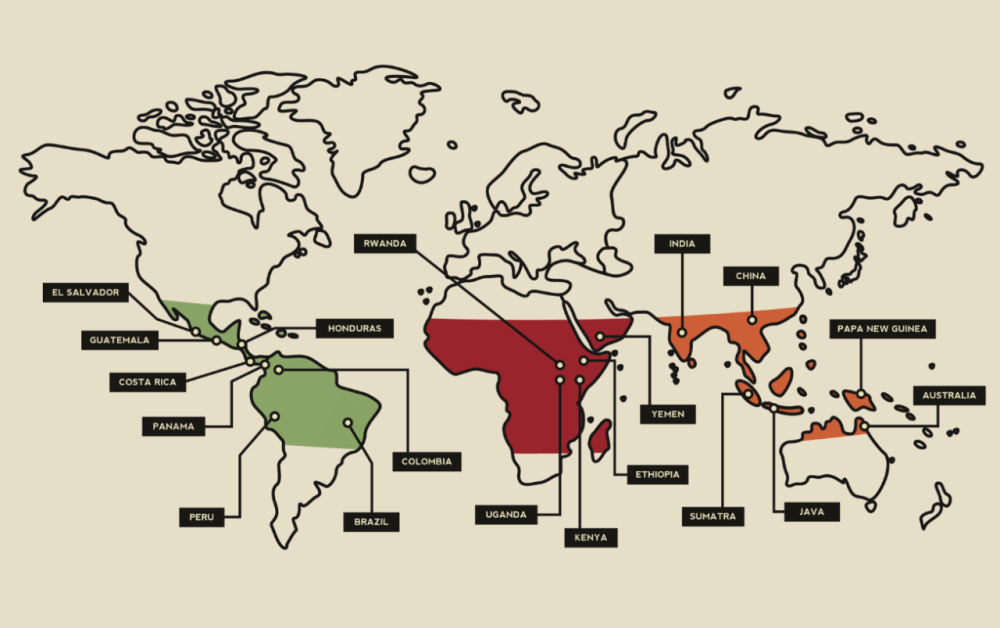
Coffee grows in the belt between the Tropic of Cancer and the Tropic of Capricorn, across about 70 countries, of which roughly 50 meet the climate requirements. Arabica performs well at high elevations, commonly 800 meters and above, with stable temperatures, steady rainfall and well-drained soil. Representative arabica beans include Typica, Bourbon, Caturra, Geisha, SL28 and SL34.
A glass of iced Americano in the morning is how many office workers wake themselves up. But have you ever wondered what beans Americano coffee actually uses? Global coffee beans fall mainly into two categories: Arabica and Robusta. Among them, Arabica, with its rich aroma and delicate mouthfeel, has become the mainstay of the specialty coffee market. Where exactly does it come from, what are its growing environment requirements, and how does it perform in flavor? This article from Front Street will introduce you to the past and present of Arabica coffee and review representative varieties such as Typica, Geisha, Bourbon, Caturra, SL28, and SL34, helping you build a more complete understanding of coffee varieties.
When drowsiness strikes, many office workers habitually order a glass of iced Americano, letting its refreshing taste and rich coffee aroma quickly bring them back to their senses. So what variety of beans does Americano coffee actually use? In this article, Front Street will talk about the mainstay of the coffee world—Arabica.
Coffee beans worldwide can be classified into two major categories: Arabica and Robusta.
Coffee beans fall mainly into three major categories, but only two have commercial value and are cultivated on a large scale: Coffea Arabica and Robusta. There is also Coffea Liberica, whose fruit is twice as large as Arabica's, though its flavor is mediocre and it is quite rare on the market.
Coffee is a tropical cash crop, usually grown in the coffee belt between the Tropic of Cancer and the Tropic of Capricorn. It requires relatively high and stable temperatures, sufficient annual rainfall and sunlight, and well-draining fertile soil—these are the suitable growing conditions for coffee trees. The "coffee belt" spans about 70 countries and regions worldwide, of which about 50 have the climate and other conditions that meet the growth requirements of coffee beans, making them coffee-producing countries. Brazil, Colombia, Ethiopia, Kenya, Indonesia... as well as China's Yunnan and Hainan are all located in the coffee belt. The unique planting environments and microclimates of each producing region provide diverse growing conditions for Arabica and also create unique flavor profiles.
As the main variety of global coffee, Arabica has quite demanding requirements for its growing environment. It needs to be planted at high altitudes of 800 to 2,200 meters where there is no frost. The higher the altitude, the more pronounced the temperature difference between day and night, which slows the ripening of coffee cherries, making it more conducive to accumulating flavor compounds and allowing the aroma to develop more fully. In addition to high altitude, Arabica also needs abundant rainfall, sunlight, well-draining loose soil, and the soil must be fertile. From a cultivation perspective, regional restrictions are very strong. Therefore, to produce high-quality coffee beans, growers must invest more management effort, and labor costs rise accordingly.
Compared with the "delicate" Arabica, Robusta has a caffeine content of 2.7%-4%, twice that of Arabica. Caffeine is a plant's natural insecticide, protecting it from most insect damage, so Robusta is easier to grow and cheaper in price. In addition, because of its higher amino acid and chlorogenic acid content, it has a full-bodied, lower-toned bitterness, along with flavors of walnut, peanut, hazelnut, wheat, and grain. If not handled properly, it can also develop an earthy, fishy taste, so it is not as likable and is often used in dark-roast espresso blends or instant coffee.
In the past, people drank coffee only for a rich, full-bodied bitterness. As specialty coffee culture has spread, the public has developed higher demands for coffee's taste, mouthfeel, and quality. As a result, aromatic Arabica beans better meet the high demands of today's specialty coffee market than Robusta. Many of the hand-brewed single-origin coffee beans on Front Street's bean list are Arabica varieties, showing that compared with Robusta, people prefer the pure flavor of Arabica.
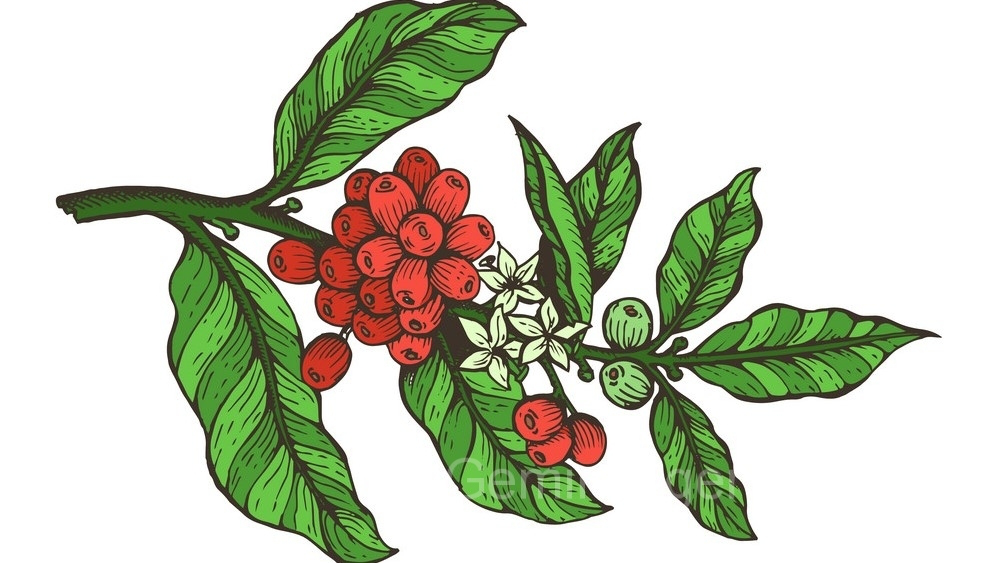
What representative members does the Arabica family have?
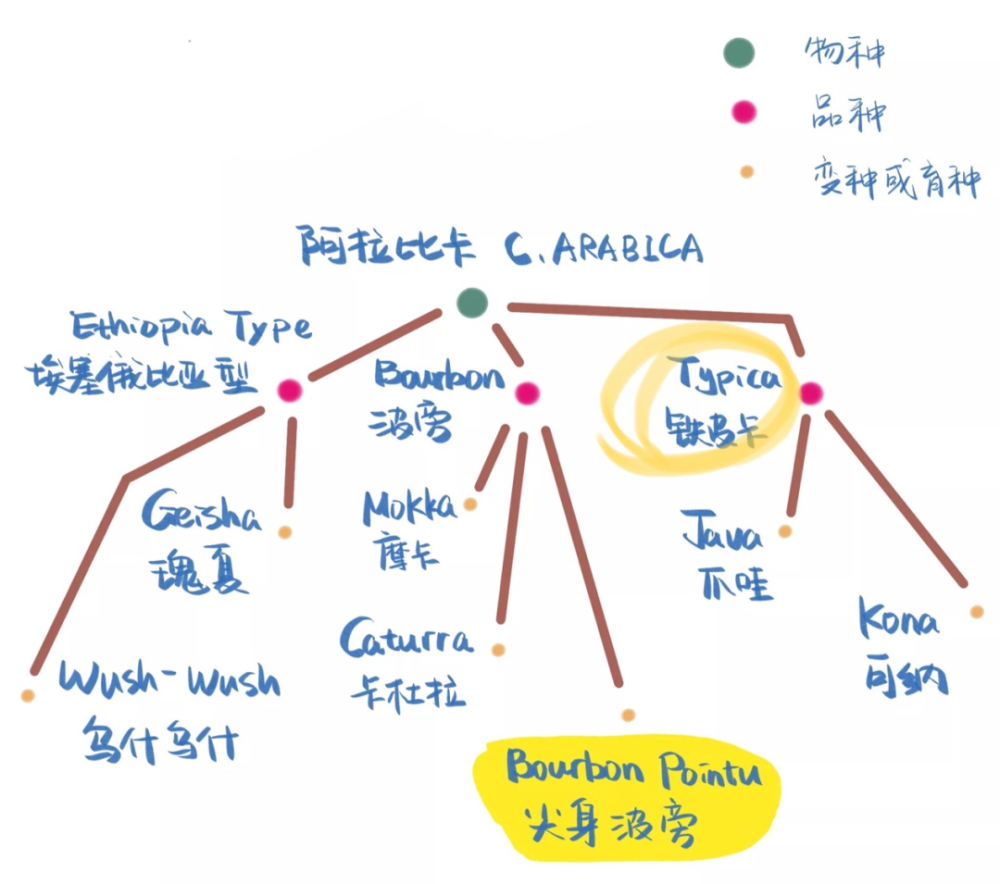
As a major category, Arabica can be subdivided into nearly three thousand varieties, all derived from Ethiopia's oldest native varieties, Typica and Bourbon, which spread to South America or Asia and then mutated. As a crop, coffee's flavor is always closely related to variety, climate, altitude, soil, management, and other factors. It is a natural and authentic expression of the variety and local terroir. Here, Front Street will pick a few representative varieties to get to know Arabica.
Jamaica's Typica
Typica is Ethiopia's oldest native variety, discovered around the 15th to 16th centuries AD. It is characterized by a taller coffee tree, bronze-colored top leaves, and relatively large, long coffee beans with pointed, upturned ends shaped like eggs. Typica coffee often has citrus acidity with a sweet aftertaste, and many praise it as an elegant, clean coffee bean. Unfortunately, it has low yield and poor resistance to coffee leaf rust, so farmers gradually replaced it with other more robust varieties.
Typica was introduced to Jamaica in the 18th century by Sir Nicholas Lawes and soon after was brought to Blue Mountain for cultivation, where it has now been grown for more than two hundred years. Blue Mountain's Typica has also adapted to the local island tropical rainforest climate according to local conditions, evolving stronger disease resistance, among which its resistance to coffee berry disease is considerably stronger than that of ordinary Typica. Front Street believes that Blue Mountain's refined and clean flavor cannot be separated from Jamaica's insistence on carefully cultivating the Typica variety, allowing Typica to integrate into the local terroir. The excellent terroir and unique microclimate of the Blue Mountains also play an indispensable role. Front Street uses a medium-dark roast to present the coffee's chocolate and nutty aromas to the greatest extent while retaining soft acidity and sweetness, making the overall mouthfeel balanced.
Panama's Geisha
Friends who often drink hand-brewed coffee must have heard of Panama Geisha. With its stunning aroma, it has become one of the synonyms for contemporary specialty coffee. The Geisha variety is derived from Typica and also originates from Ethiopia, the birthplace of coffee.
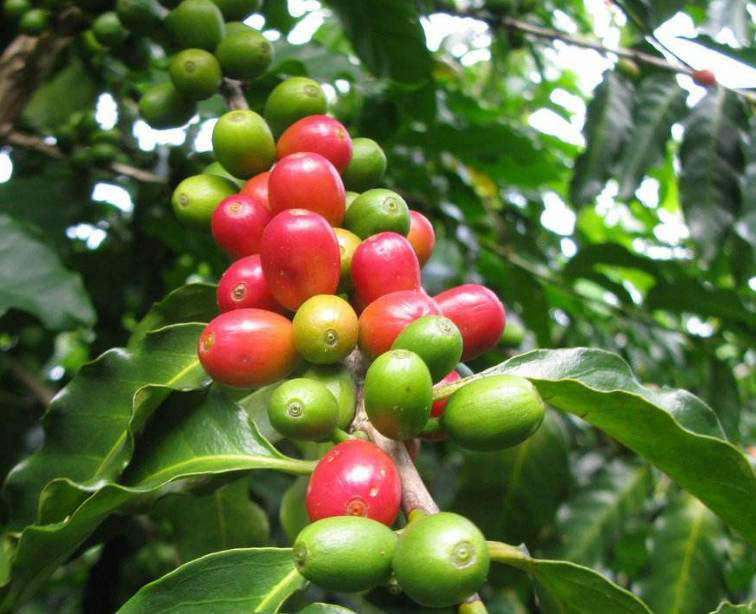
Geisha is very picky about its growing environment. It needs high altitude, fertile soil, cloud cover or shade from other plants, and cannot be exposed to direct sunlight. The owner of Hacienda La Esmeralda once said that the estate needs a large number of shade trees to shield the delicate Geisha from sunlight, and traditional pruning must be used in the early stages of planting; otherwise the plants easily die. The higher the altitude at which Geisha is grown, the longer the cherries take to mature, and the more complex and unique the flavor expression. Unlike other coffee varieties, the leaf system of the Geisha coffee tree is very thin, its photosynthetic efficiency is very low, and its roots are also fragile, absorbing water and nutrients slowly. Therefore, its yield is very small, and combined with the high-altitude environment, the cherries also mature relatively late.
At present, Geisha is grown in many regions around the world and is the new king of specialty coffee. Among them, Latin American countries such as Panama, Guatemala, and Colombia have higher quality, and Panama Geisha is outstanding among specialty coffees. When it comes to Geisha coffee, the most popular one on Front Street's bean list is of course the famous Geisha produced by Hacienda La Esmeralda, which is further divided according to different characteristics into Red Label Geisha, Green Label Geisha, and Volcanic Rock Geisha. High-quality Geisha coffee has striking aromas of rose, citrus, berries, and honey, and is deeply loved by many coffee people.
Brazil's Bourbon
Bourbon arose from a natural mutation of Typica, with the bean shape changing from slender and pointed to round. It was first discovered on Bourbon Island, also known as Reunion Island, off the east coast of Africa. In 1715, France transplanted round-bodied beans from Yemen Mocha to Bourbon Island off the east coast of Africa (renamed Reunion Island after the French Revolution), and it was only afterward that the name Bourbon was acquired. Bourbon round beans were introduced to Brazil in 1727 and began to be cultivated there.
Although its yield is not considered high, compared with the frail Typica, Bourbon has better resistance to leaf rust. Bourbon grown at high altitudes has a rich, delicate flavor, a strong aroma, and soft acidity. The Bourbon cherries generally seen turn from green to slightly yellow, orange-yellow, red, and finally to a fully ripe dark red—this is what we call Red Bourbon.
Most Brazilian coffees have relatively low acidity. Combined with the coffee's rich aroma, they enter the mouth extremely smoothly, and the aftertaste is refreshing and pleasant. FrontStreet Coffee chose a semi-washed Red Bourbon as its Brazilian representative. The coffee flavor has obvious nuts and chocolate, a medium caramel sweetness, a smooth mouthfeel, and overall balance. Front Street added it to the daily bean series. Front Street's daily beans are the flagship representatives of each major producing region, presenting the region's basic flavors. Coffee beginners can use them to understand the basic flavors of a producing region, and then choose according to their preferences to learn more about different types of producing regions.
Central and South America's Caturra
Caturra arose from a natural mutation of Bourbon and was discovered in Brazil in 1937. The tree shape is relatively short, and its disease resistance is not high, but because it can be planted densely and has a higher fruiting rate, its yield is higher than varieties such as Bourbon, and it is widely planted in Central and South American countries. Caturra is suitable for low altitudes of 700 meters up to high altitudes of 1,700 meters. The higher the altitude, the better the flavor, and the bean yield also decreases relatively. In terms of flavor, Caturra has bright acidity, a mouthfeel full of fruitiness, and after medium-dark roasting presents chocolate and nutty sweetness. It is a frequent champion in many coffee competitions.
Many coffee beans on Front Street's bean list contain the Caturra variety. If you want to understand the flavor characteristics of this variety, Front Street recommends Colombian daily beans, which are selected from washed Caturra. The cleanliness is very high. Front Street hopes to highlight the classic Colombian coffee flavor, using a medium-dark roast to present aromas of nuts, dark chocolate, and caramel.
Kenya's SL28 & SL34
During 1935-1939, the Scott Laboratories used SL as a prefix for the coffee varieties it selected and bred. The laboratory selected 42 varieties from different origins and studied their yield, quality, drought resistance, and disease resistance. After numbering and screening them one by one, SL-28 and SL-34 were finally obtained.
SL28 comes from the Bourbon genetic group. Its beans are short and round, with a thick body, and it is characterized by elevated acidity and pronounced sweetness. SL34 comes from the Typica genetic group. Its beans are oval, and from the side they do not look as plump as Typica varieties but appear relatively flat. It is characterized by balanced, full acidity and sweetness with a caramel aftertaste. Front Street's Kenya Asalia coffee beans are selected from these two varieties, using a 72-hour washed process, presenting a full acidity of plum, yellow sugar, smoked plum, and cherry tomato.
For professional coffee knowledge exchange and more coffee bean information, please follow Coffee Workshop (WeChat public account: cafe_style).
For more specialty coffee beans, please add the private WeChat of FrontStreet Coffee. WeChat ID: qjcoffeex.
The above content is compiled by CoffeeHunters, a coffee news website.


