







Is Yirgacheffe a Separate Arabica Coffee Variety?
Yirgacheffe is not a variety in opposition to Arabica. All Yirgacheffe coffee belongs to the Arabica species; the word Yirgacheffe names a producing town in the Gedeo region of southern Ethiopia. Arabica is the broad category covering many varieties, while Yirgacheffe describes a specific origin and its recognizable citrus and floral cup.
The town sits at roughly 1,700 to 2,100 meters, which is among the higher coffee-growing elevations anywhere. The area was once part of the Sidama production region and became separate because of its distinct processing and flavor. Washed processing, introduced locally in the 1970s, shapes the clean, bright profile associated with these arabica coffee varieties.
What exactly is the difference between Yirgacheffe and Arabica? As the birthplace of coffee, Ethiopia nurtured all Arabica varieties, and Yirgacheffe is a high-altitude town in the Gedeo region of southern Ethiopia. With its unique terroir and washed processing, it has become synonymous with Ethiopian specialty coffee. This article will systematically sort out the characteristics of Yirgacheffe coffee from origin background, variety naming, processing methods to flavor performance, and introduce the cupping flavors and pour-over suggestions of Front Street Coffee's Yirgacheffe coffee beans, taking you through a comprehensive understanding of this classic coffee with prominent citrus and floral notes.
Ethiopia is regarded as the birthplace of coffee, and all Arabica coffee varieties today can be traced back to this region. If you ask what the difference is between Yirgacheffe coffee and Arabica coffee, simply put, Yirgacheffe specifically refers to coffee beans produced in the Yirgacheffe area of Ethiopia, while Arabica is a vast collective term for varieties under the Coffea genus in the Rubiaceae family.
Front Street Yirgacheffe Coffee Introduction
The town of Yirgacheffe is located in the Gedeo region of southern Ethiopia, at an altitude of about 1,700 to 2,100 meters. The area originally belonged to the Sidama production region, but due to different coffee processing methods and highly recognizable flavors, it later became an independent production region. It is not only one of the highest-altitude coffee-producing regions in the world but also a representative of Ethiopian specialty coffee.
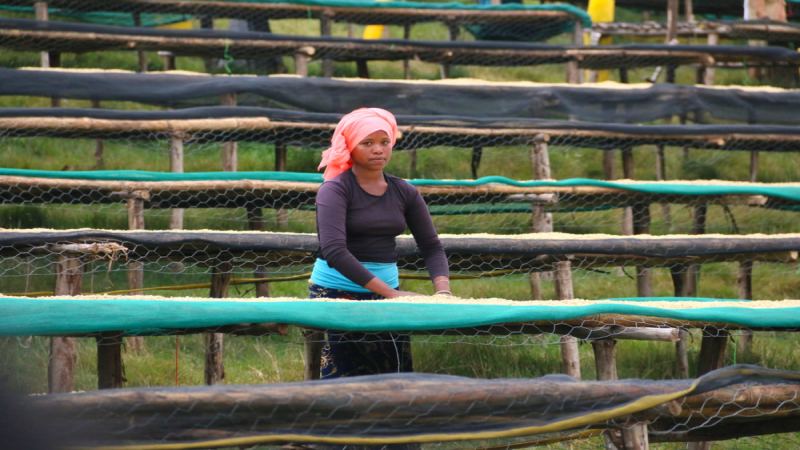
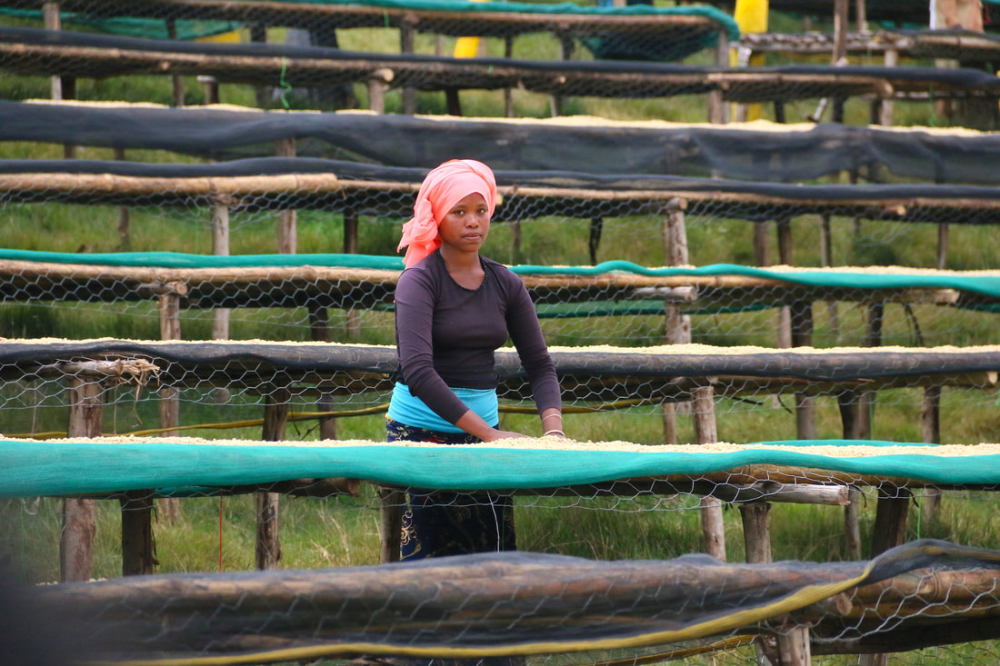
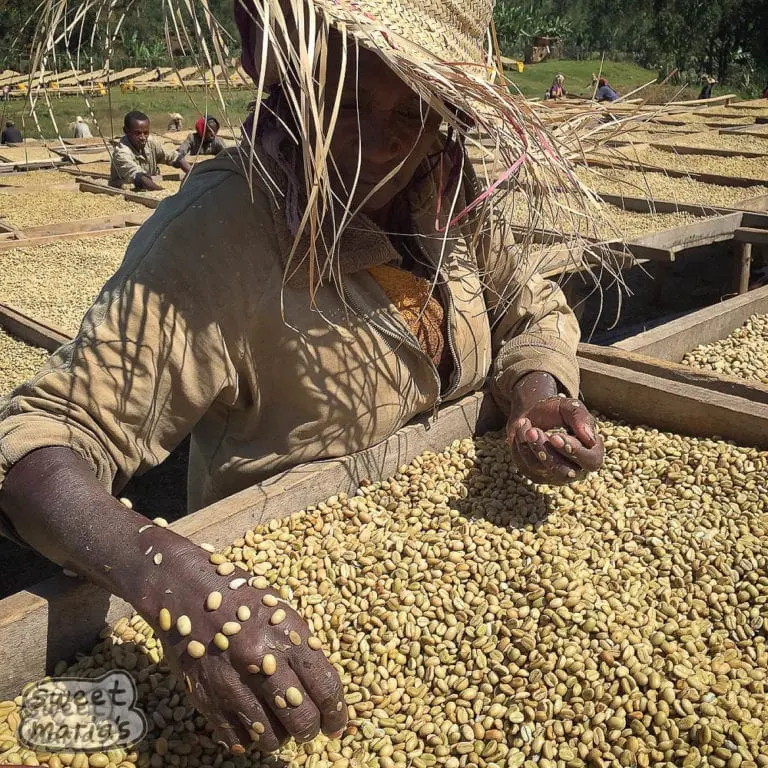
According to Front Street's understanding, the reason Front Street Yirgacheffe coffee beans have such a distinctive style is largely due to washed processing, in addition to inherent terroir conditions. Ethiopia generally has high altitudes and abundant sunshine, which would originally be very suitable for directly sun-drying coffee cherries, and early Yirgacheffe was also mainly sun-dried coffee. Traditional sun-drying methods were relatively rough, with cherries spread directly on the ground to dry, without sorting or flotation, so coffee bean quality was often uneven. It was not until the 1970s, when the first washing station in Sidama State was built in the town of Yirgacheffe, that washed processing gradually spread locally.
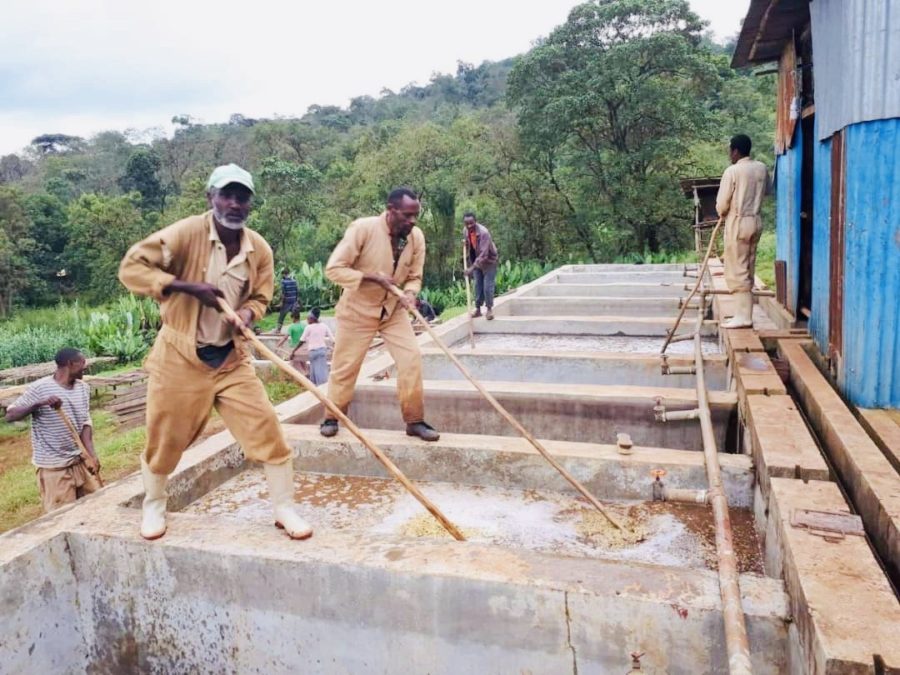
As farmer cooperatives continued to be established, in order to improve the quality of exported green coffee beans, increase income, and serve more communities, people began to intentionally build washed processing plants. Unlike sun-drying, washing stations first had to solve the water source problem, then invest in depulping machines, and also needed sufficient labor. Therefore, from a production perspective, places with people, water, and roads are most suitable for setting up washing stations, and Yirgacheffe happened to have these conditions.
The town of Yirgacheffe in the Gedeo zone is located just downstream of a large lake, with springs and rivers flowing through the area, providing abundant freshwater resources for washing stations. Front Street also noted that in ancient Ethiopian language, the English word "Yirgacheffe" is composed of two words: Yirga ይርጋ Yərga means calm, to settle down, and Cheffe ጨፌ Č̣äfe refers to marshy wetlands. Therefore, Yirgacheffe carries the meaning of "let us settle down and make a living on this wetland." At that time, so-called "Yirgacheffe coffee" referred to beans washed and processed in the town of Yirgacheffe.
Front Street Yirgacheffe Coffee Variety Introduction
Currently, the coffee grown in the Yirgacheffe region all belongs to the Arabica species, also known as small-fruit coffee. Because Ethiopia has extremely rich and diverse coffee varieties, there are both varieties recorded and named by researchers and a large number of unrecorded wild varieties.
It is not easy to subdivide these varieties one by one. Therefore, Ethiopian production regions rarely make detailed variety classifications, and what is distributed to farmers is often mixed varieties. Although they are mixed varieties, many high-quality Ethiopian coffee beans have bright citrus acidity, a refreshing and clean mouthfeel, and quite high yields, making them deeply loved by coffee enthusiasts worldwide.
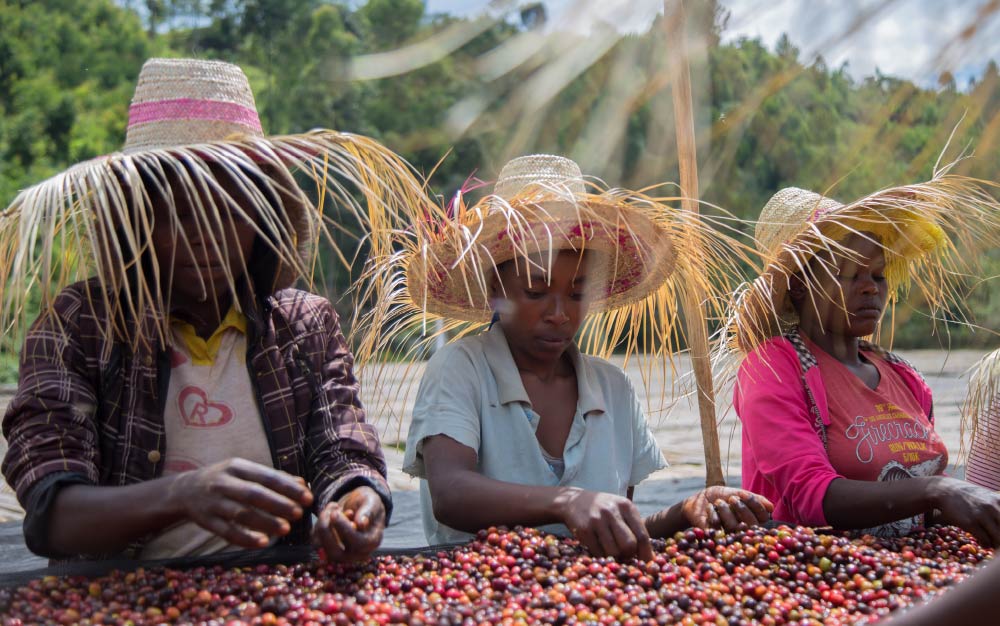
In order to make these mixed-variety coffee beans better meet the sales requirements of specialty coffee (requiring indication of origin, cultivation altitude, processing method, and coffee variety), the mixed varieties grown in Ethiopia were named Ethiopian native variety Heirloom, which means "heirloom" in the local language.
Front Street Yirgacheffe Coffee Bean Characteristics and Flavor Performance
According to observations by Front Street Coffee (FrontStreet Coffee), most Ethiopian beans are usually uneven in size because different coffee varieties differ in bean size. Through Front Street Coffee (FrontStreet Coffee) cupping results, it was noted that although Front Street Yirgacheffe coffee beans are petite in size, they produce a unique regional flavor of citrus and floral notes, tasting pleasantly sweet and tart.
Different from that era of "coffee is bitter," light-roasted Front Street Yirgacheffe can be said to have opened a "new era of fruity-acid coffee." The reason coffee is strong and bitter is mainly that roasters roast the coffee beans dark, with the main flavor direction being nuts and dark chocolate. With the emergence of the specialty coffee concept, in order to retain more acidity, roasters roast Front Street Yirgacheffe coffee only to an appropriate light level, allowing Front Street Yirgacheffe to express a pleasant fruity sweet-tartness and white floral notes. Liking sweetness and fearing bitterness is exactly the public's taste, which is also one of the reasons Yirgacheffe is so popular around the world. For such a popular Yirgacheffe coffee, Front Street of course also added it to the Front Street daily staple bean series for coffee beginners.
Yirgacheffe Coffee Bean Recommendation
Front Street Coffee (FrontStreet Coffee): Front Street Gutingding Cooperative Coffee Beans
Region: Yirgacheffe production area
Altitude: 1900-2000m
Processing method: Washed
Variety: Heirloom native variety
Flavor: Jasmine, citrus, berries, tea-like
Front Street Coffee (FrontStreet Coffee): Front Street Sun-Dried Red Cherry Coffee Beans
Region: Yirgacheffe production area, Aricha Estate
Altitude: 1700-2200m
Processing method: Sun-dried
Variety: Heirloom native variety
Flavor: Berries, jasmine, lemon
Front Street Coffee (FrontStreet Coffee) Barista Pour-Over Suggestions
Medium-light roasting allows the coffee beans to retain more floral and fruity aromas. Compared with medium-dark roasting, high-altitude light-roasted coffee beans have a denser internal structure and require higher water temperature and finer grinding to better extract the coffee's flavor compounds. Here, Front Street uses hot water at 92–93°C for extraction, and for grind size, Front Street uses a No. 20 standard sieve with an 80% passing rate.
Dripper: V60 Water temperature: 92-93°C Dose: 15g Coffee-to-water ratio: 1:15 Grind size: fine granulated sugar size, EK43s setting 10 (sieve to 80% with No. 20 sieve bowl)
In the first stage, pour 30 grams of water for a 30-second bloom, then pour 95 grams (electronic scale shows about 125 grams), finishing in about 1 minute. When the water level drops to 2/3 of the coffee bed, pour the remaining 100 grams (electronic scale shows about 225 grams), finishing in about 1 minute 35 seconds. At 2'10", dripping is complete; remove the dripper and extraction is finished.
The above content is compiled by CoffeeHunters, a coffee news website.


