







Which Arabica Varieties Grow in Yunnan Coffee Producing Regions?
Yunnan is China's largest coffee-producing region, with planting areas in Dehong, Baoshan, Lincang, and Pu'er. The main varieties grown are Catimor and Typica. Most farms sit between 1,000 and 2,000 meters within the band from 15°N to the Tropic of Cancer, a range that gives the small-bean coffee a rich but not bitter profile with a faint fruity note.
Each of the four coffee producing regions has its own character shaped by altitude, rainfall, and temperature swings between day and night. Dehong, Baoshan, Lincang, and Pu'er all fall inside the favorable latitude band, and processing methods vary from washed to sun-dried. Yunnan small-bean coffee was already exported and well regarded internationally by the 1950s, and more recent specialty lots now reach cafés at home.
China has a coffee-growing history of over a century, and Yunnan, as the country's largest coffee-producing region, is blessed with a golden belt between 15°N and the Tropic of Cancer, altitudes of 1,000–2,000 meters, abundant sunshine, and sharp day-night temperature differences. These conditions nurture a small-bean coffee that is rich yet not bitter, aromatic yet not harsh, with a slight fruity note. The four major regions—Dehong, Baoshan, Lincang, and Pu'er—each have their own characteristics, and the main varieties are Catimor and Typica. This article will review the distribution features, variety differences, and processing methods of Yunnan's major coffee-producing areas, and introduce Front Street Coffee's product lineup in Baoshan and Lincang, helping coffee lovers understand the diverse faces of Yunnan coffee, from everyday beans to specialty beans.
The connection between Chinese people and coffee has actually lasted more than a hundred years, though it did not reach scale in the early days. Today, with government support and the rise of domestic brands, it is not uncommon to find Yunnan coffee served in cafés, and consumers have gradually shifted from recognizing only imported beans to appreciating local flavors.
So, does domestic coffee actually taste good? Front Street's view is: Yunnan coffee wins people over with its distinctive flavor. If the quality were not up to standard, no one would buy it. Of course, taste varies from person to person, and preferring any particular flavor is completely normal.
Yunnan is the province with the largest coffee-planting area in China and lies in the golden latitude band for coffee cultivation. Western and southern Yunnan sit between 15°N and the Tropic of Cancer, mostly at altitudes of 1,000 to 2,000 meters, with terrain dominated by mountains and slopes. Fertile soil, abundant sunshine, plentiful rainfall, and significant temperature differences together shape the special character of Yunnan small-bean coffee—rich yet not bitter, aromatic yet not harsh, with a faint fruity note. In this region, four well-known producing areas have gradually taken shape, and a mature industry chain delivers outstanding domestic coffee to the market.
In fact, as early as the 1950s, Yunnan small-bean coffee was already favored in international markets and rated as a top-grade coffee. Yunnan's coffee-growing history can be traced back to 1892, when a French missionary brought coffee seeds into Yunnan and successfully trial-planted them in a valley in Binchuan County. More than thirty plants descended from those seeds still flower and bear fruit in Binchuan today.
Large-scale coffee cultivation in Yunnan began in the mid-1950s, when the planting area once reached 4,000 hectares. By the end of 1997, the province's coffee-planting area had increased to 7,800 hectares, accounting for 70% of the national total, with output accounting for 83% of the national total. Whether measured by area or output, Yunnan coffee has firmly held a dominant position in China.
Yunnan coffee-producing areas:
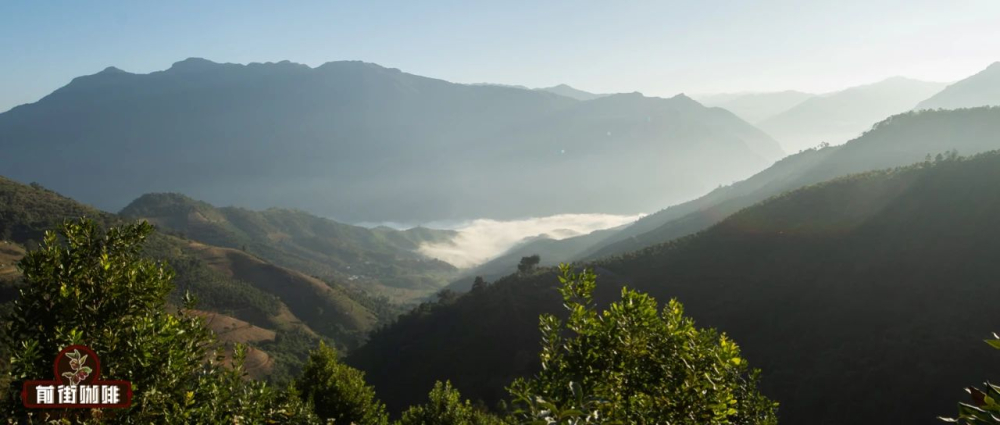
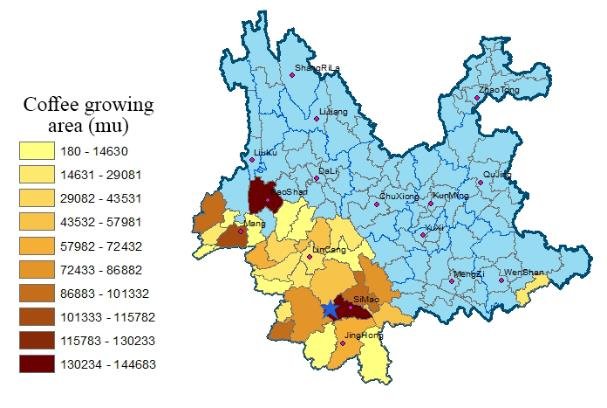
Yunnan coffee is mainly distributed in the southern and southwestern areas of Dehong, Pu'er, Lincang, Baoshan, and other places.
Dehong
Dehong enjoys the reputation of "China's Coffee Hometown." As of 2011, the prefecture's coffee-planting area reached 120,900 mu, accounting for 30% of the national total. In the next three years, Dehong Prefecture plans to expand the planting area to 200,000 mu. Local coffee farms are all at altitudes above 1,000 meters, with 30,000 mu located on mountain slopes above 1,600 meters. In addition, because organic fertilizers and organic pesticides are mainly used, the coffee produced is of superior quality, making it a rare high-quality coffee-producing area worldwide.
Baoshan
Baoshan is an important growing area for Yunnan small-bean coffee. Local coffee cultivation began in the mid-1950s, when the first coffee seedling was introduced from Southeast Asia by the late patriotic overseas Chinese Mr. Liang Jinshan. Lujiangba small-bean coffee is especially outstanding and was rated as first-grade in London as early as the late 1950s. In recent years, with the expansion of international trade, Lujiangba small-bean coffee has become widely known. Merchants from Europe, America, and Arab countries, especially those from the UK, the US, Egypt, and Hong Kong and Macao, regard it as a top-grade coffee, and demand exceeds supply. In December 2010, after review by the General Administration of Quality Supervision, Inspection and Quarantine, "Baoshan Small-Bean Coffee" officially received national geographical indication product protection.
FrontStreet Coffee's everyday-bean Yunnan small-bean coffee comes precisely from the Baoshan producing area in Yunnan.
Lincang
Lincang City is located in southwestern Yunnan Province. The Tropic of Cancer runs through its southern part. It borders Pu'er to the east, Dali to the north, Baoshan to the west, and Myanmar to the southwest. It is named because it overlooks the Lancang River and is known as a pearl on the southwestern border of the motherland. Lincang's average annual temperature is between 16.8°C and 17.2°C, with distinct dry and wet seasons and abundant sunshine.
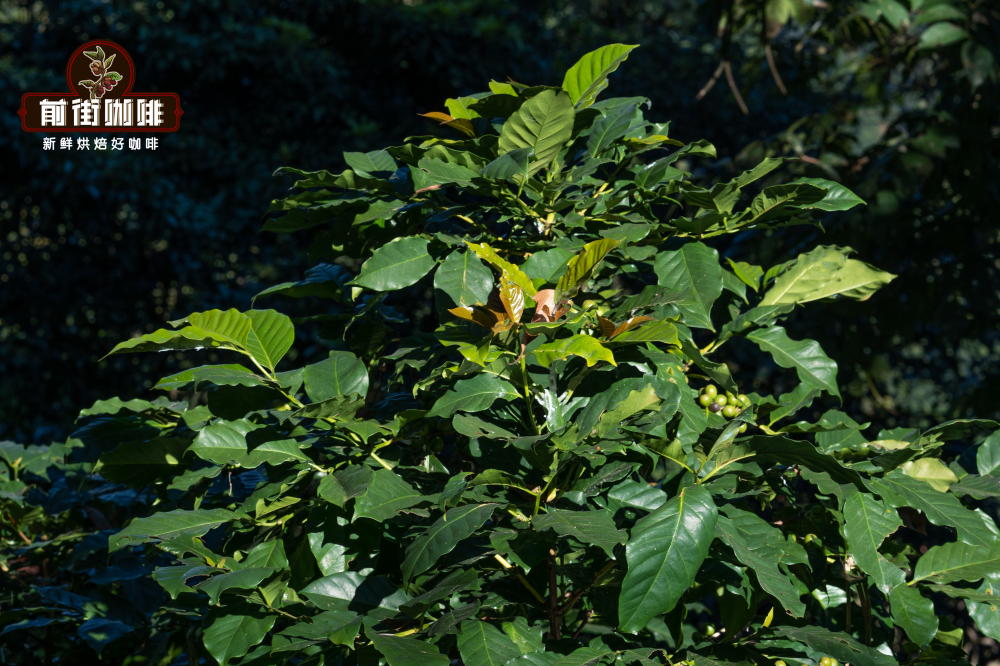
FrontStreet Coffee took a fancy to this "green pearl on the border" and established its own coffee estate in Lincang, planting the oldest Arabica variety—Typica.
Front Street 2013 Sun-Dried Typica comes from the FrontStreet Coffee estate in the Lincang producing area.
Pu'er
Pu'er, as a tea hometown, has a 150-year history of coffee cultivation. In the early 1990s, Pu'er City began cultivating coffee as a backbone industry for adjusting the industrial structure and increasing farmers' income. Among the city's 9 counties and 1 district, 54 townships (towns) grow coffee.
Yunnan coffee varieties
Whether coffee tastes good is directly related to the variety. The varieties currently mainly cultivated in Yunnan include Catimor, Typica, Bourbon, Caturra, Catuai, and others, but the most common one on the market is almost always Catimor. Therefore, what is now called Yunnan small-bean coffee usually refers to Yunnan Catimor.
FrontStreet Coffee's Yunnan coffee covers two varieties: one is Catimor, such as Yunnan small-bean coffee; the other is Typica, such as Front Street 2013 Sun-Dried Typica coffee.
The name Yunnan small-bean coffee originates from Typica, because Typica beans are small, hence the name "small bean." Front Street has previously explained that because Catimor has high productivity and strong disease resistance, many growers reluctantly cut down Typica and switched to Catimor. At present, Yunnan's Catimor planting area is still relatively large, so the variety of Yunnan small-bean coffee has also become Catimor.
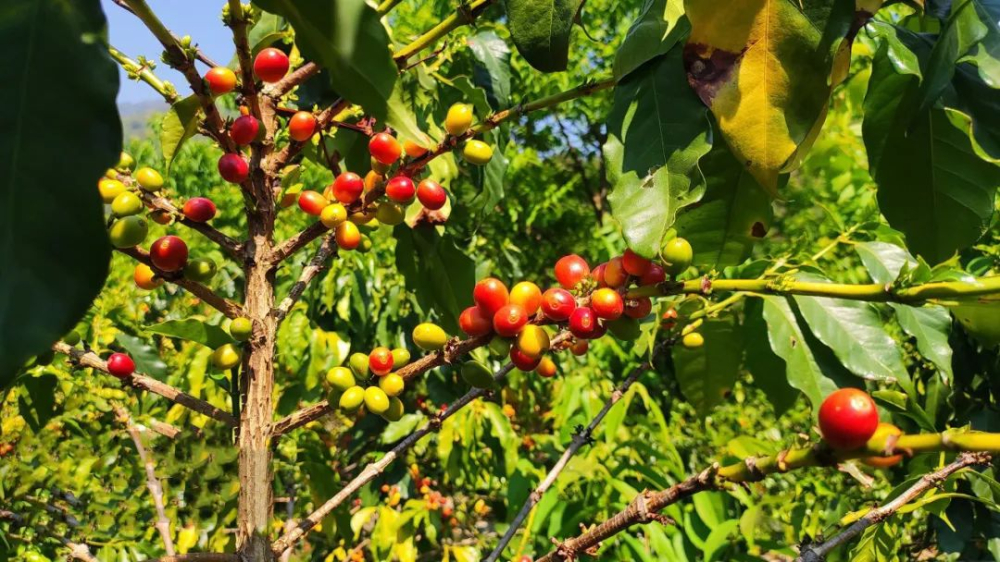
Typica coffee beans: the most classic high-quality Arabica variety, from which many commercial improved varieties are derived. Typica has excellent flavor expression and is recognized as a specialty coffee variety, but its yield is low and it is susceptible to rust disease, requiring more labor for management. Typica originated in Ethiopia and southeastern Sudan and is the most widely cultivated coffee variety in the Western Hemisphere. The plant is relatively robust but does not tolerate strong light, and yields are higher in Hawaii. Typica's top leaves are copper-red, hence the name red-top coffee.
What Front Street planted at the FrontStreet Coffee estate in Lincang, Yunnan, is precisely the Typica variety.
Catimor coffee beans: Catimor is not of pure Arabica bloodline, but a hybrid descendant of Timor (a Robusta species) and Caturra (a Bourbon variant), and therefore carries 25% Robusta genes. This bloodline also determines its flavor shortcomings: the aroma is not rich enough, the overall bitterness is relatively heavy, and it easily develops astringency and a rather pungent musty taste.
Bourbon coffee beans: this variety originated from Typica and spread after the French planted it on Bourbon Island (now Réunion Island) in 1708. Bourbon also has a beautiful aroma and rich flavor. Its yield and growth vigor are slightly higher than Typica, and it is suitable for planting at 1,200 to 2,000 meters, but its resistance to pests and diseases is relatively weak, and it is more sensitive to strong wind and heavy rainfall. Bourbon is the variant second only to Typica among small-bean coffees. The main branches initially grow upward at 45 degrees to the trunk and droop as they bear fruit. The nodes of the side branches are relatively dense, with many fruits and higher yield, but the berries are smaller and ripen more slowly. Bourbon's young top buds and leaves are green, hence the name green-top coffee.
Yunnan coffee bean processing methods
Coffee bean processing methods are closely related to local actual conditions. Yunnan has a long rainy season and unstable climate, so most local coffee beans use washed processing.
However, the Typica coffee beans grown at the FrontStreet Coffee estate use sun-dried processing: ripe and uniform coffee cherries are spread whole on raised beds for sun drying and turned from time to time to avoid uneven drying that could produce unpleasant fermented notes. At the same time, keeping the whole fruit allows more sugars to penetrate into the green beans, giving this coffee a rich aroma and stronger sweetness.
When FrontStreet Coffee's roaster received this sun-dried Typica green coffee, considering the need to highlight the aroma and sweetness while preserving the mouthfeel of Yunnan small-bean coffee, a medium roast was used.
FrontStreet Coffee brewing suggestions
Regarding brewing, Front Street recommends using freshly roasted coffee beans to experience the rich flavor to the greatest extent. The coffee beans shipped by FrontStreet Coffee are all within 5 days of roasting, because Front Street knows well that freshness has a huge impact on flavor. Front Street's roasting philosophy is "Freshly roasted good coffee," so that every customer who places an order can receive the freshest coffee. Coffee beans need about 4 to 7 days of resting, so when customers receive them, they are at their peak flavor stage.
Of course, some customers need Front Street to help grind the coffee, and that is no problem, but Front Street would like to remind: once coffee beans are ground in advance, they no longer need resting, because during transport the pressure from carbon dioxide inside the package can also round out the flavor, so the ground coffee can be brewed immediately upon receipt. However, ground coffee needs to be used up promptly, because after contact with air it oxidizes quickly, the flavor dissipates faster, and quality declines accordingly. Therefore, Front Street recommends buying whole beans and grinding fresh before brewing to better taste the coffee's flavor.
Front Street brewing parameters:
Dripper: Hario V60, water temperature: 88°C, dose: 15 grams, coffee-to-water ratio: 1:15, grind size: medium-fine grind (75% passing through China standard No. 20 sieve)
[Front Street 2013 Sun-Dried Typica Coffee Flavor] Heavy mouthfeel, prominent acidity and sweetness, with citrus and berry notes, a hint of fermented wine aroma, caramel-like sweetness, creamy finish, and black tea-like tea sensation.
[Washed Yunnan Small-Bean Coffee Flavor] Herbal, nutty aroma, chocolate, caramel.
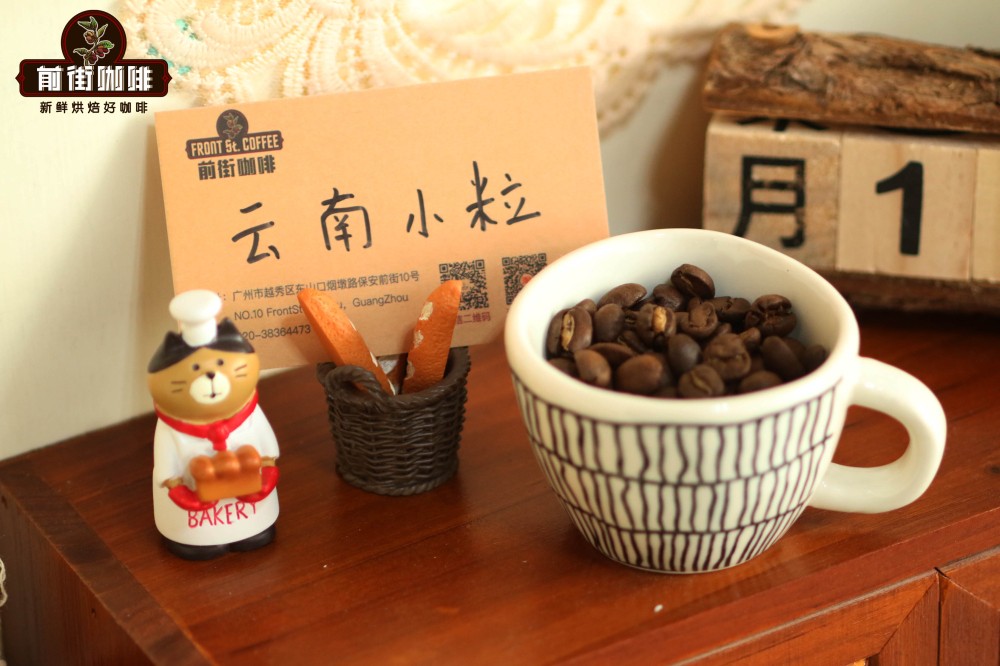
Yunnan coffee has entered the public eye and is gradually stepping into the ranks of specialty coffee. Front Street's Yunnan small-bean coffee, Yunnan Catimor coffee, and Front Street 2013 Sun-Dried Typica coffee—these three Yunnan beans have different flavors; of course, Front Street also has many single-origin coffee beans from different producing areas, which everyone can compare and taste alongside Yunnan coffee. Front Street believes that everyone has different tastes and preferences, but Front Street has more than fifty kinds of coffee beans from different producing areas, and there is always one that suits you! Welcome to Front Street to taste!
For professional coffee knowledge exchange and more coffee bean information, please follow Coffee Workshop (WeChat public account: cafe_style).
For more specialty coffee beans, please add the private WeChat of FrontStreet Coffee: qjcoffeex.
The above content is compiled by CoffeeHunters, a coffee news website.


