







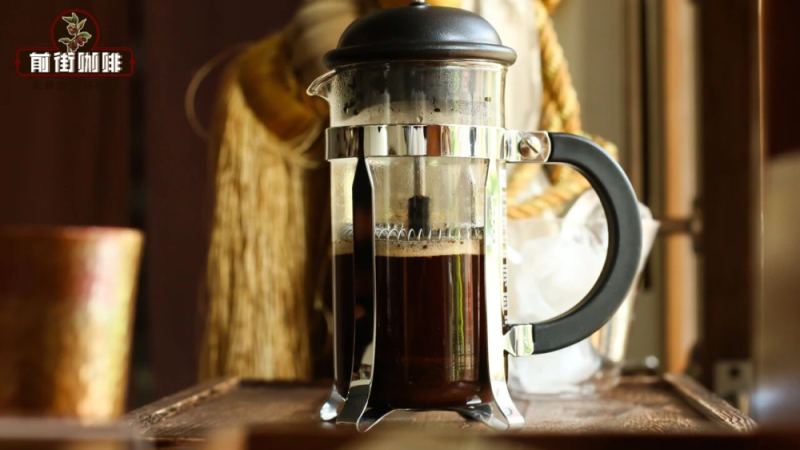
How Does Extraction Method Affect Coffee Quality in the Cup?
The French press and pour-over differ in one fundamental way: the French press steeps grounds in hot water for full immersion, while pour-over relies on drip filtration through a paper or metal filter. Immersion tends to produce a balanced, full-bodied cup with stable results, whereas drip filtration gives clearer layering and more room to adjust flavor by changing pour technique and grind.
Immersion lets all solubles dissolve at once, so the French press is forgiving of technique and needs only a coarse grind and a four-minute steep. Pour-over dissolves compounds in stages, so grind size, water temperature, and pour speed all shift the cup. Because of this, pour-over highlights coffee aroma and acidity, while the French press favors body and sweetness.
The French press and pour-over coffee are two completely different extraction methods—the former relies on immersion, while the latter depends on drip filtration. From the perspective of Front Street, this article systematically sorts out the operating principles, taste characteristics, parameter control, and applicable scenarios of both. The French press is easy to operate with stable extraction and a balanced, full-bodied flavor; pour-over offers clear layers and high playability, precisely showcasing the personality of the coffee beans. The article also details the recommended equipment for pour-over, grinding degree, and water temperature pairings, as well as several coffee beans recommended by Front Street suitable for different taste preferences, helping coffee enthusiasts find the brewing method that suits them best.
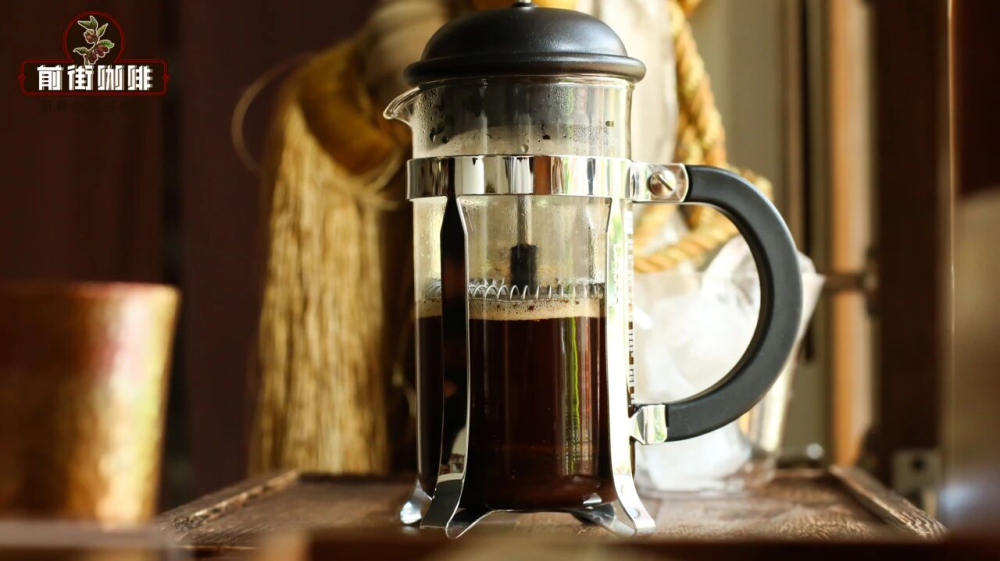
The most fundamental difference between the French press and pour-over coffee, simply put, is the distinction between the two approaches of immersion and filtration. The French press follows the immersion extraction route, while pour-over falls under drip extraction. Next, Front Street will guide everyone through a comparison of these two brewing methods.
The difference in taste between French press coffee and pour-over coffee
Pour-over coffee is now one of the most common offerings in specialty coffee shops. Baristas control various brewing parameters to allow each bean to display its unique flavor direction. Precisely because of this, pour-over has greater room for variation and higher playability. Pour-over uses the water stream poured from a gooseneck kettle as the "extraction tool," stirring the coffee bed to gradually release the internal flavor substances. Different substances dissolve at different rates at each stage, which gives pour-over coffee a clearer sense of layering in taste.
How does the French press work?
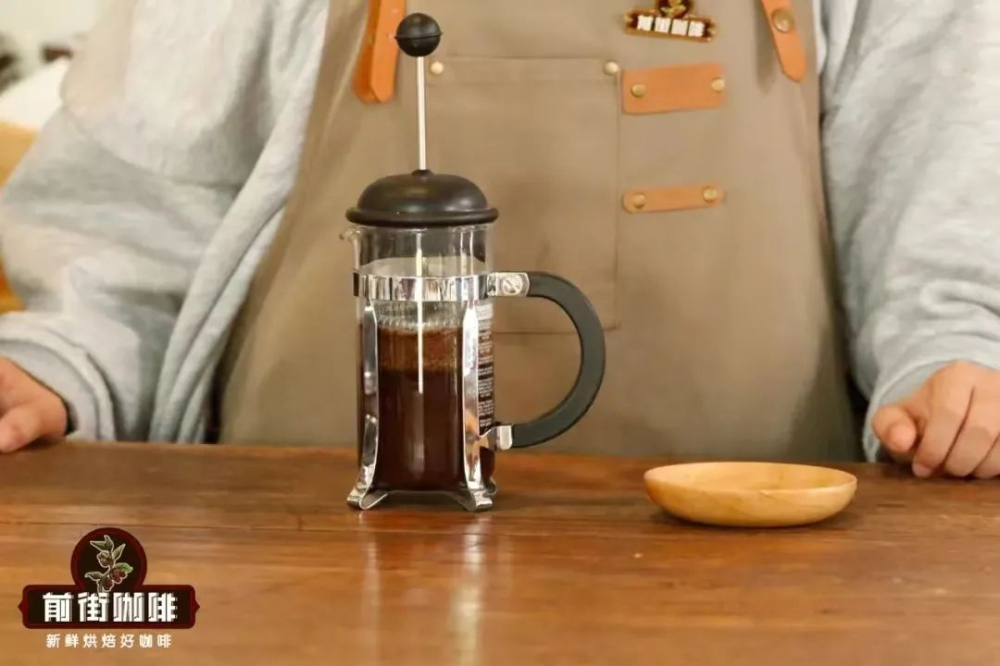
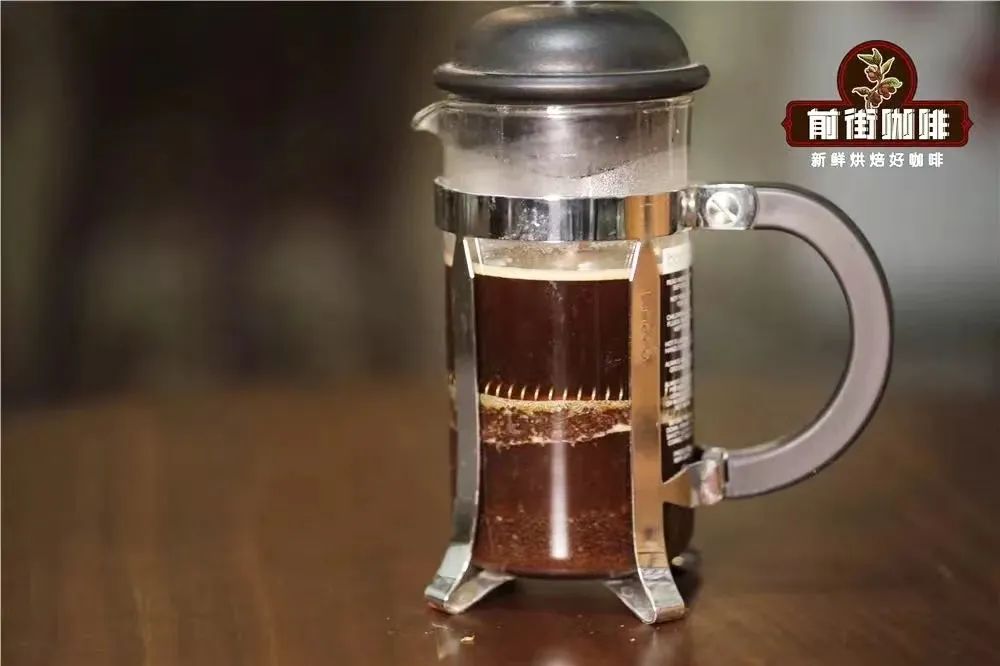
The French press consists of a cylindrical container and a lid, with a metal filter mesh attached to a rod in the center of the lid that can be pushed up and down to separate the coffee grounds from the coffee liquid, thereby controlling the extraction process. The operating logic of the French press is almost identical to brewing tea: soak the coffee grounds in hot water for a period, then press down the plunger and filter out the coffee liquid.
Compared to the complexity of pour-over, the French press uses a "one-time water addition" method, making it much simpler to operate. This also means there are only four variables affecting coffee quality: coffee-to-water ratio, grind size, water temperature, and immersion time. Its approach is similar to cupping—the extraction process is relatively stable, and the coffee flavor more faithfully reflects the bean's true character.
Because the French press completes water addition all at once, the temperature gradually decreases over time during extraction, so the starting water temperature needs to be slightly higher than for pour-over. If brewing a medium-light roast with acidic notes, you can use 92–94°C; for medium-dark roast with bitter notes, 89–90°C is recommended. In autumn and winter when room temperature is low, you can preheat the French press with boiling water first to slow heat loss during extraction.
Time is a variable that the French press can flexibly adjust. Since there is no human stirring factor, immersion time becomes one of the keys determining the extraction yield. Under the same conditions, the longer the immersion, the richer the coffee taste usually is, but it also more easily leads to over-extraction, bringing bitterness, astringency, and even a woody quality. Paired with a coarse grind, Front Street recommends immersing medium-light roast coffee for about 4 minutes; medium-dark roast beans more easily release bitterness, so 3 minutes 30 seconds is sufficient. This time range both fully releases positive flavor substances and avoids the bitter, astringent off-flavors caused by over-immersion.
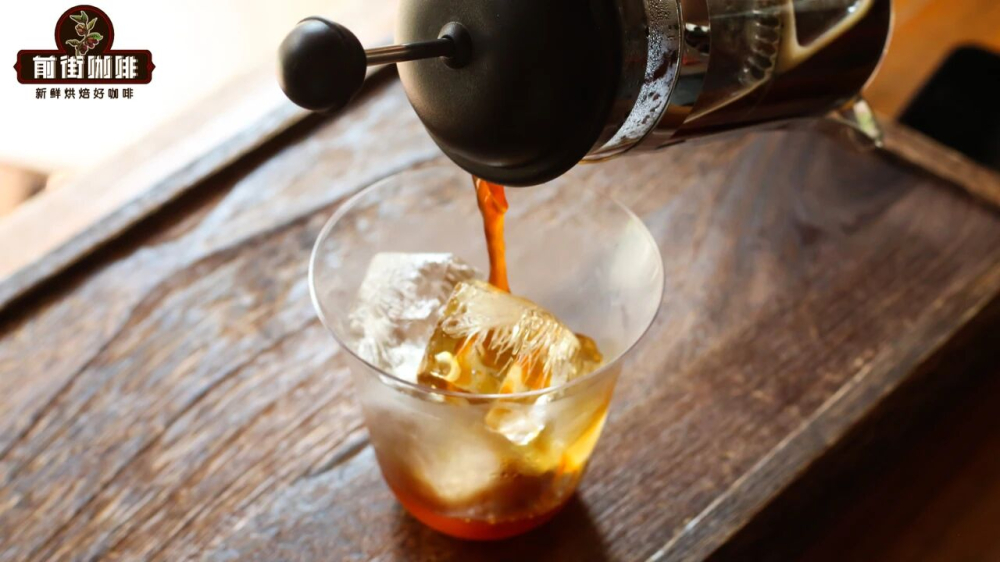
If asked whether pour-over or French press is better, Front Street believes there is no standard answer—what suits you is best. If you want to experience coffee's richer layering and variation, choose pour-over; if you want convenience and a cup of full-bodied, aromatic black coffee, the French press is a good choice.
The French press is a fully immersion-type device, and its extraction logic is exactly the same as brewing tea. Pour hot water all at once over the ground coffee, let the water fully penetrate the coffee bed, wait for the flavor substances to dissolve, and finally separate the grounds from the liquid to get a cup of black coffee. The biggest advantage of immersion-type devices is that they don't require much brewing skill and don't rely on any special accessories—much easier to master than pour-over methods, which is why they're also called "lazy person's coffee gear." Because it remains in an immersion state throughout, French press coffee tends toward a fuller body, and its flavor expression is relatively balanced.
What equipment is needed for pour-over?
To make pour-over coffee at home, you need to prepare the following tools: gooseneck kettle, dripper, carafe, grinder, filter paper, electronic scale, and thermometer.
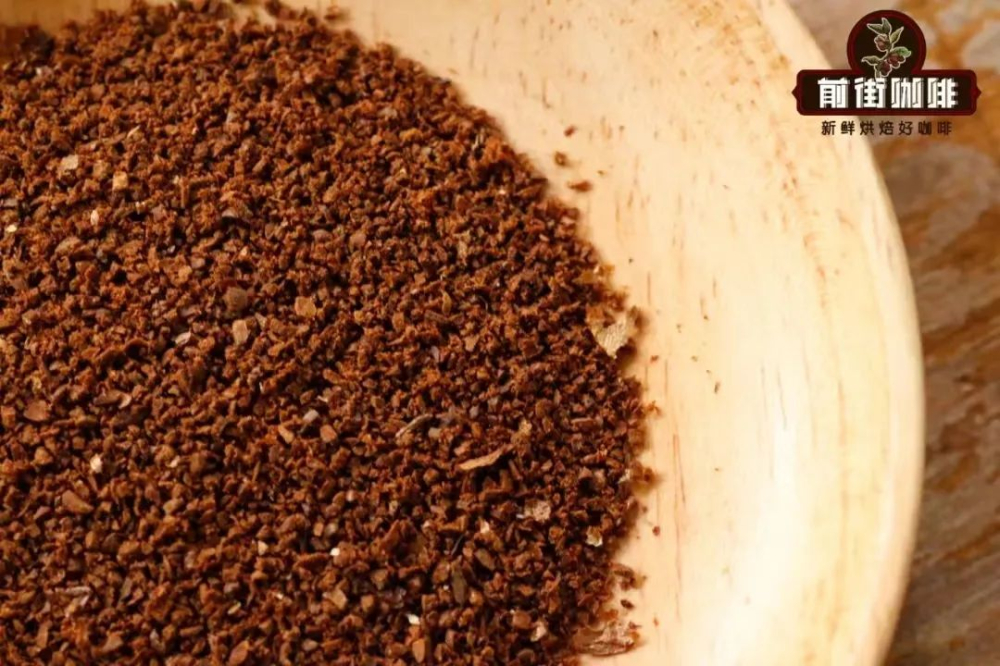
The grinder plays a very critical role in the pour-over process, generally divided into manual and electric types. Regardless of which grinding device you choose, the core goal is to obtain evenly ground coffee. The coarseness of the coffee grounds directly affects the taste of the coffee: too coarse easily leads to under-extraction and a weak taste; too fine easily leads to over-extraction and a bitter taste. When adjusting the grind size, Front Street uses a tool—the Chinese No. 20 0.85mm standard sieve. For example, Front Street's Yirgacheffe is a medium-light roast high-altitude bean with high hardness. Front Street wants to extract more rich aromatic substances, so it chooses a grind size with an 80% pass rate through the No. 20 standard sieve, corresponding to a setting of 10 on the store's EK43s grinder.
The thermometer is used to measure the temperature of the hot water. Water temperature and grind size play similar roles: the higher the water temperature, the higher the extraction efficiency, the easier it is to dissolve various substances, and the concentration rises accordingly. If you brew with near-boiling hot water, it easily extracts unpleasant bitter substances, so when brewing medium-dark roast beans, Front Street uses different parameters than for light roast beans. For medium-dark roast coffee beans, Front Street recommends 87–90°C; light roast coffee needs higher water temperature to bring out the aroma, so 91–93°C is used.
There are many types of drippers on the market. Different styles of drippers bring different brewing effects and require corresponding filter papers to separate the coffee grounds. Front Street Coffee (FrontStreet Coffee) stores use Hario V60 and KONO drippers in daily production. The V60 dripper is mainly responsible for lighter roast beans, while the KONO dripper is used for darker roast beans.
The role of the gooseneck kettle is to steadily pour hot water into the coffee grounds. A fine-spout kettle can pour a stable stream of water, more evenly washing the coffee bed and releasing flavor substances. The electronic scale helps us control the total water amount and extraction time, ensuring execution according to the original brewing plan. Front Street recommends buying a fast-display electronic scale with a timing function, or simply searching for "pour-over coffee electronic scale" to purchase.
The charm of pour-over coffee lies in the ability to adjust various subtle parameters, changing the extraction variables at different stages, and ultimately achieving the flavor and taste you are satisfied with. Front Street believes that all the above are important parameters affecting pour-over coffee. Only by mastering them properly can extraction be more stable and flavor presentation more ideal.
In Front Street's view, the choice of coffee beans suitable for pour-over and French press is very broad. Regardless of origin, variety, or roast level, as long as it suits your taste, it can be used for pour-over extraction.
For those who prefer floral flavors, Front Street Panama Geisha coffee is recommended—one of the most expensive coffees in the world; for those who like fresh, acidic coffee, Front Street Ethiopia Huakui coffee beans are recommended, with notes of black tea and berries; for those who enjoy a balanced nutty-caramel taste that is neither sour nor bitter, Front Street Brazil coffee beans are recommended; if you still favor the robust, full-bodied taste of Indonesian coffee, we suggest purchasing the highest-grade Front Street Golden Mandheling coffee, which undergoes multiple rounds of hand sorting to minimize the defect rate, making the coffee aroma clearer and the sweet aftertaste more outstanding. All the above coffee beans can be purchased and ordered at Front Street stores and the Front Street Tmall flagship store.
The above content is compiled by CoffeeHunters, a coffee news website.


