








Why Do Espresso Bars Rely on Blending Coffee Beans?
Espresso is a concentrated coffee extracted quickly under about 9 bars of pressure on an espresso machine. The Italian method has a history of more than a century, and its name traces to the Italian verb esprimere, from Latin exprimo, meaning to press out; some linguists link it to the English word express, suggesting speed. Americano is the same shot diluted with hot water.
Blending coffee beans is standard for espresso because coffee is an agricultural product whose flavor shifts with terroir and climate each year. Shops combine beans from different origins in set proportions to balance flavor and keep the cup stable, since consistency is a key reason customers return to the same bar over a long period.
Espresso is a highly concentrated coffee liquid extracted quickly under 9 bars of pressure using an espresso machine, occupying a pivotal position in the coffee family. This brewing method originating from Italy has been passed down for a century, and its name itself is the past participle of the Italian verb esprimere, tracing back to the Latin exprimō, meaning "to press out"; however, some linguists associate it with the English word express, suggesting it implies the meaning of "fast." Regardless of how the etymology is interpreted, it precisely points to the two core characteristics of Espresso. Next, Front Street Coffee will explore espresso from bean selection, extraction parameters, flavor performance, and the various classic coffee drinks derived from it, guiding everyone to a comprehensive understanding of the differences between espresso and Americano black coffee.
For more specialty coffee knowledge, please follow: Front Street Coffee ( Frontsteet Coffee )
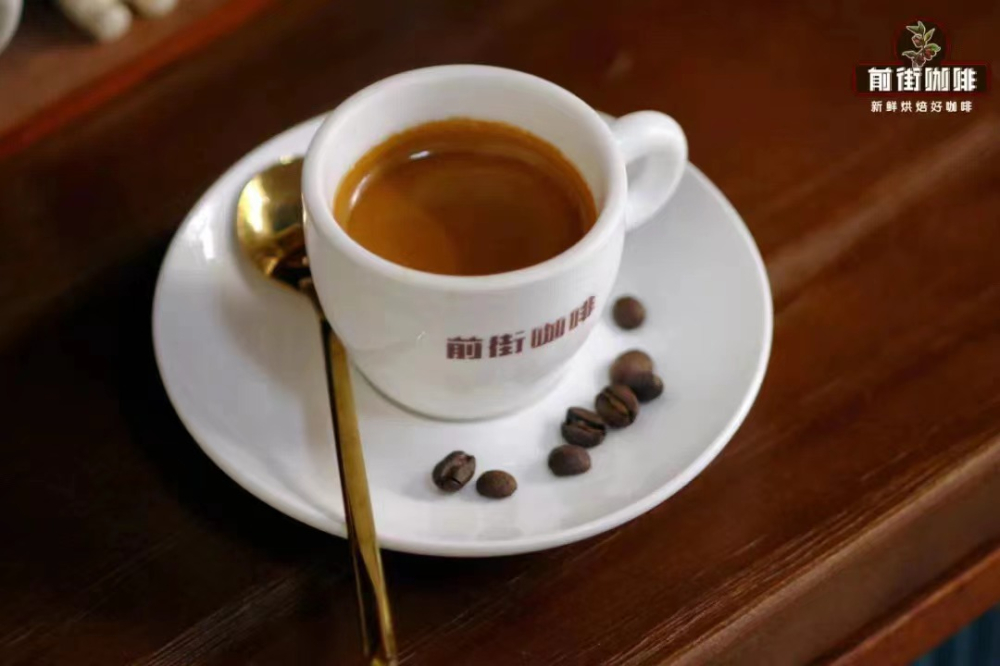
Espresso is a highly concentrated coffee liquid extracted under 9 bars of pressure by an espresso machine, and is a member of the coffee category.
Espresso is an Italian method of brewing coffee with a history of over a century. Espresso is the past participle of the Italian word esprimere, derived from the Latin exprimō, meaning "to press out." However, some linguists believe its meaning is similar to the English word express, carrying the sense of "fast." Although people interpret the etymology differently, it precisely reflects the two major characteristics of espresso.
Recommended coffee beans for espresso?
Front Street Coffee (FrontStreet Coffee) typically uses espresso blend beans composed of coffee beans from different origins to extract espresso. The characteristic of blended coffee beans lies in the fact that coffee, as an agricultural product, is affected by terroir and climate each year, resulting in insufficient stability in coffee flavor. Therefore, it is necessary to understand the flavor characteristics of coffee beans from different regions, use different proportions, and employ the method of complementing strengths and offsetting weaknesses to balance the flavor of espresso and increase stability.
Customers are willing to repurchase coffee from a shop over a long period, and the consistency of that shop's products has become a very important factor. Another characteristic of blended coffee beans is that blending coffee beans from different regions can reduce coffee costs. High cost-effectiveness and stable coffee products are also important reasons for contemporary consumers when choosing products.
Espresso Extraction Ratio and Parameters
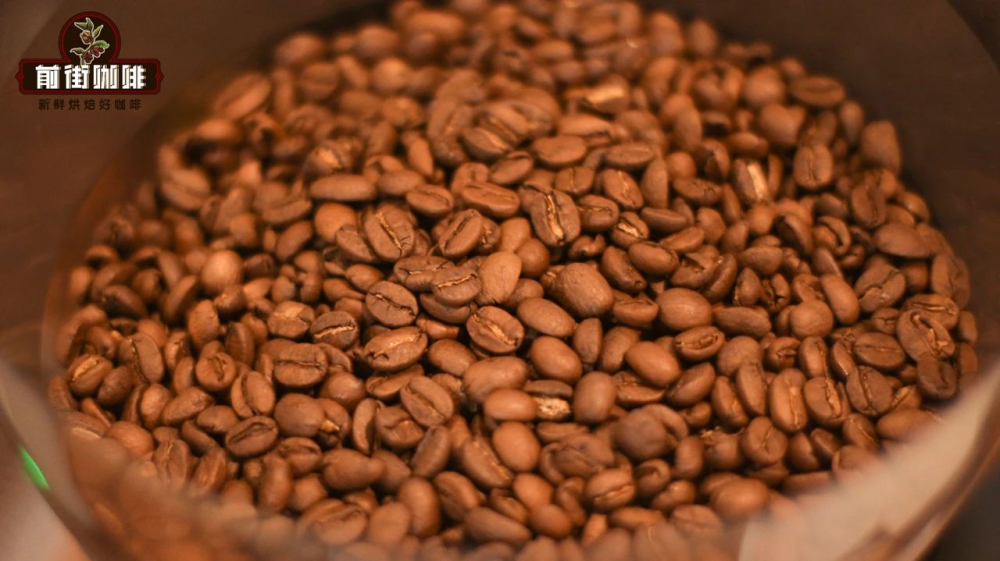
Front Street Coffee (FrontStreet Coffee) stores use a medium-dark roasted "Sunflower Warm Sun Espresso Blend" made from Ethiopian Yirgacheffe sun-dried Red Cherry coffee beans + Honduras Sherry coffee beans to extract espresso.
For those who enjoy rich and aromatic coffee, Front Street Classic Espresso Blend is recommended. This is a recipe combining beans from three origins: Brazil, Indonesia, and Vietnam, using a dark roast, which maximizes the rich aroma of the coffee and allows everyone to easily extract abundant and creamy crema. Whether making an Americano diluted with water or a latte paired with milk, it is very suitable. You can purchase and place orders at the Front Street Taobao store or the Front Street Tmall flagship store.

To make a single shot of espresso (1 shot), 10-11g of coffee grounds are used to extract 20-25g of coffee liquid, with an extraction time of about 22 seconds; to make a double shot of espresso, 19-20g of coffee grounds are used to produce 35-40g of coffee liquid, with an extraction time of about 29 seconds.
Through extremely fine grinding, and in a vacuum environment of 9-10 bars, water at 94 degrees is rapidly passed through the coffee particles. The extracted espresso drips from the portafilter smoothly like honey, with colors ranging from reddish-brown to golden yellow. After extraction is complete, the surface of the espresso is covered with a layer of delicate golden crema (the oily foam produced by carbon dioxide in the coffee particles combining and emulsifying with coffee oils in a vacuum environment).
Members of the Espresso Family
As an extremely concentrated coffee liquid, espresso has naturally been used by people in various creative ways. Next, Front Street Coffee (FrontStreet Coffee) will briefly give examples of common café products made with espresso.
Latte: Add steamed milk/iced milk to the extracted espresso. Latte in Italian means "milk" (so not all lattes are necessarily coffee), therefore "Caffe Latte" originally expresses the fusion of coffee (caffe) and milk (latte).
Americano: Add hot water/iced water to the extracted espresso. There is no fixed ratio; simply add an appropriate amount of water based on the concentration and flavor of the espresso/your own taste.
Mocha: Add chocolate to the extracted espresso and blend, then add steamed milk/iced milk. The word "mocha" originates from the Port of Mocha in Yemen, where the mocha coffee exported at that time had a very rich and aromatic flavor. It has distinct acidity, strong body and fermented notes, moderate sweetness, and a finish with rich dark cocoa aroma. The appearance of the modern espresso mocha is meant to replicate the flavor of mocha coffee.
Cappuccino: Add steamed milk and delicate creamy milk foam to the extracted espresso. The name Cappuccino comes from the Capuchin Catholic Order of St. Francis. When this order went to Italy to preach, they wore dark brown robes and small pointed hoods made of folded cloth on their heads. At that time, Italians had a flash of inspiration, whipping milk into a dense and stable foam and pouring it into espresso. The coffee in the cup presented a ring of brown close to the color of the robes, and then a spoon was used to shape the milk foam on the surface into a pointed hood shape.
Flat White: The characteristic of Flat White is that although it is also a mixture of milk and coffee, compared to latte and cappuccino, Flat White contains less milk and has a more prominent coffee flavor! Therefore, if you want a milk coffee but don't want too much milk, you can choose Flat White — rich coffee flavor, mellow and smooth mouthfeel.
Dirty Coffee: This coffee is made by filling a cup with pure white milk, then pouring double espresso over it, using the gravity of the coffee liquid to seep downward, giving a visual effect of "tainting" the milk, hence the name. Because the coffee is hot and the milk is cold, Dirty Coffee is all about the distinct layers, so after the coffee is made, there is no need to stir it evenly, nor is a straw needed — we simply take big sips and enjoy.
The above content is compiled by CoffeeHunters, a coffee news website.


