







How do you describe coffee in a tasting
Single-origin coffee tasting follows five steps: aroma, taste, flavor, mouthfeel, and aftertaste. Each step has its own points of perception and its own vocabulary, so a cup can be described in an organized way rather than with vague praise. Tasting begins the moment beans are ground, because grinding breaks the bean structure and releases aromatic compounds into the air.
Aroma splits into dry and wet. Dry aroma comes from grounds before water touches them and is usually the most concentrated; wet aroma appears after hot water is added and is weaker but shows different characteristics. Medium-light roasts tend toward floral and fruity notes, while medium-dark roasts move toward caramel and spice, as seen in a Golden Mandheling.
To accurately evaluate whether a cup of coffee is good or bad, there is actually a set of tasting logic that can be followed. Front Street breaks down the tasting of single-origin coffee into five steps: aroma, taste, flavor, mouthfeel, and aftertaste, each with specific points of perception and methods of description. Once you master this process, whether for daily drinking or writing tasting notes, you will be able to express your impressions in a more organized way. The latter part of the article uses Front Street PWN Golden Mandheling coffee to show how to apply the tasting framework to a specific bean type and experience Mandheling's signature richness, caramel, and spice notes.
Tasting coffee may seem to have a high threshold, but it is actually not complicated in practice. As long as you master a general tasting logic, you can judge the quality of a cup of coffee. When we turn the sensory experience of drinking into written or spoken expression, we can also describe a cup of coffee clearly and coherently. Next, Front Street will explain the five steps of coffee tasting to help everyone get into the state of coffee tasting and description more quickly.
Step one of tasting: aroma
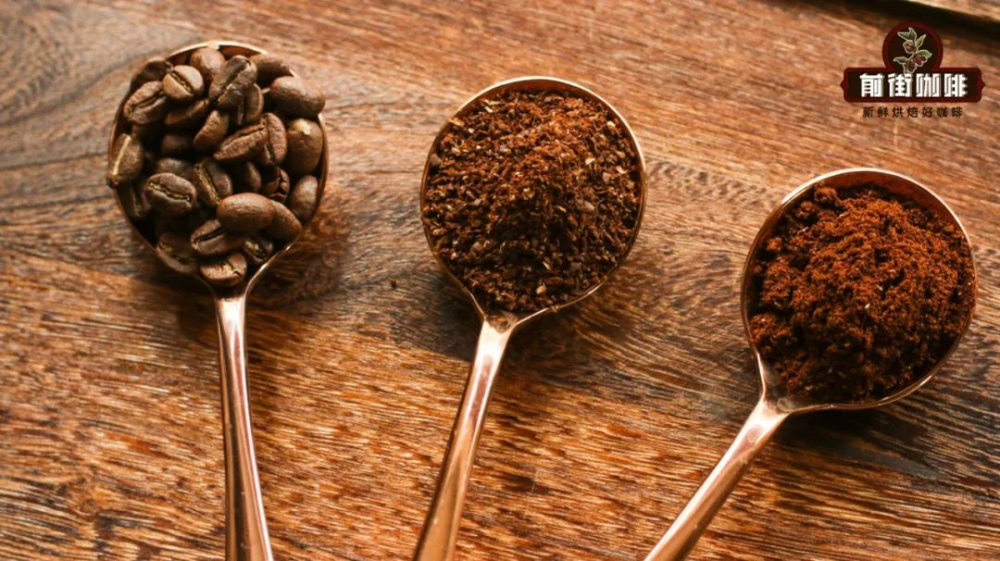
During roasting, coffee beans undergo chemical reactions that produce a considerable number of aromatic compounds. These substances do not necessarily need water to be released. When coffee beans are ground into powder, the structure of the beans is broken, and a large number of aroma components escape into the air. So tasting actually begins the moment the beans are ground. The first thing we need to do is use orthonasal olfaction, through inhalation, to capture and experience these aromas floating in the air. Simply put: smell the aroma.
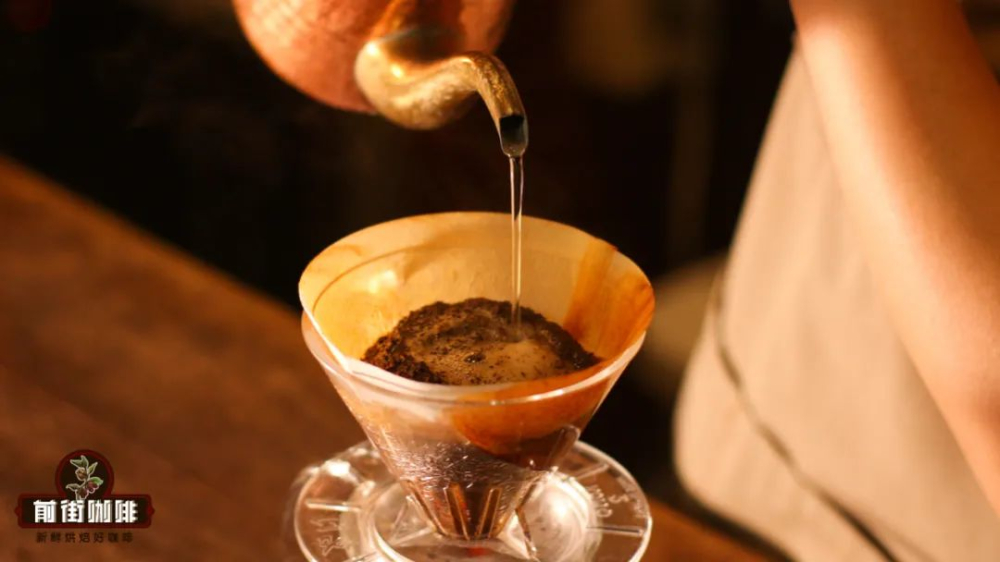
Aroma can be divided into two parts: dry aroma and wet aroma. Dry aroma refers to the aroma released by coffee grounds in a dry state before they come into contact with water, and at this stage the aroma concentration is usually at its highest; wet aroma is the smell given off after coffee grounds meet hot water. Compared with dry aroma, wet aroma is often much weaker in intensity, but precisely because the concentration is lower, we instead have the opportunity to capture different aroma characteristics.
Generally speaking, medium-light roasted beans tend toward fresher aromas such as floral and fruity notes; medium-dark roasted beans mostly present steadier types such as roasted notes, chocolate, and spices. According to the specific aroma performance, we can pair it with suitable adjectives to form a complete description. Taking floral aroma as an example, there are quite a few usable adjectives, such as rich, elegant, and so on; just choose according to the tone of the aroma.
Step two of tasting: taste
After smelling the aroma comes the most crucial part: drinking. We need to experience the coffee entering the mouth from three different dimensions. Since these items happen simultaneously, Front Street will explain them one by one here in order. The first thing to discuss is the taste of the coffee. In coffee, there are four tastes we can perceive: sour, sweet, bitter, and salty.
But we cannot merely judge which tastes are present in the cup; we also need to distinguish their intensity and quality. Front Street takes acidity as an example (because acidity is the most prominent expression in coffee). The acidity in coffee can be good or bad, and the industry habitually calls it acidity quality. High-quality acidity makes coffee pleasant to drink, with corresponding descriptors including soft, bright, lively, and so on; conversely, it makes the coffee hard to swallow, with corresponding descriptors such as sharp, flat, harsh, and so on.
Step three of tasting: flavor
Flavor perception is one of the most closely watched parts of specialty coffee. Its method is to combine the aroma and taste given off by the coffee in the mouth, and then associate it with the taste of some food encountered in daily life.
This is the most enjoyable part of coffee tasting, and also the most difficult step. The most fundamental reason many friends cannot describe coffee is that they are unable to produce flavor associations and can only remain at the level of taste in step two. In this situation, Front Street suggests first understanding how flavor is perceived through the article "Is Coffee Flavor Mysticism?"
Once we have mastered flavor perception, we can combine it with taste to organize simple descriptive sentences. For example: if you perceive citrus flavor in the coffee, and the coffee's acidity feels bright to you, then the description can be written as: bright citrus acidity.
Step four of tasting: mouthfeel
Mouthfeel refers to the tactile experience that coffee brings us. The word "body," which everyone often hears, is mainly used in the coffee field to describe coffee's body thickness. Body thickness refers to the "weight" felt by the tongue after the coffee enters the mouth.
An example Front Street often gives: skim milk, whole milk, and cream, these three dairy products bring completely different mouthfeels. Skim milk tastes as light as water, whole milk is somewhat heavier, full and smooth overall, while cream is very thick and has a heavy feeling. The same principle applies to coffee.
The higher the coffee's body, the heavier the weight felt by the tongue; the lower the coffee's body, the opposite. (For detailed content about body, please refer to the article "Coffee Body.")
The final step of tasting: aftertaste
After we have experienced the coffee from the above three dimensions, we can swallow. After swallowing, there is still one item to notice, and that is the coffee's aftertaste. In other words, the tasting of coffee is not truly over until the aftertaste has been experienced.
Aftertaste, in plain terms, is the aroma left in the mouth after swallowing coffee, or the state in which the coffee aroma can still be clearly felt continuously emerging in the mouth.
The aftertaste of coffee mainly comes from the capture of coffee aroma by retronasal olfaction. The principle is not complicated: coffee contains quite a few oil-soluble aromatic substances. After drinking coffee, some oils remain in the mouth and are not swallowed. As these oils gradually break down, the aroma components hidden within them volatilize, and are then captured by retronasal olfaction, so we perceive aroma. This is the aftertaste.
The evaluation of aftertaste also has two dimensions: first, how long it lasts, and second, whether the aroma is good or bad. A high-quality aftertaste remains for a longer time, which indicates that the coffee is rich in substances and fully extracted (different brewing methods have different standards for judging aftertaste duration); judging whether the aftertaste is good or bad from the aroma level is the same as with flavor, mainly depending on whether the flavor it presents is positive or negative.
Front Street takes light-roast pour-over coffee as an example. In light-roast pour-over, the duration of a high-quality aftertaste is about more than ten seconds, with flavor expressions such as light floral notes, tea-like notes, and honey; while a poor aftertaste lasts for a very short time, or even not at all. In terms of flavor performance, it is: dry, bitter, or other unpleasant tastes.
How to taste a cup of Golden Mandheling coffee?
Front Street Golden Mandheling coffee is PWN Company's exclusive signature product. Because the trademark "Golden Mandheling" was registered early on, only Mandheling produced by PWN Company can be called "Golden Mandheling." The characteristic of Front Street Golden Mandheling coffee is that the green beans have undergone multiple rounds of screening, and the overall quality is very high. PWN purchases Mandheling green beans of 18 screen size and above, G1 grade with fewer than 3 defective beans in a 300g sample, which is the highest grade of Indonesian green beans. Subsequently, defective beans are strictly selected according to standards through 1 mechanical sorting plus 3 manual sortings, ensuring that the color, shape, and size of the Mandheling coffee beans are uniform. Therefore, Front Street PWN Golden Mandheling tastes cleaner and more transparent, and its body and sweetness are also more obvious.
After Front Street PWN Golden Mandheling coffee is ground into powder, a full roasted hazelnut aroma can be smelled. During the stage of pouring hot water and blooming, the caramel smell is very prominent. The coffee enters the mouth with flavors of dark chocolate, nuts, caramel, and sweet fruit. As the temperature drops, various spice notes begin to fill the mouth. The finish is lasting, the balance is high, the overall layers are changeable, it is rich and full-bodied, and the mouthfeel is clean.
The above content is compiled by CoffeeHunters, a coffee news website.


