







How Did Geisha Coffee Become a Specialty Standout?
Hacienda La Esmeralda in Panama is where Geisha coffee reached the world. The Peterson family bought the Boquete estate in 1964 when it was a dairy farm, introduced Caturra and Catuai in 1987, built a wet processing plant in 1994, and acquired the neighboring Jaramillo estate in 1996. Geisha won the BOP competition in 2004.
On Jaramillo, Daniel Peterson noticed sparse, slender trees that consultant Don Pachi identified as a variety introduced from Costa Rica thirty years earlier. Most Panamanian farmers had cut it down for poor disease resistance, but Daniel transplanted the trees to a higher altitude. The estate now grades Geisha as Red, Green and Blue Label.
Hacienda La Esmeralda in Panama is where Geisha coffee began its journey to the world. From the Peterson family taking over the farm in 1964 to Geisha winning the BOP competition in 2004, this history became a legend in the specialty coffee world. This article will review the estate's production area evolution and the discovery of the Geisha variety, and focus on explaining the classification standards and differences among the three grades: Red Label, Green Label, and Blue Label. At the same time, drawing on Front Street Coffee's sourcing experience, it will introduce the specific product information, flavor performance, and pour-over extraction parameters of Red Label and Green Label Geisha, helping coffee lovers fully understand the origins and tasting points of this top-tier Geisha.
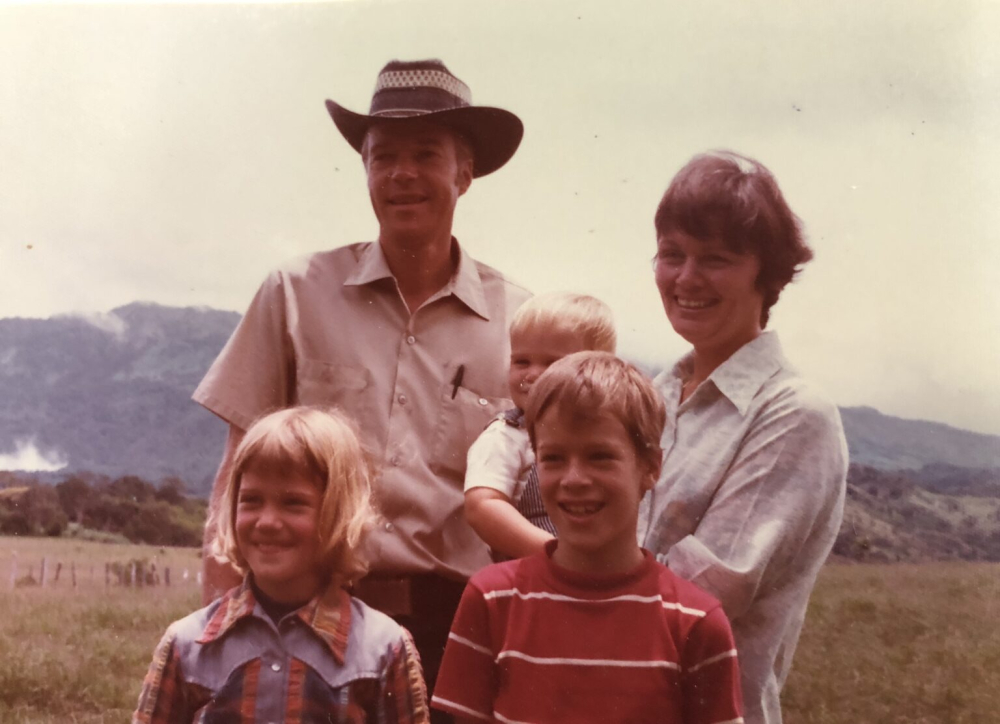
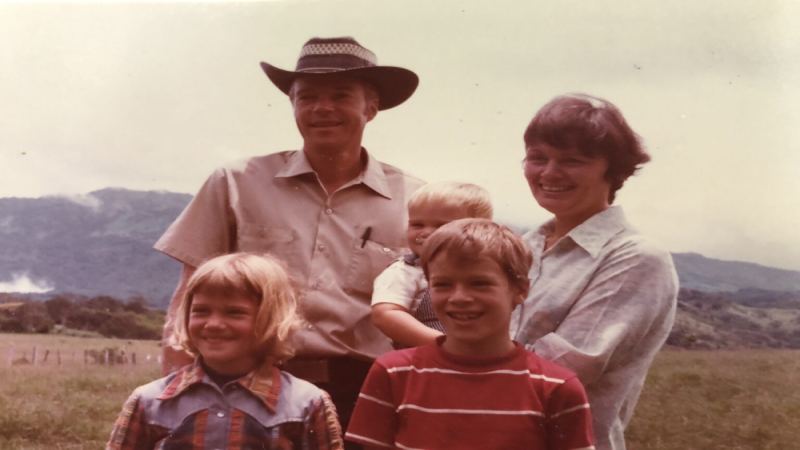
The story of Hacienda La Esmeralda can be traced back to 1964. That year, American banker Rudolph Peterson left his career, moved to Panama, and purchased this estate in the Boquete production area. Initially, the estate's main business was dairy farming and had nothing to do with coffee. Later, his son Price gave up his identity as a doctor and returned to the family to help his father manage the farm. In 1987, Price introduced two coffee varieties, Caturra and Catuai, and the estate began to engage in coffee cultivation. In 1994, a wet processing plant was completed, and Hacienda La Esmeralda finally gained the ability to process coffee beans independently. In 1996, the Peterson family acquired the neighboring Jaramillo estate, which had outstanding geographical conditions and coffee varieties whose flavor performance was also quite good.
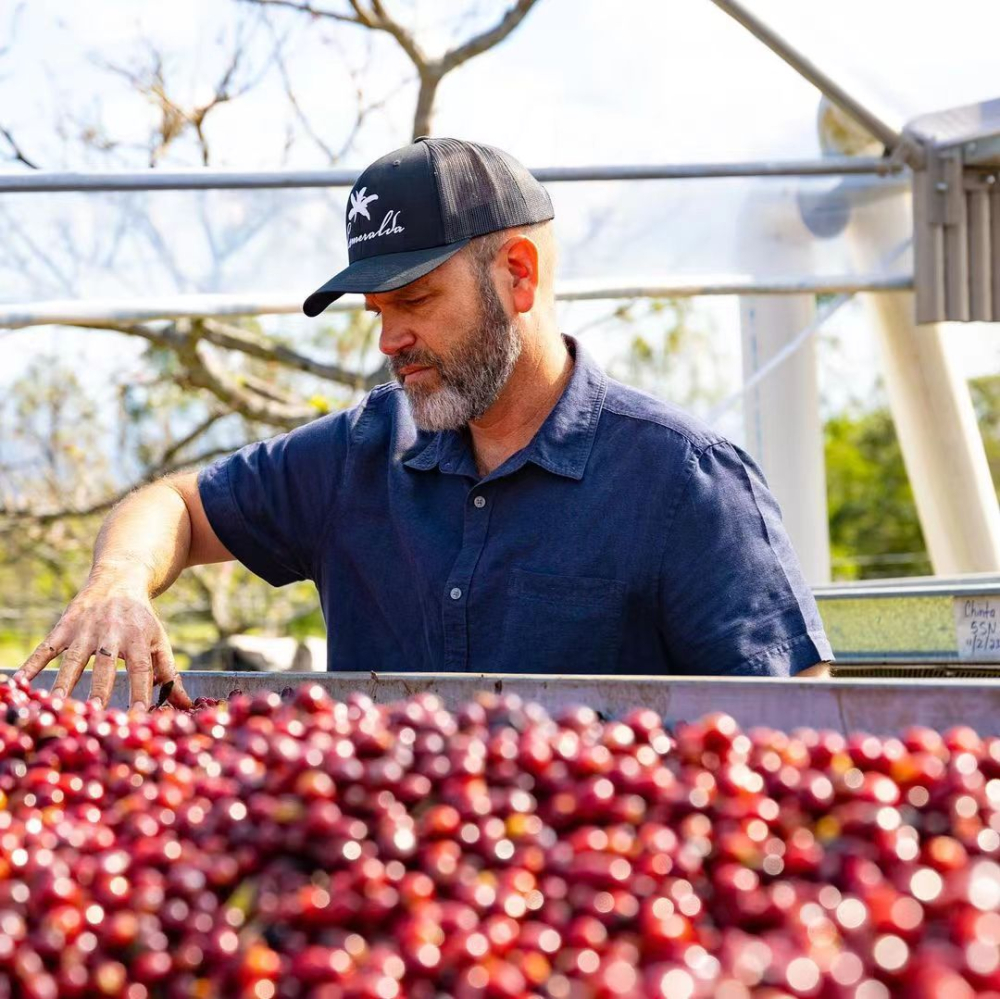
According to relevant information consulted by Front Street Coffee, the reason Jaramillo estate was favored by the Petersons was that this land had originally been planted with coffee and was at a higher altitude. While managing the estate, Daniel Peterson (the youngest son of the Peterson family) noticed that some coffee trees were in an unattended state, with sparse plants and slender branches. Mr. Don Pachi, who was then serving as a coffee consultant, identified these trees as the variety he had introduced from Costa Rica thirty years earlier. Because this variety had poor disease resistance and was difficult to manage, most local coffee farmers in Panama cut it down.
Daniel, however, chose to transplant these trees to a higher-altitude area and began learning coffee cupping. These coffee trees were the later famous Geisha. Later still, the Geisha discovered by Peterson won the championship in the 2004 Best of Panama (BOP), with a remarkable performance. Expert appraisal confirmed that it was the Geisha variety from Ethiopia. After that, the Peterson family invested a great deal of energy into infrastructure construction to support the strict separation and meticulous processing of excellent lots, which is exactly the Front Street · Red Label Geisha and Front Street · Green Label Geisha we see today.
Hacienda La Esmeralda Red Label Geisha
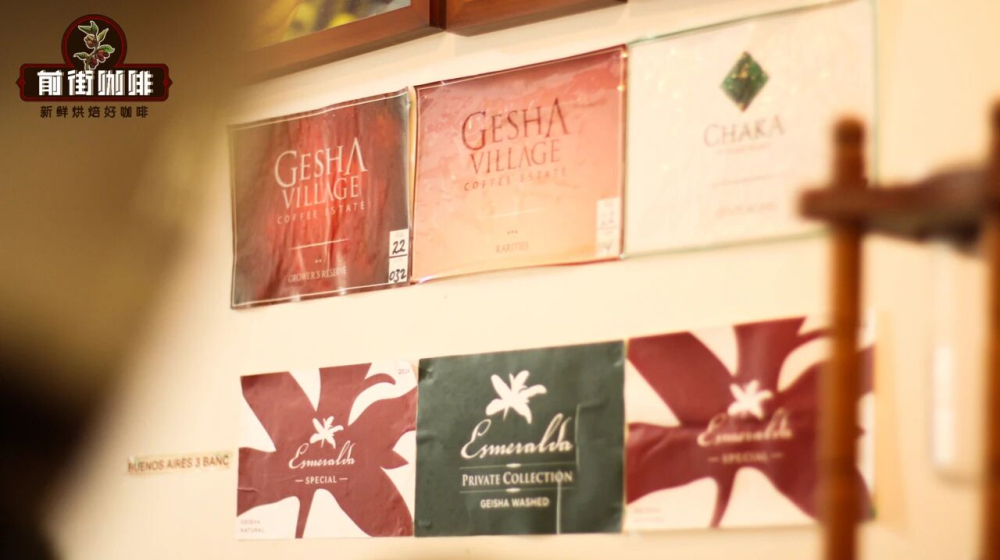
The Geisha from Esmeralda Special, commonly known as Red Label. It requires a growing altitude of 1,600 to 1,800 meters, a cupping score of 90 or above, and the coffee beans must come from the two production areas of Jaramillo and Cañas Verdes.
In addition, Red Label also needs to participate in the independent auction held by Hacienda La Esmeralda itself. Only Geisha lots selected from divided plots and entered into the auction count as true auction Red Label. However, there is also non-auction Red Label on the market, which in fact consists of Geisha selected from the same plots but not entered into the auction and released to the market. The variety and quality are no different, with the difference mainly reflected in the selling price.
Front Street · Hacienda La Esmeralda Red Label Geisha Coffee Beans
Region: Boquete, Panama
Estate: Hacienda La Esmeralda, Mario Plot
Altitude: 1,600-1,700 m Variety: Geisha Processing Method: Natural Flavor: Citrus, complex fruits, rose tea, honey
Hacienda La Esmeralda Green Label Geisha
Private Collection series, commonly known as Green Label. Its main difference from Red Label is that it does not participate in the independent competition lots, but its quality still belongs to excellent Geisha. Green Label Geisha also uses coffee beans grown at an altitude of 1,600 to 1,800 meters, from micro-lots in different plots such as Jaramillo and Cañas Verdes.
Although Green Label Geisha is not as high-grade as Red Label, it still retains the classic flavors of Geisha, such as its distinctive floral aroma, fruity notes, citrus-like acidity, and a rich, juicy mouthfeel. Therefore, Front Street Coffee believes that among the three labels, Green Label Geisha offers the most outstanding value for money.
Front Street · Hacienda La Esmeralda Green Label Geisha Coffee Beans
Region: Boquete, Panama Estate: Hacienda La Esmeralda Altitude: 1,600-1,700 m Variety: Geisha Processing Method: Natural Flavor: Jasmine, citrus, honeydew, berries
Geisha coffee also has particular requirements in the brewing process. If you want to experience its rich flavor layers to the greatest extent, be sure to use freshly roasted coffee beans. Front Street's roasting philosophy is "freshly roasted good coffee," so all shipped coffee beans are freshly roasted within 5 days, ensuring that every customer who places an order receives the coffee in the best condition.
Front Street Geisha Coffee Pour-Over Parameters
Dripper: Hario V60 Water Temperature: 90℃ Dose: 15 g Coffee-to-Water Ratio: 1:15 Grind Size: Medium-fine grind (80% passing through China standard No. 20 sieve)
FrontStreet Coffee brewing method: staged extraction
First use 30 g of water for blooming, lasting 30 seconds; then pour in a small stream in circles until 125 g and pause for the stage; when the water level drops and is about to expose the coffee bed, continue pouring until 225 g and stop. After the coffee liquid has been fully extracted, remove the dripper. Start timing from the beginning of pouring, and keep the entire extraction process within 2 minutes 00 seconds.
Flavor Description of Panama Hacienda La Esmeralda Geisha
Front Street · Esmeralda Red Label Geisha Coffee: Presents bright rose and citrus aromas, accompanied by notes of brown rice, berries, apricots, complex fruits, and honey. It has a rich juicy body, abundant flavor layers, and prominent sweetness.
Front Street · Esmeralda Green Label Geisha Coffee: On the palate, the jasmine floral aroma is rich, with high sweetness, and it carries flavors of citrus, berries, juiciness, cream, green tea, orange peel, and cantaloupe. The overall layers are rich, and the floral and citrus notes linger persistently in the finish.
The above content is compiled by CoffeeHunters, a coffee news website.


