







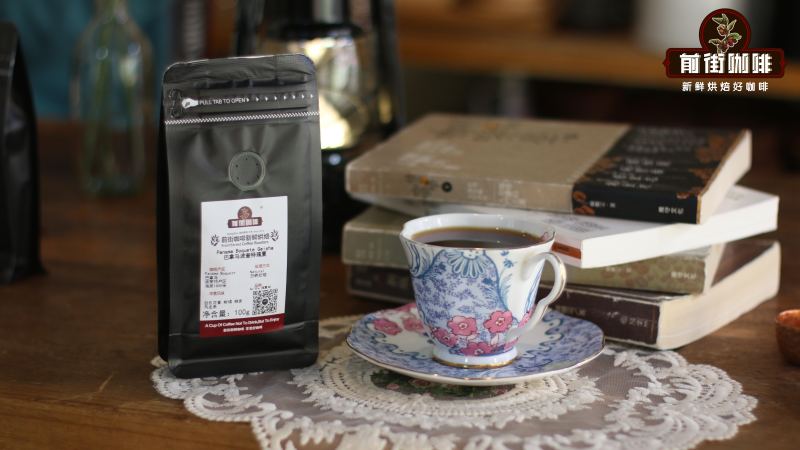
What pushes geisha coffee prices so high?
Geisha coffee sells at a premium because the variety scores above 90 points in specialty coffee evaluations and wins green bean competitions, which keeps demand ahead of limited supply. Auction prices for competition-grade lots from Hacienda La Esmeralda have driven the ceiling ever higher. In shops, a single pour-over ranges widely: a budget Boquete Geisha can cost about 30 yuan per cup, while a Hacienda La Esmeralda Red Label Geisha runs around 75 yuan.
The high price traces back to origin and scarcity. Geisha was discovered in 1931 in the Geisha forest of Ethiopia, then sent to Kenya's Coffee Research Institute, reaching Uganda and Tanzania in 1936, Costa Rica in 1953, and Panama in 1970. Its floral, fruity aroma, layered tropical sweetness, and gentle acidity set it apart from Blue Mountain, Hawaiian, and Mandheling beans. Front Street stores carry more than five Geisha pour-over coffees, and the beans also work well brewed at home with a three-stage pour.
Geisha coffee, with its delicate floral and fruity aromas and multi-layered sweetness, has become the darling of the specialty coffee world, but its price often leaves people speechless. This article starts from Geisha's origins and varietal characteristics, sorts out the reasons behind its high price, and reviews the auction prices of Hacienda La Esmeralda's competition-grade Geisha over the years, while also providing pricing references for several Geisha pour-over coffees currently sold at Front Street Coffee stores. At the end, it includes the brewing parameters and three-stage pouring suggestions for Front Street Geisha coffee beans, helping coffee lovers not only understand the price but also master a practical method for recreating a good cup of Geisha at home.
For more specialty coffee knowledge, welcome to follow: Front Street Coffee (Frontsteet Coffee)
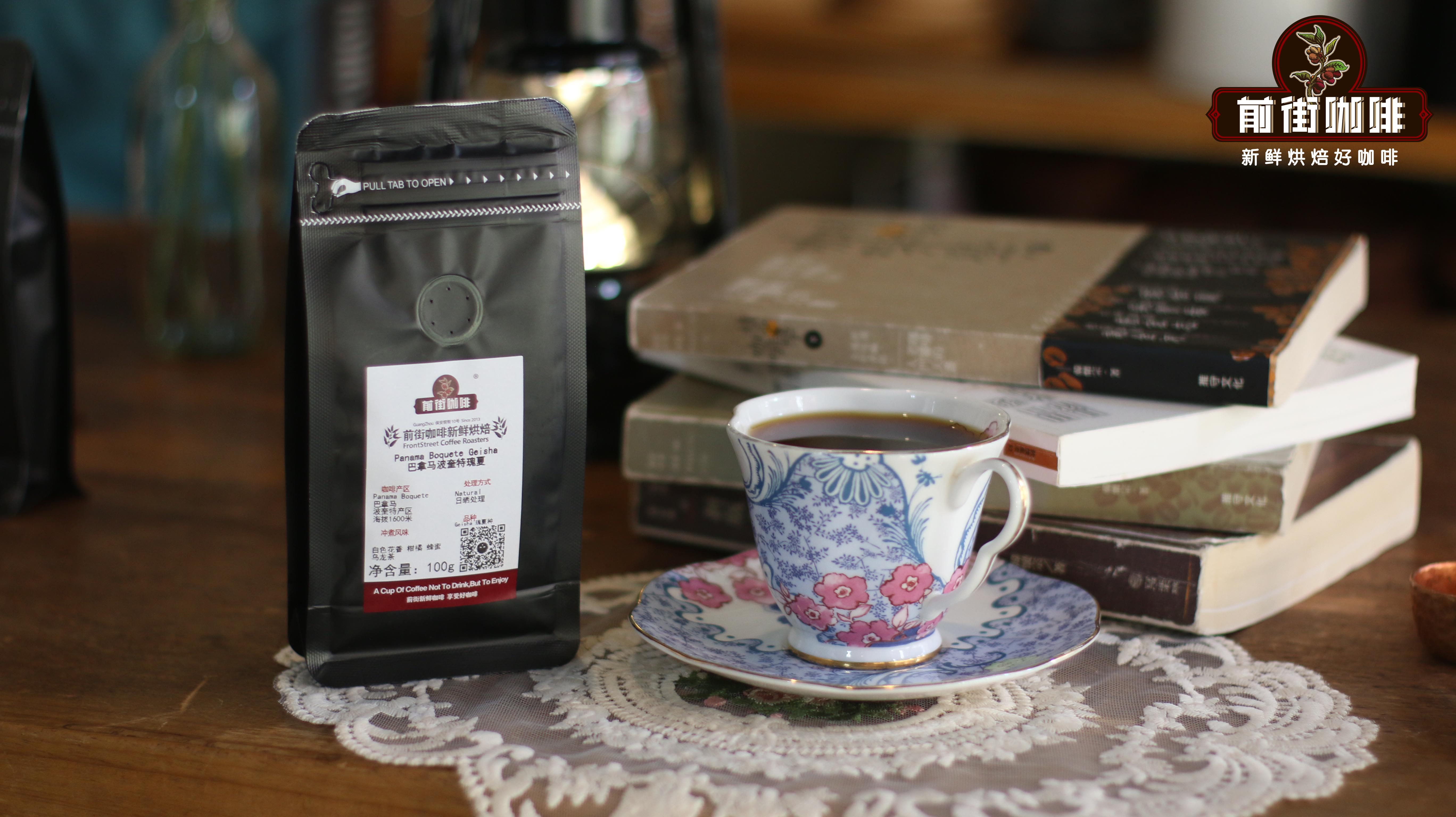
The Geisha variety often takes the crown in green coffee competitions, and both its flavor performance and mouthfeel layers captivate countless coffee fans, which is also the key reason it is widely renowned and unforgettable. In addition, Geisha coffee beans can score above 90 points in specialty coffee evaluations, so many independent cafes include it on their pour-over menus. Front Street stores currently sell more than five Geisha pour-over coffees. If you are trying it for the first time, you might start with the budget-friendly Boquete Geisha, which costs only 30 yuan per cup; you can also experience "the taste of money" by ordering a Hacienda La Esmeralda Red Label Geisha and spending 75 yuan to appreciate the charm of a high-grade coffee.
What is Geisha coffee?
The pronunciation of Geisha is the same as "geisha" in Japanese, so it also acquired the alias "Geisha coffee." Compared with Blue Mountain coffee, Hawaiian coffee, and Mandheling coffee, Geisha has fuller and richer floral and fruity aromas, with a clear layering of intense tropical-fruit sweetness. In the hearts of coffee lovers, Geisha is undoubtedly a true goddess, and countless people are captivated by its bright and complex floral and fruity aroma, multi-layered sweetness, and delicate, gentle acidity.
This variety was discovered in 1931 in the Geisha forest of Ethiopia, then sent to the Coffee Research Institute in Kenya. In 1936 it was introduced to Uganda and Tanzania, in 1953 it reached Costa Rica, and in 1970 it arrived in Panama. At first, Geisha did not receive much attention until Panama's Hacienda La Esmeralda (also known as Esmeralda Estate, Panama Geisha Hacienda La Esmeralda) separated it from other varieties in 2003 and won the BOP competition championship in 2004.
Since then, the Geisha variety has officially entered the public eye. Although Geisha's flavor is exquisite, this elegant expression depends on a specific growing environment. It is quite picky about growing conditions, requiring high altitude, cloud shade or plenty of shade trees, and fertile soil. Geisha grown at high altitude has obvious floral aromas and refined, elegant fruit acidity, which is also one of the reasons it has swept the world.
After becoming famous, Geisha was valued by coffee-producing countries around the world, and they introduced and cultivated it one after another. However, to grow delicious Geisha, it must be planted in high-altitude areas, with nutrient-rich soil, a large temperature difference between day and night, and a warm climate year-round.
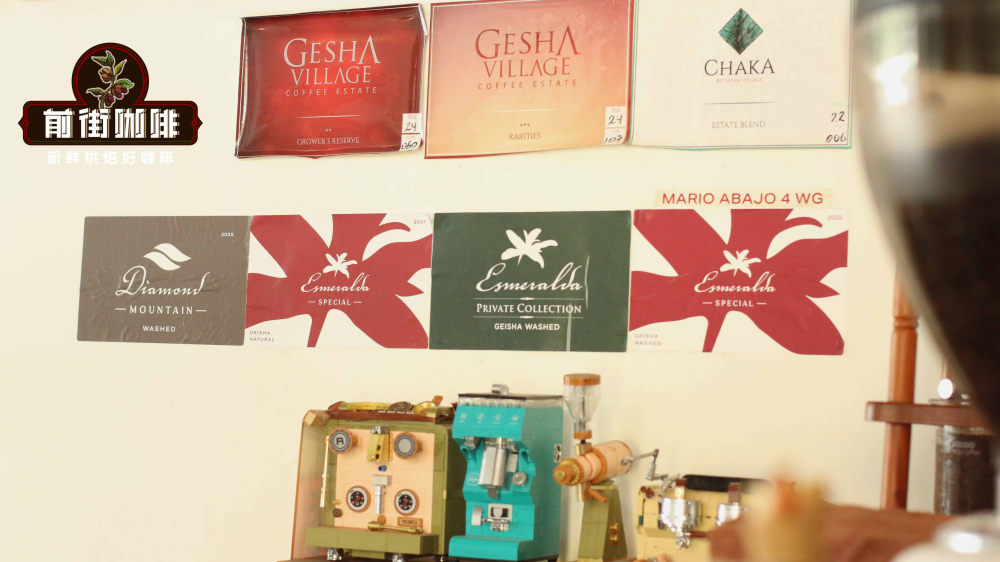
In Panama, the finest Geisha must be grown above 1,700 meters. For example, Hacienda La Esmeralda's Red Label and Green Label grades of Geisha are both planted in areas above 1,700 meters; some estates also plant Geisha between 1,700 and 1,950 meters, such as the famous Elida Estate.
What are the characteristics of Geisha grown in Panama?
Front Street has mentioned in many articles that coffee, as an agricultural crop, always has its flavor performance closely related to factors such as variety, climate, altitude, soil, and management. It is a natural and authentic expression of the variety and local terroir, while post-processing methods and roasting should preserve, restore, and present their most authentic flavors as much as possible. Therefore, Geisha's outstanding performance cannot be separated from the coordination of the above factors.
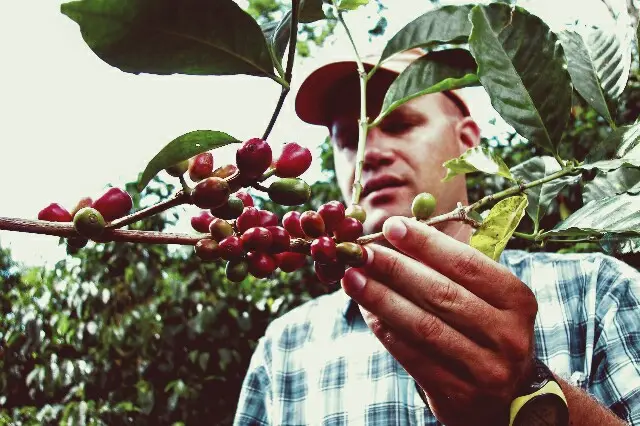
Compared with other Arabica varieties, Geisha not only has lower fruit yield, but the plant itself is also especially fragile and quite picky about its growing environment. It needs high altitude, fertile soil, cloud cover or plant shade, and cannot be directly exposed to the sun. The leaf system of the Geisha coffee tree is very thin, so its photosynthetic efficiency is very low. Its roots are also fragile, and the absorption of water and nutrients is very slow, so the yield is extremely small; combined with the high-altitude growing environment, the fruit also matures later. A single Geisha coffee tree produces only half the fruit of a Caturra variety, which is also one of the reasons Geisha coffee is expensive.
The owner of Hacienda La Esmeralda, Geisha's "talent scout," once said that the estate needs a large number of shade trees to block sunlight for the delicate Geisha, and in the early planting stage traditional pruning methods must also be used, otherwise the plants easily die. Geisha planted at higher altitudes takes longer for the fruit to mature, and only then is its flavor expression more complex and unique. Geisha fruit needs to be harvested at the most appropriate ripeness and immediately undergo post-processing. This is a great test of the estate owner's professional judgment and the estate's labor quality; once the timing is missed, quality declines and waste occurs.
Why is Geisha coffee so expensive?
Extremely low yield is only one reason it sells for a high price. What truly fascinates people is Geisha's unique and alluring flavor, and this is the most important reason it is exceptionally valuable. Geisha needs to be harvested at the most appropriate moment of ripeness and immediately undergo careful extraction and drying.
Taking Hacienda La Esmeralda's Geisha as an example, its high price is due first to Hacienda La Esmeralda being the estate that first discovered Geisha, second to Geisha continuously winning BOP championships, and third to its establishment of its own quality system. However, those very expensive Geisha coffee beans from Hacienda La Esmeralda can only be purchased through auctions, and such beans are called competition-grade.
Changes in the price of Hacienda La Esmeralda competition-grade Geisha: in 2004, 21 USD/pound; in 2006, 50.25 USD/pound; in 2007, 130 USD/pound; in 2010, 170.2 USD/pound; by the 2017 Best of Panama auction, a lot of Hacienda La Esmeralda natural Geisha fetched a sky-high price of 601 USD/pound, meaning one kilogram of green beans was priced as high as 8,900 RMB.
The Hacienda La Esmeralda Red Label and Green Label Geisha coffees we can buy are all available for direct purchase and do not require going through auction, so their prices are relatively much more affordable. Geisha coffee prices fluctuate in different regions, at different estates, or in different coffee shops (because purchasing costs differ). Front Street Coffee stores currently sell Hacienda La Esmeralda Red Label Geisha at 75 yuan per cup, Hacienda La Esmeralda Green Label Geisha at 60 yuan per cup, and also a Geisha from Panama's Boquete producing region (not subdivided to a specific estate) at 30 yuan per cup.
Geisha pour-over coffee brewing suggestions
The coffee beans sold by Front Street are all shipped within 5 days after roasting, so after receiving the beans there is no need to drink them in a hurry. You can first rest the beans, place them in a cool, dry place, keep the original packaging sealed, and let them sit until 3 to 4 days after the roast date before brewing. The Geisha coffee will be even more delicious.
Front Street Coffee Geisha coffee bean brewing parameter suggestions: dripper: V60 #01, dose: 15g, coffee-to-water ratio: 1:15, brewing water temperature: 90-91°C, grind size: medium-fine grind (80% passing through a No. 20 standard sieve).
The recommended brewing method is three-stage pouring: press the timer, use 30g of water for the first stage to bloom for 30 seconds. After 30 seconds, begin the second stage, pouring in a small circular stream up to 125g. When the coffee liquid in the dripper drops to two-thirds of the coffee bed, begin the third stage, pouring in a small circular stream up to 225g and then stop. After all the coffee liquid in the dripper has flowed into the server, remove the dripper and end extraction. The total extraction time for Geisha coffee beans is generally 2 minutes 10 seconds to 2 minutes 20 seconds.
The pour-over Hacienda La Esmeralda Red Label Geisha tastes of fresh jasmine, citrus, and tropical fruit acidity. The flavor layers change with temperature, the overall mouthfeel is smooth, and the tea-like finish is delightful.
For professional coffee knowledge exchange and more coffee bean information, please follow Coffee Workshop (WeChat public account: cafe_style)
For more specialty coffee beans, please add the private WeChat of Front Street Coffee (FrontStreet Coffee), WeChat ID: qjcoffeex
The above content is compiled by CoffeeHunters, a coffee news website.


