







What is SOE coffee and how does it differ from blends?
SOE stands for Single Origin Espresso, meaning espresso pulled from beans of one origin instead of a blend. Pour-over usually uses single-origin beans while espresso mostly uses blends, but single-origin beans can be used for espresso. High-pressure extraction releases a bean's flavors exponentially, so SOE tastes more intense than the same bean brewed as pour-over, and defects get amplified too. Choosing a distinctive single-origin bean yields a shot with clear personality.
Using Ethiopia Yirgacheffe Natural Red Cherry as an example, its signature citrus and lemon acidity becomes sharper in SOE form, while a bean like Indonesian Mandheling would push its herbal and defective notes forward. Roast level and grind size also affect the final cup, and consistency is hard to control because each shot magnifies small variables. The article gives specific extraction parameters and flavor descriptions to help beginners understand this category.
In the specialty coffee world, pour-over usually uses single-origin beans, while espresso mostly uses blends. So can single-origin beans be used to make espresso? The answer is yes—this form is called SOE (Single Origin Espresso). In this article, Front Street Coffee will walk you through the definition of SOE, its flavor characteristics, how it differs from blends and pour-over single-origin beans, and analyze why SOE consistency is difficult to control. At the same time, Front Street will also share ideas for choosing coffee beans suitable for making SOE, and use Ethiopia Yirgacheffe Natural Red Cherry as an example to provide specific extraction parameters and flavor descriptions, helping you gain a more comprehensive understanding of this unique coffee category.
Friends who drink coffee regularly probably know that in today's specialty coffee shops, the beans used for pour-over basically come from a single origin, while espresso tends to blend beans from multiple origins together—this is inseparable from the extraction principles of espresso machines. So here's the question—can single-origin beans be used to extract espresso? Front Street Coffee's answer is: of course they can, but this approach has a specific name—SOE. Next, Front Street Coffee will help everyone understand what SOE is really about.
What is SOE coffee?
SOE stands for Single Origin Espresso. Although the name contains "single origin," it cannot be directly equated with "specialty coffee." If you choose a single-origin bean with high flavor distinctiveness to make SOE, you can indeed get a shot of espresso with a clear personality and high typicality.
This also relates to the characteristics of espresso machines mentioned earlier by Front Street Coffee—high-pressure extraction releases the flavors of coffee beans exponentially. Therefore, compared with pour-over, even if the same single-origin bean is used, SOE will present flavors more intensely. Conversely, defects in the beans will also be amplified accordingly.
For example, Front Street's Ethiopia Yirgacheffe is known for its signature citrus and lemon acidity. Using it to make SOE will further heighten the citrus and lemon acidity; if you switch to Indonesian Mandheling, that herbal taste and even defective notes will also be amplified.
In addition, factors such as roast level and grind size will also affect the final performance, so SOE consistency is quite unstable. This is also why Front Street Coffee has not put SOE on its menu—Front Street's idea of opening a shop is simple: to let friends who like Front Street Coffee drink specialty coffee with stable flavor, rather than having one cup taste completely different from the next.
Moreover, the flavor of coffee beans changes with subtle climate variations in the producing region each year. For example, the flavor of Sidamo Flower Queen differs every year, but that kind of change is controllable and subtle; SOE is different—with just a slight lapse, flavor fluctuations can be very dramatic and difficult to manage.
Common serving formats for SOE coffee
Of course, SOE is not that bad. Many coffee shops specializing in SOE not only offer espresso but also use it as the base for milk coffee, which also tastes excellent. Milk plays a neutralizing role here, just as blends with different proportions of milk can become a mocha or latte.
So, what is the difference between SOE coffee beans and single-origin beans?
According to what Front Street Coffee said above, making pour-over single-origin beans into espresso is indeed SOE "single origin espresso," but the actual operation is far from as easy as imagined.
Compared with blends, espresso made from single-origin beans more easily offers clear flavors or origin character. Because blends mix several kinds of beans, their greatest strength is balance and stability, but with too many components, the origin flavors become harder to identify.
Therefore, relative to traditional blended espresso, SOE should be regarded as an espresso that emphasizes flavor expression more. This characteristic determines that when selecting beans for SOE, priority should be given to beans with high flavor distinctiveness and sufficient intensity. If you choose beans with weaker flavor to make SOE, the extracted espresso will taste thin and weak. Think about it: if it has no distinctive features and also loses the balance and stability of a blend, wouldn't such SOE be a losing proposition?
The next factor is roast level, which should not be too dark or too light. Too dark will grind away most of the origin flavor, while too light will cause the espresso machine, under high pressure, to amplify the acidity of a light roast, making the espresso sharply sour and hard to swallow; moreover, light-roasted beans are harder in texture and prone to underextraction. Whether it is grinding away origin flavor or creating imbalanced sharp acidity, both run counter to the original intention of highlighting single-origin flavor. Therefore, the same bean used for SOE and for pour-over should ideally use two different roasting curves.
From this, it can be seen that single-origin beans can indeed be used to make SOE, but the roast level must be adjusted accordingly—that is the difference. So are there any beans that are more suitable for making single-origin SOE? Front Street Coffee will now recommend a few coffees suitable for making SOE.
Coffee beans suitable for making SOE
First, Front Street Coffee believes that SOE single-origin coffee uses single-origin beans, so there is no concept of complementarity—it can only succeed by highlighting origin flavor. If your espresso machine parameters and timing are properly controlled, and you choose suitable beans, you can perfectly showcase the bean's flavor; conversely, if these links are not well controlled, the SOE single-origin coffee you make will definitely fail, and no one will want to drink it.
So do not underestimate a cup of single-origin coffee—making a cup of SOE is not that simple. Even though Front Street does not offer SOE, Front Street has explored this path countless times—first determining the blend's bean list, then determining which flavor you want to present, whether it is the lemon-citrus acidity of Ethiopia Yirgacheffe or the sweetness of Costa Rica honey-processed Bahia, all requiring Front Street Coffee's baristas to test slowly step by step. Before the recipe is finalized, it must go through repeated testing and adjustment. So the birth of every cup of SOE is not easy, and the price may be considerably higher than pour-over, which is also reasonable.
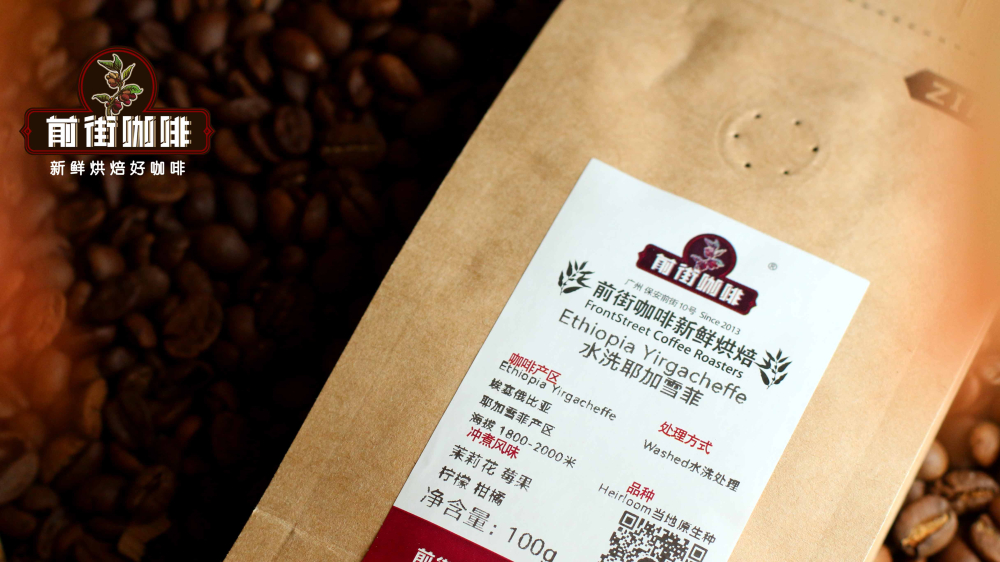
At the same time, Front Street Coffee has found that many coffee shops like to use Yirgacheffe to make SOE. The extracted floral aroma is very prominent, and the taste is also on the sour side, very suitable for friends who like acidic mouthfeel. In fact, Front Street has also tried using Ethiopia Red Cherry to make SOE: 20g dose, 40ml yield, extraction time about 27 seconds. The resulting SOE has a quite good mouthfeel, moderate body, with uplifting acidity, more like citrus and berries, plus a faint fermented wine aroma.
Next, Front Street Coffee will introduce these two SOE single-origin coffee beans separately.
Front Street Coffee Ethiopia Yirgacheffe Natural Red Cherry Coffee Beans
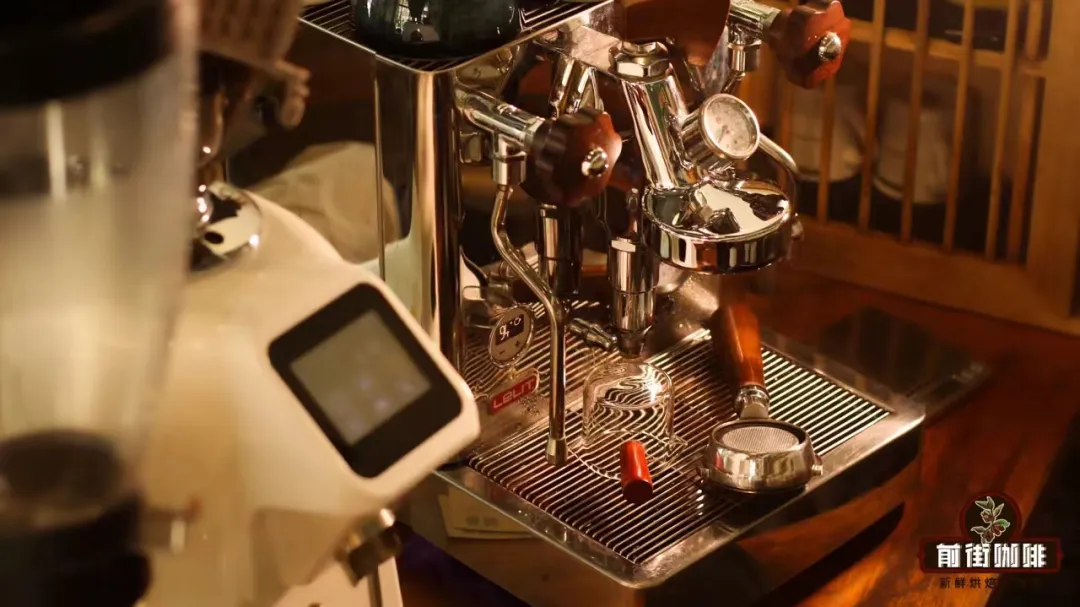
Country: Ethiopia Region: Yirgacheffe Altitude: 2300m Variety: Local heirloom varieties Processing Method: Natural Flavor: Berries, lemon, strawberry, fermented wine aroma
Grind size: Pegasus 900N #1.7 Dose: 20g Yield: 40ml Extraction time: 27 seconds Flavor description: Citrus, berries, fermented aroma, syrupy, medium bitterness, medium-high acidity, bright and lively acidity.
The above content is compiled by CoffeeHunters, a coffee news website.


