







What Does an SOE Latte Made With Gesha Village Red Label Taste Like?
An SOE latte uses a single-origin espresso instead of a blend, so the milk carries the bean's own character rather than a roaster's mix. With Gesha Village Red Label, the goal is a cup that keeps the variety's citrus and honey aromatics visible even after milk is added, which means tighter extraction control than a standard latte demands.
Gesha Village Coffee Estate sits in Ethiopia, the birthplace of the variety, and takes its name from the same source as Panama's famed lots. Since 2004 Gesha has repeatedly placed first in international competitions and set record auction prices. Extraction parameters, grind, and milk volume all need adjusting to keep a gesha latte from flattening out.
Geisha has remained popular in recent years and is called the king of coffee. It emerged from the primitive forests of Ethiopia, made its way to Panama, and shot to fame in 2004, winning one international competition after another and seeing its value climb steadily. However, Ethiopia, Geisha's birthplace, also hides an estate named after Geisha — Gesha Village Coffee Estate. This article first introduces the origins and flavor positioning of Gesha Village Red Label, then focuses on making an SOE latte with this bean, sharing Front Street's extraction parameters, operating procedure, and drinking suggestions to help enthusiasts recreate a cup of Geisha SOE with clear flavor at home.
Geisha's level of discussion has remained high in recent years, and in the specialty coffee world it is almost regarded as the representative of top-tier varieties. It was first discovered in the primitive forests of Ethiopia, then after many twists and turns arrived in Panama in Central America, and in 2004 formally entered the public eye. Since then it has frequently taken first place in world-class competitions, and transaction prices have repeatedly set new records, quickly sweeping the global coffee market.
When people talk about Geisha, many think of that refreshing profile woven from citrus and honey aromas, unforgettable after just one taste. For this reason, many enthusiasts have begun buying beans to brew at home. Recently, a customer came to ask Front Street how exactly to make an SOE latte with Gesha Village Red Label. Below, let us first clarify what kind of coffee Gesha Village Red Label actually is.
Where exactly does Geisha come from?
When it comes to Geisha's origins, Front Street first thinks of two places: Panama, which made Geisha famous, and Ethiopia, Geisha's birthplace. These two can be said to be the most representative Geisha producing regions. As the Geisha craze continues to build, many producing countries such as Colombia, Costa Rica, and Guatemala have also successively released specialty-grade Geisha lots, and even Jamaica Blue Mountain released a small amount of natural Geisha in 2020. Front Street's bean list also retains Geisha options from different producing regions. However, if you are trying this variety for the first time, Front Street suggests starting with the two producing regions of Panama and Ethiopia.
In 1931, the Geisha variety was first discovered in Ethiopia's Gesha area, and was subsequently introduced to Kenya, Uganda, Tanzania, Costa Rica, and other countries for research and to enrich local varieties. In 1963, in order to boost its coffee industry, Panama introduced more varieties from various places. Pachi Serracin, the old owner of Hacienda La Esmeralda, brought Geisha back from Costa Rica, and only then did Geisha take root in Panama.
It was not until 2000 that Daniel Peterson, the third-generation owner of Hacienda La Esmeralda, noticed Geisha's uniqueness and moved it to a higher altitude for planting. In 2004, high-altitude Geisha finally achieved mass production, and Hacienda La Esmeralda entered it in that year's Best of Panama BOP and won first place, gaining great fame from then on. Elegant aromas such as jasmine, white peach, and bergamot have left countless coffee fans unable to forget them. But besides Panama, in Ethiopia, the birthplace of coffee, there is actually an estate named for producing Geisha — that is Gesha Village.
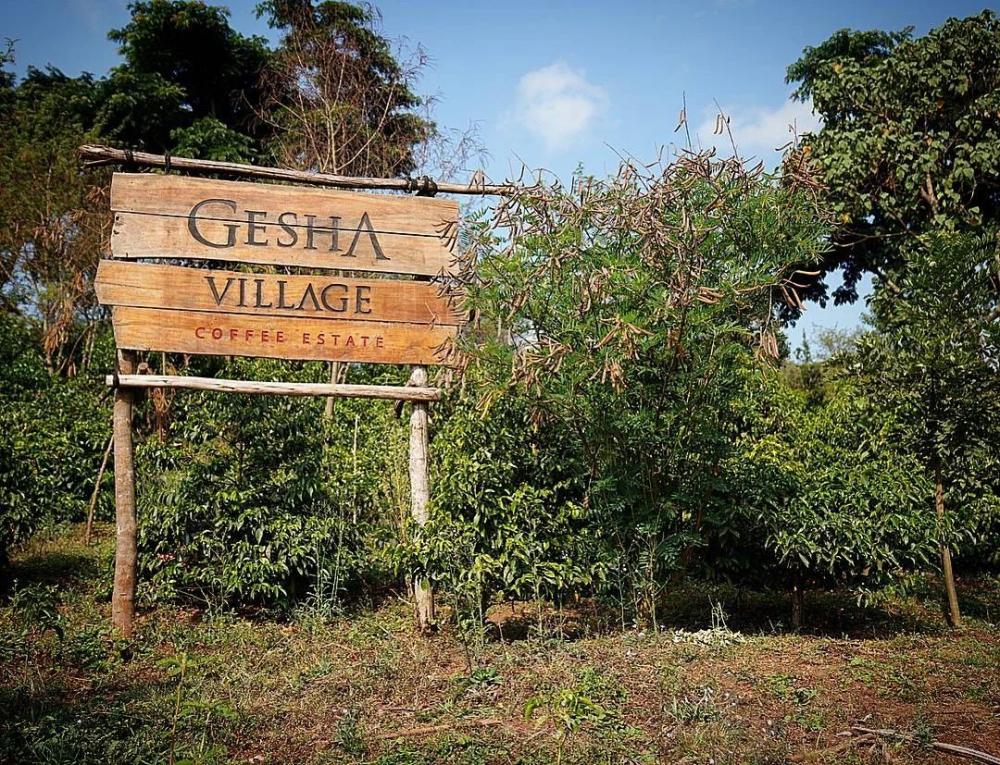
Gesha Village Coffee Estate
In 2011, Adam followed consultant Willem Boot to explore the forests around the estate. In a jungle magically wrapped by dense forest, they discovered multiple wild tree species, among which the most surprising was wild Geisha. Only later did they learn that this place was the Gori Gesha forest, the very place where the Geisha coffee variety was first found.
They collected seeds from the original Geisha trees, carefully selected them, and sent them to professional institutions for genetic testing, confirming that this place was the original collection site of the Panama Geisha variety. Subsequently, by studying the coffee trees' plant morphology and the appearance and size of the coffee beans, and combining that with cupping results, they selected the Geisha type closest to today's Panama Geisha and began raising seedlings. From that time on, the story of Gesha Village Coffee Estate began on this land in Ethiopia.
Gesha Village is located in an area of high altitude and abundant rainfall, with a temperate climate and all the key natural conditions needed to produce high-quality coffee. But unlike many estates in Panama, Gesha Village grows three Geisha varieties in total: Gori Gesha, Geisha 1931, and Illubabor Forest. In addition, to ensure the quality of the coffee produced, estate owner Adam also established a strict grading system, dividing Geisha into different grades such as Gold Label, Red Label, Green Label, and CHAKA. These coffees on Front Street's bean list are all natural lots.
From the owner's plot divisions, it can be seen that the western part of Gesha Village is planted at higher altitudes, especially the three plots OMA, SURMA, and SHEWA-JIBABU, with altitudes between 1900 and 2069 meters, among which SHEWA-JIBABU has the highest average altitude. The southern side of the estate has a relatively higher shade ratio, while the northern side has longer sunshine hours. Among the estate's eight plots, Adam selected the most suitable variety for each plot based on differences in microclimate such as altitude, soil conditions, and shade conditions, with the aim of allowing each plot to develop its own distinct flavor characteristics.
What are the characteristics of natural Gesha Village Red Label?
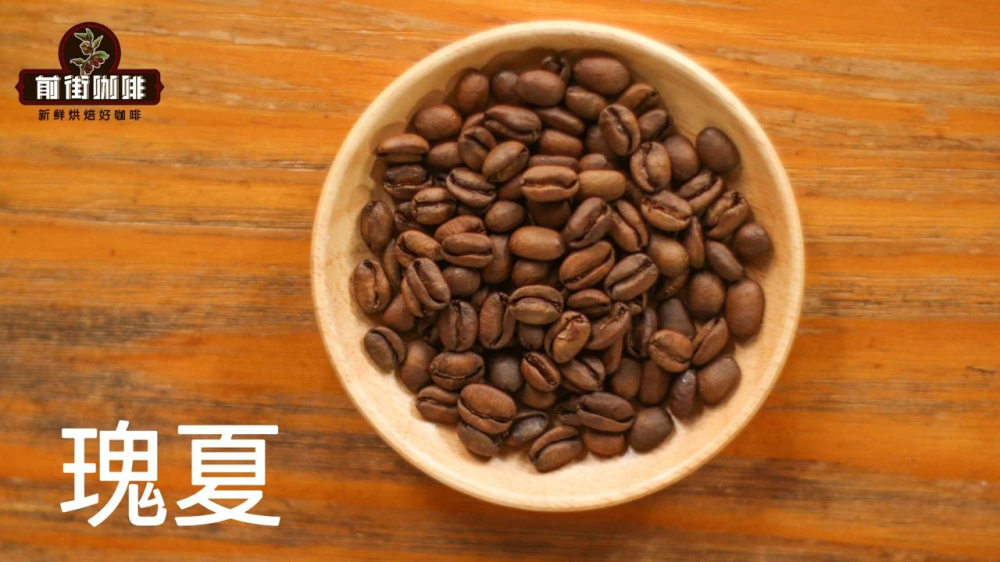
Thanks to its exceptional geographical conditions, Gesha Village's main processing method is natural. The harvest season at Gesha Village Coffee Estate is concentrated from December to March of the following year, which happens to be the region's dry season with little rainfall, allowing the estate to make full use of natural drying to process coffee beans. Gesha Village's traditional natural method is to spread freshly harvested coffee cherries evenly on African raised drying beds so they receive uniform sunlight. During this period they must be turned at irregular intervals to avoid excessive fermentation bringing negative flavors to the coffee. The drying cycle is about 21 to 40 days, and only after the moisture content drops to 12% are the fully dried beans hulled.
Unlike the Gold Label grade, Gesha Village Red Label accounts for about 15% of total annual production. It uses the Gori Geisha variety and must score above 88 points in cupping according to SCA standards. Although its flavor intensity and complexity are not as great as Gold Label and competition lots, Red Label likewise has a very classic Gesha Village flavor spectrum. Front Street believes this is a Geisha lot with quite high cost performance and worth buying for Geisha enthusiasts.
Front Street Coffee: Ethiopia · Gesha Village Coffee Estate Red Label Geisha
Region: Ethiopia, Bench Maji Region
Estate: Gesha Village Coffee Estate, Shewa-Jibabu plot
Altitude: 1973-2069 meters
Variety: Gori Geisha
Processing method: Natural process
Flavor: Lemon, plum, citrus, tropical fruit, floral tea
Sharing Gesha Village SOE extraction parameters
No matter which method is used to extract coffee beans, Front Street believes freshness is crucial. If using beans whose roast date is more than a month ago, part of the aroma may already have dissipated, and an unpleasant woody taste may also appear. Front Street hopes every customer who places an order can experience the coffee aroma within the best tasting period, so it only ships fresh beans within 5 days after roasting. To make better-flavored SOE coffee, Front Street suggests using freshly roasted single-origin coffee beans.
Coffee beans: Ethiopia · Huakui 8.0
Coffee dose: 20g
Coffee liquid yield: 40g
Dose-to-yield ratio: 1:2
Extraction time: 26-32 seconds
Grind setting: Galileo 2.0
The coffee machine used by Front Street has a double basket capacity, requiring 20 grams of coffee powder each time, with an extraction dose-to-yield ratio of 1:2, meaning 40 grams of coffee liquid is extracted within a reasonable time. Extraction time is related to the flow rate of the coffee powder, and a single extraction is usually controlled between 20 and 35 seconds. If less than 20 seconds, the coffee taste tends to be thin and weak; if more than 35 seconds, it is prone to over-extraction, causing the coffee to develop a burnt bitter taste. Therefore, when producing, Front Street controls the espresso time within the range of 26 to 32 seconds.
Before extraction, first wipe the basket dry, turn on the grinder to grind a double dose of coffee powder, and place it on an electronic scale to weigh and adjust until the weight reaches 20 grams. Then use a distribution tool to level the coffee powder, and then use a tamper to press vertically downward to compact the puck, ensuring more stable extraction.
Then turn on the extraction switch and let water run for 1 to 2 seconds to wet the group head and simultaneously rinse away attached coffee grounds. Place an electronic scale under the cup receiving the Espresso and tare it to zero, then place it together under the group head during extraction.

Gently lock the portafilter onto the group head and turn down the extraction switch. Watch the changes in the extracted liquid. When the electronic scale shows the coffee liquid has reached 40 grams and the time is about 30 seconds, pull down the extraction switch. Brewing parameters will change slightly with daily air humidity and the condition of the coffee beans, so the coffee dose, grind setting, and extraction yield need to be adjusted accordingly.
The extracted Geisha SOE can be drunk directly. Remember to pair it with a glass of water to rinse your mouth, and you can feel the dense crema foam as well as the rich tropical fruit aroma of the coffee liquid underneath. If you cannot accept espresso's intense bitterness, you can also, according to personal preference, add ice water or warm water at a 1:4 ratio to make a refreshing SOE Geisha Americano; or add steamed fresh milk at a 1:6 ratio to soften the mouthfeel, and it becomes a delicious cup of SOE Geisha latte.
The above content is compiled by CoffeeHunters, a coffee news website.


