








How Does the ASD Process Shape Panama Geisha Coffee?
Panama geisha coffee from Elida Estate is a Gesha variety grown in Boquete, and its ASD anaerobic slow-dry natural process uses sealed fermentation and low-temperature drying to push floral and tropical fruit notes forward. The estate set a 94.15-point record at the 2016 reliable of Panama competition, which helped cement Panama's role in the variety's modern reputation.
Geisha coffee beans trace back to the Gesha forest of Ethiopia, discovered in 1931, then moved through Kenya, Uganda, Tanzania, Costa Rica, and finally Panama in the 1970s. The variety stayed obscure until La Esmeralda won the 2004 Cup of Excellence, after which low yields and scarce supply turned Panama geisha into a benchmark for aroma-focused lots.
Geisha coffee is widely recognized as the most noble variety in specialty coffee, and Panama's Elida Estate set a historic record of 94.15 points in the 2016 BOP competition with its exceptional Geisha beans. This article will guide you through Geisha's origins and flavor characteristics, and provide an in-depth analysis of Elida Estate's ASD anaerobic slow-dry natural process—a technique pioneered by estate owner Mr. Wilford that uses sealed anaerobic fermentation and low-temperature slow drying to give the coffee more prominent floral and tropical fruit notes. Front Street Coffee will also share the specific brewing parameters and flavor profile of this Panama Elida Estate Geisha, making it suitable reading for every specialty coffee enthusiast.
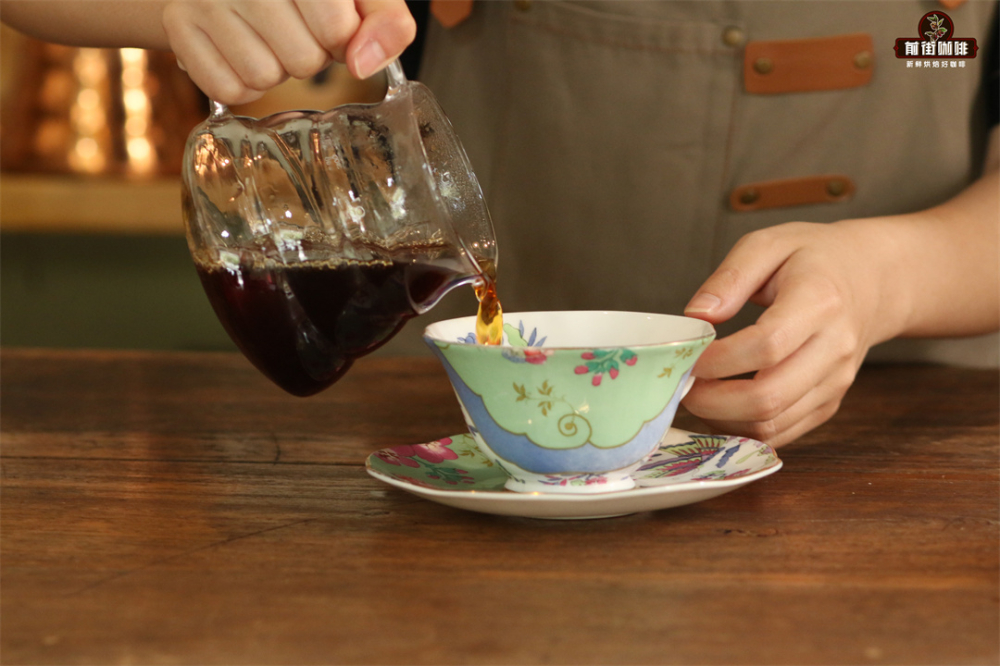
In the realm of specialty coffee, Arabica varieties account for the vast majority, and Geisha is recognized as the most aristocratic bean variety. At Front Street Coffee's stores, baristas often explain Geisha's unique qualities to customers: within the same producing region, washed processing typically presents the bean's primary flavors, while natural processing adds aromatic layers on top of the washed baseline; beans like Blue Mountain are best enjoyed washed, while aroma-focused varieties are recommended as natural—and Geisha is a prime example. Geisha is also a specialty coffee that has always held a permanent spot on Front Street's bean list.
The Origins of Geisha Coffee
Geisha coffee beans are also known as "geisha," but they do not come from Japan. The name derives from a mountain in Ethiopia called Gesha, which happens to be pronounced the same as the Japanese traditional geisha (Geisha), hence the name. In recent years, however, Chinese-speaking circles have more commonly used the transliteration "瑰夏."
The Geisha variety was discovered in 1931 in the Geisha forest of Ethiopia, then sent to the coffee research institute in Kenya; in 1936 it was introduced to Uganda and Tanzania, in 1953 Costa Rica imported and cultivated it, and in the 1970s Mr. Francisco Serracín of Panama's Dongbaiqi Farm obtained seeds from CATIE in Costa Rica, thus beginning Geisha's cultivation history in Panama.
Although Geisha's original homeland is the Gesha mountain in southwestern Africa, after its introduction to Panama, coffee farmers were generally reluctant to plant this variety due to its low yield. It was not until Panama's La Esmeralda shone brightly with this bean at the 2004 Panama Cup of Excellence that Geisha's reputation truly began to spread. Another reason is that Geisha's output is scarce—when people are accustomed to linking price with quality, Geisha naturally became a legend.
Characteristics of Geisha Coffee
Geisha coffee beans display a very beautiful blue-green hue—usually referring to washed beans—with a jade-like smooth texture and an elongated shape. The dry aroma contains fresh grassy notes, peach, berry fragrance, and the unique creamy sweetness of oolong tea that most coffee beans lack. Perceiving aroma and flavor requires some association, but that subtle tea sensation is clearly detectable.
It is often said in the market that Yirgacheffe tastes somewhat similar to Geisha, but the charm Yirgacheffe contains is far less intense than Geisha's. Geisha coffee has its own unique flavor expression, with clear floral notes and bright, clean citrus acidity as its signature characteristics. However, Geisha from different origins also presents its own distinctive flavors, and the differences may stem from growing environments or processing methods.
Since Geisha's flavor expression varies, Front Street Coffee will now outline the flavor profiles of several Panama Geisha coffees.
Panama Geisha
Elida Estate is located in the small town of Boquete in Panama's well-known coffee-producing region of Bouquete. The estate sits at an extremely high altitude, with some areas even within the Volcan Baru Nature Reserve of Panama's national park. Baru is one of the highest volcanoes in Central America and Panama's only volcanic terrain. Thanks to its excellent growing environment, with cultivation at altitudes of approximately 1,670 to 1,825 meters, Elida primarily grows three varieties: Catuai, Geisha, and Criollo.
Elida Estate's Geisha Green Tip Natural coffee beans won the Geisha Washed category championship at the 2016 "Best of Panama" (BOP) green bean auction, with international judges giving an incredible 94.15 points—not only breaking the BOP historical high score record, but the lot also fetched a staggering price of approximately NT$9,000 per pound at the international bidding arena, setting the highest price record for washed Geisha beans in BOP history. The 2016 All-Japan Barista Championship winner also used coffee beans produced by Elida Estate to claim victory.
Front Street Coffee: Panama Elida Estate
Country: Panama
Region: Boquete
Altitude: 1850M
Processing: Washed
Variety: Geisha
Flavor Description: Citrus, honey, berries, green tea, with a round and smooth mouthfeel.
However, when it comes to Elida Estate's post-harvest processing methods, Front Street must mention the particularly popular ASD in recent years.
ASD is the abbreviation for Anaerobic Slow Dry, translated into Chinese as anaerobic slow-dry natural. It was first proposed by Mr. Wilford, the owner of a famous Panama coffee estate. The specific method involves hand-picking fully ripe coffee cherries, subjecting them to a first round of washing and sorting, then placing them in sealed tanks for anaerobic fermentation lasting 3 to 7 days, after which the fermented coffee cherries are removed.
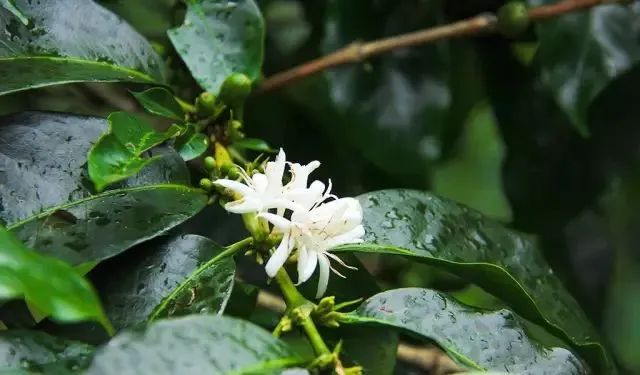
By regulating the "drying rate" to create the optimal activity level for specific types of microorganisms—thereby controlling the type and degree of fermentation to a certain extent—this is precisely the specialty of current estate owner Wilford Jr. After fermentation is complete, the coffee fruit enters the drying stage. If an uninterrupted sunlight process can be maintained, drying typically takes 10 to 20 days. This method allows moisture within the fruit to gradually dissipate and gives the coffee more prominent floral and tropical fruit notes.
The low-temperature slow-dry natural processing method demands that producers invest more time and effort. Nurtured by time, slow drying allows coffee cherries to develop optimal water activity during the process—firstly, flavor development is better, and secondly, green beans can be stored for longer periods in seasonal cycles. At the same time, however, this method not only depends on climatic cooperation—relying on the heavens—but also extends the time required for each batch of production, increasing the cost of green beans.
Panama Elida Estate
Panama · Elida Estate
Region: Panama Boquete Producing Region
Estate: Elida Estate
Altitude: 1900 meters
Variety: Geisha
Processing Method: Anaerobic fermentation low-temperature slow-dry natural
Recommended Brewing Method: Pour-over
Dripper: Hario V60
Water Temperature: 90-91℃
Grind Size: Medium-fine (BG 5R: 58% passing rate on China Standard No. 20 sieve)
Coffee-to-Water Ratio: 1:15
Technique: Staged extraction. Use 15 grams of coffee, bloom with 30 grams of water for 30 seconds, then pour in a slow circular motion to 125 grams for the first stage; when the water level drops and is about to expose the coffee bed, continue pouring to 226 grams and stop; when the water level drops and is about to expose the coffee bed, remove the dripper. (Start timing from the beginning of blooming.) Extraction time is 1'50".
Flavor: A faint fermented aroma and floral notes on the nose; grapefruit, lemon, and guava on the palate; honey sweetness in the mid-palate; and a black tea finish.
The above content is compiled by CoffeeHunters, a coffee news website.


