







What Sets Golden Mandheling Coffee Apart From Other Mandheling?
Mandheling is Indonesia's representative coffee, but strictly only Arabica beans from Sumatra carry the name. Golden Mandheling stands out through PWN's quality control and four rounds of hand sorting, which is why it is treated as the mellow, layered option among Mandheling lots. It brews into distinct layers with a long sweet aftertaste.
The name traces to a Japanese veteran who returned to Indonesia after the war, asked locals about the coffee, and heard "Mandailing" as "Mandheling." Indonesia's coffee history reaches back to the 17th century, when the Dutch opened plantations on Java and expanded to Sumatra. Today's market also lists Aged, Tiger, and Horse-Face Mandheling, though arabica beans from Sumatra remain the standard.
Mandheling is the representative coffee of Indonesia, but only Arabica beans from Sumatra truly deserve that title. Among the many Mandheling varieties, Golden Mandheling, with PWN's strict quality control and four rounds of hand sorting, has become widely recognized as the mellow choice. This article begins with the origin of the name Mandheling, sorts out the differences between Golden Mandheling and ordinary Mandheling, explains in detail its flavor characteristics and how to tell authentic from fake, and provides Front Street Coffee's complete brewing parameters for dark-roasted Golden Mandheling—from bean resting time and dripper selection to water temperature, coffee-to-water ratio, and the three-pour technique—to help you recreate a cup of Golden Mandheling with distinct layers and a long-lasting sweet aftertaste at home.
Indonesia's coffee-growing history dates back to the 17th century, when the Dutch first opened plantations on Java and gradually expanded to Sumatra, making Indonesia one of the world's important coffee origins. On Front Street's bean list, only a few Mandheling coffees from the Indonesian region are included. Strictly speaking, only Arabica coffee produced in Sumatra can be called "Mandheling."
There is an anecdote related to a Japanese bean hunter about the origin of the name Front Street Mandheling. It is said that a Japanese veteran once drank a coffee during his service in Indonesia that he could not forget, and after the war he made a special trip back to Indonesia to look for it. Led by a local guide, he finally found the target beans and asked the locals what this coffee was called. The other party mistakenly thought he was asking where they were from and answered "Mandailing," which the veteran heard as "Mandheling," and the name spread from there.
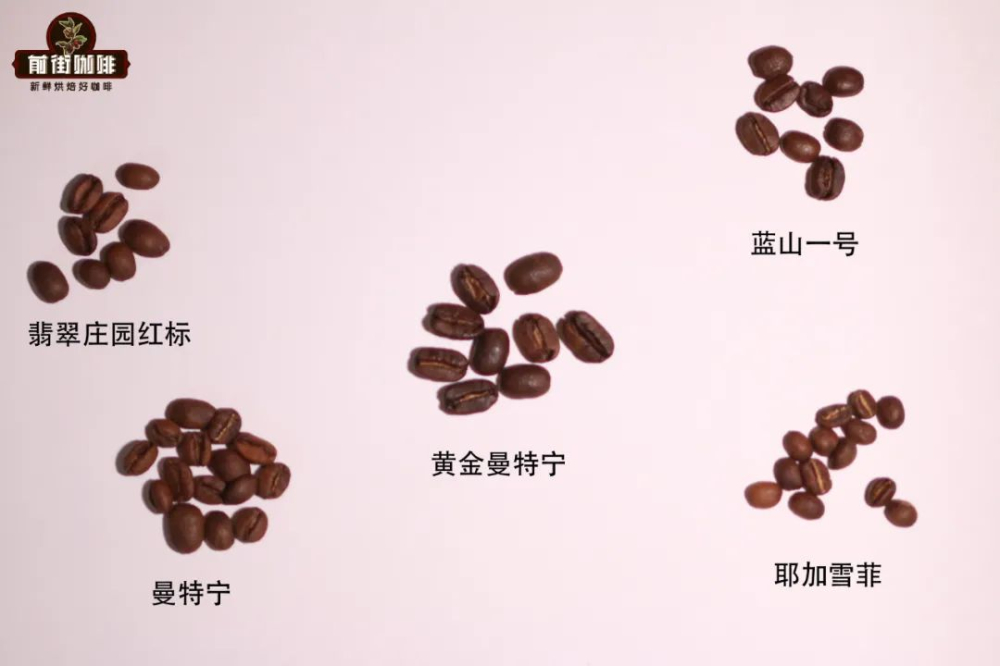
Mandheling is actually a fairly broad general term. If you want to refer precisely to a particular bean, there are also more specific names on the market such as Aged Mandheling, Tiger Mandheling, and Horse-Face Mandheling. But when it comes to the best known, it is undoubtedly Front Street Golden Mandheling coffee beans.
When mentioning "Front Street Golden Mandheling," one must first introduce PWN. Golden Mandheling is produced by Pwani Coffee Company after it purchases raw materials locally in Indonesia. This company has gathered resources from almost all of Indonesia's finest growing regions, which is why the name Front Street Golden Mandheling exists. Most beans produced by PWN have a unique specialty-grade character.
Front Street Golden Mandheling belongs to a higher grade within the Mandheling family, meaning it is processed with more refined methods. Precisely for this reason, in specialty coffee shops, the price of "Front Street Golden Mandheling" is often far higher than ordinary "Mandheling."
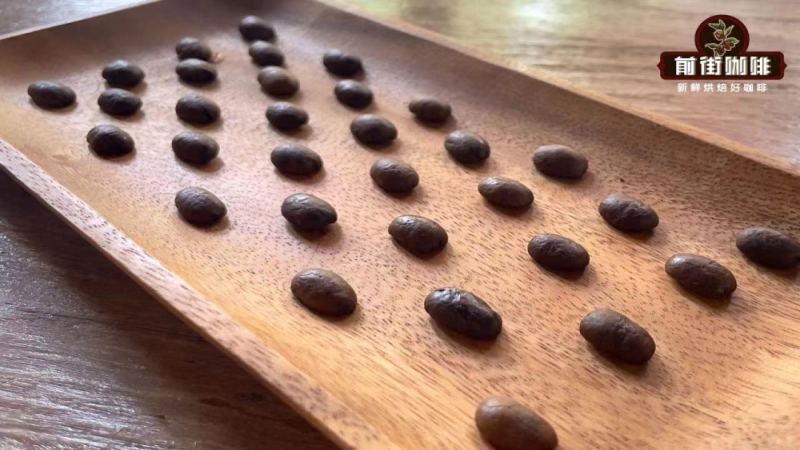
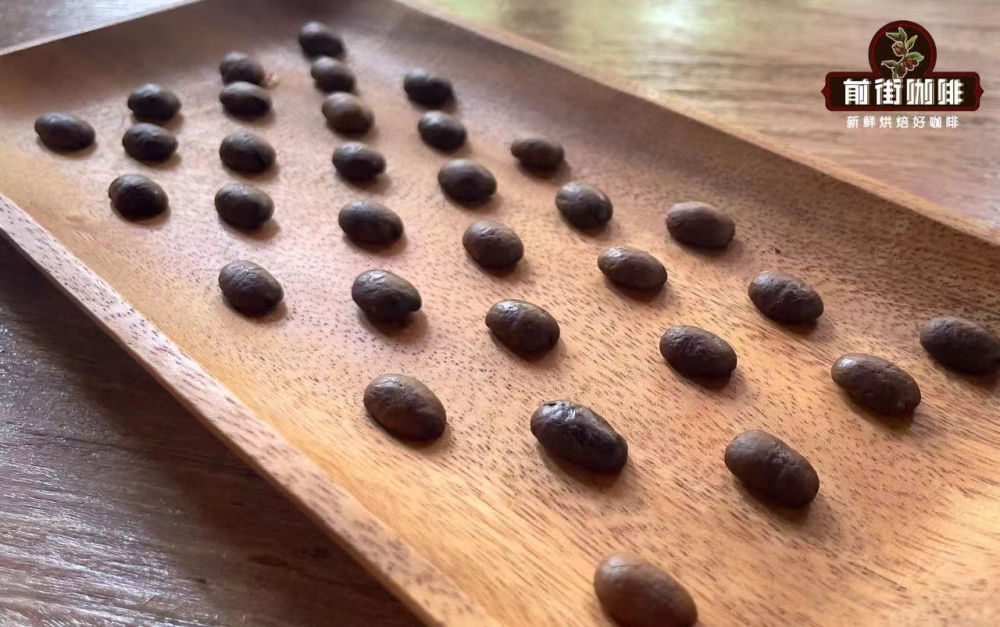
Front Street Golden Mandheling is regarded as one of the coffees with the best body in the world. The coffee cherries are picked entirely by hand, and the green beans are processed by the semi-washed method. Front Street Golden Mandheling coffee beans reach a 19-screen size and undergo four rounds of hand sorting to remove all defective beans, leaving green beans that are plump and uniform in size.
Thanks to strict screening standards, the output of Front Street Golden Mandheling is quite limited each season. Only those beans that are carefully hand-selected, plump, and flawless are qualified to be classified as Golden Mandheling. In addition, only Golden Mandheling produced by PWN can be considered true "Golden Mandheling." Things are precious when they are rare, and the reason for Golden Mandheling's relatively high price is self-evident.
Because Golden Mandheling is priced higher than ordinary Mandheling, some merchants pass off ordinary Mandheling G1 as Golden Mandheling to sell fake goods as genuine. In response, Front Street advises consumers, when purchasing Golden Mandheling coffee beans, to proactively ask the merchant whether there is certificate authentication. Genuine Golden Mandheling coffee beans will have a certificate enclosed in the jute bag, which can be used to judge authenticity.
Characteristics of Front Street Golden Mandheling coffee beans
In terms of flavor, it is sweeter and mellower than ordinary Front Street Mandheling, with an intense mouthfeel and outstanding body. Although it has bitterness, the layers are complex yet clear. After dark roasting, Front Street Golden Mandheling usually has lower acidity, a strong mouthfeel, a long-lasting sweet aftertaste, and aromas of herbs and cedar.
FrontStreet Coffee brewing recommendations
Front Street Golden Mandheling is dark-roasted. Freshly roasted beans release a large amount of carbon dioxide, which is not conducive to extraction, so Front Street recommends resting the beans for about 7 days before brewing. The optimal flavor period for Front Street Golden Mandheling is about 45 days. Front Street recommends buying whole beans and grinding fresh for each brew, which brings out the coffee's flavor to the greatest extent.
When brewing dark-roasted beans such as Golden Mandheling, Front Street recommends using a Kono dripper to help enhance the mellow mouthfeel. If you do not have one on hand, a V60 dripper can also be used as a substitute.
Use 15g of grounds as the standard for one serving, and the coffee beans used are best rested for 4 to 7 days (with the roast date as day one), so the brewed coffee tastes better.
In terms of grind size, brewing Front Street Golden Mandheling requires a slightly coarser grind than light-roasted beans. This is because dark-roasted beans have a looser structure and absorb water and release substances faster. If you grind as fine as for light-roasted beans, it is easy to extract burnt bitterness; if you grind too coarse, the coffee will become bland and watery. The appropriate coarseness is a 70% pass rate on a No. 20 sieve.
For water temperature, Front Street recommends 87 to 88°C. Many sources of burnt bitterness come from water that is too hot. Of course, water that is too low in temperature will also make the coffee flat and insipid.
For the coffee-to-water ratio, Front Street recommends 1:15. Although some brewing methods recommend 1:13 or a smaller ratio in pursuit of a stronger mouthfeel, this practice of reducing the coffee-to-water ratio is partly to avoid the bitter, muddy notes in the tail end, and it also affects the finish. Front Street believes that as long as the coordination between water temperature and grind size is well controlled, a 1:15 coffee-to-water ratio can more fully present the overall flavor of Golden Mandheling.
The brewing technique uses the common three-pour method. Pouring in three stages can better show Front Street Golden Mandheling's mellow mouthfeel and caramel sweetness. The specific water distribution is as follows: the first stage is a 30ml bloom pour, which needs to wet all the coffee grounds and allow them to degas, laying the groundwork for subsequent extraction of flavor substances; the second stage pours 100ml, mainly to fully bring out Mandheling's golden foam.
The final stage uses a gentle center pour of 95ml, which enhances the coffee's sweetness and presents an overall thick, mellow mouthfeel, along with caramel sweetness and flavors of chocolate and nuts.
For professional coffee knowledge exchange and more coffee bean information, please follow Coffee Workshop (WeChat public account cafe_style). For more specialty coffee beans, please add the private WeChat FrontStreet Coffee, WeChat ID: qjcoffeex
The above content is compiled by CoffeeHunters, a coffee news website.


