







Where Do Geisha Coffee Beans Come From and Why the Name Huakui?
Huakui is not a place name. The coffee comes from the Buku Abel processing station in the Hambela sub-region of Guji, Sidamo, Ethiopia. After winning the 2017 TOH it was introduced to China and named Huakui, meaning chief of a hundred flowers. The 2022 crop is Huakui 6.0. Luckin sold the beans out in a day, which drew wider attention.
Hambela is Ethiopia's highest planting sub-region, with coffee grown above 2,000 meters, wide day-to-night temperature swings, and fertile red soil rich in iron. A 3,200-meter mountain range separates it from Yirgacheffe's Kochere. Front Street Coffee also lists a separately processed Small-Bean Huakui whose strawberry-cream profile sits close to the champion batch.
Geisha coffee beans once again sparked heated discussion after Luckin sold out in a single day, and Li Guoqing's public criticism brought this Ethiopian natural bean into the public eye. Geisha is not a place name but originates from the Buku Abel processing station in the Hambela sub-region of Guji, Sidamo. After winning the 2017 TOH, it was introduced to China by Hongshun and named "Huakui," meaning "chief of a hundred flowers." Since then, Huakui has been named by vintage iteration, and the 2022 crop is Huakui 6.0. On Front Street Coffee's bean list, besides Huakui 5.0, there is also a separately processed Small-Bean Huakui, whose strawberry-cream flavor is closer to the champion batch of that year. This article will sort out Huakui's origin background, naming origin, and the uniqueness of Small-Bean Huakui, and share Front Street's roasting suggestions and V60 three-pour brewing parameters.
Huakui coffee beans sold out within a day after being listed by Luckin, which then set off another wave of discussion. Li Guoqing publicly criticized Luckin online for monopolizing the Huakui coffee market, while what netizens captured as the key point was that Luckin sold Huakui out of stock, causing Li Guoqing to be unable to drink Huakui coffee. This wave of reverse marketing was very effective, and at the same time it also let more people begin to know about Huakui coffee.
Most people's understanding of coffee often starts with the name, such as Blue Mountain coffee—Blue Mountain is a place name; Kona coffee—Kona is also a place name. So do the two characters "Huakui" in Huakui coffee also represent a place of origin? The answer is no. Huakui coffee comes from the Hambela sub-region of Guji, Sidamo, Ethiopia.
The Hambela sub-region is the sub-region with the highest planting altitude in Ethiopia, with coffee cultivation at an altitude above 2,000 meters, a significant temperature difference between day and night, and fertile red soil rich in iron, which further gives the coffee here a sweet-and-sour, delicious flavor. The western part of the Hambela sub-region faces Yirgacheffe's Kochere across the mountains, and between the two places a 3,200-meter-high, 30-kilometer-wide mountain separates them.
Seeing this, some people may wonder: since Huakui coffee comes from the Hambela sub-region, why is it called Huakui coffee rather than Hambela coffee? This is actually related to the history of Huakui coffee's rise in 2017.
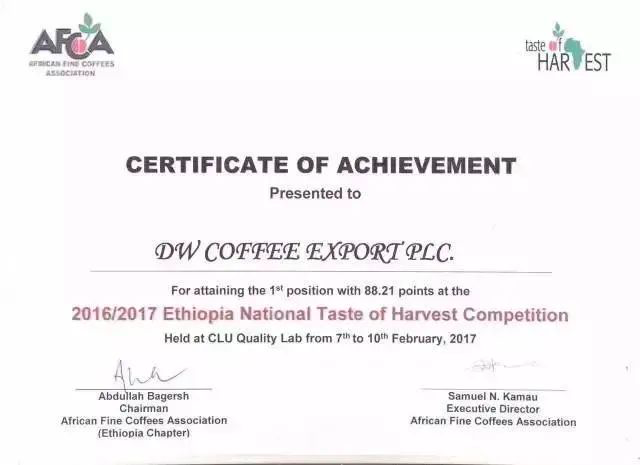
In 2017, Ethiopia's DW Company sent the natural coffee beans from its Buku Abel processing station to compete in that year's TOH (Taste of Harvest) competition, and won the championship in the natural group of the Ethiopia division in one go.
That year, Beijing green bean merchant Hongshun took a fancy to the same batch of green coffee beans and introduced them into China. That year's Ethiopian TOH natural champion batch conquered many judges with its strawberry-cream flavor, and also amazed domestic green bean merchants. As long as there was a slight improvement in the post-processing method of the green coffee beans, this bean had the potential to become the next Geisha. Therefore, it was named "Huakui." "Huakui" in Chinese means the chief of a hundred flowers, which fully shows the high hopes the green bean merchant placed on this coffee bean.
Also in 2017, at the China stage of the World Brewers Cup, Geisha coffee beans swept multiple competition areas, and contestant Li Jianfei, who won second place that year, used the same batch of Huakui coffee beans. After the news spread, everyone was stunned—there were actually coffee beans with a flavor even better than Geisha, and Huakui coffee's fame thus rose rapidly.
2017 can be called the year Huakui coffee beans rose to prominence, and in the many years since, coffee connoisseurs' pursuit of Huakui has never stopped. Hongshun, as the green bean merchant that discovered this deliciousness, also continued to work hard for the "Huakui" IP for many years, dealing with the producing area for years. 2022 has already begun, which means the new-crop Huakui coffee beans are about to arrive. If following the naming method of previous years, the Huakui coffee beans of this crop should be called "Huakui 6.0." However, the news Front Street received is that the new-crop 2022 Huakui coffee beans are still in the place of origin and are expected to arrive at port only in April 2022. Of course, Front Street also reserved a batch at the first opportunity; when the Huakui coffee arrives, that will be the time for Front Street to share it with everyone.
Earlier, Front Street mentioned Huakui 6.0, while the Huakui coffee beans everyone can see on the market are more often called "Huakui 5.0." Those who have grasped the trick may have already discovered that the naming method of Huakui coffee beans advances as "Huakui X.0." Huakui 2.0 in 2018, Huakui 3.0 in 2019, Huakui 4.0 in 2020, so 2021's is Huakui 5.0, and 2022's is naturally Huakui 6.0.
Now, FrontStreet Coffee's bean list not only has Huakui 5.0, but also a Small-Bean Huakui. Since 2017, through observation and tasting, Front Street has found that the unique aroma in Huakui coffee mainly comes from those small-particle Huakui coffee beans with smaller bean sizes. By 2020, DW Company's Buku Abel processing station even directly processed the small-particle Huakui coffee beans separately and made them into a separate product, which means Small-Bean Huakui is not included in the "Huakui X.0" series.
In addition, Front Street learned that in 2021 alone, domestic green bean merchants imported only 30 to 40 tons of Huakui coffee beans in total, while in Li Guoqing's public criticism he said Luckin bought out 90 tons of Huakui coffee beans. Front Street also mentioned earlier that Huakui coffee comes from the Buku Abel processing station in the Hambela sub-region.
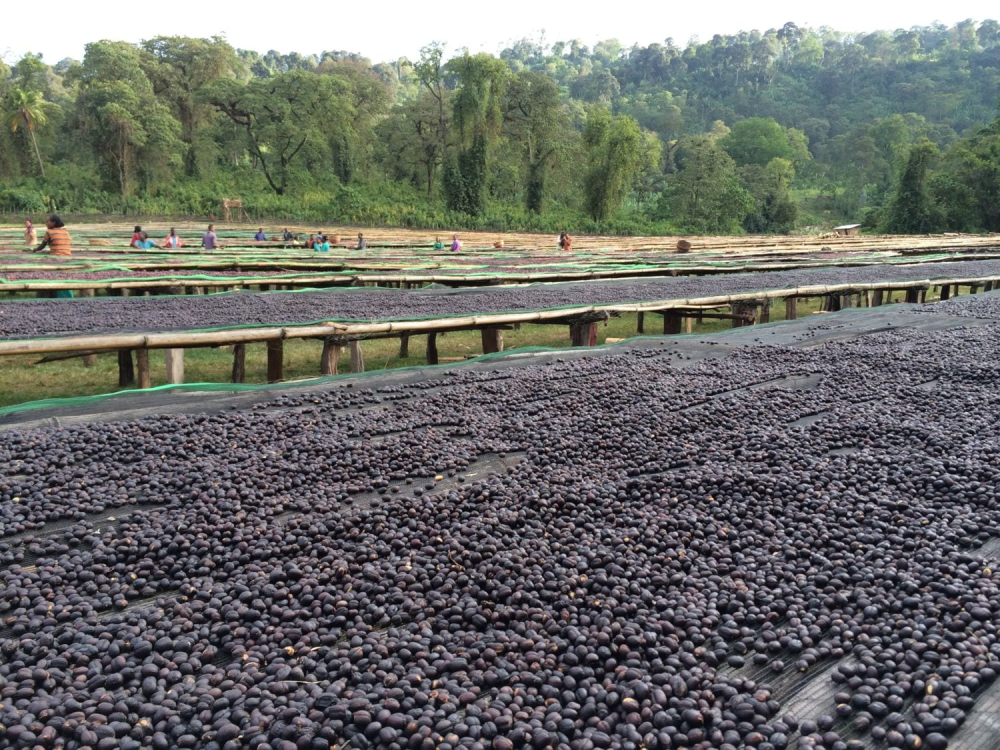
The Buku Abel processing station is a coffee natural processing plant managed by DW Company, which has 20 years of experience. The processing station is 400 kilometers from Ethiopia's capital Addis Ababa, in Buku village. Around the land where coffee is grown in this village, the local staple food—false banana—is planted everywhere. Front Street believes that what can be called Huakui coffee beans are all natural coffee beans produced at the Buku Abel processing station.
Through cupping two Huakui coffees both from the Buku Abel processing station and both from the 2021 crop, Front Street found by comparison that the flavor of Huakui 5.0 is closer to the citrus and berry tone of the Guji producing area, with a faint floral aroma and a tropical fruit juice-like mouthfeel; while the flavor of Small-Bean Huakui coffee is closer to the strawberry-cream flavor of the 2021 Ethiopian TOH natural champion batch.
Because when Front Street roasted these two Huakui coffee beans, in order to retain more berry acidity and a bright mouthfeel, it adopted a medium-light roast level. When brewing, Front Street recommends using a water temperature of 91 degrees Celsius, a Hario V60 dripper, and a medium-fine grind.
Because the ribs of the V60 dripper are distributed in a curved shape from top to bottom and vary in length, during brewing the exhaust is relatively smooth and the flow rate is also relatively fast. Therefore, when generally choosing this dripper, a staged extraction method is used for extraction: first, it can slow the flow rate of the water stream; second, it can improve extraction, and to a certain extent can reduce under-extraction caused by the fast flow rate.
Dripper: Hario V60
Water temperature: 91 degrees Celsius
Coffee dose: 15 grams
Coffee-to-water ratio: 1:15
Grind level: 80% passing through China standard No. 20 sieve
When pouring water for brewing, Front Street recommends using a three-pour method, thereby giving the coffee a richer sense of layering. First, pour 30 grams of hot water in a "の" shape to completely wet the coffee grounds and bloom for 30 seconds. Then pour from the center point with a small stream and slowly circle to 125 grams for the stage. Wait until the water level in the dripper drops to the point where the coffee bed is about to be exposed, then continue pouring. Gently pour and slowly circle to 225 grams, then stop pouring. Wait until the water in the dripper has completely dripped into the server, then remove the dripper. The total extraction time is about 2 minutes.
For more coffee bean information, please follow Coffee Workshop (WeChat public account cafe_style)
For professional coffee knowledge exchange, please add WeChat ID kaixinguoguo0925
The above content is compiled by CoffeeHunters, a coffee news website.


