








How Do You Fix Common Latte Art Mistakes Involving the Foam on Coffee?
Long tails, wrong cup volume and off-center patterns usually trace back to milk flow and pitcher control rather than the pattern itself. A dragged line often comes from carrying momentum through the finish or pouring straight out of the cup, a habit from early teaching that is no longer advised. The fix is to raise the pitcher, cut the flow, push forward along the tail direction and stop cleanly.
Cup volume depends on the reference fusion amounts used for each pattern, so hearts and leaves can finish with a small tail while tulips and patterned tulips should not. Two extra drops of milk muddy the surface when the spout sits too close to the foam on coffee during pouring. An outside observer can also correct cup-holding and pitcher-holding posture.
Once latte art practice reaches a certain stage, the pattern itself can take shape, but mistakes in the details often cause more frustration. This article compiles three high-frequency problems: dragging out an overly long line when finishing, the cup not being full or overflowing after pouring, and the pattern being asymmetrical left and right. For each situation, Front Street provides specific cause analysis and correction methods, including milk flow and pitcher spout control when finishing, reference fusion amounts for different patterns, and using another person's observation to correct your cup-holding and pitcher-holding posture. It is suitable for coffee enthusiasts who are polishing their latte art details to practice against, gradually improving the consistency and beauty of their output.
First, dragging a long tail when finishing Many people pull the main body of the pattern quite well, but at the very last moment when closing the line, they drag out a very long line that ruins the overall effect.
This situation is mostly seen in patterns that finish symmetrically along the center line, such as hearts, leaves, and tulips. Some people carry momentum in their hand when finishing and naturally drag the line longer; others finish by following certain tutorials that say to "pull directly out of the cup." Front Street remembers that this was originally a method used by early latte art teachers to deal with students who hesitated when finishing, but once it becomes a habit, it is instead very hard to change back, so this practice is basically no longer advocated now. The finishing move often directly determines success or failure, so the method must be handled accurately. When preparing to finish, you generally need to raise the milk pitcher, reduce the milk flow, push forward in the direction of the tail, and then stop the pitcher cleanly when you reach the end, so as to avoid dragging out an extra long line. Also note that patterns such as hearts and leaves can finish with a small tail, while tulips and patterned tulips are not suitable for pulling out a tail.

When practicing the finish, at first you may not be able to control the milk pitcher and one or two extra drops of milk may muddy the surface. There are usually two reasons: first, during the pouring stage the pitcher spout is too close to the surface, so milk foam sticks to the outside of the spout and then falls onto the surface when finishing; second, the stopping motion is too large and too deliberate. Quickly stopping the pitcher does not mean the movement path has to be large. Some people noticeably lift the milk pitcher when finishing, and it is exactly this motion that makes the finishing part blurry. The correct way is simply to give a gentle lift when finishing to stop the milk flow.
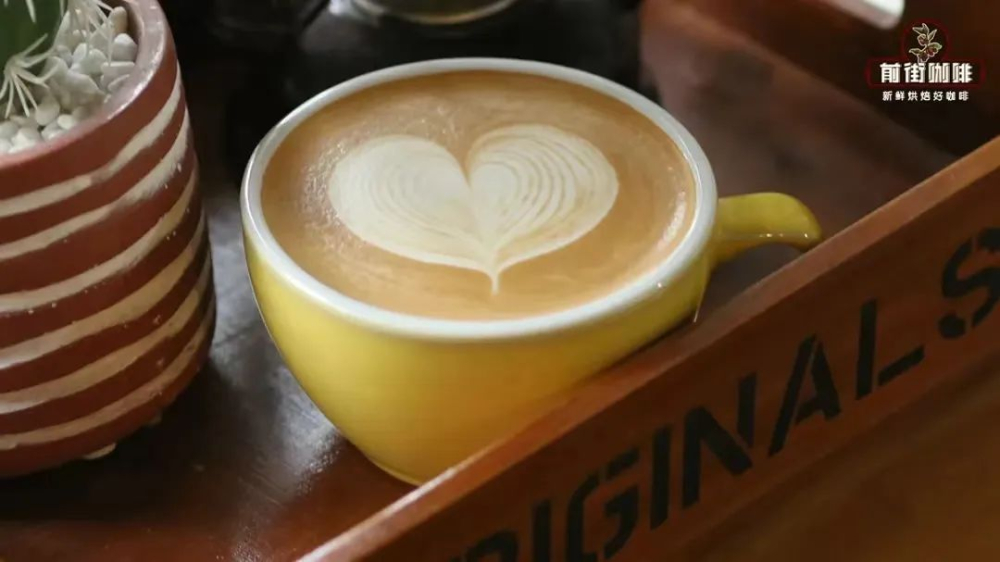
Second, the cup is not full or overflows after pouring There are also some people whose latte art movements are already very proficient and whose patterns are attractive and proper, but the problem lies in controlling the amount in the cup. For example, the pattern is poured nicely, but the cup is only eighty percent full; or the movements and lines are perfect, yet at the final step the coffee overflows.

This is mainly related to judging the fusion amount. How much to fuse depends on the complexity of the pattern being poured. For relatively simple patterns like hearts, leaves, and four-petal tulips, the fusion amount should be greater, about to seventy percent full; while for more complex patterns like six-petal tulips and patterned tulips, the fusion amount should be less, about forty percent full, leaving enough space for the subsequent pattern. Third, the pattern is crooked, one side large and the other small Many patterns look decent on their own, but unfortunately they are asymmetrical left and right, with one side large and the other small.
There are three main reasons for this situation: the coffee cup is held crooked, the milk pitcher is held crooked, and the amplitude of the side-to-side movement is inconsistent when making patterns. During the pouring process, it is hard to notice that you are holding the cup or pitcher crooked; usually you only discover it after finishing. If your patterns are always crooked too, Front Street suggests finding a companion to help point it out during practice, so you can adjust in time.
The above content is compiled by CoffeeHunters, a coffee news website.


