







Does authentic Blue Mountain coffee still come only from Japan?
The idea that real Blue Mountain coffee is available only in Japan traces to a 1970s agreement. After a 1969 hurricane damaged Jamaica's coffee industry, the Japanese company UCC provided aid and cultivation support, and Jamaica signed a 30-year contract to supply 90 percent of high-quality Blue Mountain coffee to Japan. The remaining 10 percent went to Europe and the United States.
After the contract expired, economic troubles in Japan reduced its purchasing power, and Jamaican farmers raised green bean prices rather than remain tied to Japanese traders. Japan's share has since dropped below 60 percent. Jamaican Blue Mountain coffee can now be imported directly into China, so buyers can obtain beans with certificates of origin through legitimate channels. Grading standards for green beans still determine quality tiers.
When Blue Mountain coffee is mentioned, many people associate it with "high prices" and the saying that "authentic Blue Mountain can only be bought in Japan." These impressions actually stem from a period of coffee trade history between Jamaica and Japan in the last century. Today the market landscape has long changed, and Jamaican Blue Mountain coffee can be imported directly into China, allowing consumers to buy authentic Blue Mountain beans with certificates of origin through legitimate channels. This article will sort out the origins of the relationship between Japan and Jamaican Blue Mountain coffee, explain the current import situation of Blue Mountain coffee, introduce the grading standards for Blue Mountain green beans, and share Front Street's roasting approach and pour-over extraction parameters for Blue Mountain No. 1, helping coffee lovers understand this classic coffee more clearly.
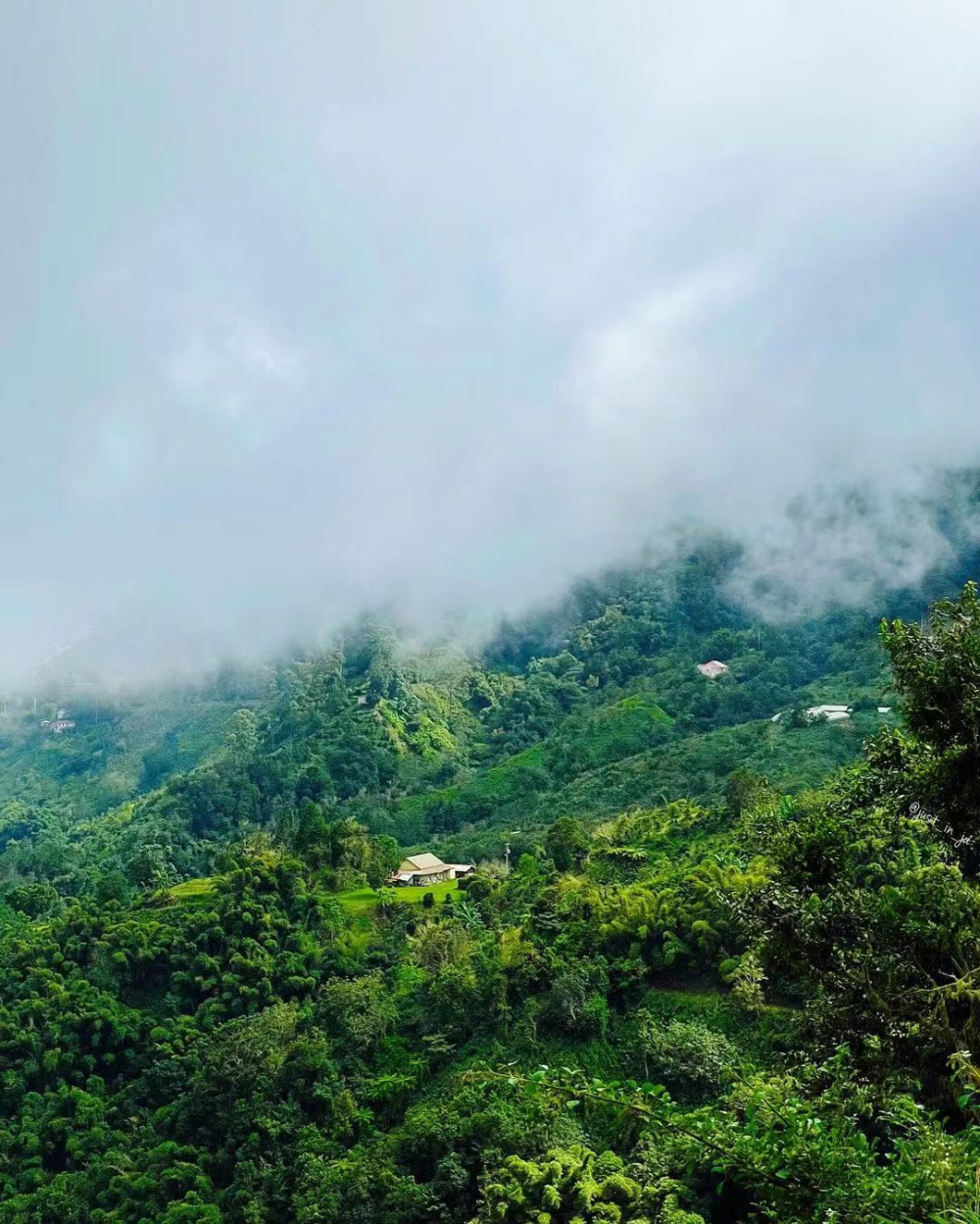
In the past, people often heard sayings like "Blue Mountain coffee is too expensive to drink" and "authentic Blue Mountain can only be bought in Japan." These impressions actually came from a coffee agreement signed between Jamaica and Japan in the 1970s.
Before the 1960s, Jamaican coffee beans were already quite favored in the specialty coffee market. In 1969, Jamaica suffered a severe hurricane disaster, which hit many industries, and the coffee industry was no exception. At this time, the Japanese company UCC provided financial assistance to Jamaica's coffee industry and brought in scientific ecological cultivation methods. To express its gratitude, the Jamaican government signed a 30-year contract with Japan, promising to supply 90% of the quota of high-quality Blue Mountain coffee to Japan, with only the remaining 10% allocated to European and American countries.
After the contract expired, it coincided with the global economic crisis. Japan's economy was sluggish and its purchasing power declined, and Jamaican coffee farmers were unwilling to continue being monopolized by Japanese traders, so they significantly raised the price of green coffee beans. At present, Japan's share of purchases of Jamaican Blue Mountain coffee has fallen from 90% back then to less than 60%.
In today's increasingly prosperous coffee culture, we are already able to import Blue Mountain coffee beans directly from Jamaica. At Front Street, you can drink authentic Front Street Blue Mountain coffee. Front Street Blue Mountain No. 1 is sold at 158 yuan per 100 grams per pack, and enjoying it directly as pour-over is 60 yuan per cup, which is a relatively affordable price and suitable for coffee lovers to buy and try.
If you enter the keyword "Blue Mountain" into a search engine, a large number of articles teaching people how to identify authentic Blue Mountain will pop up. Indeed, Blue Mountain coffee is internationally renowned, and many unscrupulous merchants use the Blue Mountain name to pass off lower-quality commercial coffee as the real thing, so the market is flooded with a large number of fake Blue Mountain products. The most common are products mixed with words such as "Blue Mountain flavor," "Blue Mountain blend," and "Blue Mountain instant," which in fact have nothing to do with real Blue Mountain.
Although there are many fake Blue Mountains in China, that does not mean real Blue Mountain does not exist. In fact, there were reports in April 2011 of direct imports of Blue Mountain coffee from Jamaica into China. At that time, Zhejiang DUNN'S RIVER Import and Export Trading Company purchased from Jamaica on behalf of the "Hangzhou Coffee and Western Food Association," totaling 1000*70kg, with a total value of two million US dollars. Today Jamaica also attaches great importance to the Chinese market, and a list of many authorized domestic exporters can be found on the CIB official website.
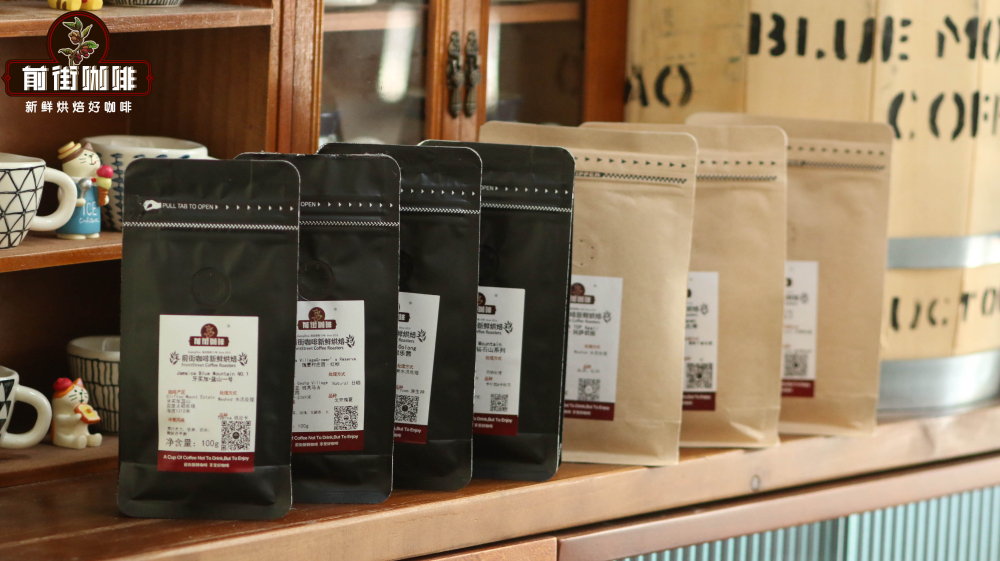
Front Street's own-roasted Front Street Blue Mountain No. 1 coffee is produced by Jamaica's Clifton Estate and comes with a quality certificate issued by the Jamaica Coffee Board, an authorized sales certificate issued by the Blue Mountain coffee producer, and a certificate of origin for Jamaican Blue Mountain coffee. The oak barrels used to hold Blue Mountain green beans are also displayed in the Dongshankou store.
Compared with other coffee origins, Jamaica was the first country to realize that coffee has a "taste of place." The local standards for evaluating the quality of Blue Mountain green beans cover multiple categories: green bean size, defect rate, color, uniformity, and cup performance after roasting (including dry aroma, wet aroma, acidity, flavor, body, cleanliness, and other factors).
The size of the beans is measured using screens with various hole diameters, and coffee beans that do not pass through the holes meet the required standard. Color evaluation includes visual observation and colorimeter readings, with blue-green being the highest grade. Combining the above standards, Blue Mountain coffee is divided into 4 grades, from highest to lowest: NO.1, NO.2, NO.3, PB, and blend. NO.1 is the highest-grade top Blue Mountain, known in China as "Blue Mountain No. 1." Front Street Blue Mountain No. 1 must meet a screen size of 17 or above, a defect rate below 3%, a moisture content of about 13%, and in cupping display rich coffee aroma, a smooth and balanced mouthfeel, low acidity, and a lasting sweet aftertaste.
In roasting, CIB also has recommendations for the roast level targeting the classic Blue Mountain flavor, and Front Street's roaster follows this by using a medium roast, allowing Front Street Blue Mountain No. 1 coffee to present both rich chocolatey sweetness and retain a suitable soft fruit acidity.
Front Street hopes to highlight the rich, round mouthfeel of Front Street Blue Mountain No. 1 coffee, so it uses a KONO coffee dripper for extraction. KONO's ribs extend less than half the height of the dripper. This design is actually intended to ensure that after the dripper is wet, the filter paper clings tightly to the dripper wall and restricts airflow, which increases the time for coffee grounds to absorb water, resulting in a more even overall extraction and making it suitable for the mild, mellow Front Street Blue Mountain coffee.
Brewing parameters: 15 grams of coffee, coffee-to-water ratio 1:15, grind size: EK43s setting 10.5 (75% passing rate on China No. 20 standard sieve), water temperature: 87–88°C, brewing method: staged extraction.
Place the filter paper in the KONO dripper and pour in water to wet the filter paper while making it fit more closely. Add the coffee grounds and tap gently so the coffee bed is evenly distributed. For the first stage, gently pour in 30 grams of water for blooming, with a blooming time of 30 seconds. For the second stage, pour in water until about 125 grams, circling outward evenly and steadily. Then wait for the coffee liquid to drop, and when it has dropped to half, pour in the final stage of water up to 225 grams. After all the coffee has dripped through, the total extraction time is generally about 2 minutes.
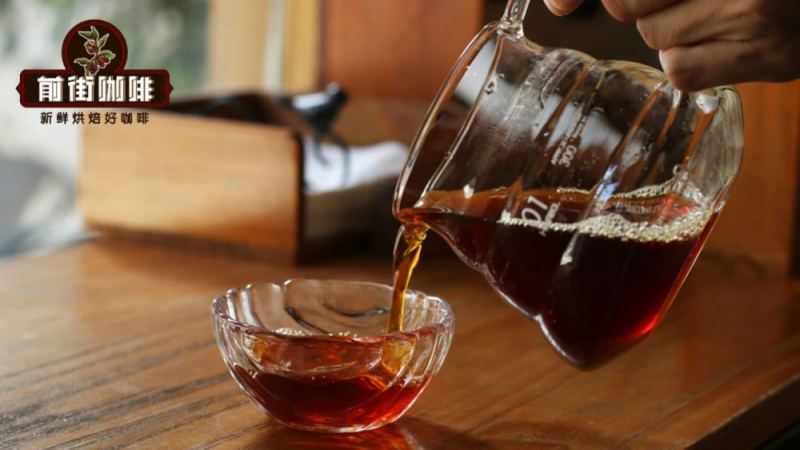
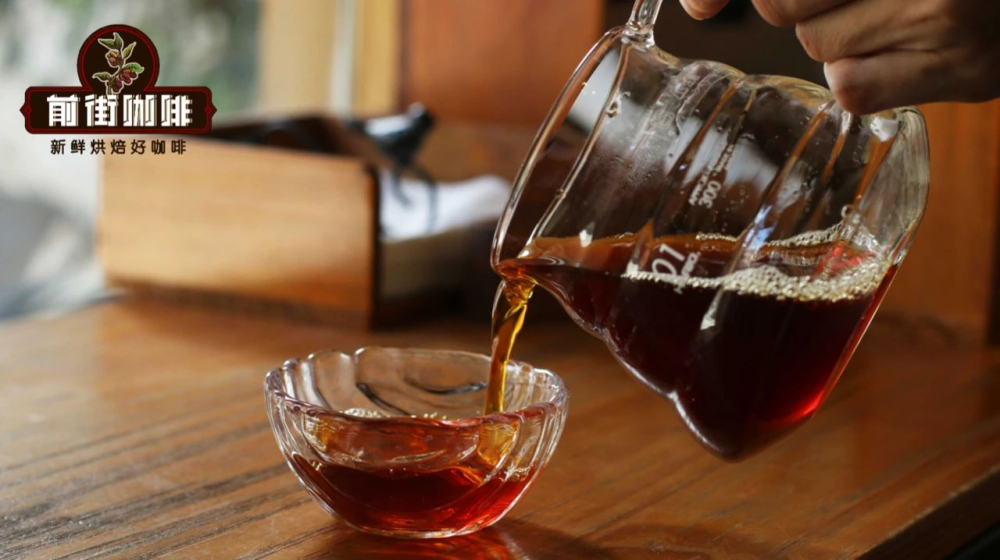
The pour-over Front Street Blue Mountain No. 1 coffee has notes of dark chocolate and nuts, is very full-bodied, and has an obvious almond-like sweet aftertaste. As the temperature drops, it becomes like roasted hazelnut and creamy, sweet, and silky, with a hint of soft acidity and caramel sweetness, and the aroma lingers in the mouth.
For professional coffee knowledge exchange and more coffee bean information, please follow Coffee Workshop (WeChat public account: cafe_style).
For more specialty coffee beans, please add the private WeChat of Front Street Coffee (FrontStreet Coffee), WeChat ID: qjcoffeex
The above content is compiled by CoffeeHunters, a coffee news website.


