







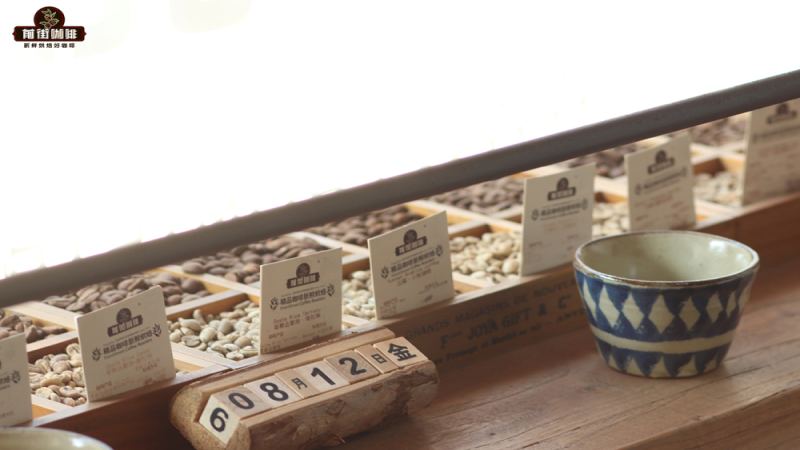
Which Regions Do These Coffee Farm Selections Come From?
This guide covers ten representative coffees from Ethiopia, Indonesia, Jamaica, Panama, Kenya, Brazil, Colombia, Honduras, Yunnan in China, and Costa Rica. Each bean stands for the typical flavor of its region, from the tropical fruit of Huakui to the classic balance of Blue Mountain.
Take Ethiopia Huakui, the natural-process bean grown at 1,200 meters: only ripe red cherries are picked and turned by hand during drying, giving mango, strawberry, and passion fruit notes. Panama Geisha beans appear as well, known for an elegant floral aroma that sets them apart.
At the request of many coffee lovers, Front Street Coffee has selected 10 representative coffee beans from different producing regions around the world, covering Ethiopia, Indonesia, Jamaica, Panama, Kenya, Brazil, Colombia, Honduras, Yunnan China, and Costa Rica. These beans each have their own characteristics, from the tropical fruit storm of Huakui to the classic balance of Blue Mountain, from the elegant floral aroma of Geisha to the wine barrel fermentation of Sherry, each one represents the typical flavor of its region. Whether you are a beginner just starting out or a seasoned player seeking new experiences, this guide can help you find your ideal choice.
Many coffee lovers have left messages for Front Street, hoping we could recommend some representative high-quality coffee beans. After thinking it over, Front Street concluded that what is most representative is none other than the beans with distinctive styles from the world's major producing regions. So Front Street carefully selected 10 coffee beans from different countries and introduces their characteristics one by one.
TOP1. Front Street Ethiopia Huakui Coffee Beans
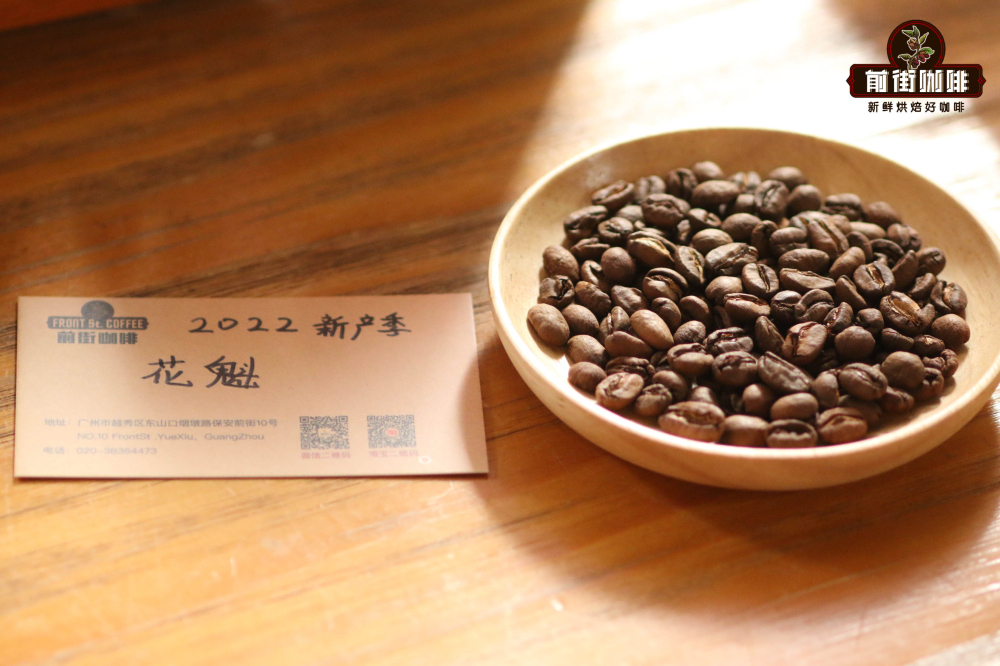
In China's coffee circle, the name Front Street Huakui is truly resounding. In 2017, Ethiopian green bean company DW sent a batch of naturally processed coffee beans to compete in the TOH competition held by the African Coffee Association, and won the championship in one fell swoop. In the same year, Chinese green bean merchant Hongshun brought this bean to China, and barista Li Jianfei immediately used it to defeat many Geisha competitors in the China Barista Championship, taking second place. Because Geisha is often called geisha coffee, this bean was named Huakui, meaning the top geisha.
Front Street Huakui is grown at an elevation of 1200 meters, and the superior natural conditions allow the coffee cherries to accumulate sufficient sugar. During picking, only fully ripe red cherries are selected, and during the natural drying process it is continuously turned by hand. The rigorous processing flow creates outstanding quality. After brewing, it presents a rich tropical fruit profile, with fermentation aroma, mango, strawberry, and passion fruit notes. It is full-bodied on the palate, with solid acidity and prominent sweetness.
TOP2. Front Street PWN Golden Mandheling Coffee Beans
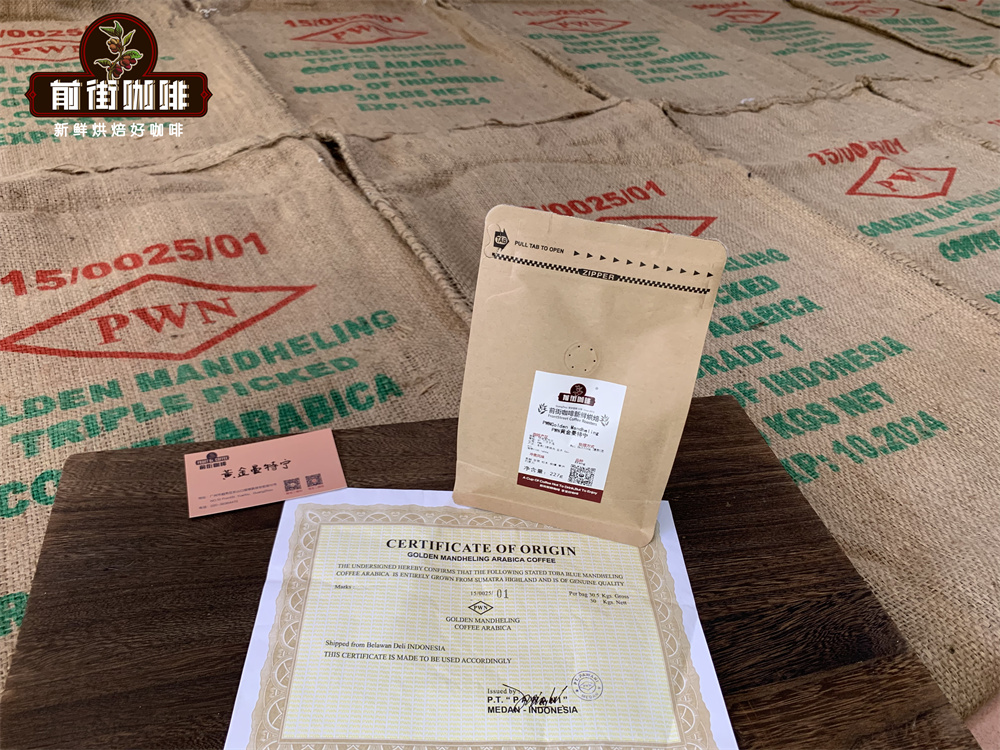
Front Street Golden Mandheling comes from the Indonesian green bean company Pawani and is the company's selected top-grade product. It should be noted that Golden Mandheling is a registered trademark, and Pawani has built it into Indonesia's most premium coffee brand. To maintain quality, Pawani searches throughout Sumatra and purchases high-quality coffee beans.
One of the keys to the stable quality of Front Street Golden Mandheling is that after processing is completed, it undergoes three rounds of manual hand sorting to reduce the defect rate of green beans as much as possible and ensure full, evenly sized beans.
Because Golden Mandheling is famous and high in quality, many counterfeit products have appeared on the market. Front Street reminds you here that not every Mandheling with large beans and few defects can be called Golden Mandheling. This trademark belongs to PWN, and officially imported Golden Mandheling green beans all come with a PWN certificate as proof of authenticity. The jute bag specification is 30 kilograms, and each batch has a corresponding number that matches the certificate one to one.
The flavor profile of Front Street Golden Mandheling is rich and full-bodied, with herbal, nutty, and dark chocolate notes, and very high cleanliness.
TOP3. Front Street Jamaica Blue Mountain No.1 Coffee Beans
Jamaica Blue Mountain coffee is something even people who do not know much about coffee have heard of. The name Blue Mountain is always associated with rarity, expense, and high quality. It was one of the earlier famous beans to gain worldwide fame for its quality, and in the last century it was known as the king of coffee. Compared with coffee beans of the same era, Blue Mountain took the path of intensive cultivation. Its excellent Typica variety, meticulous washed processing, and unified grade classification made Blue Mountain No.1 stand out at the time.
By 2022, there were already many coffee beans more expensive than Blue Mountain, but Blue Mountain has always maintained its high-quality management over the years, and thus formed its unique Blue Mountain flavor. Nowadays, many vendors on the market label their packaging with phrases such as Blue Mountain flavor or Blue Mountain blend. These are not true Blue Mountain No.1 coffee beans, but beans from other regions used to imitate the taste of Blue Mountain.
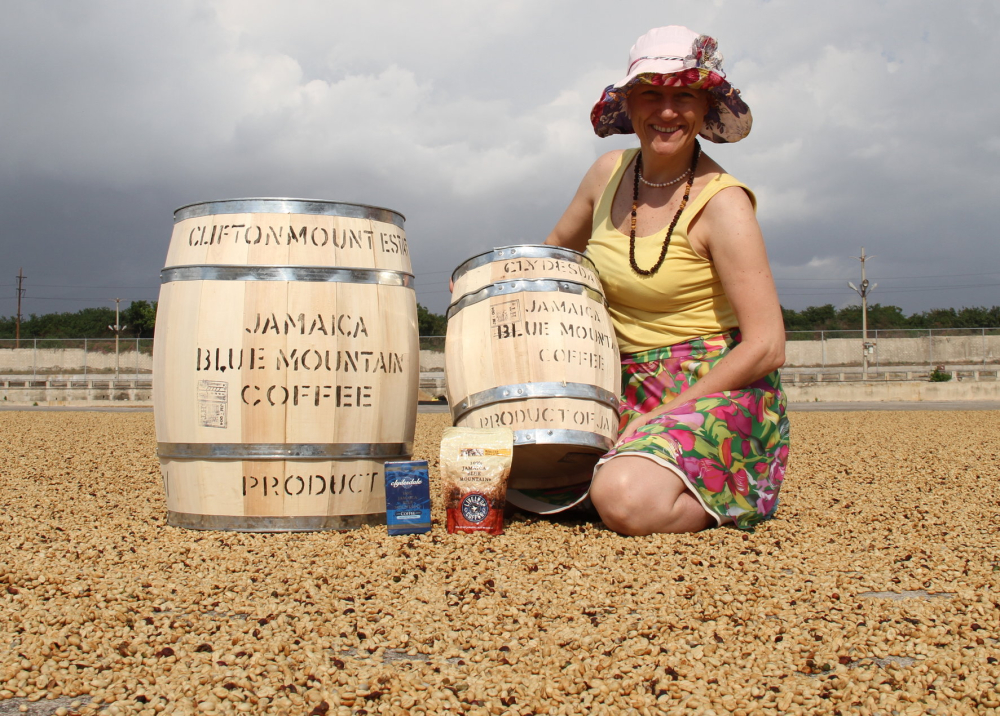
Of course, buying Blue Mountain coffee beans in China is no longer difficult now. Since 2011, China has had officially imported Blue Mountain coffee beans. The Blue Mountain No.1 sold by Front Street Coffee comes from Clifton Farm, one of the earliest Blue Mountain growing sites certified by the Jamaica Coffee Board. Clifton Farm is 1310 meters above sea level, which is relatively high among Blue Mountain growing areas, so the coffee beans it produces have even better flavor.
The flavor characteristics of Front Street Blue Mountain coffee are a full body, with balance among acidity, sweetness, and bitterness, along with dark chocolate notes and caramel aroma.
TOP4. Front Street Panama Hacienda La Esmeralda Red Label Geisha Coffee Beans
This bean is extremely well known and can be called today's king of coffee. It comes from Hacienda La Esmeralda in Panama. In 2004, Hacienda La Esmeralda first brought Geisha to the Panama BOP green bean competition and won the championship, which not only made Hacienda La Esmeralda famous but also spread the name Geisha throughout the world.
If we are talking about where Geisha is most authentic, Hacienda La Esmeralda is undoubtedly second to none. The Geisha of Hacienda La Esmeralda is divided into Red Label (Esmeralda Special) and Green Label (Private Collection). Most of these Geishas come from the Jaramillo and Cañas Verdes farms under Hacienda La Esmeralda, all planted at elevations above 1650 meters. The difference between Red Label and Green Label is that Red Label can be traced to a specific plot, while Green Label does not emphasize plot division. Every year the estate owner cups the Geisha from each plot and defines Red Label according to flavor performance.
The Red Label selected by Front Street comes from the Mario plot of Jaramillo Farm, which is exactly the origin where Geisha won the BOP championship in 2004, so the Geisha produced here has always performed excellently. The batch selected by Front Street is slowly natural processed. We believe that naturally processed Red Label Geisha has better sweetness and a richer juicy feel.
The flavor characteristics of Front Street Hacienda La Esmeralda Red Label Geisha are ginger flower aroma, citrus juice, honey, and rose tea.
5. Front Street Kenya Little Tomato Coffee Beans
Kenya borders Ethiopia. Although its coffee-growing history is not long, its quality is quite outstanding. Kenyan coffee is mainly grown in high mountain areas at around 2000 meters above sea level. Rainfall, volcanic soil, temperature differences between day and night, and climatic conditions all provide a good foundation for coffee to accumulate flavor compounds. The main cultivated varieties are SL28 and SL34, and these two artificially bred varieties are also Kenya's stars. Kenya uses a double washed processing method lasting a full 72 hours, first fermenting for 24 hours, then washing and fermenting for another 24 hours, cycling three times in this way. This gives Kenyan coffee a lively and bright acidity, clean yet full-bodied, with sweet berry-like acidity and a fascinating red-wine-like character.
This Front Street Kenya Little Tomato comes from the Asali processing station, which is quite famous locally. The coffee it processes shows obvious sweet-and-sour notes of little tomato and smoked plum, highly characteristic of Kenyan coffee.
6. Front Street Brazil Fazenda Rainha Yellow Bourbon
Fazenda Rainha is a famous specialty coffee farm in Brazil. It won the Brazilian COE competition in 2011, and its four farms have collectively received more than 20 awards of various kinds. The farm mainly grows the Yellow Bourbon variety, whose fruit turns yellow when ripe due to the influence of a recessive gene. This variety has a full body, a creamy smoothness, and prominent nutty and peanut flavors. The processing method is natural, different from Brazil's traditional pulped natural: the coffee cherries are first washed and screened to remove defective beans of poor quality, then the good beans are depulped and directly sun-dried, during which they are turned by hand to prevent over-fermentation.
If you are a beginner just getting into freshly ground pour-over coffee, this bean is very suitable for practicing brewing. Front Street uses a medium roast for this bean. Compared with light-roasted beans, it is easier to brew a good flavor and can easily show sugarcane-like sweetness. The overall flavor leans toward chocolate and creamy peanut, and it is also relatively friendly to people trying coffee for the first time.
Front Street recommends this bean because it is not only suitable for pour-over, but also performs well in a moka pot, French press, or espresso machine, making it a veritable all-purpose choice with great value for money.
7. Front Street Colombia Flower Moon Night Coffee Beans
This coffee comes from Colombia's famous specialty coffee Huila region and uses anaerobic natural processing. First, high-quality coffee cherries are selected and put into sealed stainless steel tanks, carbon dioxide is injected to expel oxygen, and low-temperature fermentation is carried out. The low temperature extends the entire fermentation cycle, generally allowing the coffee to develop better water activity under oxygen-free conditions for 15 to 20 days, thereby obtaining richer flavor, sweetness, and balance. After that, the coffee cherries are sun-dried, and the drying process must be monitored to prevent over-fermentation. Front Street Flower Moon Night coffee beans have a very obvious strawberry jam flavor, as well as chocolate and honey-like sweetness, with a rich mouthfeel.
8. Front Street Honduras Sherry Coffee Beans
At Front Street stores, customers often smell a rich wine aroma as soon as they walk in. This is not because Front Street has switched on an early coffee late alcohol mode, but because the espresso blend Warm Sun used by Front Street includes Sherry coffee beans. What you smell upon entering is exactly the sherry wine aroma given off by the Sherry beans.
Sherry was a very popular coffee in 2019. It also uses a non-traditional processing method, namely low-temperature fermentation in wine barrels. Therefore, it carries a very rich whisky aroma. The specific method is: remove the peel from selected high-quality coffee cherries, place them into whisky barrels for low-temperature fermentation for 15 to 30 days, during which the coffee beans absorb the aroma of the barrels, then take them out to dry. As a result, this coffee bean has a rich whisky aroma, and when brewed it also has a vanilla cream-like sweet fragrance. It tastes of winey chocolate and honey.
9. Front Street Yunnan Small-Bean Typica Coffee Beans
Yunnan is an important coffee-producing region in China, mainly cultivating two varieties, Typica and Catimor, but currently more than 90 percent is Catimor. What is the difference between these two varieties? Typica has low yield and poor resistance to insects and disease, but good flavor; Catimor has high yield and strong resistance to disease and insects, but poor flavor. So although Typica was planted before, later, in pursuit of yield, everything was switched to Catimor.
If Yunnan is to truly produce specialty coffee, it should start from the beginning, choose suitable places and varieties, and adopt scientific green planting management. Front Street began growing coffee in Yunnan in 2013. Yunnan is located on the Yunnan-Guizhou Plateau. The southern Yunnan areas suitable for growing coffee are mostly at elevations of around 900 to 1000 meters, and such elevations make it difficult to grow high-quality coffee beans. By chance, Front Street found a patch of virgin forest in Lincang near the China-Myanmar border, at an elevation of 1200 to 1300 meters, meeting the hard requirements. In terms of variety selection, Front Street chose Typica because it is an excellent variety, and Yunnan already had a record of successfully growing Typica as early as 100 years ago.
Growing coffee is a long process, and Front Street was also feeling its way across the river. Although not fully certain that good coffee could be grown, we still went ahead without hesitation. In 2020, after 7 years of cultivation, Front Street harvested its first mass-production batch, 300 kilograms in total. Front Street did not use fancy processing methods, only traditional natural processing, which was also part of Front Street's effort to verify whether Yunnan could grow good coffee. After cupping, it had flavors of candied fruit sweetness, plum, yellow sugar, and chocolate. Front Street named this bean "Front Street 2013."
10. Front Street Costa Rica Mozart Coffee Beans
Costa Rica's Mozart has a sweetness like Kyoho grapes and has long been loved by many friends. This coffee bean uses raisin honey processing to allow the coffee fruit to ferment slowly. Front Street uses a medium-light roast to highlight this bean's very rich raisin, rose, and fermented wine aroma flavors.
For more specialty coffee knowledge, please follow: Front Street Coffee (Frontsteet Coffee)
The above content is compiled by CoffeeHunters, a coffee news website.


