







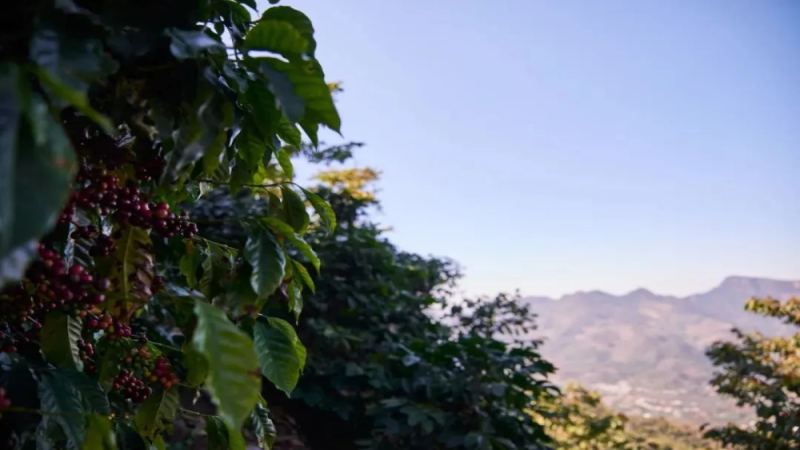
Where Is Coffee Beans Grown Across Guatemala?
Guatemala holds more than three hundred microclimates, and volcanic soil with high-altitude terrain shapes its coffee. Antigua gives balanced fruit acidity, while Huehuetenango brings bright fruity notes. The country's eight main regions each carry their own character, shaped by climate, elevation, and processing.
Terrain splits into the lower northern plains, the central highlands, and the Pacific coastal strip, so coffee trees grow from the highlands down to both coasts. Major regions include Antigua, Atitlan, San Marcos, and Coban. The national coffee association supports growers, and many estates still farm traditionally.
Guatemala is home to over three hundred microclimates, where volcanic soil and high-altitude terrain nurture specialty coffees with distinctive flavors. From the balanced fruit acidity of Antigua to the bright fruity notes of Huehuetenango, the eight major regions each have their own character. This article will take you deep into Guatemala's coffee region distribution, varietal characteristics, grading methods, and washed processing procedures, and analyze its signature flavor profile. Front Street Coffee has a particular fondness for this land, and the Flora coffee beans on its bean list come from the Antigua region, washed processed, with a refined flavor, well worth trying.
For more specialty coffee knowledge, please follow: Front Street Coffee (Frontsteet Coffee)
When mentioning coffee origins in the Americas, people usually think of iconic countries such as Brazil, Colombia, Costa Rica, and Panama. With their respective geographical conditions, coffee varieties, and processing methods, they present completely different coffee profiles. And Front Street Coffee has an exceptional preference for coffee beans produced in Guatemala.
Guatemala has a remarkable feature, which is its rich geographical environment. From low-altitude plains to high-altitude mountains, and further to the Pacific coast, plus the many volcanoes distributed across the country, these conditions together give coffee its distinctive qualities. Fertile volcanic soil provides an ideal foundation for nurturing high-quality specialty coffee.
Guatemala has multiple volcanoes exceeding three thousand meters within its territory. The country's terrain can be roughly divided into the lower northern plains, the higher central highlands, and the southern coastal area bordering the Pacific. Influenced by differences in terrain and climate, coffee cultivation covers the highlands, the northern plains, and both the Pacific and Atlantic sides. Major producing regions include Antigua, Atitlan, San Marcos, and Coban.
Thanks to fertile volcanic ash soil and a suitable climate, Huehuetenango has also gradually gained widespread attention in recent years. The Guatemalan National Coffee Association operates with the joint participation of producers and exporters, providing necessary agricultural support for growers. Local estates vary in size, and although many still follow traditional cultivation methods, they still produce a large amount of specialty coffee with distinctive character.
Major Coffee Regions of Guatemala
Such diverse regional flavors are inseparable from the soil and water conditions of the country's eight major regions. Among them, five regions—Antigua, Acatenango Valley, Atitlan, San Marcos, and Fraijanes—belong to volcanic rock geology. The other three regions—Huehuetenango, Coban, and New Oriente—belong to non-volcanic highland areas or tropical rainforest climates. Guatemala has over three hundred microclimates across its territory, a number considered the highest in the world.
The Guatemalan National Coffee Association (ANACAFE) divides producing regions according to factors such as coffee flavor, climate, soil, and altitude, roughly into eight:
Antigua
The Antigua producing region is located in the mountain range running through Guatemala, mainly the entire area dominated by the Madre plateau. Due to superior natural conditions, Antigua has become the most renowned of Guatemala's eight major regions. High altitude, unique volcanic soil, and shade-growing methods give the coffee beans produced here a distinct regional flavor.
Huehuetenango
Huehuetenango is one of Guatemala's important coffee-producing regions. Its name comes from Nahuatl, meaning "place of the ancients (or ancestors)." Unlike Antigua, the coffee produced here has aromatic, bright fruity flavors, with a refreshing taste. High altitude produces higher-quality coffee beans, with rich flavor and plump beans, and it is deeply loved by European royalty. This region is located in the northwestern highlands of Guatemala, with cultivation at altitudes between 1800 and 2100 meters, making it the highest-altitude coffee-producing region in the country, famous for producing high-quality coffee beans.
Thanks to fertile volcanic ash soil and climatic conditions, Huehuetenango has also attracted much attention in recent years. The Guatemalan National Coffee Association operates jointly with producers and exporters, actively providing agricultural assistance to growers. Local estates vary in size, adopt traditional farming methods, and still produce many specialty coffees with rich character.
Guatemala has numerous rivers and lakes. The Huehuetenango area is rich in mountains, rivers, and water resources, with a dry climate but ample water supply, along with well-developed water infrastructure, so the coffee is mostly processed by the washed method.
Coban
The Coban coffee-producing region is located in the Alta Verapaz department, 220 kilometers from Guatemala City, and is known for its unspoiled natural environment and unique microclimate. Geographically, Alta Verapaz is close to the northern Peten department, which is the core area of Maya culture and also the birthplace of Guatemala's largest tropical rainforest in Central America; looking further south, there are mountain ranges all above 1600 meters. The high-altitude mountains and the high-humidity tropical rainforest form a sharp contrast. This makes the area perpetually shrouded in fine mist formed by dense cloud cover descending. The name "Coban" comes from the Q'eqchi' word "Cob'An," meaning "place of mist."
Lake Atitlan
Among Guatemala's three major volcanic producing regions, this area has the highest content of organic matter in the soil. 90% of the coffee plants are grown along steep volcanic slopes, and each day cool winds blowing from Lake Atitlán also have an influence, giving this region's microclimate a unique style and character. Lake Atitlan is one of Guatemala's four volcanic coffee-producing regions. The soil around the lake is very fertile, and the altitude by the lake is still 1500 meters. This is also Guatemala's largest and most famous high-altitude volcanic lake.
Fraijanes Plateau
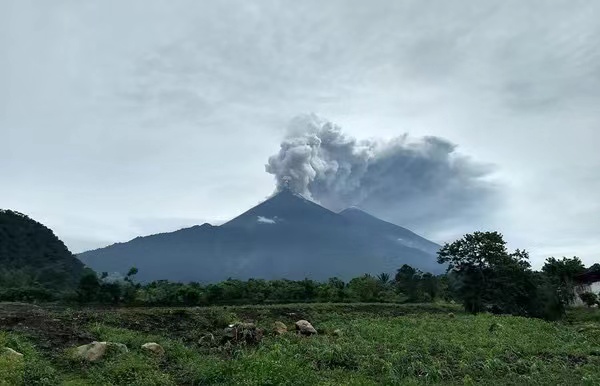
The Fraijanes producing region surrounds the capital, Guatemala City, with high altitude, abundant rainfall, and relatively large humidity variations. Volcanic ash from Pacaya, Guatemala's most active volcano, provides important minerals for the soil in this area, but occasionally it also affects personal safety and infrastructure construction.
Volcanic San Marcos
This is the warmest climate among the eight coffee-producing regions, and also the area with the highest rainfall, reaching 200 inches (5000 millimeters). The rainy season arrives earlier than in other regions, and flowering time is correspondingly earlier. Like all remote coffee-producing regions in Guatemala, most estates in San Marcos have their own washing stations, after which the coffee is dried in courtyards to semi-dryness and then dried at low temperatures.
Acatenango Region
Acatenango is the smallest of Guatemala's eight major coffee-producing regions, located on the slopes of Acatenango Volcano, with an average altitude of 1600 meters. Its soil is rich in volcanic mixture, derived from new volcanic ash brought by frequent eruptions of the nearby Fuego Volcano.
The microclimate of this region is characterized by four distinct seasons: spring allows farmers to sun-dry coffee, summer provides abundant rain for coffee trees to maintain humidity, and winter brings warm, moist sea breezes from the Pacific that protect the coffee from cold damage.
New Oriente Region
New Oriente is Guatemala's youngest coffee-producing region. It has abundant rainfall and is under cloud cover all year round, with a climate similar to the Coban rainforest producing region. In ancient times this was a volcanic area, and the soil is composed of metamorphic rock rich in minerals. Before coffee cultivation began, the New Oriente region was once the poorest area in Guatemala. Since the 1950s, mountain farmers have relied on this naturally fertile land to begin growing coffee, gradually bringing it to life, and today it has become a rising star in Guatemala's coffee-growing industry.
Coffee Varieties
Guatemala's coffee varieties are mainly Bourbon, Typica, Catuai, and Caturra, with small amounts of Yellow Bourbon, Geisha, and Pacamara, making the varieties quite diverse. Being able to retain the old Typica and Bourbon is especially rare. The varieties of this Flora coffee bean from Front Street Coffee are Caturra and Bourbon.
Grading Method
Although grading is usually based on the altitude of the producing area, many times the grade is also determined by flavor. Producing areas above 1300 meters are rated "Strictly Hard Bean" (SHB); 1200 to 1300 meters are rated "Hard Bean" (HB); 900 to 1050 meters are rated "Extra Prime Washed" (EPW).
Guatemala's Processing Methods
Coffee-producing countries in the Americas basically mainly use the washed processing method, such as Colombia and Costa Rica, and Guatemala is no exception. The specific steps of washed processing are: after the coffee cherries are picked, they are immediately sent to the washing station, and first floated on water, with the purpose of selecting coffee cherries with sufficient density. Cherries with an insufficient growth cycle have lower density and will float on the water surface during the flotation stage, while cherries with sufficient density sink underwater and enter the next stage with the water flow.
Next, a machine removes the skin and pulp, and the coffee beans with mucilage are placed in a fermentation tank to ferment, using fermentation to break down the mucilage layer. After fermentation is completed, they are washed with clean water to wash away the decomposed mucilage layer and excess pulp.
Flavor of Guatemalan Coffee Beans
Guatemalan coffee beans once enjoyed a reputation for being the highest-quality coffee beans in the world. The Strictly Hard Beans here are plump and balanced in flavor, and the coffee brewed from them is pure and rich. With relatively strong acidity, a mellow taste, and a slight wildness, they can be enjoyed as single-origin coffee and are also suitable for blending into coffee blends.
Guatemalan Strictly Hard Beans are known for their elegant and lively acidity, clean cup with no off-flavors, and distinct layers, with notes such as green apple acidity, berry aroma, jasmine fragrance, orange peel aroma, green pepper aroma, fruity sweet-and-sour sensation, chocolate sweetness, and even a smoky note in the finish.
In addition to the uniqueness of the Huehuetenango region, the Antigua region is also worth mentioning. The charm of Antigua lies in its balanced, smooth fruit acidity and rich spice notes. The coffee beans not only have a smooth surface, high hardness, and good quality, but also a perfect combination of richness and sweet-and-sour balance, plus a hint of smokiness, further highlighting its depth and mystery. The smoky note is especially distinctive. On Front Street Coffee's bean list, there is a Flora coffee bean from the Antigua region. The Flora coffee bean is washed processed, with varieties such as Caturra and Catuai, and the flavor carries citrus, nut, and cocoa notes in the finish, with an overall refined performance.
The above content is compiled by CoffeeHunters, a coffee news website.


