







How Does American Coffee Differ From Pour-Over and SOE?
Americano did not begin as espresso diluted with water. The name comes from American drip coffee culture, where households brew a large pot in a machine and pour from the carafe, paying little attention to origin. That lighter black coffee is what other countries came to call Americano, and it explains why Starbucks-style espresso plus six to eight times water is a different drink.
Single-origin pour-over and drip bags sit between the two approaches. Using Yirgacheffe Red Cherry beans, an SOE americano pulls a concentrated shot and adds water, while pour-over extracts slowly through a paper filter and shows more layered acidity and aroma. Drip machines trade some clarity for volume and convenience, which is the tradeoff behind most everyday American coffee.
Many people think that Americano is simply espresso diluted with water, but the real Americano actually originates from America's drip coffee culture. This article begins with the historical origins of Americano, sorts out the reasons for its popularity in the United States, and the origin of the Starbucks-style Americano method. At the same time, it clarifies the similarities and differences between single-origin pour-over, drip bag coffee, and American drip machines, and uses Front Street Yirgacheffe Red Cherry beans as an example, comparing SOE Americano and pour-over to present the differences in flavor, helping coffee lovers more clearly choose the cup that suits them.
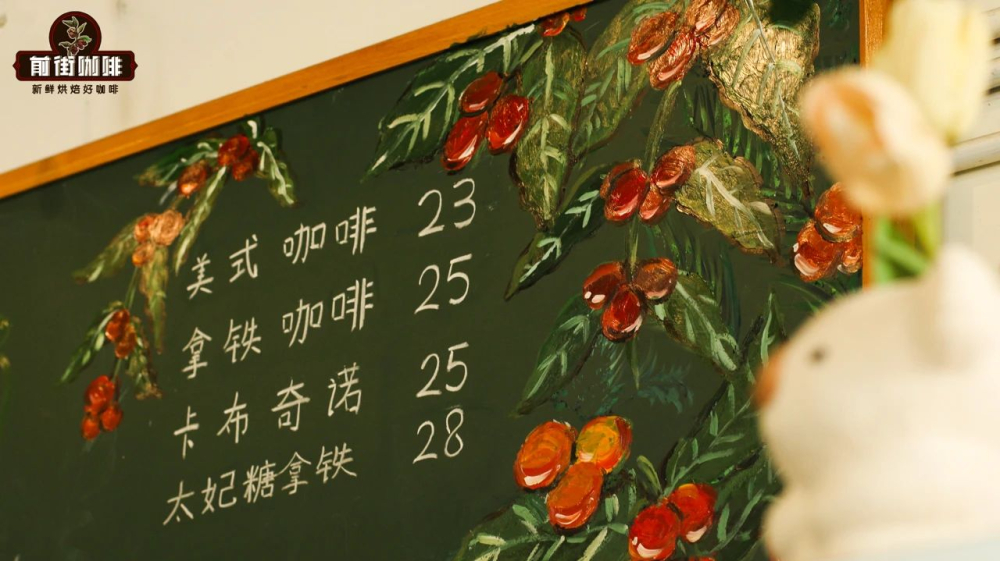
People who drink coffee regularly are certainly familiar with the name "Americano." When ordering an Americano at Starbucks, the barista usually uses espresso as the base and then adds about six to eight times the amount of water. But Italians clearly do not drink Americano, so why does it still appear on Italian coffee menus? Is Starbucks' method really authentic?
What is真正的美式咖啡?
Literally understood, Americano is American-style coffee, that is, the kind Americans habitually drink in daily life. But this name was not invented by Americans themselves, just as foreigners would not call themselves "laowai." American households commonly use drip coffee machines, almost every home has one, and some even have more than one, while fully automatic coffee machines are actually rare. Coffee written on American restaurant menus usually refers to the kind brewed by drip machines—brewing a large pot at once, and after customers order, pouring a cup directly from the thermal carafe, which is convenient and pays little attention to origin. Because Americans drink coffee extremely frequently, several cups a day is the norm, and over time, people in other countries called this lighter black coffee "Americano."
How did coffee become popular in the United States?
In the early seventeenth century, European immigrants gradually brought coffee and tea to North America. At that time, the English Puritans who fled to the New World had a strong tendency toward temperance, and they advocated replacing alcohol with tea and coffee, so these two beverages gradually became part of Americans' daily lives. After the Boston Tea Party broke out in 1773, it further deepened the antagonism between the United States and Britain. The British loved tea, so Americans deliberately switched to coffee, and the Continental Congress later even declared coffee the official national drink of the United States.
Why do Americans prefer drip coffee?
The United States is a nation of immigrants, without a heavy cultural burden, and in lifestyle it pursues freedom and casualness even more, so making coffee is not as rule-bound as it is for Europeans. Drip coffee is simple to operate and quick to produce, and does not require a high technical threshold, which exactly fits the American character.
Returning to the original question: why is Starbucks' Americano espresso diluted with water, and does this count as fooling people? In fact, this method can be traced back to World War II. After American soldiers entered Italy, they really could not get used to the strong espresso, so they poured the coffee into military canteens and added water to dilute it. Seeing this, Italians could not help but mock them, saying that Yankees could only drink coffee as weak as dishwater. After that, Americano specifically came to refer to the practice of diluting espresso with water, which is today's "Americano" in coffee shops. For a long time, American coffee was looked down upon by people in other countries, and the French even described it as like sock-washing water. The reason is that early Americans were indeed casual about coffee, did not care much about bean quality, and coffee was more of a supporting role with meals, so the taste was naturally not very good. However, the more backward the place, the more room there is for improvement. It was precisely against this background that the American woman Ms. Knutsen first proposed the concept of "specialty coffee" in the magazine Coffee and Tea, thus setting off the third wave of coffee, and the current industry standards were formulated by the Specialty Coffee Association of America, SCAA.
Does single-origin coffee count as Americano?
The American drip machine completes pouring and extraction by machine, while single-origin pour-over extraction is controlled manually by pouring water. Both belong to filter extraction, and the principle is the same. But single-origin pour-over is only one way of making drip coffee, and the American drip machine is another way, and there are differences between the two. Traditional Americano is made by adding water to espresso, while the American drip machine extracts coffee grounds directly with water, not by diluting espresso. The reason it is called American-style is that the machine used is called an American coffee machine. To be precise, it should be called American black coffee. Single-origin pour-over is black coffee, and Americano is also black coffee; only by calling it this way is it more rigorous.
In addition, pour-over coffee also has a pre-made form—drip bag coffee. It grinds the coffee beans in advance, packages them in single-serving filter bags, and can be brewed anytime and anywhere, and different beans present different flavors. Here Front Street briefly lists a few options suitable for most people: for those who like floral notes, you can try Front Street Panama Geisha drip bag coffee, which is one of the most expensive coffees in the world; for those who prefer a fresh and slightly sour taste, Front Street Flower Queen drip bag coffee is recommended, which tastes like black tea and berries.
If you like a balanced taste, that is, a type that is neither sour nor bitter, Front Street Brazil drip bag coffee is recommended; as for those who love a solid and mellow flavor, it is suggested to choose the highest-grade Front Street Golden Mandheling drip bag coffee. This bean has undergone multiple rounds of hand sorting, and the defect rate has been pressed to the lowest, so the aroma is clearer and the sweet aftertaste is also more outstanding. All the above drip bag coffees can be purchased at Front Street stores and the Front Street Tmall flagship store.
What are the flavor differences between Americano and pour-over?
In order to visually show the difference, this time [Front Street Yirgacheffe · Red Cherry] beans were selected for a comparative experiment.
Region: Yirgacheffe
Altitude: 1,700 to 2,200 meters
Variety: Heirloom
Processing method: Natural process
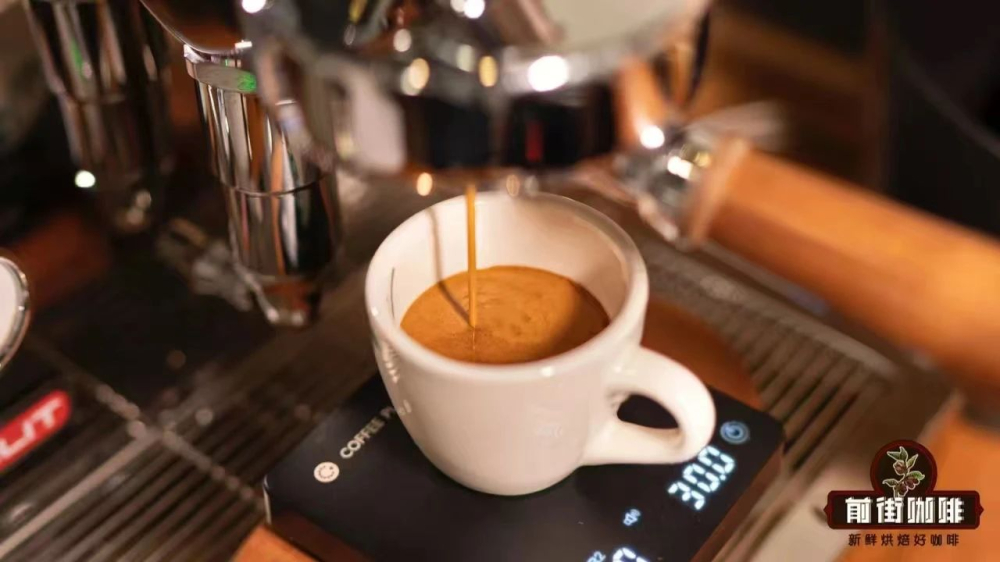
FrontStreet Coffee Natural Red Cherry SOE preparation
FrontStreet Coffee SOE preparation parameters: 20g dose, 40g extracted coffee, extraction time 26 seconds.
SOE flavor description: citrus, berries, fermented aroma, syrupy mouthfeel, medium bitterness, medium-high acidity, bright and lively acidity.
FrontStreet Coffee Natural Red Cherry SOE Americano
In order to compare with pour-over, we made the SOE into Americano.
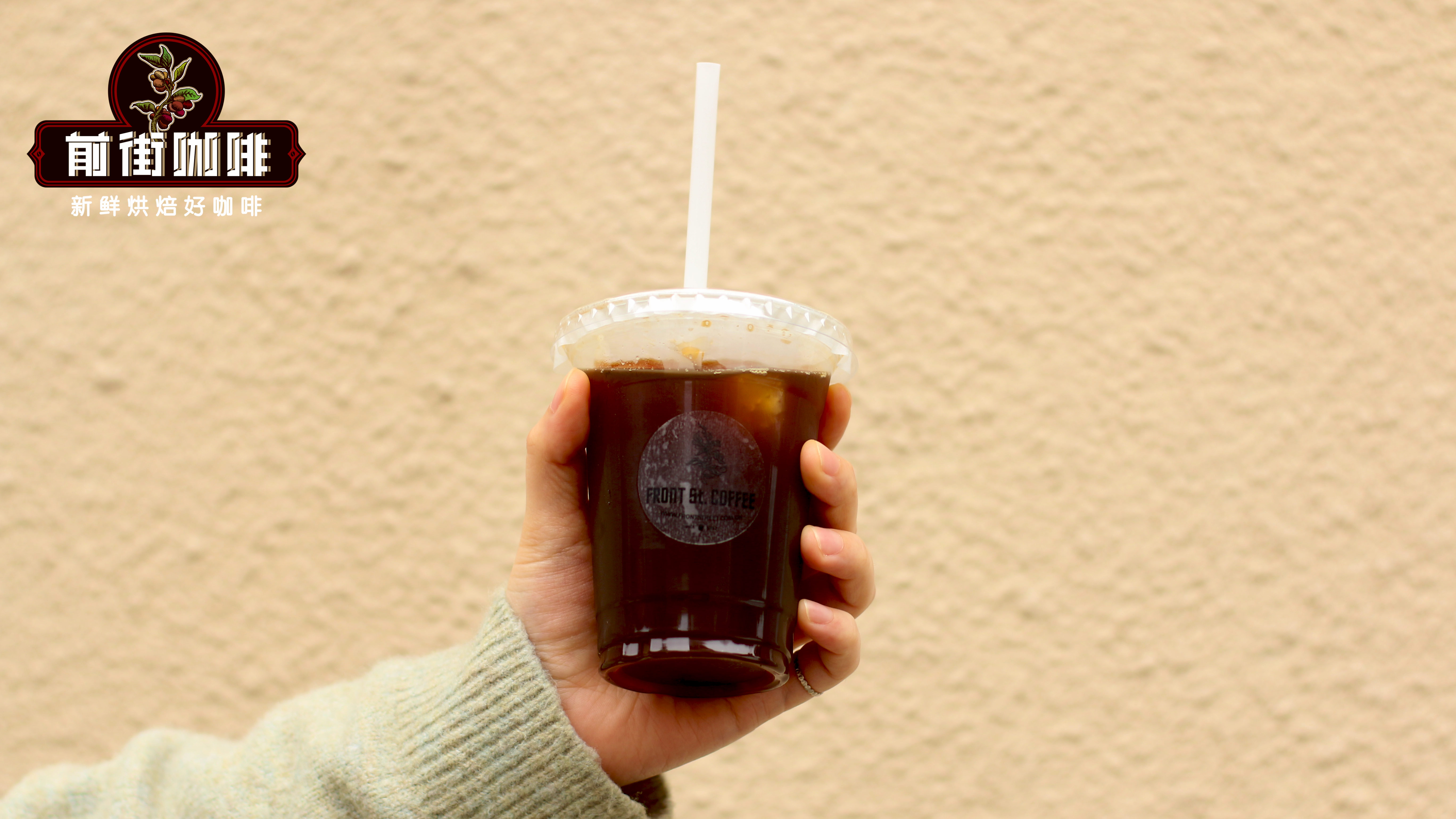
The ratio of espresso to hot water is 1:7, so this cup of SOE Americano is made by mixing 40ml of SOE with 280ml of hot water.
SOE Americano flavor description: overall a rich fermented aroma, with soft fruit acidity on the palate, citrus acidity, obvious sucrose sweetness, and a tea-like note in the finish.
FrontStreet Coffee Natural Red Cherry coffee brewing
Next, brew the Natural Red Cherry coffee beans by pour-over.
Dripper: Hario V60
Water temperature: 90 to 91 degrees
Coffee-to-water ratio: 1:15
Grind size: granulated sugar size
Front Street brewing method: first bloom with 30 grams of water for 30 seconds, then pour in a small stream in circles until 125 grams, then pause in stages, wait until the water level drops and is about to expose the coffee bed, continue pouring to 225 grams and stop, and when the water level drops again and is about to expose the coffee bed, remove the dripper. Timing starts from the bloom, and the total extraction time is 2 minutes 00 seconds.
Brewed flavor: it smells of rich fermented fruit aroma and jasmine fragrance; on the palate there is the sweet-and-sour sensation of strawberries and berries; the middle shows almond and creamy flavors, and the finish has an oolong tea note.
Summary
Through this comparison, FrontStreet Coffee found that after Natural Red Cherry is made into SOE Americano, the sweetness is noticeably improved and the flavor is more balanced, but the mouthfeel is thinner, the flavor is单一, and the layering is insufficient; while the black coffee made by pour-over with Natural Red Cherry has a more distinctive character, richer flavor and layering changes, and a relatively fuller mouthfeel.
The above content is compiled by CoffeeHunters, a coffee news website.


