







How do washed and natural Yirgacheffe beans differ
Yirgacheffe sits at roughly 1,800 to 2,000 meters and ranks among Ethiopia's highest coffee-producing regions. Its cup is built on interwoven citrus and floral notes. Gedeb Gotiti Cooperative beans show this clearly: the washed version reads clean and bright, while the natural Red Cherry lot adds heavier fruit and body from the same coffee trees.
The Yirgacheffe region reaches beyond the town itself to Wenago, Kochere, and Gedeb, and the area was once part of greater Sidamo before being separated for its distinct flavor. Roast level and pour-over parameters decide much of the result, so matching grind, water, and timing to washed or natural beans keeps the citrus and floral character intact.
Yirgacheffe is both a well-known coffee-producing region in Ethiopia and an important synonym for specialty coffee flavor. This article will focus on Front Street's Gedeb Gotiti Cooperative coffee beans, outlining the regional background of Yirgacheffe, the differences between washed and natural processing methods, the origin of the Red Cherry Project, as well as Front Street Yirgacheffe's roasting approach and pour-over parameters. It also compares the flavor performance of the washed Gotiti and natural Red Cherry beans, helping coffee enthusiasts gain a more comprehensive understanding of Yirgacheffe's charm and master the key details for everyday brewing.
Yirgacheffe is both the name of an Ethiopian coffee-producing region and has long since become a byword for a certain coffee flavor. For many people just getting into specialty coffee, it is often the go-to starting point, and at the same time one of the most representative origins in specialty coffee. On Front Street's bean list, Front Street washed Yirgacheffe has always enjoyed great popularity and is deeply favored by coffee enthusiasts.
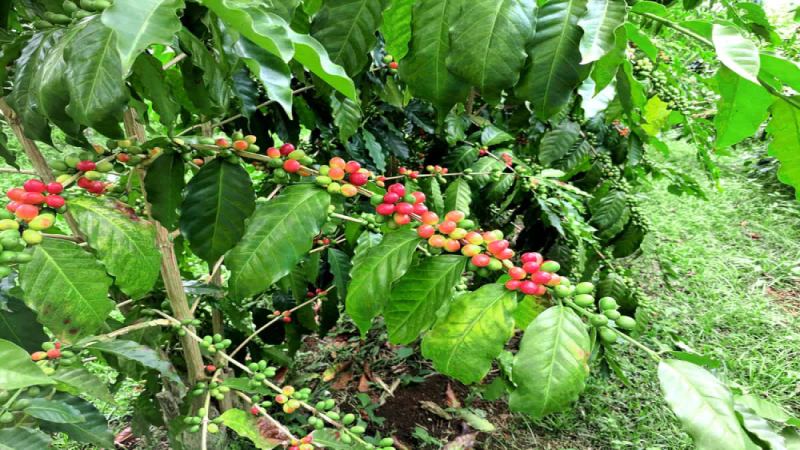
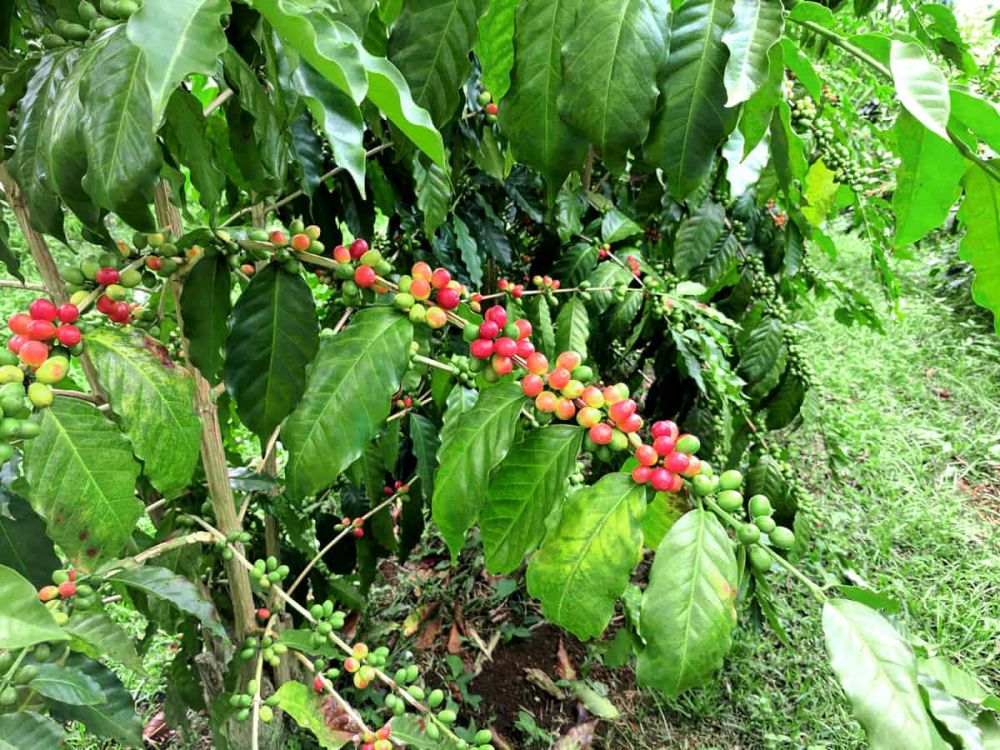
Coffee is, after all, an agricultural product, and its quality and flavor are inseparable from its growing environment. Front Street believes that the reason Front Street Yirgacheffe coffee can present its unique character interweaving citrus and floral notes is closely tied to its geographical conditions. Yirgacheffe sits at an altitude of roughly 1,800 to 2,000 meters, making it one of the highest coffee-producing regions in Ethiopia. It is located to the northwest of Sidamo and was originally part of the greater Sidamo region, but because its flavor performance was so outstanding, it was eventually divided off as an independent region. Strictly speaking, Yirgacheffe is administratively just a small town, but from the perspective of a coffee-producing region, the Yirgacheffe region is not limited to Yirgacheffe town; it also includes legal areas such as Wenago, Yirgacheffe town, Kochere, and Gedeb.
Friends familiar with FrontStreet Coffee probably know that FrontStreet Coffee alone carries more than a dozen Ethiopian single-origin beans. Why stock so many beans from a single producing country? Because Ethiopia is the birthplace of coffee, with an extremely diverse range of coffee varieties, and the microclimatic conditions of each producing region differ, so the coffee flavors of different regions also vary. This is also why Front Street has listed more than a dozen single-origin coffee beans from the Ethiopian region alone.
Front Street washed Yirgacheffe coffee is one of the representatives of Ethiopian washed coffee. Some people might assume that Ethiopian Yirgacheffe coffee beans are naturally washed-processed. In fact, Ethiopian Yirgacheffe coffee beans were initially dominated by the most traditional natural processing method. Later, the Ethiopian government introduced the washed processing method from Central and South America, and the quality of Yirgacheffe coffee beans improved significantly, showing bright, uplifting acidity and white floral flavor characteristics, quickly accumulating a large number of loyal fans. It can be said that washed Yirgacheffe coffee became Ethiopia's "internet-famous coffee" for a time. However, natural-processed coffee from the Yirgacheffe region is equally impressive, and there is also a Red Cherry Project related to natural processing.
Front Street believes that washed-process coffee has a cleaner and brighter flavor, while natural-process Yirgacheffe is superior in aroma intensity. Each processing method has its own advocates, and there is no distinction of better or worse.
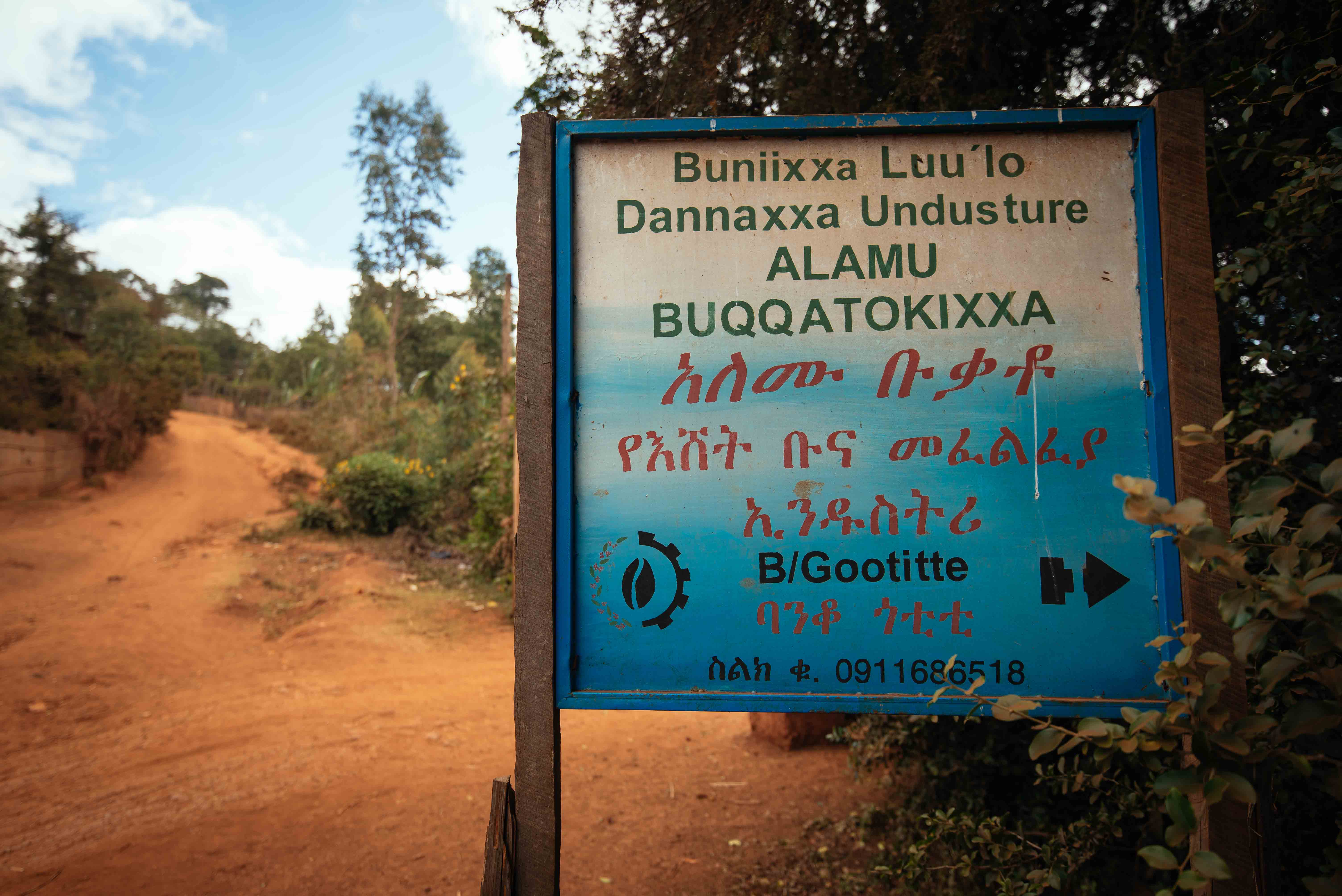
Gedeb Gotiti Cooperative Banko Gotiti
The Gedeb Gotiti Cooperative is located in the Worka region at the southeastern end of Yirgacheffe, and was originally part of the Worka Cooperative under the Yirgacheffe Coffee Farmers' Cooperative Union (YCFCU). As people place increasing importance on the traceability of green coffee beans, the concept of "single origin" has been unearthed one by one by coffee hunters around the world.
In 2012, Gedeb Gotiti, with approximately 300 farmer members, formally became independent and established the "Gedeb Gotiti Cooperative." Gedeb Gotiti village was the first village area to become independent, and many smallholder farmers were originally members of the Worka Cooperative, so their coffee production techniques are quite mature. The Gedeb Gotiti Cooperative is called the last pure land of Yirgacheffe, and the processing methods it uses are quite traditional, mainly washed and natural processing.
Currently, the Gedeb Gotiti Cooperative has about 300 farmer members, all experienced and knowledgeable producers. Each person can harvest an average of 1 to 2 hectares of farmland, most of which is processed using the traditional natural method. The Worka Cooperative is located in a remote area within the Yirgacheffe region, 75 kilometers away from the local coffee trading hub of Dilla (DILLA). The cooperative was initially composed of 305 farmers, with a planting area of about 763 hectares and an annual output of nearly 460 tons, making it a relatively small-scale farmer cooperative. Because no chemical fertilizers or pesticides are used in the coffee-growing process, Worka smallholders have also obtained SKAL organic coffee certification recognized by the EU. These coffees not only have organic and fair trade certifications, but some coffees even come from coffee trees as high as 2,300 meters. Such unique terroir conditions create these one-of-a-kind Ethiopian coffee flavors.
Ethiopian Yirgacheffe's washed and natural processing methods:
This batch of Front Street Gedeb Gotiti Cooperative coffee beans purchased by FrontStreet Coffee uses the washed processing method. First, a pulping machine removes the skin and pulp of the berries, which are then left to sit in fermentation tanks for 18 to 36 hours to let the mucilage layer break down, with the length of time depending on local temperature and humidity conditions. Next, the parchment beans are scrubbed through washing channels for 30 to 60 minutes.
At this point, with the help of the channel design and water flow, low-density, poor-quality beans can be removed, and then the high-quality parchment beans are placed on African raised beds to dry for about 14 days. After drying is complete, they are first stored in the processing plant warehouse, and before export the parchment beans are sent to a Dry Mill for hulling, passing through a series of complicated screening processes including foreign matter removal, silver skin removal and polishing, gravity sorting, and color sorting, before finally being bagged for export.
Traditionally, farmers place harvested coffee berries directly on patios or spread them flat on the ground, using sun exposure to dry them, and once the coffee fruit's moisture content drops to around 12%, it can be sent for hulling and bagging. This processing method easily produces earthy flavors, over-fermentation, and rotten fruit flavors. To improve the defective flavors caused by sun exposure, Ethiopia introduced washed processing technology from Central and South America.
Washed processing means pouring coffee cherries into a water tank, first removing the floating unripe beans, then using a machine to remove the coffee fruit skin, and then placing them into a clean water tank to ferment. The acidic substances produced during fermentation of the green beans cause the mucilage layer to fall off, and then the surface of the parchment beans is rinsed with clean running water, and finally dried in the sun. There are multiple steps in the washed process that can remove defective beans, and the flavor expression is a cleaner acidity.
Natural Red Cherry Coffee
The "Red Cherry Project" is a project initiated in 2007 by the Dutch trading company Trabocca BV, with the aim of improving the quality of Ethiopian coffee.
The project mainly targets high-altitude producing regions in Ethiopia such as Yirgacheffe, improving washed, semi-washed, natural, and other processing techniques, and introducing professional cuppers. During the harvest season, different coffee harvest volumes are set for different microclimatic areas, and only 100% ripe red coffee cherries may be harvested, with output of roughly 1,500 to 3,000 kilograms. The economic loan support, new hardware equipment, and production knowledge and technology provided by Trabocca have significantly improved the quality of coffee beans in the Yirgacheffe region and even throughout Ethiopia. As a result, the coffee also commands a higher price, thereby increasing the income of coffee farmers.
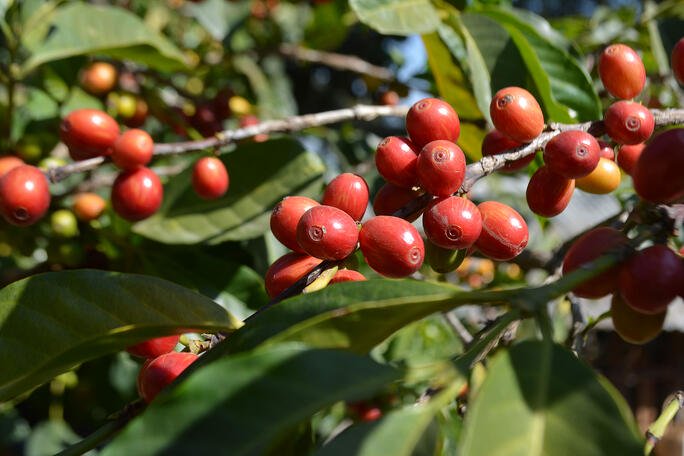
Front Street's in-store Front Street natural Yirgacheffe Red Cherry coffee beans use fully red cherry natural processing from the Aricha farm. The green coffee beans are pale yellow, plump, complete in appearance, and low in defect rate, reaching G1 grade. Front Street natural Yirgacheffe has a more intense flavor and richer layering, with a wine-like fermented note and relatively higher sweetness.
Coffee bean varieties
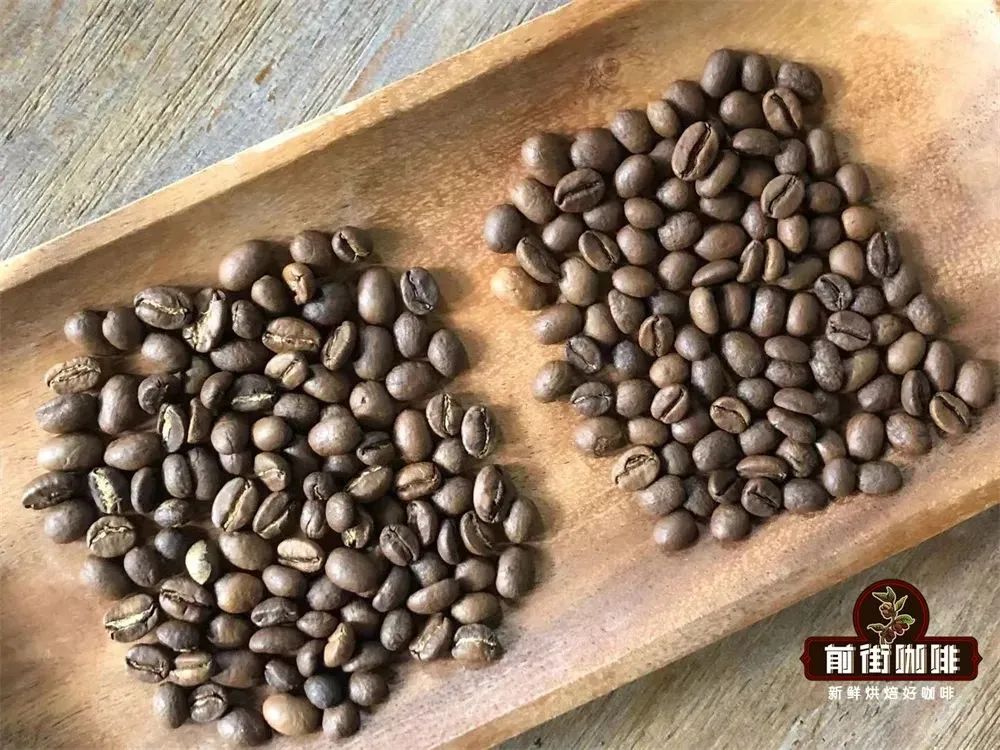
There is also a point about the size of Ethiopian coffee beans. Observant friends will notice that Ethiopian coffee beans are not uniform in size, unlike Colombian coffee beans, which are neat and consistent. This is because Ethiopia is the birthplace of coffee and a natural gene bank for Arabica, with far too many coffee varieties; in addition, identifying and classifying coffee varieties is quite difficult, and the Ethiopian government, for protection reasons, is unwilling to disclose information about these varieties. So where Ethiopian varieties are concerned, you will often see labels such as the local native variety Heirloom.
Front Street's parameters for brewing Front Street Yirgacheffe coffee:
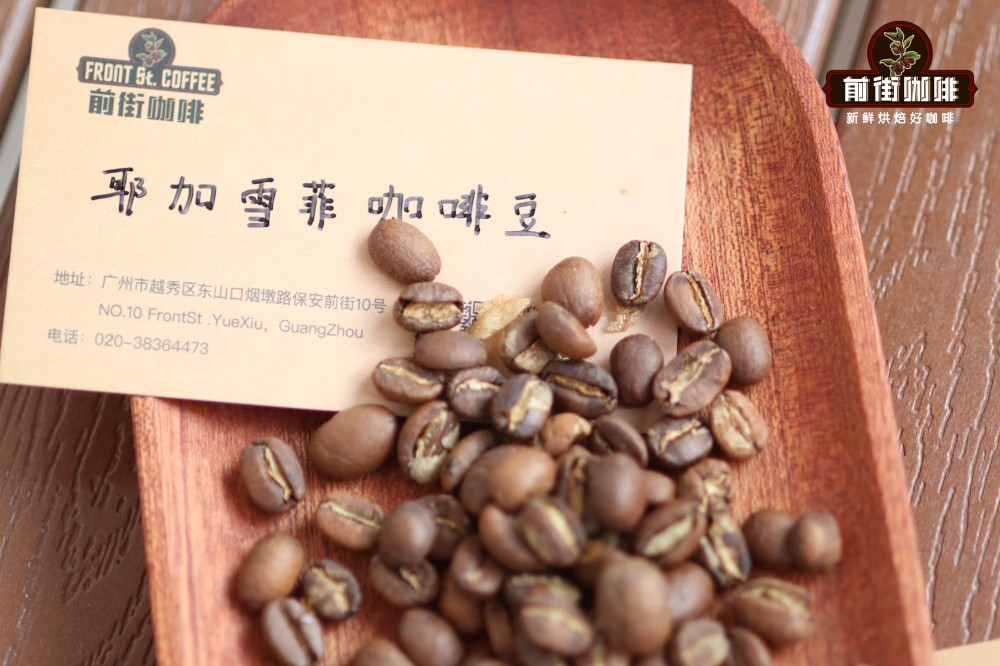
Considering that Front Street Yirgacheffe coffee should take acidity as its main flavor direction, Front Street uses a medium-light roast for roasting. Front Street washed Yirgacheffe Gedeb Gotiti Cooperative coffee beans use a light roast to retain more bright acidity and white floral notes; Front Street natural Yirgacheffe Red Cherry coffee beans use a medium-light roast, presenting full berry-like sweet acidity.
Because Front Street Yirgacheffe uses a light roast, the coffee beans are harder in texture and require hot water at 91°C to bring out the floral and fruity notes in the coffee. As for grind size, Front Street recommends a medium-fine grind (80% passing through a Chinese standard No. 20 sieve). Too coarse and it cannot extract rich substances, making the brewed coffee taste thin; too fine and it is prone to over-extraction at high water temperatures, making the brewed coffee prone to bitterness.
The specific brewing parameters Front Street uses are: V60 dripper, water temperature 91°C, water-to-coffee ratio 1:15, coffee dose 15g, medium-fine grind (80% passing through a Chinese standard No. 20 sieve).
FrontStreet Coffee's staged extraction method: First, use 30g of water to fully wet the coffee bed into a "hamburger" shape and let it bloom for 30 seconds; for the second pour, at 1 minute 00 seconds on the timer, pour water until it reaches 125g, then stop and wait for the water level to drop to two-thirds of the coffee bed before pouring the third stage; for the third stage, at 1 minute 40 seconds on the timer, pour water until it reaches 225g, and after the coffee liquid has fully dripped through, the total extraction time is 1 minute 59 seconds. The total brewing time is 2 minutes 00 seconds. After extraction is complete, gently swirl, and wait until the coffee liquid is fully even before tasting.
Front Street Yirgacheffe Gedeb Gotiti coffee flavor: at high temperature it is berry, cream, honey, citrus, and juice-like mouthfeel, with bright acidity; as the temperature drops slightly, it is berry, cream, smooth, and citrus.
Front Street natural Red Cherry coffee flavor: lemon, citrus, berry, sweet orange, with relatively high overall sweetness, a caramel and cream finish in the aftertaste, and a black tea aroma in the lingering finish.
Front Street coffee brewing suggestions:
To brew a delicious cup of coffee, you still need to pay attention to the freshness of the coffee beans. Front Street has always believed that the freshness of coffee beans has a great impact on coffee flavor, so the coffee beans shipped by FrontStreet Coffee are all within 5 days of the roasting date. Front Street's roasting philosophy is "freshly roasted good coffee," so that every customer who places an order can receive the freshest coffee when they get it. The resting period for coffee is about 4 to 7 days, so when customers receive it, it is exactly at its best flavor.
For friends who need ground coffee, Front Street offers a friendly reminder: once coffee beans are ground in advance, there is no need to rest them anymore, because during transportation the pressure from carbon dioxide inside the packaging can also make the coffee flavor rounder, so once you receive the ground coffee you can immediately brew a cup and drink it. However, ground coffee needs to be brewed promptly, because after ground coffee contacts air it oxidizes relatively quickly, meaning the coffee flavor will dissipate faster and the coffee will not taste as good. Therefore, Front Street recommends buying whole beans and grinding fresh for each brew, so you can better taste the coffee's flavor.
Whether natural processed or washed processed, Front Street Yirgacheffe has its own flavor characteristics. Of course, Front Street believes that washed-process coffee beans better reflect the local coffee's true flavor, so among Front Street's daily drinking bean series there is a Front Street Yirgacheffe coffee bean mainly using the washed processing method. Front Street has nearly fifty single-origin coffee beans, including natural, washed, anaerobic, and honey processing, among others. Different processing methods correspond to different flavor characteristics, letting you experience different coffee cultures and styles.
For professional coffee knowledge exchange and more coffee bean information, please follow Coffee Workshop (WeChat public account cafe_style)
For more specialty coffee beans, please add the private WeChat FrontStreet Coffee, WeChat ID: qjcoffeex
The above content is compiled by CoffeeHunters, a coffee news website.


