







Why Does Java Coffee Origin Matter for Indonesian Varieties?
Indonesian coffee varieties trace back to Dutch plantings of Typica on Java in the late 17th century, which then spread to Sumatra. Typica gave Indonesia its low-acid, sweet, herbal profile. After leaf rust hit in 1877, disease-resistant varieties such as Robusta replaced many of those old trees, and today Sumatra Typica survives mainly around Lake Toba and Lintong.
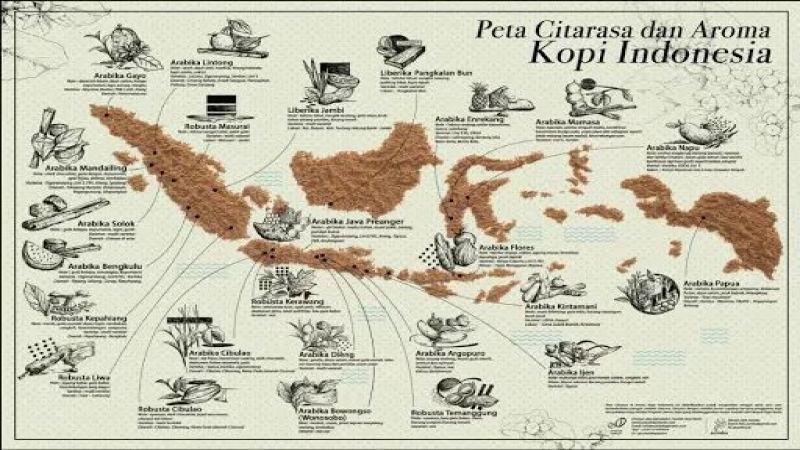
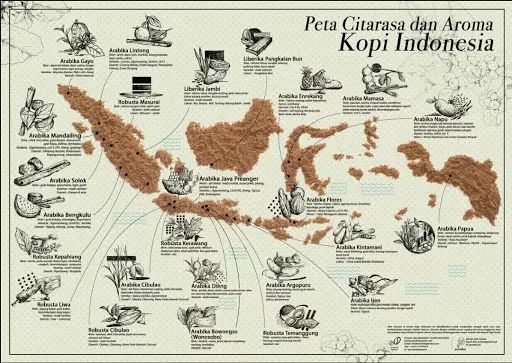
That layered Java coffee origin story explains why the country grows Typica, Robusta, Catimor and Jember side by side, often interplanted on the same land. Arabica continues to dominate the high-altitude estates, while Robusta fills lower, warmer zones. The result is a wide range of regional lots, from Lintong Mandheling to West Java Ijen Estate beans, each shaped by local soil and altitude.
Indonesia is an important coffee-producing region globally, but its complex cultivation history and mixed varieties often confuse coffee enthusiasts. This article systematically reviews Indonesia's main coffee varieties, including the historically significant Typica, the disease-resistant Robusta, and localized Catimor and Jember, and provides detailed introductions to the flavor characteristics and main producing regions of each variety. At the same time, the article retains relevant product recommendations from Front Street Coffee, such as Lintong Mandheling, Golden Mandheling, and West Java Ijen Estate beans, helping readers gain a more comprehensive understanding of the diversity of Indonesian coffee.
For more specialty coffee knowledge, please follow the WeChat official account: Front Street Coffee (FrontStreet Coffee)
Indonesia occupies a pivotal position in the global coffee landscape and is one of the major producing regions. Due to historical evolution and limitations in cultivation conditions, Indonesia's coffee varieties are extremely complex, and different varieties are often interplanted together, causing outsiders to feel completely confused whenever they discuss Indonesian coffee varieties. This installment of the Barista Development Diary will guide you through the context of Indonesia's coffee varieties.
Typica is the variety with the longest cultivation history in Indonesia. As early as the late 17th century, the Dutch introduced Typica from India to Java for cultivation. As Java's cultivation succeeded and spread widely, this variety also expanded northward to the larger island of Sumatra. The Typica grown in Indonesia at that time performed excellently in flavor, and through long-term integration with the local terroir, it gradually developed Indonesia's distinctive flavor characteristics of low acidity, high sweetness, and herbal aroma.
In 1877, leaf rust ravaged Indonesia, and most Typica across the country became infected and withered, forcing the Indonesian government to introduce disease-resistant varieties as replacements. Today, Sumatra Typica is mainly distributed in the Lake Toba and Lintong areas. The Lintong Mandheling regional beans launched by Front Street contain this excellent variety, Typica.
The name Sumatra Typica is usually not heard locally in Indonesia; they are accustomed to using names such as Bergendal, Sidikalang, and Rambung to refer to Sumatra Typica. It is also the finest coffee bean variety among Indonesian Mandheling.
The reason Robusta was able to occupy more than half of Indonesia's coffee landscape stems from the major leaf rust crisis of 1877. At that time, large areas of Typica grown in Indonesia withered, and in order to respond to the epidemic and restore coffee production, Robusta coffee with strong disease resistance had to be introduced from Africa. With its excellent high yield and reproductive capacity, Robusta won the favor of local coffee farmers.
Catimor was created in 1959, when the Portuguese moved the Brazilian Bourbon mutation Caturra to East Timor and crossed it with Timor, which carries Robusta lineage. It has extremely high disease resistance, and its productivity is 3 times that of Typica. During the leaf rust crisis, the Indonesian government not only introduced Robusta (whose flavor is far removed from Arabica), but also introduced Timor from East Timor with the intention of replacing Typica. Later, according to expert investigations, some Catimor seeds were mixed into a batch of Timor seeds introduced by the Indonesian government in 1980, and this batch of seeds was planted in Aceh in northern Sumatra. The earliest area in Indonesia where Catimor was detected was Central Aceh, so locals also call Catimor Ateng, taken from Aceh Tengah (Central Aceh).
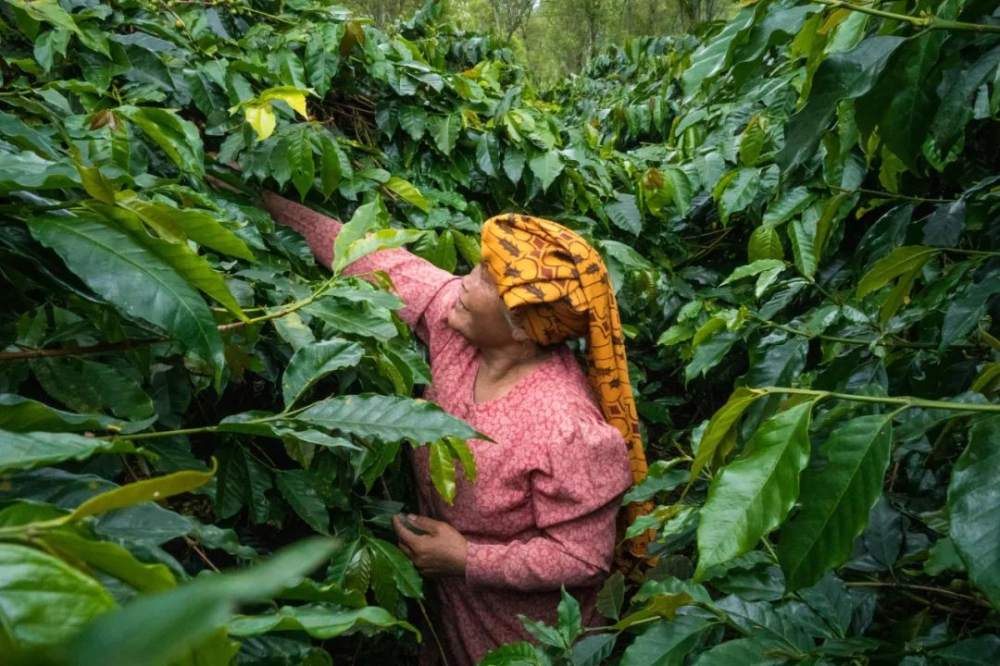
Ateng's disease resistance and productivity are both superior to Typica. After many years of local adaptation, the originally wild flavor of Catimor within Ateng has also been tamed, gaining the affection of coffee farmers and spreading from Aceh to Lake Toba. Aceh's Ateng also attracted the attention of Pawani, Indonesia's largest green bean merchant. The coffee variety in the latest 2020 crop Golden Mandheling currently launched by Front Street comes from Ateng in the Gayo Mountains of Aceh.
Jember is Indonesia's localized S795 and is currently mainly planted on the island of Java. It was introduced from India by the Jember Coffee Research Center in East Java and then given to Javanese farmers to plant, so local Javanese farmers also directly call S795 Jember.
S795 beans have a blue-green color, and their original tree, a natural variation, comes from S288. Originally, S288 was an excellent hybrid variety cultivated in India in 1946. S288's predecessor came from crossing the first-generation S288 lineage with Typica and was named S26, because the first-generation S288 beans were a cross between Arabica and Liberica and always carried Liberica's earthy, gamey taste. Indian botanists therefore crossed the first-generation S288 with the Kent variety, which was produced by crossing with Typica, and then crossed it with the second-generation S288, resulting in today's S795.

The West Java Ijen Estate currently launched by Front Street Coffee (FrontStreet Coffee) uses coffee beans of this variety, processed with honey processing, expressing flavors of mango, red wine, peach, and jackfruit.
Indonesia originally grew only Typica. Everything stemmed from that coffee leaf rust disease that swept across the entire country, creating today's chaotic situation of Indonesian coffee varieties. In addition, Indonesia cultivates coffee on a smallholder basis, and coffee farmers generally have low levels of education and weak ability to identify varieties, so multiple varieties are often mixed within the same area. However, thanks to Indonesia's cultivation culture and unique growing environment, coffee varieties are able to blend well with one another, forming a landscape represented by North Sumatra's Mandheling coffee, Java's Java coffee, and Sulawesi's Toraja coffee.
The above content is compiled by CoffeeHunters, a coffee news website.


