







How Should You Brew a Yirgacheffe Huakui 5.0?
Huakui 5.0 is an Ethiopian natural-process coffee from the Buku Abel processing plant, known for creamy strawberry sweetness and a full, juice-like body. Four extraction routes work well: hot pour-over, flash-brewed iced pour-over, ice drip and cold brew. Because the beans are high-altitude and dense, roasting extends the dehydration and middle phases to develop sweetness before brewing.
Unlike classic Yirgacheffe white florals and bright citric acidity, Huakui follows a rich fermented-sweetness path. Each brew method needs its own grind, ratio and timing to reproduce that gentle profile at home. Its 2017 Taste of Harvest win first drew attention, including comparisons to geisha green coffee, though Huakui shifts noticeably with each harvest as the climate changes. Adjust parameters in small steps and taste as you go.
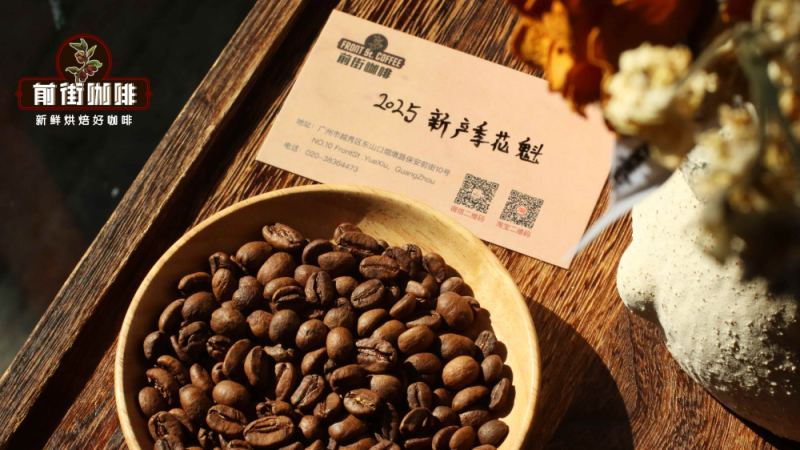
Ethiopia's natural-process coffee beans from the 2025 new harvest season, Huakui 5.0 is famed for its creamy strawberry sweetness and full juice-like body. It comes from the Buku Abel processing plant and has drawn widespread attention in China's coffee circles since winning TOH in 2017. Unlike Yirgacheffe's signature white floral notes and bright citric acidity, Huakui takes a rich fermented-sweetness route. In response to this bean's high-altitude hard-bean characteristics, Front Street Coffee extends the dehydration and middle phases during roasting to fully develop sweetness, and offers four extraction methods: hot pour-over, iced pour-over, ice drip, and cold brew. This article fully lays out Huakui's story background, roasting approach, and the specific parameters and techniques for each brewing method, helping you reliably reproduce Huakui 5.0's gentle flavor at home.
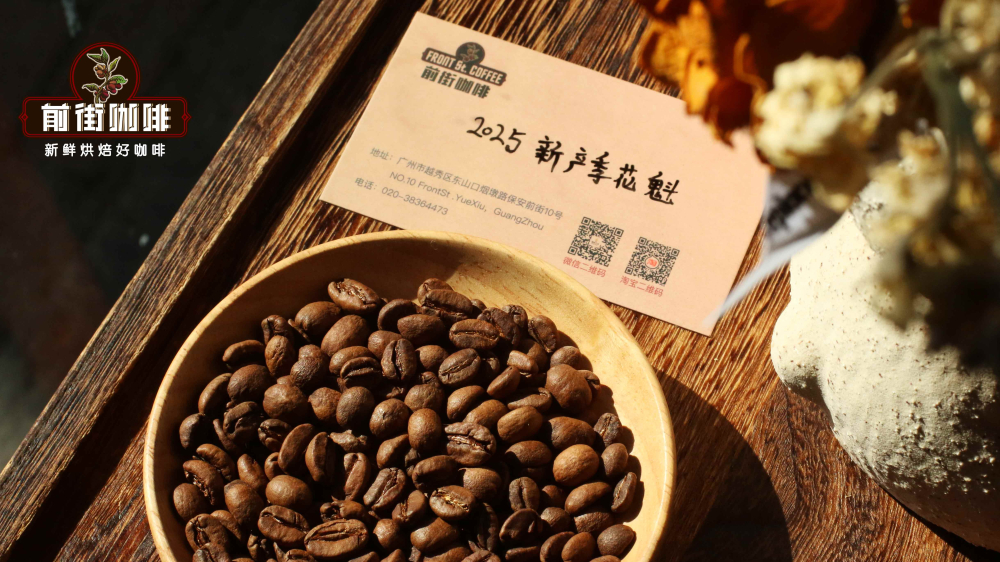
When you look up at the sky on a summer evening, that softly transitioning sunset glow easily brings to mind a coffee bean that has won countless fans—Huakui 5.0. Its fruity aroma is like dusk woven from orange-red and golden hues, its rich berry-juice feel is like clouds tinged with pink and purple, and its creamy, smooth mouthfeel is like a summer evening breeze. How can you bring Huakui's gentleness to your lips? Front Street has four usual methods.
First, let's talk about the origins of Huakui coffee beans
In 2017, Ethiopian green bean company DW sent a batch of coffee beans to the TOH (the Taste Of Harvest) green bean competition held by the African Coffee Association. One lot produced at the "Buku Abel" processing plant took first place in that year's TOH Ethiopia region with its standout strawberry and cream aroma. This batch of green beans was subsequently introduced into China by a green bean trader in Beijing and was given the name "Huakui" because of its champion status. In the same year, Beijing's Li Jianfei used this 2017 champion Huakui coffee bean to win second place in the China region of the World Coffee Brewing Championship (most other competitors that year chose Geisha), and Chinese coffee enthusiasts thus firmly remembered this bean.
Is Huakui 5.0 still the same Huakui as before?
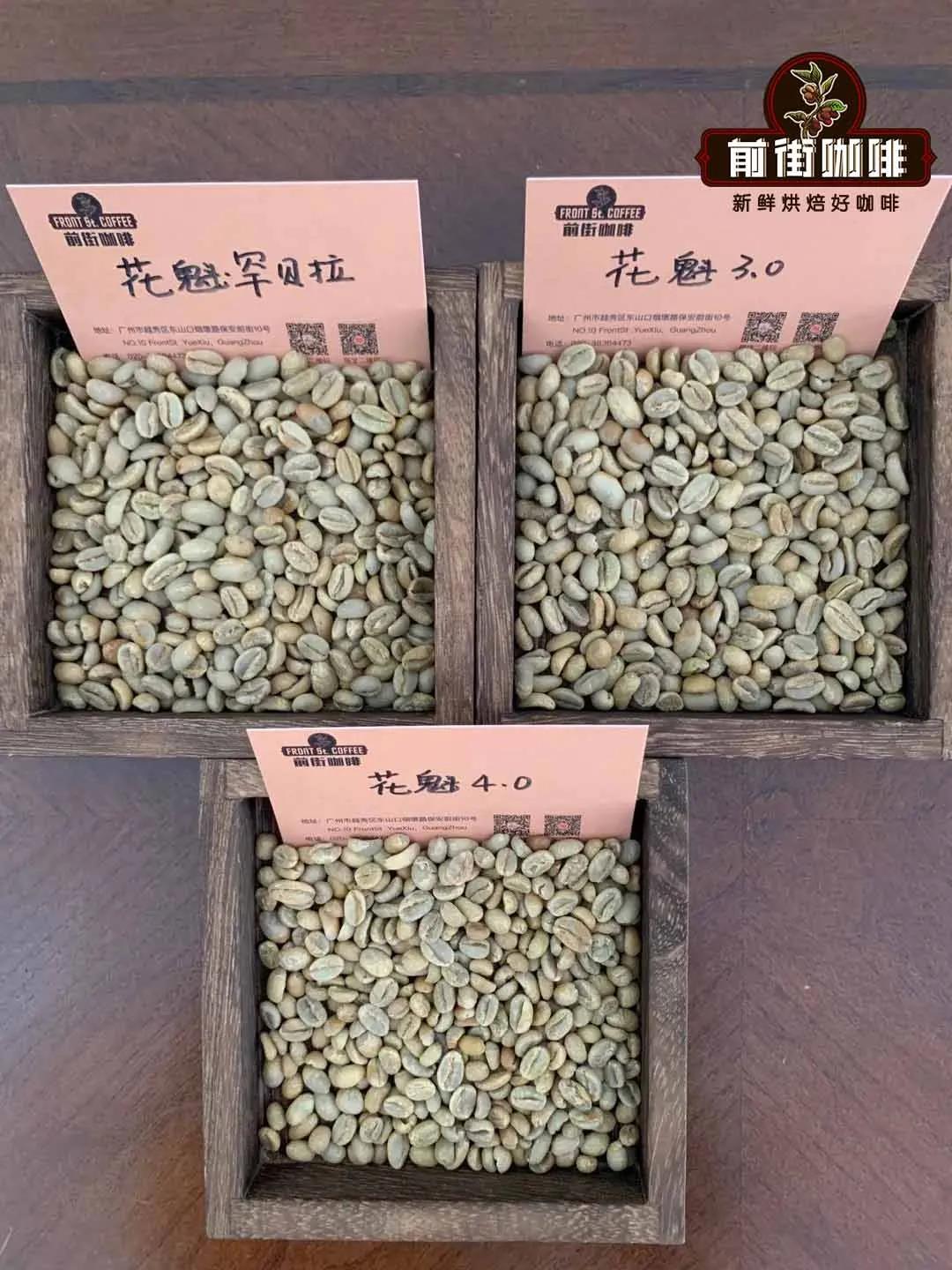
No. As the climate continues to change, coffee, being an agricultural crop, naturally changes in flavor as well. Although all Huakui series come from the "Buku Abel" processing plant and all use the natural process, the formation of coffee bean flavor is affected by many factors such as climate and soil. Therefore, DW distinguishes Huakui by batch every year: Huakui 2.0 was released in 2018, Huakui 3.0 and 3.1 in 2019, Huakui 4.0 in 2020, and Huakui 5.0 in 2021.
How do Front Street roasters bring out Huakui 5.0's gentleness?
Yirgacheffe is known for white floral notes and bright citric acidity, while Huakui is known for creamy strawberry flavor; the two have entirely different character. Therefore, when roasting Huakui, Front Street consciously amplifies this characteristic.
New-harvest green beans have relatively high moisture content. During roasting, moisture directly affects heat transfer efficiency, making incomplete dehydration likely. At this point, the bean surface may already be roasted while the bean core is still underdeveloped. To avoid underdevelopment, Front Street recommends extending the dehydration phase when roasting Huakui 5.0 (that is, the time between the turning point and the yellowing point). At the same time, in order to highlight the sweetness and fermented notes brought by the natural process, Front Street roasters also appropriately lengthened the middle phase (that is, the time between the yellowing point and first crack). Huakui 5.0 is grown at an altitude of 2,250 m to 2,350 m, and the beans are relatively hard, so before entering first crack, the heat needs to be increased to prevent first crack from developing for too long and causing the loss of sweet and acidic flavors.
How does Front Street Coffee bring Huakui coffee beans' gentleness into the mouth?
| Hot pour-over method & iced pour-over method
To fully extract Huakui 5.0's rich layering, Front Street uses a relatively high water temperature and a finer grind. However, to avoid over-extraction caused by high temperature, it pairs this with a faster-flow dripper, such as a V60. The V60 is a 60-degree cone, and this angle allows the coffee grounds to gather in a concentrated distribution; when pouring, the water flow also automatically converges toward the center of the dripper, ensuring enough contact time between water and coffee grounds so that a suitable coffee liquid is extracted. In addition, the ribs on the inner wall of the V60 form a clockwise spiral extending all the way from the bottom to the top, leaving ample space between the filter paper and the dripper for better water flow. Combined with the large hole design at the bottom, the overall flow rate is faster than many drippers.

The hot pour-over parameters and brewing technique are as follows: water temperature 90°C, coffee-to-water ratio 1:15, dose 15 g, medium-fine grind (80% passing through a Chinese No. 20 standard sieve).
First use 30 g of water to fully wet the coffee bed and form a "hamburger" shape, and bloom for 30 seconds; for the second pour, when the timer reaches 1 minute 00 seconds, add water until the total reaches 125 g, then stop and wait for the water level to drop to two-thirds of the coffee bed before pouring the third stage; for the third stage, at 1 minute 40 seconds on the timer, pour water until the total reaches 225 g, and after the coffee liquid has fully dripped through, the total extraction time is 1 minute 59 seconds. After extraction is complete, gently swirl the server to mix the coffee liquid evenly before tasting.
The iced pour-over parameters and brewing technique are as follows: water temperature 91°C, coffee-to-water ratio 1:10, dose 15 g, medium-fine grind (85% passing through a Chinese No. 20 standard sieve), and 100 g of ice. It also uses a three-stage pour: the first stage pours 30 ml and blooms for 30 seconds, the second stage pours 60 ml, and the third stage pours another 60 ml. After that, pour the coffee liquid into a cup containing 100 g of ice and shake evenly.
| Ice drip method
When Front Street makes ice drip coffee, the coffee powder cup is filled with 60 g of coffee grounds, and finally 600 ml of coffee liquid is extracted, giving a coffee-to-liquid ratio of 1:10. In terms of grind size, choose a setting slightly finer than for pour-over; judged by a No. 20 sieve, the passing rate is about 85%. The ice-water mixture is prepared at a 1:1 ratio, and the flow rate of the throttle valve is controlled at 7 drops every 10 seconds. The entire extraction process lasts about 6 to 8 hours. After extraction is complete, put it into a bottle and chill it for 12 hours before drinking.
| Cold brew method
Taking Front Street's regular cold brew production as an example, the coffee beans are ground slightly finer than for pour-over, that is, a passing rate of 75% to 80% through a Chinese No. 20 standard sieve. Visually, this is about the coarseness of fine granulated sugar, corresponding to a setting of 9.5 to 10 on an EK43s, and for a hand grinder such as the C40, about 22 to 26 clicks.
Next, pour the ground coffee into a clean container, which can be a dedicated cold brew pitcher or a mineral water bottle. Add room-temperature water at a 1:10 coffee-to-water ratio, stir evenly, seal with plastic wrap, and put it in the refrigerator to steep for more than 8 hours (12 hours or less is best). Finally, filter out the coffee grounds with filter paper, and the cold brew portion is ready.
The coffee-to-water ratio for cold brew is often what everyone cares about most. Front Street believes that if you plan to drink it directly without adding anything else, you can use a 1:12 to 1:13 coffee-to-water ratio, because black coffee made in this range has the best drinkability and releases its aroma relatively fully. But considering that fresh milk will be added at the end, the coffee concentration needs to be increased so that it will not be diluted too much afterward; here Front Street recommends making it at a ratio of 1:10 to 1:11, which is more suitable.
Finally, Front Street reminds you once more: generally speaking, for the sake of flavor experience and health and safety, whether it is ice drip or cold brew, Front Street recommends drinking any extraction method carried out in a low-temperature environment within 5 days (counting from the production date).
The above content is compiled by CoffeeHunters, a coffee news website.


