







How Do You Brew Authentic Blue Mountain Coffee at Home?
A good Blue Mountain coffee pour-over starts with three things: genuine Blue Mountain No. 1 beans, freshly roasted beans, and extraction parameters suited to its mild, balanced profile. The KONO dripper works well here. The coffee itself is an arabica variety known for a rich, clean, balanced cup rather than sharp acidity, so water temperature, grind size and pouring rhythm need steady control.
Authenticity is the first hurdle. Jamaica exports Blue Mountain in wooden barrels, so buying from a seller holding a full barrel lowers the risk of substitution. Buyers can also request a certificate of origin from the Jamaican CIB or the estate. Prices reflect limited annual output and quotas, with roasted Blue Mountain No. 1 beans commonly selling for roughly 150 to 300 yuan in the domestic market.
Blue Mountain coffee has long been hailed as the "King of Coffee," but to truly brew a great-tasting cup, every step from bean selection to extraction is crucial. This article focuses on how to identify authentic Blue Mountain No. 1, the importance of fresh roasting, and the KONO dripper pour-over method recommended by Front Street Coffee, systematically covering core parameters such as water temperature, grind size, and pouring rhythm. Whether you are a beginner just getting to know Blue Mountain or an enthusiast looking to refine your pour-over technique, you will find practical guidance here to fully bring out Blue Mountain coffee's rich, clean, and balanced character.
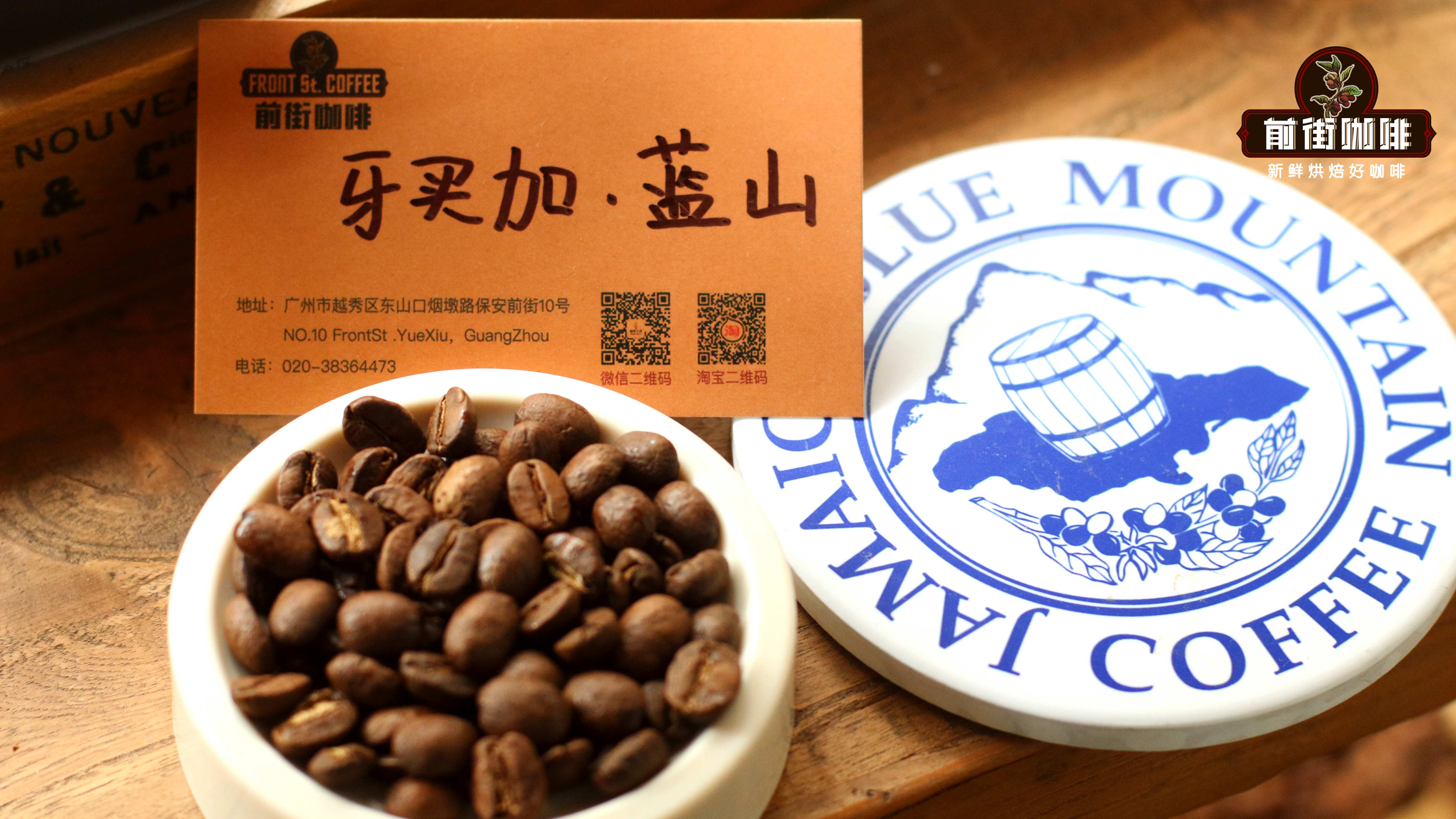
To enjoy a truly satisfying cup of Blue Mountain coffee, three things are essential: authentic Blue Mountain No. 1 beans, coffee beans that are freshly roasted, and an extraction method and parameters that suit Blue Mountain's flavor profile. Now Front Street Coffee will walk you through how to brew Blue Mountain coffee so it tastes even better!
How to Identify Blue Mountain Coffee Authenticity?
1. Coffee Bean Price
The Blue Mountain coffee industry itself faces many challenges, such as hurricane damage, rising labor costs, and the difficulty of mechanizing terraced terrain. Many small estates and farms struggle to achieve large-scale, rational cultivation, so annual Blue Mountain coffee production is not high, and the import quotas allocated to different regions are quite limited. In the domestic market, roasted Blue Mountain No. 1 beans typically sell for between 150 and 300 yuan. Currently, Front Street Coffee's Jamaica Blue Mountain No. 1 coffee beans are priced at 158 yuan/100g.
2. Look for the Blue Mountain Coffee Wooden Barrel
The Jamaican government has explicit regulations: all exported Blue Mountain coffee must be shipped in wooden barrels. Therefore, authentic Blue Mountain No. 1 is exported in whole barrels. When buying, check whether the seller has a complete Blue Mountain barrel on hand—this reduces the risk of purchasing other beans passed off as Blue Mountain coffee.
3. Look for the Certificate of Origin
Buyers of Blue Mountain coffee beans (i.e., first-hand green bean purchasers) can apply to the Jamaican CIB or the relevant estate for a Blue Mountain coffee bean certification. This document can also prove the beans' authentic identity. So before placing an order, it is worth confirming whether the seller holds a certification certificate issued by the Jamaican government or the place of origin.
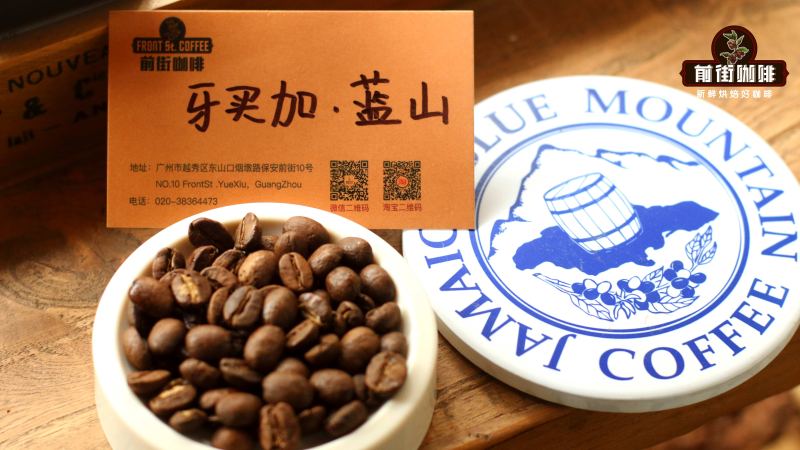
At present, the authentic Blue Mountain coffee single-origin beans available domestically are basically all Blue Mountain No. 1 grade. At Front Street Coffee's physical store, you can see the wooden barrels required by the Jamaican government for Blue Mountain coffee exports, as well as the certificate of origin for Blue Mountain coffee (Clifton Estate).
Why Use Freshly Roasted Coffee Beans for Brewing?
Generally speaking, the pleasant regional flavors in coffee come from small-molecule compounds. After roasting, these small molecules gradually volatilize and dissipate. Over time—what we commonly call the beans no longer being fresh—the small molecules have almost entirely evaporated, leaving mostly large-molecule, bitter-tasting substances behind.
So, in order to experience coffee's flavors more completely, Front Street Coffee's baristas and roasters all emphasize the "optimal flavor period." The optimal flavor period is not the same as the shelf life; it refers to the window during which the coffee tastes best. Beans past their optimal flavor period can still be drunk—you have simply missed the peak moment. That is why all Front Street Coffee beans are shipped within 5 days of roasting.
According to Front Street Coffee's roasting style, the roaster recommends an optimal flavor period of between one month and one and a half months after roasting, so we often remind customers to finish their beans within a month of purchase. Of course, this does not mean the fresher the coffee, the better it tastes.
After all coffee beans are roasted, they retain a large amount of carbon dioxide, which can interfere with extraction. Therefore, the beans need to rest in their original packaging until 3-4 days after the roast date (light roast) or 5-6 days (dark roast), allowing them to release an appropriate amount of carbon dioxide on their own while also reducing the "roastiness" from the roasting process.
How to Brew Blue Mountain Coffee for Great Taste?
Front Street Coffee currently sells Blue Mountain No. 1 coffee beans. Blue Mountain No. 1 belongs to the Typica variety, one of the oldest varieties in the Arabica family and also one of the cleanest, most serene in flavor. To bring out Blue Mountain coffee's rich, solid body and clean character, Front Street Coffee roasts Blue Mountain coffee to a medium-dark level.
Blue Mountain coffee is on the darker side of roasting, with a rich, full-bodied flavor direction. Front Street Coffee's baristas choose the KONO dripper, using the tight fit between the filter paper and the dripper to create an immersion-style extraction during pouring, resulting in a higher coffee concentration. At the same time, to avoid over-extraction that would make it bitter and overly strong, Front Street uses a slightly lower water temperature and a slightly coarser grind setting.
To let Blue Mountain coffee show a gentle, full body, Front Street Coffee uses the KONO dripper with a medium-coarse grind (coarse sugar size / 70% passing rate on the Chinese No. 20 standard sieve) and a water temperature of 88-89°C for extraction.
The specific extraction method is as follows: first pour 30g of water for blooming, with a bloom time of 30 seconds; second pour to about 125g, then wait for the coffee liquid to drop. When the liquid level drops to half, pour the final stage to 225g. Once all the coffee liquid has finished dripping, end the extraction. The total extraction time is usually controlled at around 2 minutes 10 seconds.
"Front Street Washed Blue Mountain Coffee" has rich dark chocolate and nutty flavors, a creamy smooth mouthfeel, and a balance of acidity, sweetness, and bitterness.
The above content is compiled by CoffeeHunters, a coffee news website.


