







Is an Americano Bitter, and What Can Be Added?
An americano can taste bitter, but the bitterness comes from the espresso shot, not from the drink's nature. It is simply espresso diluted with hot water, with no milk or sugar, so it stays low in calories. Adding sugar or milk is a personal choice and softens the edge without changing what the drink is.
Americanos began in Italy, where espresso was born in 1884 from a steam-pressure machine, and the style spread in the United States. To make americano at home, a moka pot works: use a moderate water-to-coffee ratio and a medium grind, and pick a blend with cocoa and caramel notes so the cup stays balanced.
Americano, with its no-milk, no-sugar, low-calorie, and healthy characteristics, has become a popular choice for modern young people for socializing and staying alert. But many people are put off by its bitterness at the first sip—what should be added to Americano if it's too bitter? Is it appropriate to add sugar or milk? This article starts from the origin of Americano, tracing its process from Italian espresso diluted with water to becoming popular in the United States, introduces Front Street Coffee's extraction parameters and recommended water-to-coffee ratios, and provides key points for replicating Americano at home with a moka pot. Finally, it recommends four espresso blend coffee beans suitable for making Americano, helping you find a balanced point that is easy on the palate while retaining the flavor of black coffee.
Professional coffee knowledge exchange More coffee bean information Please follow: Front Street Coffee (FrontStreet Coffee)
When watching Korean dramas, it is not hard to notice that the coffee most often ordered in cafes, and most often used to treat others, is often Americano. It is like a "regular character" in the drama. Why is Americano so popular? For many people, it is not just a pick-me-up drink, but also a social medium.
Americano is essentially black coffee made by adding water to espresso, containing no milk or sugar, and is low in calories, so it is regarded by many young people as a healthy drink. People choose it because, on the one hand, cafes provide a social setting, and on the other hand, Americano is affordable and low-pressure, making it easy whether you are drinking it yourself or treating someone else.
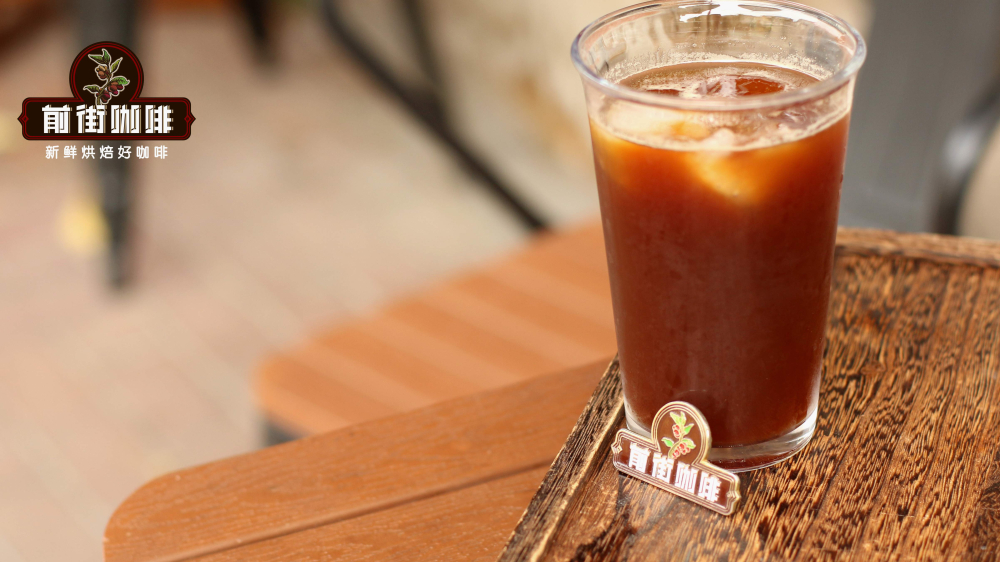
If you are unsure about the other person's taste, or want to express a request or gratitude, bringing an iced Americano is usually a safe choice. If you are worried that the other person may not accept black coffee, you can also include creamer and sugar packets so they can add them according to their preference.
What is Americano?
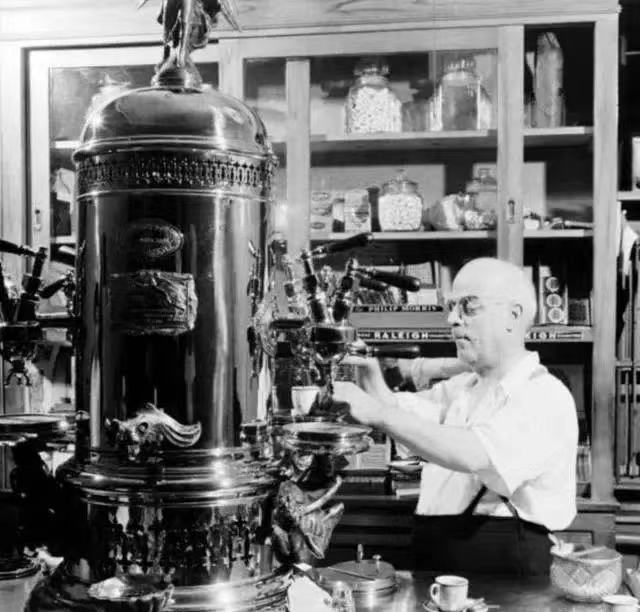
The birthplace of Americano is not the United States, but Italy. In 1884, Italians invented a coffee machine that used steam pressure for extraction, and in the same year espresso was also born.
The method for this coffee is to first grind coffee beans into extremely fine particles, then force hot water through the coffee grounds under sealed pressure to extract a highly concentrated coffee liquid. At that time, during a period of industrial development, espresso quickly won the favor of locals as soon as it was introduced.
Before World War II, American soldiers came to Italy. When resting in cafes, they drank this extremely concentrated and strongly flavored coffee and found it hard to swallow (at that time, espresso was not made precisely, and coffee bean quality was not as good as it is now). So later American soldiers diluted it with water when drinking it.
Italians, who preferred strong flavors, did not approve of this way of drinking it, so they called the drink made by adding water to espresso Americano, meaning "American coffee."
Although Italians did not approve, Americans genuinely liked it. First, it was quick and convenient to make; second, it could be adjusted to personal taste. After returning to the United States, some people introduced espresso machines there, and these machines that quickly extract coffee soon became widespread across America, and Americano also became an indispensable product in cafes.
How do you make Americano?
Americano is made up of espresso and water. When Front Street Coffee (FrontStreet Coffee) makes Americano, it selects dark-roasted blended coffee beans, grinds them into extremely fine particles, uses 20g of grounds at a 1:2 ratio and 9 bar pressure to extract 40g of coffee liquid, controls the time to 25-30 seconds, and then adds clean water at a 1:5 ratio.
But note that the performance of each grinder and espresso machine is different, and the roast level and condition of the coffee beans also vary in flavor. The above extraction parameters are only Front Street Coffee's (FrontStreet Coffee) suggestion as an initial reference, and in practice they still need to be adjusted according to the flavor performance of the extracted coffee.
As for the water-to-coffee ratio for Americano, the data above is likewise a reference provided by Front Street Coffee (FrontStreet Coffee), and the final decision should be based on the flavor concentration of the espresso. If it is hard to judge, it is recommended to start from 1:5: if the coffee is too strong, increase the proportion of water; if it is too weak, reduce the proportion of water.
If you want to make Americano at home but do not want to buy a coffee machine, you can use a moka pot to make espresso. Although it is not as rich as an espresso machine, the flavor is still mellow.
There are a few things to note when using a moka pot: do not add water to the lower chamber above the pressure relief valve; use a relatively fine grind for the coffee grounds, but they should not pass through the holes of the filter basket; without applying pressure, the amount of coffee grounds only needs to be level with the filter basket, and after filling, level it off without pressing hard.
After extraction begins, once you see coffee liquid emerging in the upper chamber, turn off the heat source, take heatproof precautions, and move the moka pot to a wet towel to cool it quickly. The temperature difference will speed up the release of the coffee liquid and also reduce over-extraction caused by prolonged high heat.
Prepare a cup with a capacity of more than 200ml, pour in 180ml of warm hot water, then pour the coffee liquid extracted from the moka pot into the water, and a cup of Americano is ready. Stir gently before drinking; if you are not used to the mellow bitterness of black coffee, you can add some sugar to balance it, or add a small amount of milk to make the taste more balanced.
What coffee beans are used for Americano?
Front Street Coffee (FrontStreet Coffee) recommends using comprehensive coffee beans specially blended for espresso, which not only costs less, but also has more stable flavor performance than single-origin beans.
Front Street Coffee (FrontStreet Coffee) currently sells 4 espresso blend coffee beans, which can be chosen according to your own positioning.
" Front Street Warm Sun Blend Coffee Beans " 78 yuan/227g, suitable for home preparation and specialty coffee shops. It uses Ethiopian natural Red Cherry coffee beans (30%) + Honduras Sherry Barrel coffee beans (70%), with rich wine aroma, vanilla cream, berry acidity and sweetness, and roasted nut flavors.
" Front Street Specialty Blend Coffee Beans " 75 yuan/454g, suitable for home preparation, specialty coffee shops, community coffee shops, and small coffee shops. It uses Colombian washed coffee beans (30%) + Brazilian semi-washed coffee beans (70%), presenting nut, dark chocolate, and caramel flavors.
" Front Street Commercial Blend Coffee Beans " 60 yuan/454g, suitable for specialty coffee shops, community coffee shops, small coffee shops, and takeout/takeaway coffee shops. It uses Robusta washed coffee beans (10%) + Colombian washed coffee beans (30%) + Brazilian semi-washed coffee (60%), presenting nut, cocoa, and caramel flavors.
" Espresso moka pot coffee beans recommended by many baristas - Front Street Black Cocoa Blend Coffee Beans " 50 yuan/454g, suitable for small coffee shops, milk tea shops, and takeout/takeaway coffee shops. It uses Yunnan washed small-bean coffee (30%) + Brazilian semi-washed coffee beans (70%), presenting soft fruit acidity, caramel, and nut flavors.
The above content is compiled by CoffeeHunters, a coffee news website.


