







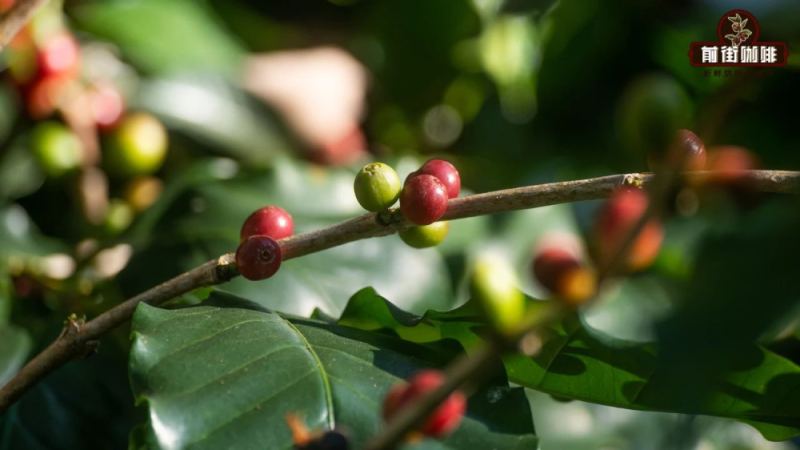
What makes Yunnan coffee taste the way it does?
Yunnan is China's largest coffee-producing province, accounting for about 70 percent of planted area and 83 percent of national output. The main growing areas are Pu'er, Dehong, Baoshan and Lincang, in the west and south between 15 degrees north latitude and the Tropic of Cancer, mostly at 1,000 to 2,000 meters. The cup is rich but not bitter, aromatic but not harsh.
Coffee reached Yunnan in 1904, when French missionaries brought saplings from Vietnam to Binchuan County, but large-scale planting only began in 1955 with 4,000 hectares, rising to 7,800 hectares by the end of 1997. Catimor and Typica are the two leading varieties, and a Typica plantation plus roasting and brewing data show how origin conditions carry through to the cup.
Yunnan is China's most promising coffee-producing region. Its unique geographical and climatic conditions in the west and south give rise to a coffee flavor that is rich but not bitter, aromatic but not harsh. This article systematically reviews the history of coffee cultivation in Yunnan and its main producing areas—Pu'er, Dehong, Baoshan, and Lincang—and focuses on comparing the flavor differences between the two major varieties, Catimor and Typica. At the same time, Front Street Coffee shares its experience in establishing its own Typica plantation and the roasting and brewing data for "Front Street 2013," providing coffee lovers with a complete perspective from origin to cup.
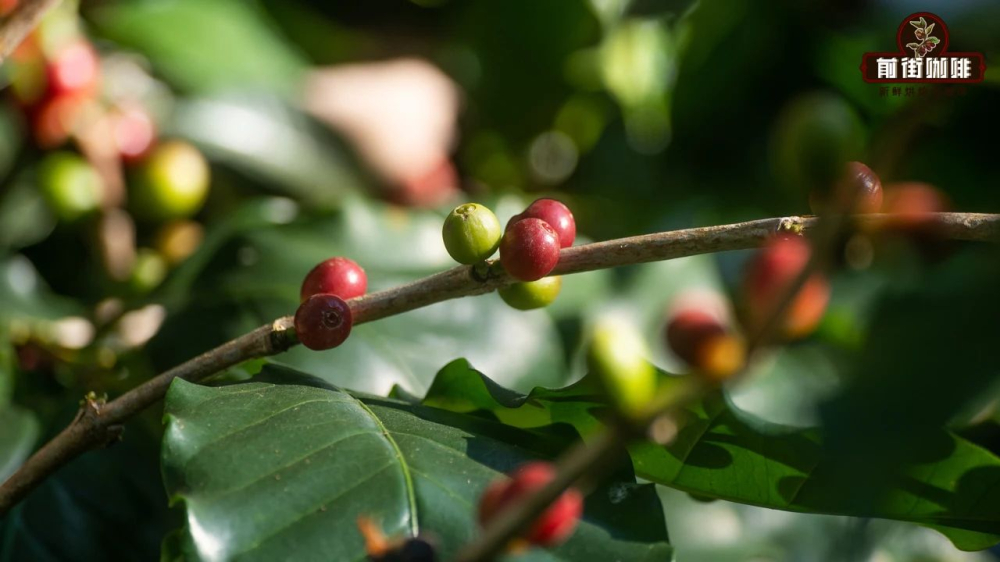
For more specialty coffee knowledge, please follow the WeChat public account: Front Street Coffee
When it comes to the representative of Chinese coffee, Yunnan is inevitably the first to come to mind. Although Yunnan coffee has not been in the specialty market for a long time, Front Street Coffee has always believed that Yunnan is China's best coffee-producing region, and its coffee beans hold enormous potential. So what kind of geographical environment has made Yunnan coffee what it is? Below, Front Street Coffee will introduce the core producing areas and cultivation history of Yunnan coffee beans.
The History of Coffee Cultivation in Yunnan
Although Yunnan coffee is still a newcomer in the specialty coffee field, according to Front Street Coffee's research, the history of coffee cultivation in Yunnan, China is actually quite long.
The story begins in 1904, when French missionaries introduced the first batch of coffee saplings from Vietnam to Binchuan County in Yunnan, and from then on Yunnan began its long history of coffee production. However, it was in 1955 that Yunnan coffee truly achieved large-scale cultivation, when the planted area reached 4,000 hectares. By the end of 1997, the province's coffee planting area had climbed to 7,800 hectares. Today, Yunnan Province accounts for 70% of the country's planted area and 83% of the country's coffee output. Whether in area or output, Yunnan coffee has already established an absolutely dominant position in China.
Yunnan Coffee Bean Producing Areas
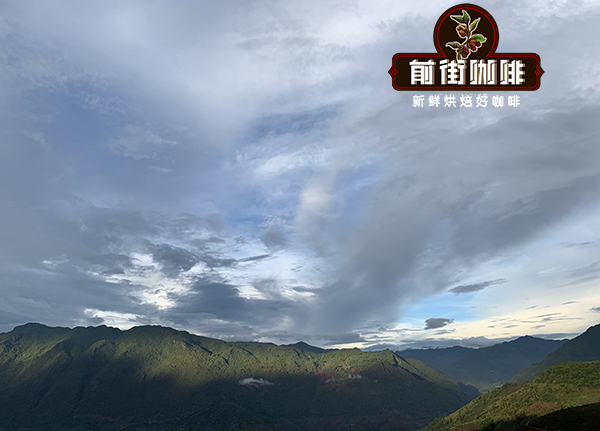
The western and southern parts of Yunnan Province lie between 15 degrees north latitude and the Tropic of Cancer, with most areas at an altitude of 1,000-2,000 meters. The terrain is mainly mountains and slopes. Fertile soil, abundant sunshine, plentiful rainfall, and a significant temperature difference between day and night together shape the flavor characteristics of Yunnan coffee: rich but not bitter, aromatic but not harsh, with a slight fruity note. For this reason, Front Street Coffee often says that the flavor formation of single-origin coffee beans is inseparable from the climate and geography of the producing area—coffee beans are ultimately an agricultural product, and factors such as soil and climate will directly affect the quality of the flavor.
According to Front Street Coffee's understanding, Yunnan coffee farms are currently mainly distributed in Pu'er, Xishuangbanna, Dehong, Baoshan, and other places in southern and southwestern Yunnan.
Pu'er Producing Area
Pu'er City is famous for tea, with a coffee planting area of 789,000 mu, coffee bean output of 586,600 tons, and total output value of 2.469 billion yuan, making it Yunnan's largest coffee planting base. Its climate, geography, and soil conditions are uniquely favorable, establishing its position as mainland China's largest coffee-producing area, with the largest planting area, the highest output, and the finest coffee trading distribution center.
Among the 9 counties and 1 district under the jurisdiction of Pu'er City, 54 townships (towns) grow coffee, and it is known as the "Coffee Capital of China." Pu'er coffee is not only China's main coffee-producing area, but also the region that receives the most coffee study tour programs.
Dehong Producing Area
Dehong Prefecture is one of the main coffee-producing areas in Yunnan Province and one of the earliest regions in Yunnan to grow coffee. According to historical records, since 1914, arabica coffee was introduced to Nongxian Village in Dehong County, and the history of coffee cultivation there has exceeded a hundred years. Dehong Prefecture also has China's largest coffee seed gene bank—the Ministry of Agriculture Ruili Coffee Germplasm Resource Garden, one of the first batch of nine tropical crop germplasm resource nurseries awarded by the Ministry of Agriculture. Coffee cultivation in Dehong Prefecture is mainly arabica coffee, and the national record for yield per unit area is 363.5 kilograms of coffee beans (the average yield of Chinese coffee beans is about 80-100 kilograms per mu).
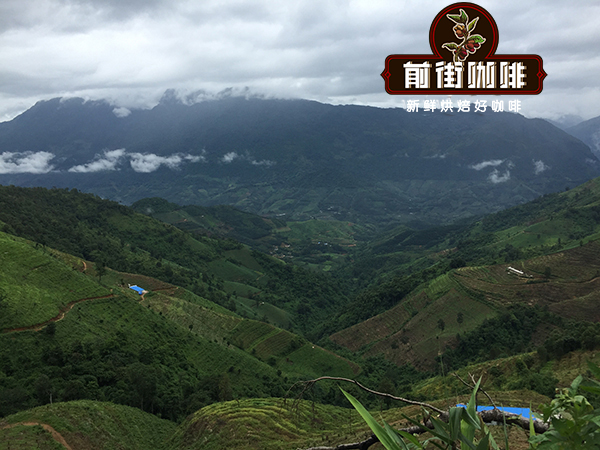
The coffee cultivation altitude in Dehong Prefecture exceeds 1,000 meters, with 30,000 mu planted on mountains above 1,600 meters. In addition, Dehong Prefecture mainly uses organic fertilizers and organic pesticides for cultivation. The coffee produced in Dehong Prefecture is of excellent quality and is one of the rare high-quality coffee-producing areas in the world.
Baoshan Producing Area
Baoshan, Yunnan has a long history of coffee cultivation, is a national geographical indication product, and is also one of the high-quality coffees in the country and even the world. Baoshan's average temperature is 21.5°C, with a maximum temperature of 40.4°C, and basically no frost throughout the year, and it is widely recognized as the best producing area for arabica coffee. Front Street Coffee believes that the arabica coffee brewed here is known for being rich but not bitter, aromatic but not harsh, with uniform beans, a soft aroma, and fruity notes.
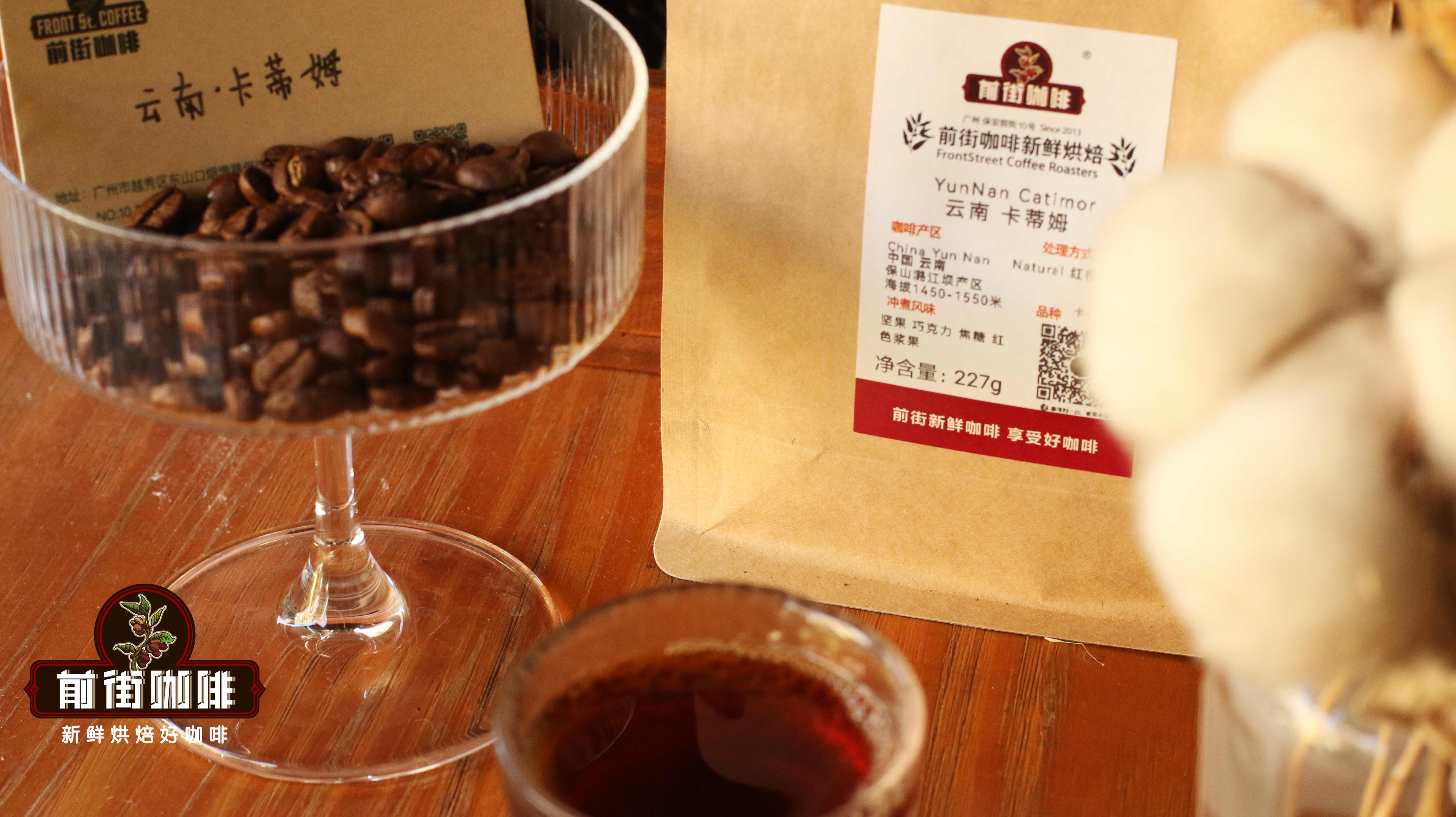
Lujiangba in Baoshan is a relatively famous coffee-producing area, known for producing Typica coffee. Compared with arabica coffee (Catimor), Typica has better flavor quality, but lower yield and greater cultivation difficulty. Therefore, Yunnan coffee farmers are more inclined to grow the high-yield Catimor. Front Street's "Front Street 2013 Typica" comes precisely from the Typica variety in Lujiangba, using washed processing, which better reflects the flavor characteristics of the Yunnan producing area.
This coffee displays sunflower seed aroma, black tea, muskmelon, and plum acidity, very soft and aromatic.
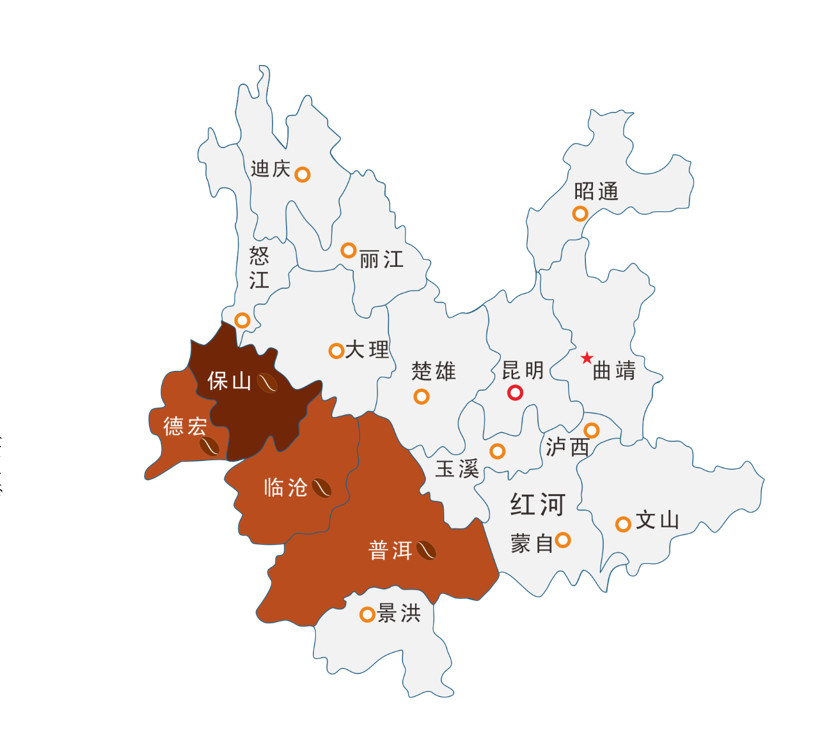
Lincang Producing Area
Lincang City is located in southwestern Yunnan Province, with the Tropic of Cancer passing through its south. It borders Pu'er to the east, Dali to the north, Baoshan to the west, and Myanmar to the southwest, and is therefore also called a brilliant pearl on the southwestern border of China by the Lancang River. The average annual temperature in Lincang City is between 16.8 and 17.2°C, with distinct dry and wet seasons and abundant sunshine.
With its unique geographical location and climatic conditions, Lincang City has become the focus of many coffee enterprises. Locally, high-quality coffee seedling bases of 200 mu and 100 mu have been established in Mengding Town of Gengma Autonomous County and Lincang Happy Farm respectively, and coffee cultivation is carried out in Gengma, Zhenkang, Yunxian, Cangyuan, and Yongde.
For this reason, Front Street Coffee saw the infinite potential of Yunnan coffee and therefore established a plantation in Lincang, Yunnan, specifically for growing Typica and a small amount of Bourbon coffee trees, with the aim of letting everyone appreciate the charm of Yunnan coffee beans. Typica is one of the oldest derived varieties of Arabica, and its flavor expression is naturally the most primitive and best, so Front Street Coffee chose it.
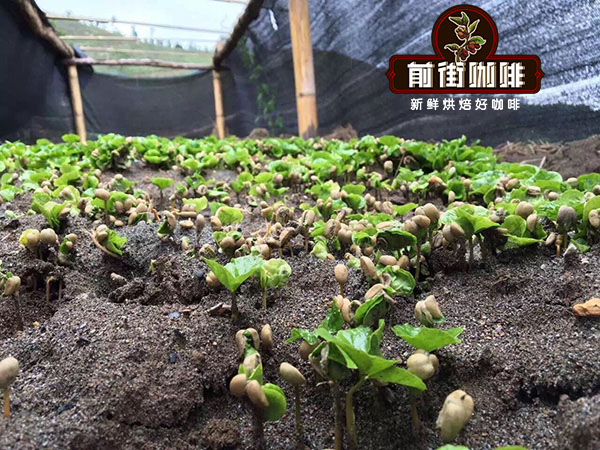
If you have never grown coffee yourself, how can you clearly describe the real coffee production process? This was exactly the idea with which Front Street started. To grow coffee in Yunnan, you can buy an existing coffee estate to start on easy mode, or you can choose a piece of land suitable for coffee cultivation and start from scratch, challenging hell mode. Front Street chose the latter, because Front Street deeply understands that to grow coffee beans of excellent quality, variety, soil, environment, cultivation level, and processing level are all indispensable.
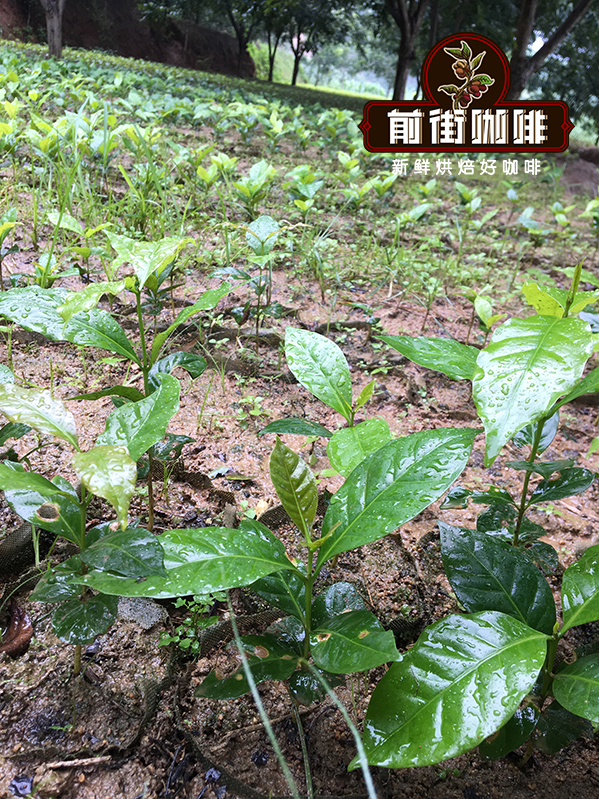
What Front Street selected and cultivated is the Typica variety, a pure Arabica variety, with better flavor than the Catimor currently grown in Yunnan. From seedling to first fruiting takes at least 4-5 years, which is also why Yunnan coffee farmers, even knowing that Catimor has inferior flavor, are unwilling to tear it up and replant. Front Street's first batch of self-produced Yunnan coffee beans from 2020-21 was named "Front Street 2013" and received unanimous praise. In February 2022, the new season's Front Street 2013 was finally released to the public again.
The coffee beans produced this year are plumper and larger than last year's; as with last year, only natural processing was used. After processing, they were immediately shipped to Guangzhou for roasting, and the day after roasting, Front Street's baristas could not wait to cup this bean. The performance of this bean was stunning: dried apricot, caramel, black plum, black tea, showing an overall very sweet flavor.
Before launching each new single-origin coffee bean, Front Street Coffee conducts roasting and brewing flavor tests to select the best flavor curve, making it convenient for future brewing for coffee enthusiast friends who come to Front Street Coffee. Next, Front Street will share Front Street Coffee's roasting and brewing data for this single-origin Yunnan coffee bean.
Front Street 2013 Typica Coffee Roasting Suggestions
The general moisture content of coffee beans is 10.9%, so Front Street Coffee's roaster plans to charge the beans when the roaster reaches 200°C, then use high heat and a small airflow door to speed up dehydration. After the dehydration stage ends, open the medium airflow door and use medium heat so that the Maillard reaction time is not too rushed, and develop for 3 minutes after first crack before discharging. Turning point: 1:32, 92.5°C; yellowing point: 5:40, 148.5°C; first crack: 8:59, 188.0°C; develop for 3 minutes and discharge: 12'00, 196°C.
Front Street 2013 Yunnan Coffee Roasting Suggestions
Charge when the drum temperature reaches 200°C, set the airflow door to 3, adjust the heat to 160°C after 1 minute, turning point at 1:36, roast until 4:50 when it turns yellow at a temperature of 150.7°C, the grassy smell completely disappears, dehydration is complete, keep the heat unchanged, change the airflow door to 4; at the 6th minute, adjust the heat to 140, at the 7th minute, adjust the heat again to 120, at the 8th minute, ugly wrinkles and dark spots appear on the bean surface, and the toast smell clearly turns into coffee aroma, which can be defined as the prelude to first crack. At this time, listen clearly for the sound of the first crack. First crack begins at 8:33, adjust the heat to 90, open the airflow door fully to 5, at the 9th minute reduce the heat to 20, develop for 2'05" after first crack, and discharge at 198.5°C.
Front Street Coffee Pour-Over Suggestions
Because both of these beans come from Yunnan and both are medium roast, Front Street recommends using a V60 conical dripper. The V60 has a larger opening, and together with its unique spiral curve ribs, it allows air to escape more easily, thereby improving extraction quality. The body may not be thick enough, but the Yunnan coffee's fruity acidity and distinct aroma brought out by its high concentration are one of its major features.
Dripper: V60 Water temperature: 90-92°C Coffee-to-water ratio: 1:15 Grind size: medium-fine grind (75% passing through China standard No. 20 sieve)
Brewing method: staged extraction.
Use 30 grams of water for a 30-second bloom, pour in a small stream in circles until 124 grams for the stage break, and when the water level is about to expose the coffee bed, continue pouring until 227 grams and stop pouring. When the water level is about to expose the coffee bed again, remove the dripper. (Start timing from the beginning of the bloom.) The extraction time is 2 minutes.
Huaguoshan brewing flavor description: Rich but not bitter, aromatic but not harsh, floral aroma, muskmelon sweetness in the middle, black tea sensation in the finish.
Front Street 2013 brewing flavor description: Dried apricot, soft fruity acidity, chocolate, black tea
The above content is compiled by CoffeeHunters, a coffee news website.


