








How does coffee extracted in small concentrated amounts change with pour-over ratio?
A 1:15 coffee-to-water ratio, meaning 1 gram of grounds to 15 grams of water, is a reliable starting point for pour-over. Side-by-side brewing of Kenya Asalia at 1:15, 1:13 and 1:17 shows that different ratios shift the balance of acidity and sweetness, the body and the length of the finish, so the right figure depends on the cup being aimed for.
The comparison follows extraction principles and Golden Cup theory: a tighter ratio extracts more coffee in small concentrated amounts and tends to read heavier and more bitter, while a looser ratio lifts brightness and thins the body. Using a three-stage pouring technique at 1:15 keeps soluble flavor compounds inside the Golden Cup range, after which small adjustments suit individual taste.
What pour-over coffee ratio is actually appropriate? This is the most common confusion many coffee lovers encounter when brewing. Front Street Coffee habitually uses a 1:15 coffee-to-water ratio in its daily production, but this ratio is not an ironclad rule—different ratios bring out completely different flavor expressions. Starting from the principles of extraction and the Golden Cup theory, combined with actual brewing tests of Front Street Kenya Asali coffee beans, this article compares three coffee-to-water ratios—1:15, 1:13, and 1:17—to present in detail the differences in acidity-sweetness balance, body thickness, and finish length, helping readers find the cup that best suits their own taste.

Many customers who regularly come to Front Street's store for coffee prefer to sit at the bar. Front Street once asked several regulars why, and most answers were: the bar is closest to the barista. Among the friends who come to Front Street for coffee, quite a few are full of interest in pour-over but lack systematic learning and have many questions about the brewing process. Sitting at the bar is the perfect opportunity to throw out all kinds of questions during gaps in the barista's work: What processing method was used for this bean? Do all coffees need blooming first? Why do you pour in circles? But in conversations with beginners, Front Street noticed that the biggest stumbling block is actually the coffee-to-water ratio.
Readers who follow Front Street's official account, or who have read Front Street Coffee (FrontStreet Coffee)'s practical content, should know that in standard production, Front Street Coffee (FrontStreet Coffee) uses a 1:15 coffee-to-water ratio for the vast majority of coffees. When popularizing knowledge for readers online, Front Street has also always suggested starting with 1:15 and then making slight adjustments according to personal taste. Calculated at 1:15, every 1 gram of coffee grounds corresponds to 15 grams of water. This ratio provides a good foundation for ideal extraction, and combined with Front Street Coffee (FrontStreet Coffee)'s usual three-stage pouring technique, it allows the coffee's soluble flavor substances to fall within the Golden Cup range.
Front Street believes that this 1:15 brewing ratio can be regarded as an ideal balance between coffee and water. Of course, this is only Front Street Coffee (FrontStreet Coffee)'s own subjective judgment. Ultimately, the brewing ratio is just a ruler, used to help everyone determine how much coffee grounds to put in and how much water to pour. Below, Front Street shares some practical points around pour-over coffee extraction:
To brew out flavor, the prerequisite is that the beans themselves have flavor. So Front Street recommends choosing freshly roasted coffee beans for brewing, so you can experience the coffee's rich layers as much as possible. The coffee beans sent out by Front Street Coffee (FrontStreet Coffee) all have roast dates controlled within 5 days, because Front Street is very clear about how crucial freshness is to flavor. Front Street's roasting philosophy is "freshly roasted good coffee," so that every customer who places an order receives the freshest possible state when the goods arrive. Coffee's resting period is about 4 to 7 days, so by the time the customer receives it, it is exactly at the stage where flavor performance is at its best.
1. The basic principle of coffee extraction is that water comes into contact with coffee grounds, dissolving a large amount of aromatic substances and various compounds from the coffee into the water. At present, the mainstream extraction paths in the specialty coffee field are divided into immersion and filtration, both of which occur at the physical level and do not involve chemical changes (the brewing process of espresso, however, includes chemical changes). Filtration is what Front Street produces daily as "pour-over coffee," requiring water to pass through the coffee grounds layer. Immersion means all the water and coffee grounds are fully mixed together; French press and AeroPress both fall within the category of immersion extraction.
2. According to the Golden Cup theory proposed by the Specialty Coffee Association of America: coffee concentration falling between 1.15% and 1.45%, and extraction yield between 18% and 22%, are the data conditions a good cup of coffee should have. Of course, this is not an absolute standard; some coffees outside the Golden Cup range still taste great. Everyone can first operate according to this framework, and then make moderate adjustments afterward. The balance between coffee concentration and extracted substances is crucial to a cup of coffee. If the concentration is too low, it tastes weak and bland; if the concentration is too high, the coffee appears overly intense. When the extraction yield is insufficient, coffee tends to show sharp acidity; when the extraction yield is too high, it brings out negative flavors such as bitterness.
3. Extraction yield and concentration are two different concepts. If you find that the brewed coffee is too sour, Front Street's advice is: do not rush to change the coffee-to-water ratio first, but instead start with the extraction yield. The most common approach is to grind the coffee finer, or extend the extraction time. Sort out these factors first, and then consider the water-to-coffee ratio.
Once these are clear, Front Street plans to use the same brewing method (three-stage) to brew the same coffee—Front Street Kenya Asali from Kenya's Thika region—to let everyone experience together how the coffee's flavor changes under different water-to-coffee ratios. First, here is the basic information for this bean:
Front Street Kenya Asali Coffee Beans
Country: Kenya
Region: Thika
Washing Station: Asali Honey Washing Station
Altitude: 1,550-1,750 meters
Soil: Volcanic soil
Grade: AA TOP
Variety: SL28 SL34
Processing Method: 72-hour washed
Processing Method Description: The Kenyan-style washed process uses a repeated cycle of fermentation followed by washing. On the day of harvest, the highest-quality coffee cherries are selected; after pulping, they enter fermentation for 24 hours. After 24 hours, they are washed with clean river water, then fermented again with clean water for another 24 hours, and washed again. This is repeated for 3 cycles, totaling 72 hours, which is why it is called the Kenyan-style 72-hour fermentation washed process. Through this processing, Front Street Kenya coffee beans undergo long fermentation in a low-temperature environment, allowing the beans to present a brighter, cleaner, and fuller flavor.
Recommended Brewing Parameters: Pour-over dripper V60, water temperature 90-92°C, coffee dose 15 grams, coffee-to-water ratio 1:15
Grind Size: Medium-fine grind (80% passing through Chinese standard No. 20 sieve), Brewing Technique: Staged extraction
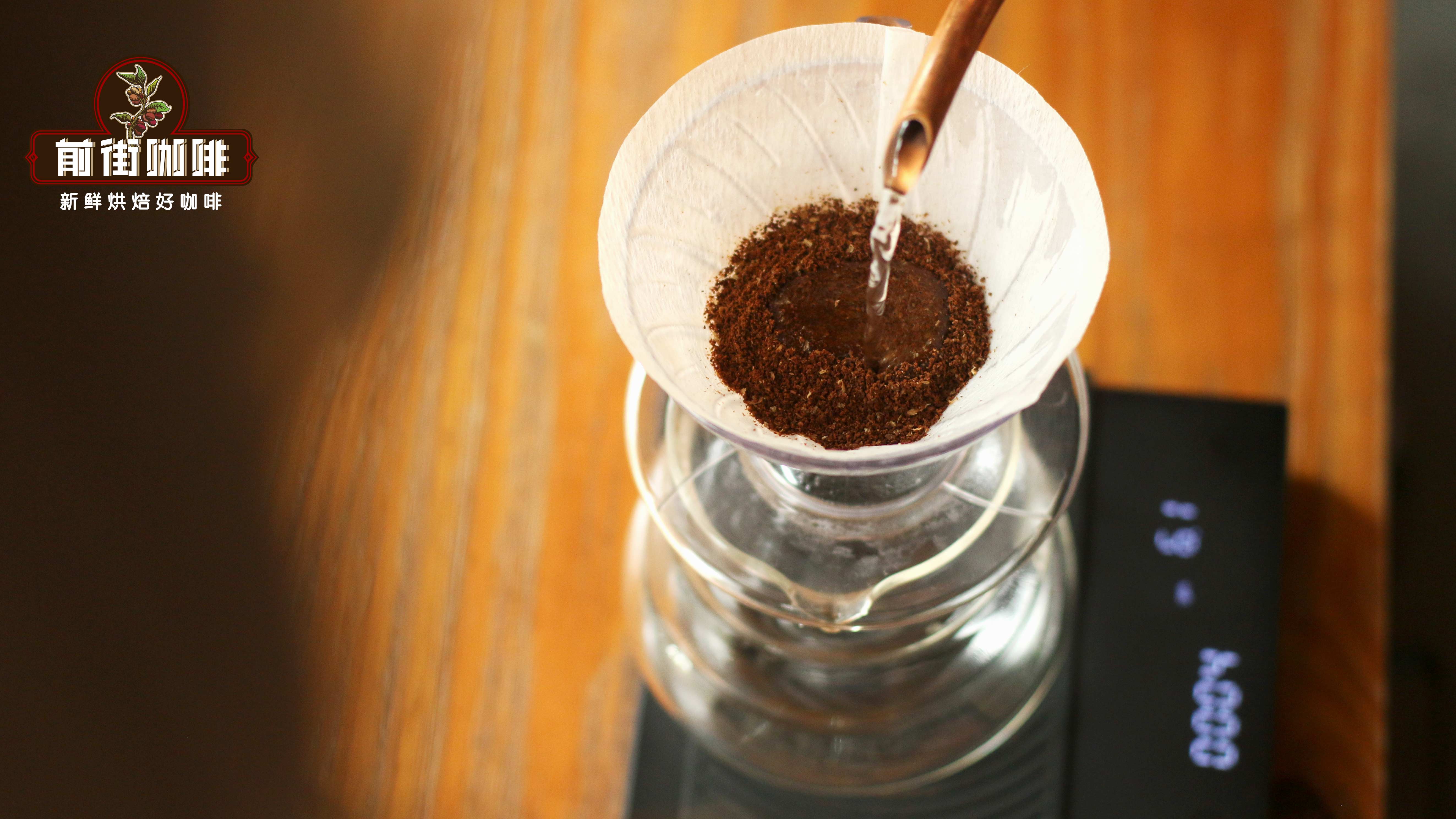
The first brew uses Front Street's standard production ratio of 1:15. Staged extraction: first bloom with 30 grams of water for about 30 seconds, then pour in a small stream in circles at the center until 125 grams, pause, and when the water level drops to almost exposing the coffee bed, continue pouring until 225 grams to finish. When the water level again drops to the point of almost exposing the coffee bed, remove the dripper (timing starts from the beginning of blooming). Total extraction time is 2 minutes.
Flavor Performance: The entry is a bright citrus (yellow fruit) acidity. After the temperature drops, the flavor of cherry tomatoes gradually emerges, though not especially prominent. The acidity rises into a lemon note, with a long finish and a faint tea-like sensation. Overall, it is very pleasant.
For the second brew, lower the coffee-to-water ratio to 1:13 (a relatively large adjustment, making the difference more intuitive to feel). The brewing technique remains consistent with the first.
Flavor Performance: The entry has a prominent caramel powder flavor, with the smoky note of dark plum concentrated in the front section. The sourness only slowly appears in the latter half; when the temperature is higher, the acidity is not obvious and even somewhat dull. Overall sweetness is on the high side.
For the third brew, increase the coffee-to-water ratio to 1:17. The brewing technique is still the same as the first.
Flavor Performance: The entry is too flat, and the body is very thin. After the temperature drops, the acidity is fairly obvious, but the overall astringency is on the high side.
Front Street believes that hearing others explain is not as good as trying it yourself. If you also want to experience the effect of coffee-to-water ratio on coffee flavor, why not try a cup right now? You might just find the taste you like.
Professional Coffee Knowledge Exchange More Coffee Bean Information Please follow Coffee Workshop (WeChat public account: cafe_style)
For more specialty coffee beans, please add private WeChat Front Street Coffee (FrontStreet Coffee), WeChat ID: kaixinguoguo0925
The above content is compiled by CoffeeHunters, a coffee news website.


