







Is SOE Coffee Really Better Than a Blend?
SOE stands for Single Origin Espresso, meaning espresso pulled from coffee beans of one origin. It gained attention after the 2007 WBC champion used single-origin beans against competitors brewing blends, and it has been common abroad for over a decade while spreading in China only in recent years. SOE is not the same as specialty coffee, and it does not automatically taste better than a blend.
Choosing soe coffee beans is harder than it looks, because variety, quality, roasting, and production process all shape the cup, and personal preference matters too. Coffee is an agricultural product affected by season and climate, so keeping every shot stable is difficult. Blended beans can also qualify as specialty coffee, so the format alone says nothing about quality.
SOE is short for "Single Origin Espresso," referring to espresso extracted from coffee beans of a single origin. Since the 2007 WBC champion used it to defeat competitors using blended beans, it has been popular abroad for over a decade, while in China it has only gradually gained traction in recent years. But SOE does not equal specialty coffee, and single-origin beans are not necessarily better tasting as espresso than blends. This article sorts through the concept, flavor performance, stability, and bean selection one by one, and provides Front Street Coffee's recommended bean list to help you judge whether a cup of SOE is a success.
SOE Coffee
Simply put, SOE is espresso extracted from single-origin coffee beans. In 2007, the WBC champion competed with single-origin beans and defeated all the competitors using blended beans on site. After that, SOE became popular overseas for over a decade, and its system has become quite mature. In China, it has only risen in recent years, for two reasons: first, specialty coffee culture had not yet spread widely at the time, and second, consumers had not yet developed the habit of drinking coffee.
Today, more and more cafes are using single-origin beans for espresso. On one hand, single-origin beans can better present regional characteristics and layers, fitting the public's expectations for specialty coffee; on the other hand, many domestic chain brands use SOE as a selling point to showcase the unique appeal of specialty coffee.
Is SOE coffee necessarily specialty coffee?
Not necessarily. Single-origin coffee and specialty coffee cannot be equated, and blended beans can also be specialty coffee. Front Street Coffee believes that this proposition itself is a false one, because there is no unified standard to prove that SOE must taste better than ordinary espresso. There are too many factors determining whether a cup of coffee tastes good: variety, quality, roasting, production process, and personal taste preferences all play key roles.
Does espresso made from single-origin beans taste better than blended beans?
Not necessarily. Keeping every cup of SOE espresso stable is quite difficult. Coffee beans are an agricultural product and are affected by seasons, climate, and other conditions, so stability naturally fluctuates. Espresso extracted from single-origin beans is not necessarily truly better in quality than espresso made from blended beans.
The above discussion all concerns the factors affecting the final characteristics and quality of a cup of coffee. Precisely because there are so many variables, the claim that SOE must taste better than blended-bean espresso does not hold up, even if SOE sells for a higher price.
If it is for a coffee shop's output, it is not recommended to switch everything to SOE; keeping a blended-bean option is still necessary. After all, not every customer can accept the acidity of coffee. In most people's impressions, coffee should be rich and full-bodied.
How to choose SOE coffee beans
The core of SOE coffee lies in highlighting flavor and high recognizability, so selecting single-origin beans with distinct flavor and mouthfeel is most suitable. Imagine this: a person who loves milk coffee drinks a coffee with a unique flavor and extremely high recognizability, cannot forget it, and will naturally come back next time. If you choose SOE at a high price but the flavor is mediocre, then it would be more cost-effective to use common commercial blended beans.
So when choosing beans for SOE, Front Street Coffee more recommends coffee beans with prominent flavor and medium or darker roasting. Light-roasted beans, under pressurized extraction, easily present a sharp acidity and thin body.
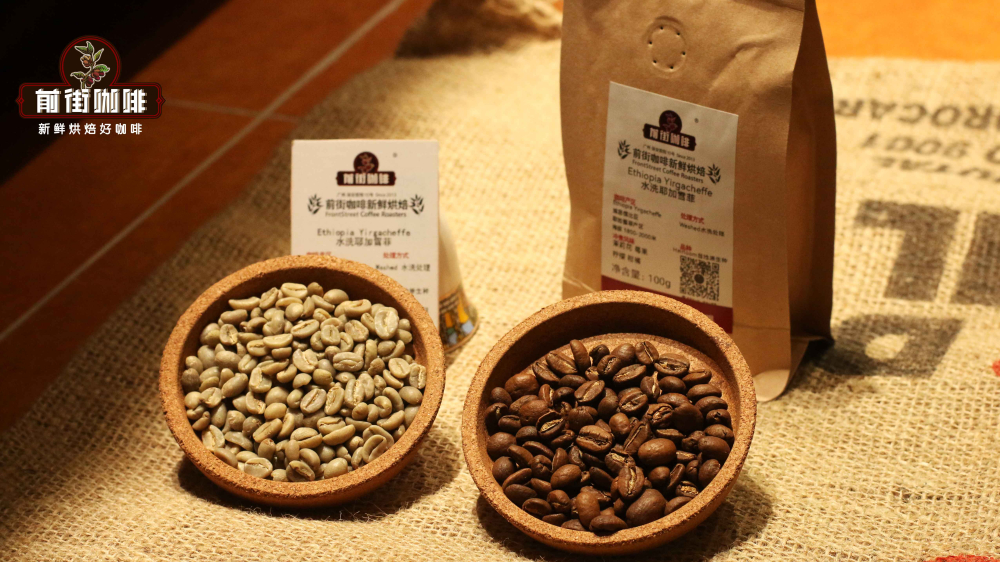
Front Street has not launched beans specifically for SOE, but in the spirit of experimentation, Front Street Coffee took beans from various sources and used them to extract SOE, and found that some single-origin beans perform quite well as espresso.
"Front Street - Costa Rica Strawberry Candy Coffee Beans": after this medium-roasted bean is extracted as SOE, it can present the sweet aroma of dried fruit, red floral notes, and berry-like sweet acidity.
"Front Street - Brazil Queen's Estate Coffee Beans": after this medium-dark roasted bean is extracted as SOE, it can present the aroma of roasted peanuts and roasted nuts, as well as dark-chocolate-like richness and a caramel finish.
How do you judge whether a shop's SOE is successful?
It can be viewed in two categories. One is enthusiasts who understand the concept of SOE and come because of SOE; they are satisfied with this cup of coffee and are willing to keep thinking about it. The other is making friends who have no concept of SOE also feel that this cup of coffee tastes better than ordinary coffee.
The above content is compiled by CoffeeHunters, a coffee news website.


