







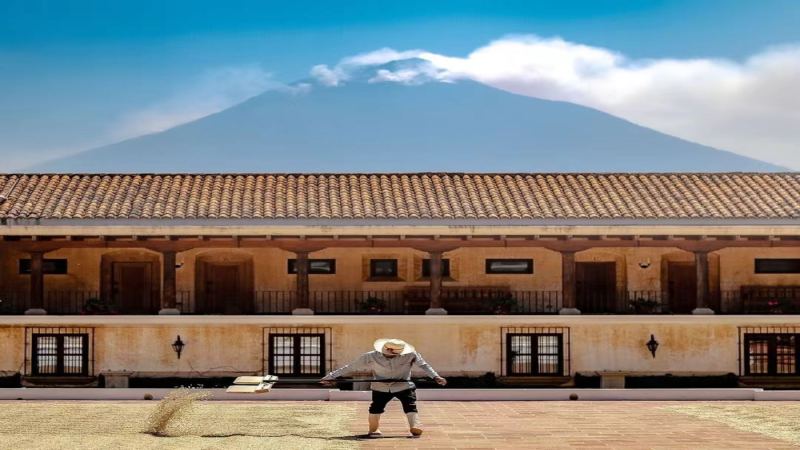
Does Geisha Coffee From Huehuetenango Carry Rose Aroma?
Finca Las Rosas in Guatemala's Huehuetenango region grows coffee at 1,980 meters and has produced since 1915. Its washed Geisha is graded SHB and described with rose, bergamot, lemon, and nectar notes over a smooth body. The estate reached seventh place on the C.O.E. winners' list in 2017, and also placed in 2008.
The rose impression comes from the combination of variety, altitude, and coffee bean processing. Washed processing removes the fruit before drying, which keeps the cup clean and lets floral aromatics read clearly. The estate, in the San Pedro Necta area near the Cuchumatanes mountains, also grows Pacamara, Bourbon, Caturra, Pache, and Catuai, and mostly sells directly to overseas buyers.
In the high-altitude mountains of northwestern Guatemala, the Huehuetenango region nurtures numerous specialty coffees with its unique terroir. Among them, Finca Las Rosas has been growing coffee since 1915, and after a century of heritage, it is renowned for its washed Geisha and has twice been listed on the C.O.E. winners' list. This article will delve into whether the Geisha coffee from this estate carries rose flavor, and analyze the regional characteristics, varieties, and processing methods of Guatemalan coffee. At the same time, Front Street Coffee's Huehuetenango and Flor coffee, as everyday beans, will also provide coffee enthusiasts with practical brewing suggestions and flavor references.
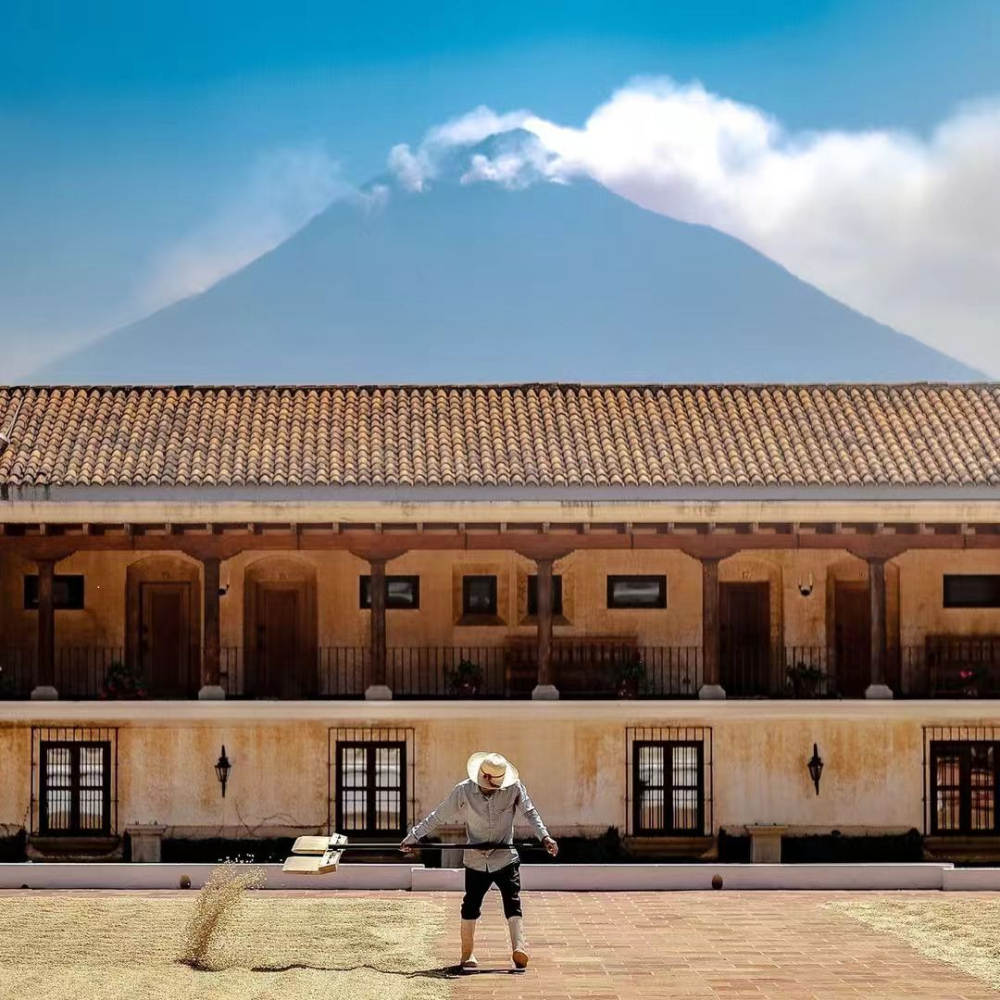
Guatemala Huehuetenango Rose Specialty Estate Geisha Washed Rose Flavor
Guatemala Huehuetenango Finca Las Rosas Geisha Washed Guatemala HHT Finca Las Rosas Geisha Washed
Country: Guatemala
Region: Huehuetenango
Altitude: 1,980 meters
Processing method: Washed
Grade: SHB
Variety: Geisha
Flavor description: Rose, bergamot, lemon, nectar, smooth body
Las Rosas estate has been producing coffee since 1915, now over a century. The estate is located in the well-known San Pedro Necta area of high-altitude Huehuetenango in Guatemala, focusing on producing high-quality micro-lots of Geisha, Pacamara, Bourbon, Caturra, Pache, and Catuai. Among them, Geisha, Pacamara, and Bourbon are globally popular items every year.
Finca Las Rosas is situated amidst the magnificent Cuchumatanes mountains, in the high-altitude region of Huehuetenango, Guatemala. The estate's name, Las Rosas, originates from the owner's grandmother, who loved planting roses around the farmhouse, hence the farm was named Finca Las Rosas.
The current estate owner, Isabel Villatoro Hernandez, inherits the experience of predecessors and focuses more on improving production processes and equipment to enhance coffee quality. For them, high-quality coffee not only secures better prices but also improves employees' lives through better wages, health, and education conditions. Due to high quality requirements, the estate rarely sells coffee to local cooperatives or exporters, mostly trading directly with overseas customers.
Las Rosas was listed on the C.O.E. winners' list twice, in 2008 and 2017, and in 2017, it achieved seventh place with its washed Geisha variety.
Coffee is originally a crop, directly related to the environment and climate of its origin. Guatemala has high-altitude volcanic terrain, and these volcanoes are ideal places for cultivating coffee. Therefore, you will find that Guatemalan coffee has a smoky flavor. Geisha coffee from Guatemala is a wild coffee from Ethiopia, a very rare premium coffee. It is a single origin from the Nueva Granada coffee farm in San Marcos, Guatemala, where plants grow at an altitude of 5,000 feet. The farm is located between two volcanoes, Tacana and Tajumulco, with rich volcanic soil from Tacana. The taste of Guatemalan Geisha coffee can be described as low-acidity chocolate and nutty flavors. Annual harvest is limited. Rainforest Alliance Certified, medium roast. Cup notes: crisp, elegant, sweet and delicious. Baker's chocolate, lemon blossom, musk, dried peach, almond aroma and cup.
Guatemalan coffee is among the world's top coffees. Due to its high-altitude volcanic terrain, compared to other varieties, tasters prefer this mixed flavor coffee with spicy notes. The strictly hard beans here are rare good coffee, with full beans, delicious taste, and balanced acidity. Additionally, its giant coffee beans have also brought Guatemala much attention.
Guatemalan Coffee Regions
Coffee was truly introduced to Guatemala in 1750 by Jesuit priests, and by the late 19th century, German colonists developed the coffee industry here. Guatemala has eight major regions, divided into five volcanic regions and three non-volcanic regions. The five volcanic regions: Antigua, Acatenango, Atitlan, Volcanic San Marcos, and Fraijanes. The three non-volcanic regions: Huehuetenango, Coban, and New Oriente. Guatemala possesses over 300 microclimates, the most in the world. The coffee flavors from each region vary, but overall, Guatemalan coffee presents a mild and full-bodied texture, elegant aroma, and a special pleasant acidity similar to fruit acid, making it a nobility among coffees. Among them, Antigua Classic is highly recommended by global coffee connoisseurs.
Huehuetenango
The Huehuetenango region is located in the northwestern highlands of Guatemala, with planting altitudes of 1,800-2,100 meters, the highest coffee-growing region in the country, known for producing excellent quality beans. The dry hot winds from the Tehuantepec Plateau in Mexico protect the coffee beans from frost. Locals plant coffee trees up to nearly 2,000 meters, which can be said to be a gifted coffee-growing environment. Although Huehuetenango has a dry climate, the region is interlaced with streams, providing ample clean water for irrigation or washing stations. During harvest season, washing can be done directly on the mountain. Due to numerous rivers and lakes in Guatemala, Huehuetenango is rich in mountains and water resources, with a dry climate but abundant water. Also, the region has complete water facilities, so coffee is mostly washed. Harvest period: January to April.
Front Street Coffee has chosen its washed Huehuetenango coffee, which has obvious citrus notes, lemon peel acidity but also rich berry flavors, and a nutty finish, as its everyday bean. It is a representative of the Huehuetenango region and Guatemalan coffee.
Antigua
Antigua City is the oldest and most beautiful city in the Americas. As early as 1543, Antigua was the capital of all colonial Central America, and the Spanish Governor's Palace was also located here. After the great earthquake in 1773, Antigua was destroyed, and the capital was moved to Guatemala City. Antigua is about 40 kilometers west of Guatemala City. The colonial buildings damaged by the earthquake have been preserved as they were after the earthquake, making it a living history museum.
Coffee Varieties
Guatemala mainly cultivates Bourbon, Typica, Caturra, and Catuai. Bourbon and Typica are the oldest Arabica coffee varieties, mostly appearing as specialty coffee.
Front Street Coffee has two Guatemalan coffees: one is the everyday bean Huehuetenango coffee, with varieties Bourbon, Caturra, and Catuai; the other is the single-origin Guatemalan Flor coffee, with varieties Caturra and Bourbon.
Guatemalan Coffee Bean Processing Methods
Guatemalan coffee beans are mainly processed using the washed method.
After harvesting, the selected coffee cherries are put into a depulper to initially remove the skin and pulp. Then, the green beans with residual pulp and mucilage are placed in water for about 24 hours of fermentation. After fermentation, they are washed in a flowing water tank, then dried by sun or machine until moisture content drops to about 12%, transferred to warehouses, and finally the parchment is removed before sale. This processing method can express a very clean taste. At the same time, Front Street believes that washed coffee best reflects the basic flavor of a region, so this bean is also suitable for coffee newcomers, marking the Guatemalan origin flavor.
Front Street Roasting Suggestions
Front Street Coffee has two Guatemalan coffees: one is the everyday bean Huehuetenango coffee, with varieties Bourbon, Caturra, and Catuai; the other is the single-origin Guatemalan Flor coffee, with varieties Caturra and Bourbon. Guatemalan coffee beans inherently have the nutty and cocoa tones unique to Latin America, with a hint of floral fragrance and soft fruit acidity. Front Street uses a medium-light roast to preserve more floral and fruity aromas, clean and bright acidity.

Front Street Brewing Parameters for Guatemalan Coffee:
Guatemalan coffee beans are medium-light roasted. Light-roasted beans have a lower dissolution rate of coffee substances than dark-roasted ones. Front Street recommends using a faster-flow V60 dripper, higher water temperature, and finer grind.
Front Street uses medium-fine grind / fine sugar coarseness (80% passing through Chinese standard No. 20 sieve). Use 15g coffee powder, then brew with a V60 dripper, 91°C water temperature, 1:15 coffee-to-water ratio, and a three-stage pouring method.
Using three-stage extraction, bloom with twice the coffee powder weight in water, i.e., 30g water for 30 seconds. The blooming process is necessary to allow the coffee powder to release internal carbon dioxide gas, thus making the later extraction more stable. Pour in a small stream in circles until 125g, then continue pouring until 225g and stop. After the dripper stops dripping, remove it. Time from the start of pouring, extraction time is 2'00". Then pick up the whole cup, shake it evenly, and pour into a cup for tasting.
Guatemalan Huehuetenango Coffee Flavor Characteristics: Citrus, berry acidity, lemon peel, nutty aroma in the middle, tea-like aftertaste.
Guatemalan Flor Coffee Flavor Characteristics: Berry acidity, citrus, slight chocolate, rich layers, smooth mouthfeel.
Front Street Brewing Suggestions:
Regarding coffee brewing, Front Street has always believed that the freshness of coffee beans greatly affects the flavor. Therefore, Front Street Coffee ships coffee beans within 5 days of roasting. Front Street's roasting philosophy is "Freshly roasted good coffee," so every customer receives the freshest coffee upon ordering. The resting period for coffee is about 4-7 days, so when customers receive it, it is at its best flavor.
For those who need ground coffee, Front Street kindly reminds: once coffee beans are pre-ground, there is no need for resting, because during transportation, the pressure from carbon dioxide in the packaging can also round out the coffee flavor, so you can brew a cup immediately upon receiving ground coffee. However, ground coffee needs to be brewed promptly, as it oxidizes quickly upon contact with air, meaning the flavor dissipates faster and the coffee tastes less good. Therefore, Front Street recommends buying whole beans and grinding fresh for better flavor.
Besides Geisha coffee from different regions, Front Street also has over fifty single-origin coffee beans from various regions worldwide, each with unique flavors. Whether you like acidic, bitter, or neither, Front Street can meet everyone's needs.
The above content is compiled by CoffeeHunters, a coffee news website.


