







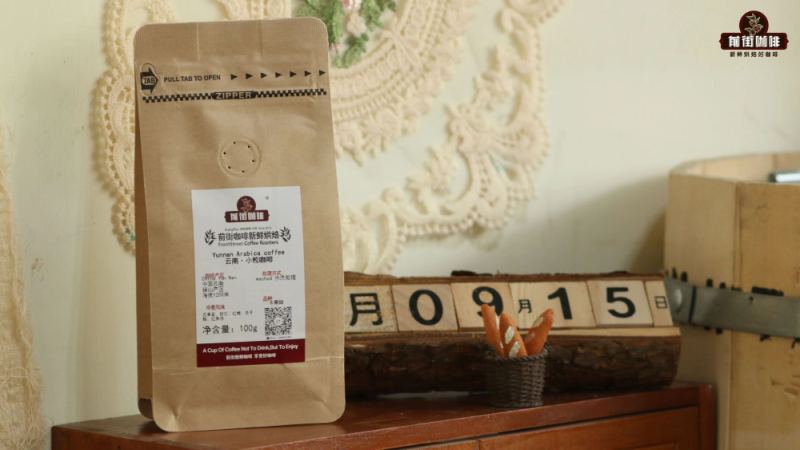
Which Yunnan Coffee Producing Region Is Worth Trying?
Yunnan is China's largest coffee-growing region, with planting spread across nine prefectures including Pu'er, Baoshan, Dehong, Lincang, Wenshan and Xishuangbanna. Total area stays near 1.8 million mu with annual output around 139,000 tons, roughly 1.5 percent of global production. Baoshan, one of the earliest areas to plant coffee, is home to the Lujiangba base.
Baoshan introduced its first coffee tree varieties in the 1950s, and Lujiangba has since become the country's largest coffee planting base, with Xizhai Village known as China's No. 1 Coffee Village. Variety evolution from Typica to Catimor, plus washed versus natural processing, shapes the flavor differences between regions and helps buyers decide what to try.
Yunnan coffee has seen continuous quality improvements in recent years and is attracting growing attention from domestic coffee enthusiasts. For those who have not yet tried Yunnan beans, its flavor profile is a source of curiosity. This article will guide you through the main producing regions of Yunnan small-bean coffee—especially the cultivation history and natural conditions of Lujiangba in Baoshan—trace the evolution of varieties from Typica to Catimor, analyze how washed and natural processing methods affect flavor, and recommend two products from the Front Street brand: the washed Yunnan small-bean and the natural Typica, helping you find a Yunnan coffee that suits your taste.
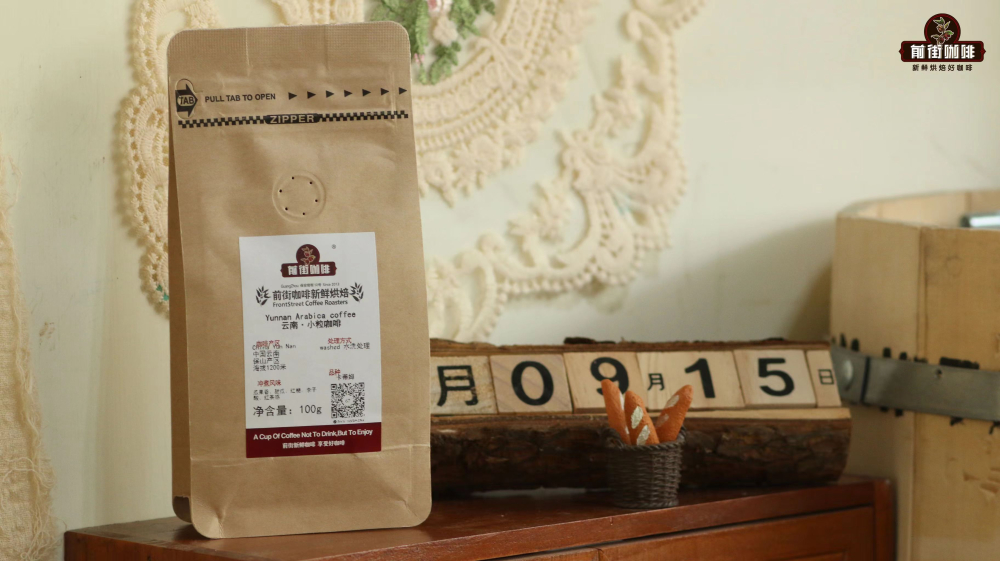
In recent years, thanks to sustained investment from various parties, the quality of Yunnan coffee has steadily improved and gained increasing recognition, with a loyal community of Yunnan coffee enthusiasts building up domestically. For those who have not yet encountered Yunnan beans, what they most want to know is probably what it actually tastes like.
Why is small-bean coffee from the Baoshan region worth paying attention to?
At present, Yunnan's total coffee planting area remains around 1.8 million mu, with annual output of approximately 139,000 tons, accounting for about 1.5% of global production. Of this, beans reaching premium commercial grade (75 points and above) make up roughly 10%, while specialty grade accounts for about 5% (2019 statistics). Yunnan is currently China's largest coffee-growing region and the core hub for trade consolidation and export. Coffee cultivation covers 9 prefectures and cities including Pu'er, Baoshan, Dehong, Lincang, Wenshan, and Xishuangbanna, spanning 35 counties and districts, involving over 380,000 farming households and more than 1.14 million people. Among the many producing regions, Baoshan is one of the earliest areas to have introduced coffee cultivation.
In the 1950s, Baoshan introduced its first batch of coffee tree varieties for seedling cultivation. After decades of development, Lujiangba in Baoshan has become the largest coffee planting base in the country, with Xizhai Village earning the title of "China's No. 1 Coffee Village." There, every household has coffee trees growing on the hills behind their homes, courtyards are covered with coffee beans drying in the sun, and the aroma of coffee fills the air indoors. The local frost-free warm climate year-round provides a comfortable growing environment for coffee trees, while the significant day-night temperature difference at high altitude extends the ripening cycle of coffee cherries, prompting the fruit to accumulate richer flavor compounds.
Yunnan's coffee trees are mostly planted on mountainous and sloping terrain, and the uneven topography makes mechanical harvesting impractical, so the picking of ripe coffee cherries is entirely done by hand. Similar to most coffee-producing countries, Yunnan harvests one season each winter, with the concentrated picking period from November to March of the following year. Coffee cherries turn red and ripen successively in the hills, and farmers can be seen busy picking small-bean coffee everywhere.
What variety does small-bean coffee belong to?
Yunnan small-bean coffee is also called "Arabica coffee" (coffea arabica L.). In the 1950s, the main varieties in the Baoshan region were Typica, Bourbon, and S288. Among them, Typica is the oldest, with a pure and elegant flavor, but its yield is low and its disease resistance is weak, making it prone to infection and withering. For this reason, Yunnan introduced Catimor, which can be densely planted and has strong disease resistance, and it has now become the most widely planted coffee variety in Yunnan. Therefore, when we commonly refer to "Yunnan small-bean," in most cases we mean Yunnan Catimor coffee beans.
Catimor is the offspring of a cross between Caturra and Timor. Caturra is a highly regarded natural mutation of Bourbon and frequently appears in various specialty coffee competitions; among Front Street's own roasted coffee beans, dozens are made with Caturra. Timor is a natural hybrid of Robusta and Arabica, discovered in the early 1900s on the island of Timor in Southeast Asia. Robusta's flavor has never been particularly appealing, characterized mainly by heavy bitterness, but it has extremely strong disease resistance, tolerates cold and heat, and yields well. Catimor therefore inherited some of these traits: higher survival rate, better fruit-setting rate, and shorter maturation period, naturally making it more popular with coffee farmers and producers.
Processing methods for Yunnan small-bean coffee
Most Yunnan coffee farmers have limited production conditions and cannot afford expensive processing equipment, so Yunnan coffee beans generally adopt natural processing methods, namely washed and natural (sun-dried). Yunnan is rich in freshwater resources, but the harvest season often brings rain, making the washed method more suitable for processing, and washing is currently the most mainstream green bean processing method in Yunnan.
Washed Yunnan small-bean recommendation
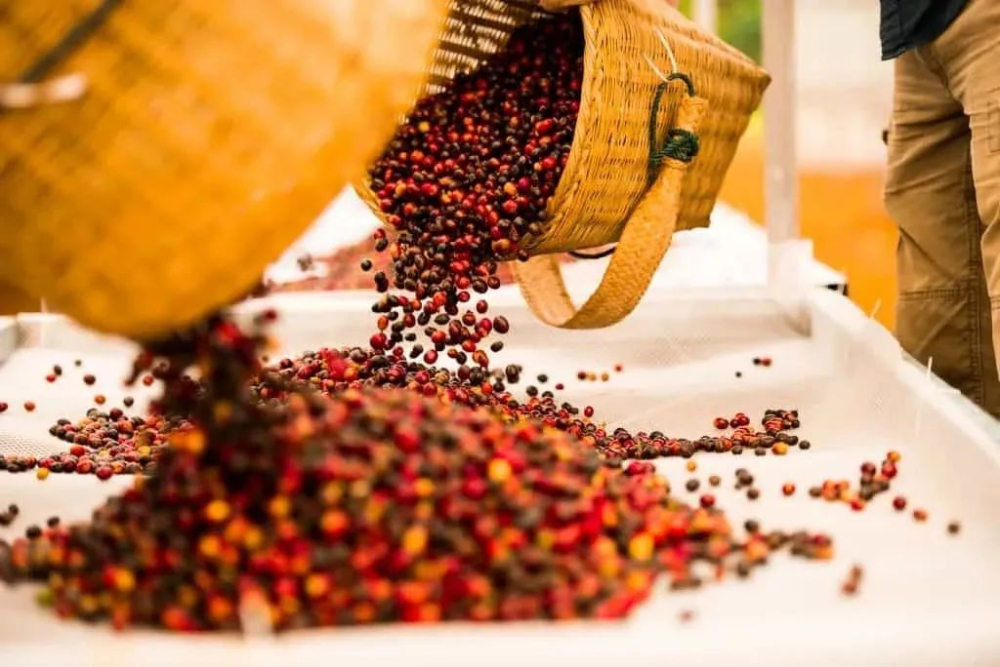
After picking, coffee cherries are immediately sent to the washing station. First, flotation is performed to remove defective beans. Then the skin and pulp are removed by machine, at which point a sticky layer of mucilage still clings to the bean surface. The processing station places the coffee beans into fermentation tanks, where microorganisms break down the mucilage, then rinses them repeatedly with clean water to wash away the decomposed mucilage and residual pulp.
After washing, the coffee beans enter the drying stage. Unlike the natural method, which retains all the pulp and mucilage, the washed method removes the skin, pulp, and mucilage, resulting in a moisture content far lower than that of natural beans, cutting drying time by more than half—typically about two weeks depending on weather conditions.
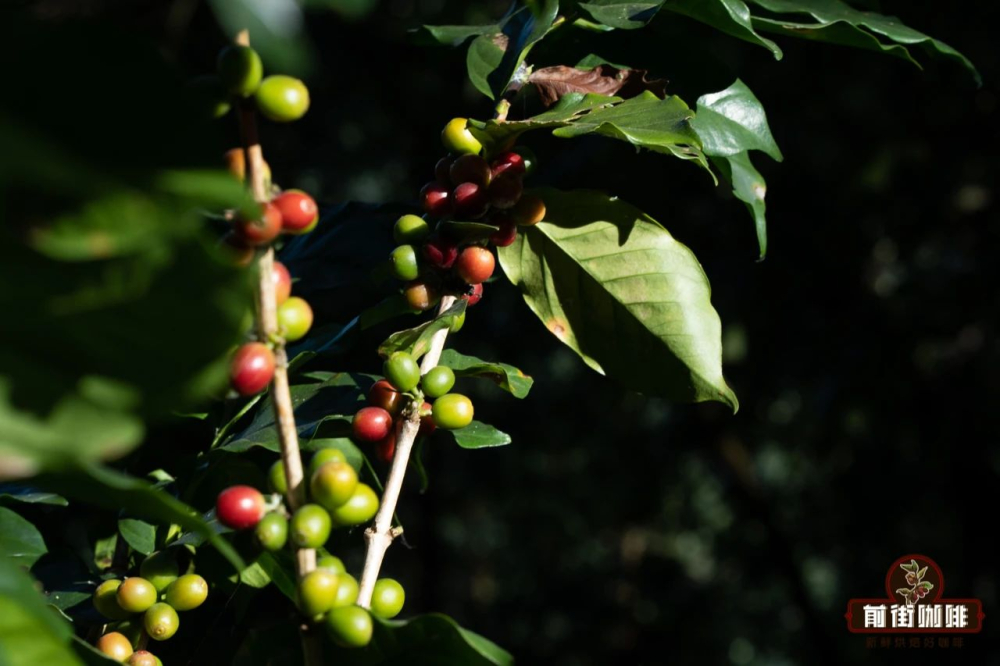
Front Street Washed Yunnan Small-Bean Coffee
Region: Baoshan, Yunnan, China Altitude: 1200m Variety: Catimor Processing: Washed
Flavor: Nutty aroma, herbal, chocolate, caramel, with a hint of fruity acidity in the finish.
The natural (sun-dried) method is the most primitive and traditional post-processing method for green beans. Compared to washing, natural processing gives coffee a more intense flavor, with a qualitative boost in sweetness. After picking ripe red cherries, Front Street 2013 Typica spreads the whole fruit evenly on drying beds and turns them every half hour. This high-frequency turning ensures even drying of the fruit while preventing excessive fermentation that would produce unpleasant fermented flavors.
Front Street 2013 Yunnan Typica
Region: Lincang, Yunnan
Estate: Front Street Estate
Altitude: 1300 meters
Variety: Typica
Processing: Natural
Flavor: Dried apricot sweetness and acidity, nutty notes, brown sugar sweetness, with a tea-like finish
When it comes to the flavor of Yunnan coffee, some say it's like chocolate, some say it's like sweet potato, and others think it resembles Sanhua plum. Yunnan small-bean coffee takes a balanced, harmonious approach, combining acidity, sweetness, and bitterness. Using a medium roast highlights both the roasted aromas of chocolate and nuts while retaining some acidity. In Front Street's cupping, the Yunnan small-bean daily drinker showed nutty, herbal, and brown sugar aromas, melon-like sweetness, and plum acidity, with a balanced mouthfeel. The natural Typica presents chocolate, baked bread, tropical fruit fermentation notes, and a black tea finish.
The above content is compiled by CoffeeHunters, a coffee news website.


