







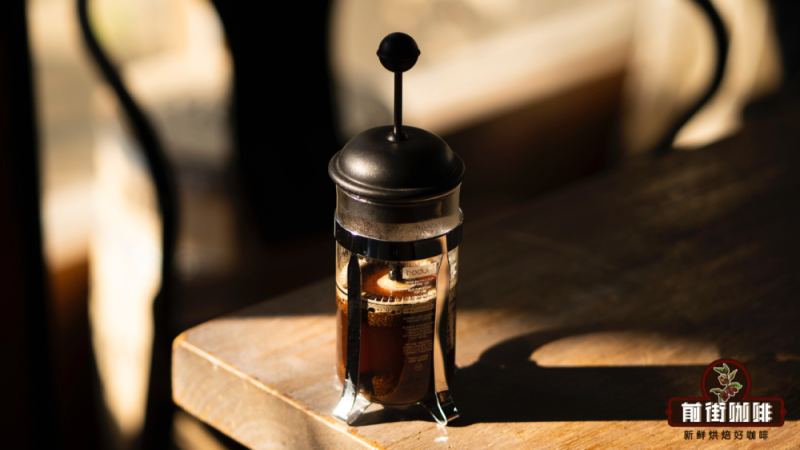
How to Make Americano With a French Press
A French press can produce a concentrated coffee base for drinks like a latte or americano without buying an espresso machine. Lowering the coffee-to-water ratio raises concentration, though the result is less rich and full-bodied than true espresso and cannot form the golden crema that 9 bar of pressure creates.
Crema appears when espresso machines push hot water through finely ground coffee at about 9 bar, forcing carbon dioxide and oils out of the puck and into the liquid. French press or pour-over coffee cannot replicate that, so the base tastes different, and grind size and ratio become the main variables to adjust. Whether the result reads as notably americano bitter depends on those settings.
Many coffee enthusiasts want to enjoy a latte or americano at home, but are put off by the price of espresso machines. In fact, to get a rich coffee base, a French press can do the job just as well. This article focuses on the method of making high-concentration coffee with a French press, while explaining the difference between it and true espresso, including the formation of Crema, and the adjustment of grind size and coffee-to-water ratio. Front Street Coffee also uses Ethiopian natural Red Cherry as an example to demonstrate the specific process and flavor performance of making black coffee with a French press, suitable for enthusiasts who want to use simple equipment to enhance coffee concentration.
Introduction
Recently, when communicating with customers, Front Street Coffee found that many coffee enthusiasts plan to buy an espresso machine, simply to easily make an americano or latte at home, but are often ultimately put off by the price of the machine. In fact, the rich coffee base that an espresso machine is supposed to provide does not only depend on an espresso machine to achieve; a French press can also accomplish a similar effect.
Can espresso only be made with an espresso machine?
If we don't have an espresso machine on hand, we might as well think of espresso as a cup of extremely concentrated coffee liquid. Therefore, whether it is drip filtration or immersion extraction, as long as the coffee-to-water ratio is lowered, a high-concentration coffee liquid can be obtained. Of course, the coffee liquid made this way cannot be compared with espresso extracted by an espresso machine: whether it is high-concentration coffee made with a French press or pour-over, it cannot reach the level of true espresso in richness and body, nor can it form that layer of golden crema.
Mini science lesson: What is the crema on the surface of espresso?
When an espresso machine extracts espresso, the coffee grounds are ground extremely fine and extracted under about 9 bar of pressure. When hot water passes through the coffee puck, the carbon dioxide in the grounds, due to the excessive pressure, makes the water supersaturated with carbon dioxide. The carbon dioxide cannot be released and can only dissolve directly into the coffee liquid. At the same time, the high pressure also forces the oils in the coffee out of the puck and brings them out together with the hot water.
After extraction ends, the coffee liquid flows out of the machine, atmospheric pressure returns to normal, and the carbon dioxide still remaining in the coffee liquid prepares to return to the air, but encounters the oils in the coffee liquid. The oils wrap around the carbon dioxide that is about to escape, and this forms the crema layer.
Although espresso made with a French press does not have golden crema, it can retain the coffee's original oils. Unlike drip coffee, because there is no paper filter, the oils and very fine particles in the coffee are retained, so the mouthfeel is smooth, but clarity will be slightly weaker.
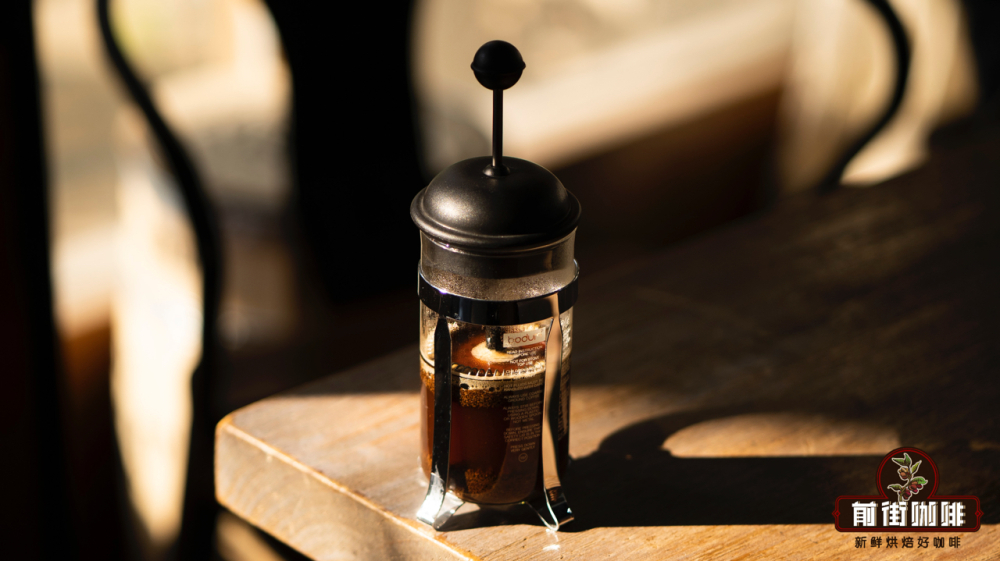
How to make espresso with a French press?
Usually, when making black coffee with a French press, a 1:15 coffee-to-water ratio is used to directly extract coffee of moderate concentration. Because it needs to steep for 4 minutes, the grind size should preferably have a 75% passing rate through a No. 20 sieve (coarse sugar size), to avoid over-extraction. However, when making espresso with a French press, a low coffee-to-water ratio is needed to extract a high-concentration coffee liquid, so 20g of coffee can be used at a 1:4 ratio, which can extract 75-80g of coffee liquid. The grind size should also be adjusted finer accordingly, with a coarseness of 80% passing rate through a No. 20 sieve (fine sugar size), water temperature 92°C, and because the grind is finer, the steeping time is shortened to 3 minutes.
How to make americano with a French press?
Coffee made with a French press belongs to black coffee and cannot be called americano; the overall feel is close to pour-over coffee. This time, Front Street Coffee uses Ethiopian natural Red Cherry to demonstrate how to make black coffee with a French press. The coffee-to-water ratio is 1:15, the grind size is 75% passing rate through a No. 20 sieve (coarse sugar size), water temperature 94°C, and steeping time 4 minutes.
Pour the ground coffee into the pot, then add 225ml of hot water, pull up the plunger, cover the pot, and wait 4 minutes. Then slowly press down the plunger so that the metal filter is pressed to 1/4 of the pot body, avoiding fine particles at the bottom surging upward. After extraction is complete, pour out all the coffee liquid before tasting, to avoid the coffee grounds remaining in an extracting state and causing bitterness.
Coffee flavor performance: a full mouthfeel like berry juice, obvious sweetness, a lingering finish like black tea, overall rich and solid, but clarity is somewhat lacking.
For more specialty coffee beans, please add private WeChat Front Street Coffee (FrontStreet Coffee), WeChat ID: kaixinguoguo0925
The above content is compiled by CoffeeHunters, a coffee news website.


