







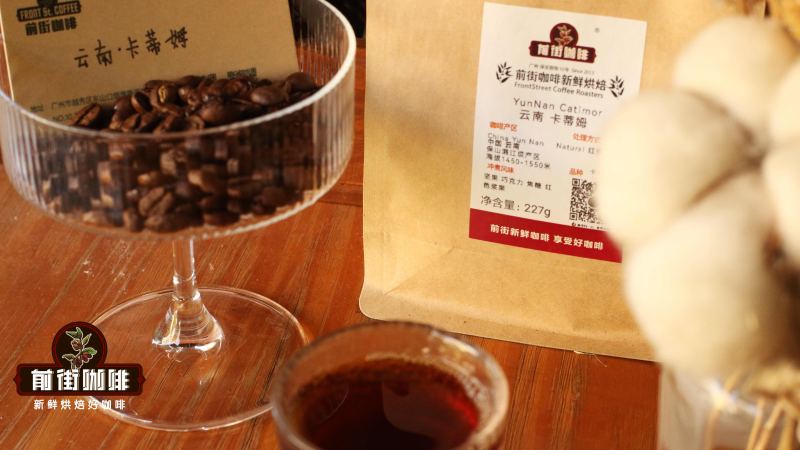
How did Yunnan coffee cultivation develop in Pu'er?
Coffee reached Pu'er in 1892, brought by a French missionary who planted the first tree at Zhukula, giving the area more than a century of growing history. Pu'er now holds about 679,000 mu of coffee, roughly 48.7 percent of Yunnan's total, and produces over 51,200 tons of green coffee beans a year, with 256,700 farmers depending on the crop.
Large-scale coffee cultivation advanced in the 1950s under agricultural expert Ma Guojin, with output sent mainly to the Soviet Union. Catimor later became the dominant variety, and today both washed and natural processing are used, each giving different acidity, body and sweetness. Roast profiles are adjusted to suit the small-bean character of the region.
Pu'er, as the core production area of Yunnan coffee, has a planting history of over a century and an annual output of more than 50,000 tons of green coffee beans. From the first coffee tree introduced by French missionaries to Catimor becoming the main variety, what kind of evolution has Yunnan coffee undergone? What are the characteristics of washed and natural processing? In this article, Front Street Coffee will take you through variety characteristics, processing methods, roasting, and brewing to systematically understand the full flavor profile of Yunnan small-bean coffee.
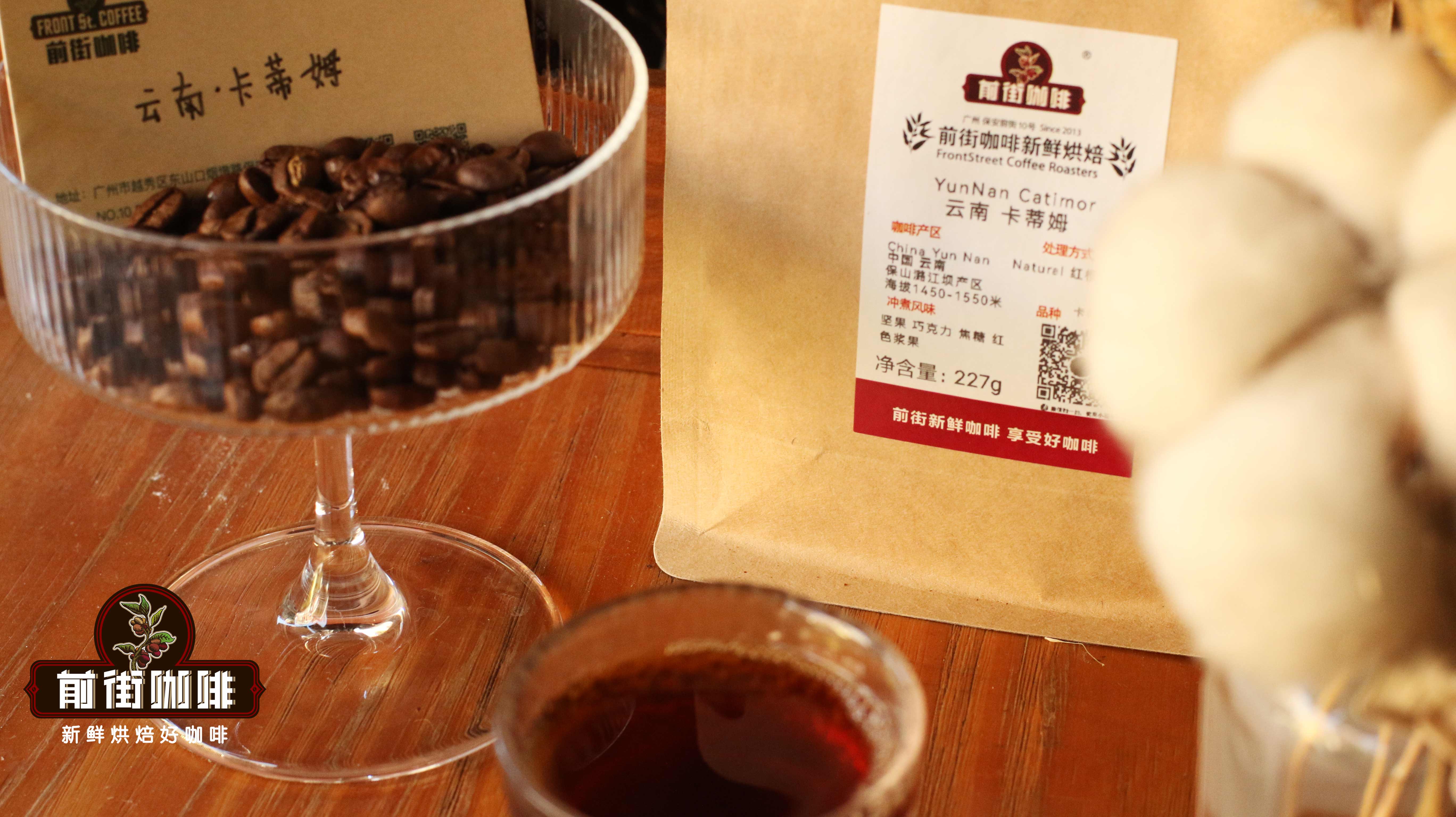
According to information compiled by Front Street Coffee, coffee cultivation in the Pu'er region can be traced back as early as 1892, giving it a history of more than a hundred years. Compared with other prefectures and cities in Yunnan, Pu'er's total coffee planting area reaches 679,000 mu, accounting for about 48.7% of the province. As of September 2023, Pu'er's annual output of green coffee beans has exceeded 51,200 tons, and as many as 256,700 farmers rely on coffee cultivation to make a living.
Geographically, Pu'er is located in southwestern Yunnan, bordering Vietnam and Laos to the southeast and adjacent to Myanmar to the southwest. It is the birthplace of the "Tea Horse Road." Not only does it enjoy the reputation of being the "Source of the World's Tea," but with the continued development of the coffee industry, it has also gained the title of "China's Coffee Capital" in recent years. So when exactly was coffee introduced to China? This article from Front Street Coffee will take everyone into China's most suitable coffee-growing region—Yunnan Province.
The origin of Yunnan coffee dates back to the early last century. A French missionary brought coffee seeds into Yunnan from abroad and planted the first coffee tree in a place called Zhukula. At that time, he probably could not have foreseen that a century later coffee would become a highlight of Yunnan's plateau specialty agriculture.
Entering the 1960s, the scale of coffee cultivation in Yunnan expanded further. In 1952, after the founding of New China, under the leadership of agricultural science expert Ma Guojin, coffee cultivation was officially advanced on a large scale, and the coffee produced was mainly supplied to the Soviet Union. As early as 1937, the patriotic overseas Chinese Mr. Liang Jinshan brought a batch of seeds back from Myanmar to Baoshan, opening up coffee planting areas in Baoshan's Lujiangba. At that time, the varieties grown in Yunnan all belonged to Typica and its variant Bourbon, and the planting area once reached as much as 50,000 mu.
Afterward, Yunnan coffee suffered an invasion of global leaf rust, a large number of coffee trees died, and the planting area shrank sharply. By the 1980s, during the reform and opening up, Yunnan coffee gradually moved toward the international market. In 1988, foreign enterprises such as Nestle set up branches in China and supported the development of Yunnan's coffee industry from multiple aspects. They not only introduced high-yield, disease-resistant varieties such as Catimor, but also promised to purchase Yunnan coffee beans as raw materials at the then-current U.S. futures prices. These measures further expanded Yunnan's coffee planting area and increased coffee farmers' enthusiasm for cultivation, while also establishing Catimor's position in replacing the old Typica varieties and making it the main force of Yunnan coffee.
After entering the new millennium, all industries in China developed vigorously, the concept of domestic specialty coffee continued to spread, and Yunnan coffee also began to become more scientific in aspects such as seed selection, cultivation, harvesting, and processing.
Compared with the past, consumers today are more willing to take the initiative to learn about Yunnan as a "new production area." Many customers who come to Front Street stores to taste pour-over coffee ask whether there are Yunnan beans, which shows that Yunnan coffee is continuously progressing.
What are the characteristics of Yunnan small-bean varieties?
Before the 1980s, the varieties widely planted in Yunnan were two ancient small-bean varieties: Typica and Bourbon. So-called small-bean refers to Arabica varieties with smaller beans, in contrast to the medium-bean Robusta coffee beans grown in Hainan.
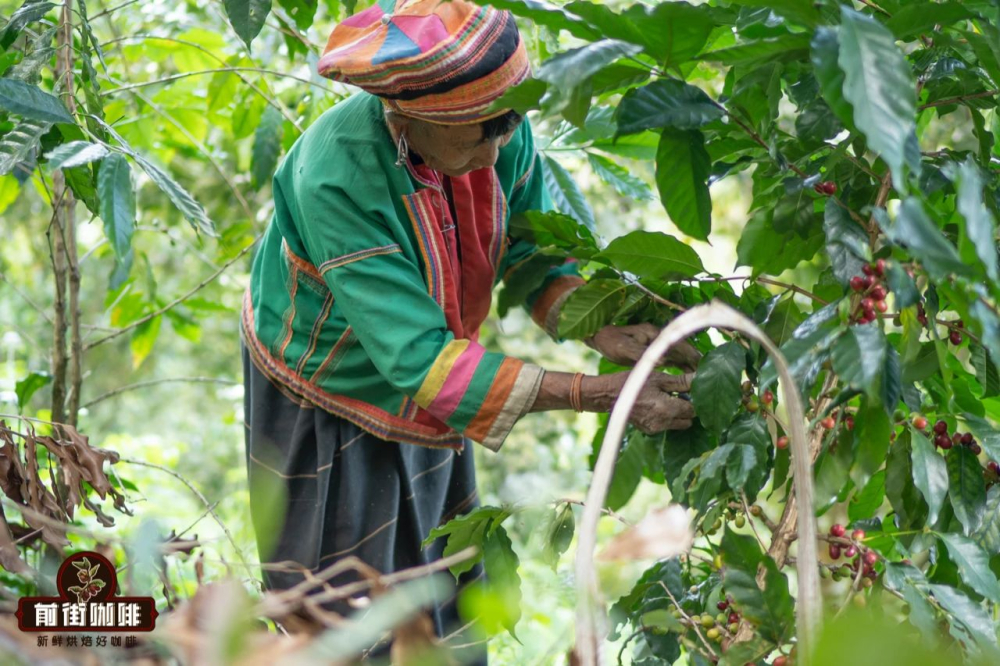
Typica has a rich flavor hierarchy, with various fruit acids and a delicate mouthfeel, and is recognized as a high-quality variety. The famous Blue Mountain coffee and Hawaiian Kona both belong to Typica. In appearance, the Typica tree is tall and has good cold resistance, but the yield per plant is relatively low, and its disease resistance is weak, making it highly susceptible to leaf rust, coffee berry disease, and nematode disease. Therefore, more labor is needed for management. In addition, because the variety lacks an advantage in market price, many Yunnan coffee farmers switched to planting higher-yielding varieties.
In 1995, the Yunnan Provincial Government officially included coffee cultivation in the "18 Project" for biological resources, greatly encouraging farmers' enthusiasm for planting, and the planting area in villages expanded rapidly. In the same year, the Institute of Tropical and Subtropical Economic Crops of the Yunnan Academy of Agricultural Sciences introduced a new disease-resistant, high-yield coffee variety—Catimor—and began planting it in Xinzhai Village in Yunnan's Nujiang Gorge. Catimor 7963 is a hybrid variety bred by the Portuguese Tropical Research Institute (HCT) for coffee rust, with stable traits. This variety has a compact tree shape, is dwarf, has many branches, short fruiting nodes, vigorous growth, and extremely strong vitality. Its greatest characteristics are astonishing resistance to rust and high yield. Therefore, it is deeply favored by Yunnan coffee farmers, and currently more than 90% of coffee trees in Yunnan are still Catimor.
Front Street Coffee believes that to understand Yunnan coffee, one should first recognize the flavor characteristics presented by the production area. Therefore, the representative Yunnan coffee launched by Front Street Coffee is selected from the Catimor variety in the Baoshan production area, using washed processing, and released in a 100-gram small package so everyone can taste the "flavor of Yunnan." Front Street Coffee believes that Catimor coffee grown in Yunnan has a balanced flavor profile of nuts, brown sugar, and plum.
Washed Yunnan or natural Yunnan, which is better tasting?
From fruit on the tree to coffee in the cup, it needs to go through multiple stages such as picking, post-processing, grading and classification, purchasing, roasting, and brewing. In addition to variety, post-processing methods greatly influence the direction of coffee flavor.
At present, novel flavor-enhancing processing methods have appeared on the market to cover up the flaws of Yunnan beans themselves and add a large amount of aroma to raise prices. Front Street Coffee feels that doing so not only fails to truly preserve the flavor of Yunnan coffee, but also misleads consumers. Some friends, after tasting Yunnan coffee beans using special processing methods, find the aroma particularly prominent and therefore think this is the mainstream processing method for Yunnan coffee. In fact, most Yunnan coffee farmers work under difficult conditions and do not have expensive processing equipment, so the vast majority of Yunnan coffee beans can only use natural processing methods, namely washed and natural.
Washed steps: first use a machine to remove the peel and pulp from the harvested coffee fruit, put the peeled coffee beans into a fermentation tank to ferment, using fermentation to break down the pectin layer. After fermentation is complete, rinse repeatedly with clean water to remove the decomposed pectin, and finally dry the coffee beans for 1 to 2 weeks. Washed Yunnan coffee not only reduces the defect rate, but also produces a more stable quality and higher cleanliness, and the cup better reflects the most original flavor of Yunnan coffee. This is also why Front Street Coffee prioritizes washed batches when launching the "representative face of Yunnan" everyday beans.
What does Yunnan coffee taste like?
When Front Street Coffee talks about the flavor characteristics of Yunnan coffee, some friends describe it as chocolate, some say it is like sweet potato, and others feel it is like Sanhua plum. Front Street Coffee believes that the flavor of Yunnan small-bean coffee belongs to a balanced and harmonious profile, that is, combining acidity, sweetness, and bitterness. Therefore, Front Street Coffee's Yunnan coffees are all medium-roasted, highlighting the roasted aromas of chocolate and nuts while retaining some acidity. From cupping, Front Street Coffee tastes in the washed Yunnan small-bean everyday beans notes of herbs, nuts, caramel, chocolate, and brown sugar, the sweetness of melons and fruits, and the acidity of plum, with a balanced mouthfeel.
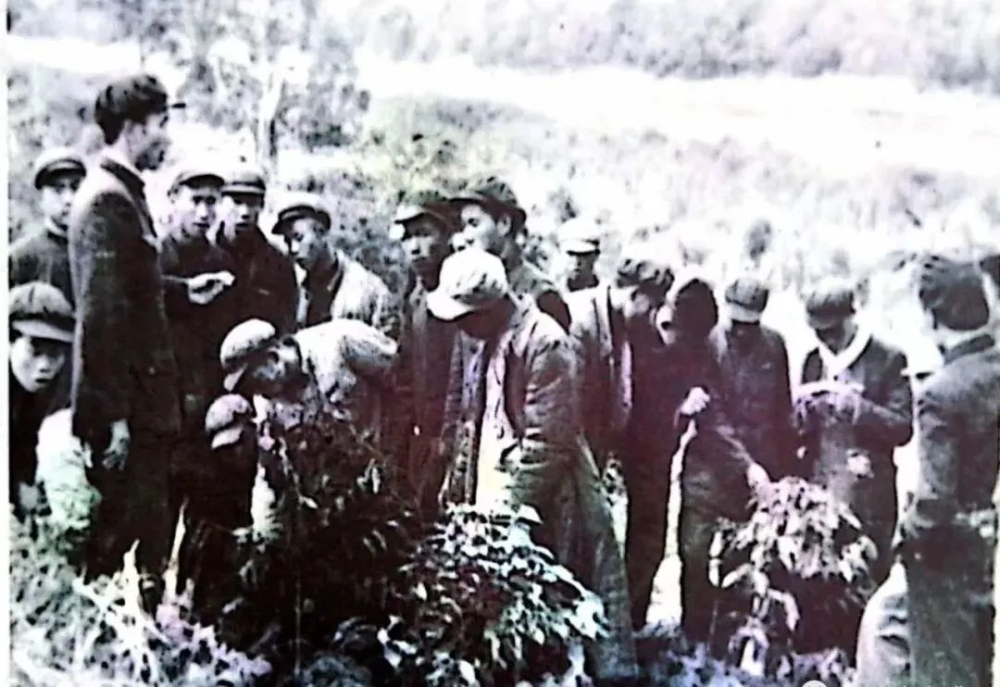
After purchasing Yunnan coffee beans, many customers ask Front Street Coffee: how should it be brewed? What are the recommended brewing parameters? If you want to experience the flavor spectrum of Yunnan coffee, Front Street Coffee recommends tasting it best as black pour-over coffee.
Front Street Coffee's pour-over parameters:
Dripper: hario v60
Dose: 15g
Water temperature: 90°C
Grind size: 75% passing through a No. 20 sieve
Water-to-coffee ratio: 1:15
Grind size and water temperature: precisely because Yunnan coffee's flavor attribute is balanced and harmonious, overly high water temperature and too fine a grind easily lead to over-extraction, releasing too many bitter large-molecule flavor substances; while overly low water temperature and too coarse a grind instead lead to under-extraction, and the coffee easily tastes flat. Therefore, Front Street Coffee chooses a medium water temperature and grind size, extracting with 90°C hot water, with the coffee grounds at a passing rate of 70% through the China Standard No. 20 sieve, and a store EK43s setting of 10.5.
Three-stage pouring: wet the coffee bed with water at twice the weight of the coffee grounds, forming a dome and letting it bloom for 30 seconds, then pour in a small stream in circles from the inside out until 125g, pausing in stages. Wait until the coffee bed drops to half the height of the dripper, then continue pouring the third stage with the same fine stream until 225g, until all the coffee liquid has filtered through, then remove the dripper. The time is about 2 minutes.
The above content is compiled by CoffeeHunters, a coffee news website.


