







What Is Luwak Coffee Made Of and Why Does It Cost So Much?
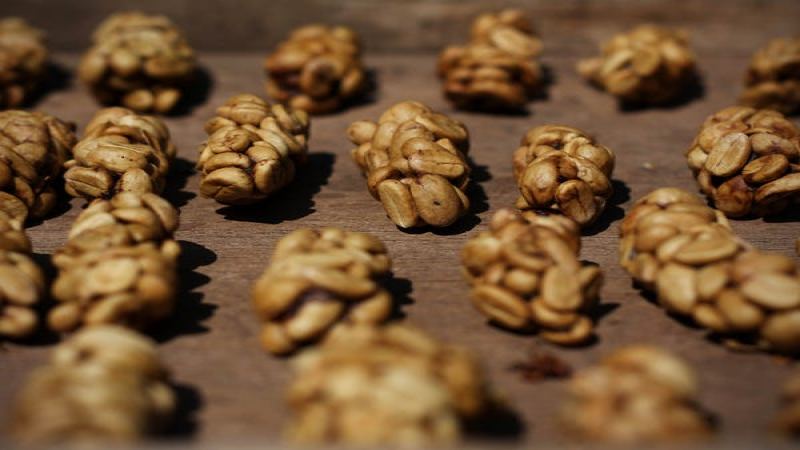
Luwak coffee, or Kopi Luwak, is made from coffee cherries that an Indonesian civet eats and then excretes. The beans are collected from the feces, washed, and roasted at high temperature, which makes them safe to drink. Its high price comes from the unusual production method and the limited number of wild civets, not from a superior flavor.
One brand sold Kopi Luwak beans at 260 yuan per 100 grams before discontinuing them due to a lack of green bean inventory. The civet is a Viverridae animal native to Indonesia, sometimes confused with the masked palm civet found in China. Cup notes tend toward smoothness, dark chocolate, herbal tones, and a fermented quality; cage-free production is the main animal welfare concern.
Kopi Luwak is regarded as one of the most unique and luxurious coffees in the world, and its high price often makes people wonder what exactly makes it so expensive. This article starts with the Kopi Luwak beans once sold by Front Street Coffee at 260 yuan per 100 grams, and sorts out the production principles of Indonesian civet coffee, the source of its flavor, and the reasons for its high price, while comparing it with the hand-picked all-red cherry concept of Operation Cherry Red. The article also discusses the animal welfare issues behind the Kopi Luwak industry, as well as Front Street's insistence on cage-free civet-friendly production methods, and finally explains that Kopi Luwak is safe to drink after washing and high-temperature roasting, with a flavor profile mainly featuring smoothness, dark chocolate, herbal notes, and a fermented quality.
In the minds of many people, Kopi Luwak beans are one of the most special and luxurious coffee categories in the world. When it is mentioned, most people's first reaction is that it is expensive. Taking the former Front Street Coffee as an example, the brand's Kopi Luwak beans have now been discontinued because there is no green bean inventory; but during the period when they were on sale, 100 grams of Kopi Luwak beans were priced at 260 yuan, even higher than Hacienda La Esmeralda's green label. So why can authentic Indonesian Kopi Luwak sell for such a price? Front Street believes the core reason lies in its highly unusual production method.
The raw material of Kopi Luwak comes from the feces of Indonesian civets. It is also called civet coffee, written in Indonesian as Kopi Luwak. Kopi means coffee in Indonesian, and Luwak refers to a small ferret-like animal that looks similar to a cat, namely the civet. However, some people confuse it with the masked palm civet. Both belong to the Viverridae family, and the main difference is that masked palm civets are mostly distributed in China, while civets mainly live in Indonesia. The true source of Kopi Luwak is the civet, but the number of wild civets is limited, resulting in very low Kopi Luwak production, so many merchants use masked palm civets instead of civets to make coffee. This coffee also has different names in different countries, commonly including Civet Coffee, Coffee Alamid in the Philippines, and Weasel Coffee in Vietnam.
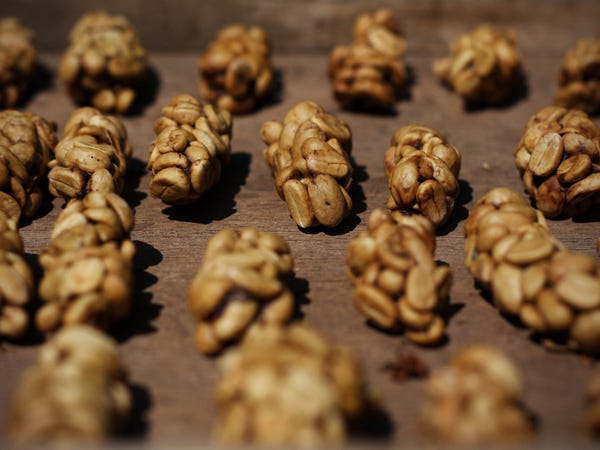
How is Kopi Luwak made? After reviewing information, Front Street found that civets are omnivores. Besides eating insects and small reptiles, they also eat seeds and fruits. Wild civets are very picky about food and only choose the ripest and most delicious coffee cherries. When coffee cherries undergo digestion inside the civet, digestive enzymes alter the protein structure in the coffee beans, removing part of the bitterness and acidity and other harsh sensations, making the overall taste smoother. Even after passing through the digestive tract, the surface of the coffee beans still retains some pulp, which adds considerable sweetness to the coffee.
Why is Kopi Luwak so expensive? Front Street believes the main reason is that the civet's unique production method brings a distinctive flavor, while the entire process requires a large amount of land and time, ultimately resulting in a very limited yield. It is not hard to imagine that from feeding and caring to collection, every step consumes a great deal of manpower, and harvesting is extremely difficult. Second, the quality of Kopi Luwak is indeed generally superior to ordinary coffee beans. The civet's behavior of selecting coffee cherries is equivalent to the all-red cherry picking pursued by today's coffee industry. Front Street also believes that manual hand sorting can now achieve a similar effect, so there is no need to be overly obsessed with the "civet feces" production format.
Take Front Street's sun-dried Red Cherry as an example. This is a coffee bean from Ethiopia. Why is it called Red Cherry? Because this bean comes from Operation Cherry Red. Next, Front Street will introduce this project. In 2007, Dutch trader Trabocca launched the ORC (Operation Cherry Red) project, aiming to incentivize coffee farmers to produce the highest-quality coffee and reward their efforts, with processing methods covering washed, semi-washed, dried, and semi-dried. Local coffee farmers carefully hand-pick 100% ripe red coffee cherries in batches, which is also the origin of the project's name. Trabocca provides funds, new hardware, and production and processing technology to help farmers, and promises to purchase at favorable prices as long as the actual output quality meets the standard. Trabocca is one of the earliest coffee trading companies to pursue all-red cherries, and Front Street approves of and supports this project. Front Street believes that Operation Cherry Red gives smallholder farmers an additional chance to survive under the commercial monopoly of global conglomerates, so it holds Operation Cherry Red in especially high regard.
Originally, the Kopi Luwak trade was actually a good thing for living creatures. In Indonesia, civets that raid commercial orchards are usually regarded as pests; but after Kopi Luwak became popular, the Kopi Luwak industry instead encouraged locals to protect civets in order to obtain valuable feces. As Kopi Luwak became more and more popular, randomly collected "Kopi Luwak" could no longer meet market demand. At the same time, Indonesia became a tourist destination, and many tourists wanted to see the production and processing of Kopi Luwak with their own eyes. As a result, more and more civets were locked in cages on coffee plantations, some used to produce coffee and others used to make money from tourists viewing civets. A large number of civets were imprisoned in narrow, unsanitary cages, and many individuals could not even get clean drinking water, while being displayed to tourists all day long, which is very cruel for nocturnal animals. Many wild civets developed health problems because they could only be fed coffee cherries, leading to malnutrition and emaciation. Kopi Luwak gradually developed into a dark industry full of inhumane practices, causing enormous harm to local civets. Moreover, the coffee cherries merchants fed to civets were by no means superior fruit, and the quality of Kopi Luwak once declined as a result. In order to protect wildlife, the Rainforest Alliance and other coffee certification bodies issue certification seals according to Sustainable Agriculture Network standards; this seal prohibits farms from capturing wild animals, and the Sustainable Agriculture Network also explicitly stipulates that Indonesia prohibits keeping civets in cages.
Front Street's Kopi Luwak is one of the few cage-free civet products. The civets can roam freely in the coffee plantation and choose what to eat. Although this greatly increases the workload required to harvest coffee beans and also limits Kopi Luwak production, it truly produces high-quality Kopi Luwak in an animal-friendly way, so why not do it?
Of course, many people are deterred from this coffee because of the word "excrement." In fact, Kopi Luwak beans are thoroughly washed and then roasted at high temperature, and both processes ensure that Kopi Luwak is 100% safe to drink. In order to amplify the dark chocolate aroma in Kopi Luwak, Front Street Coffee uses a dark roast. The coffee is overall very smooth and carries some fermented quality. Front Street believes this is related to its processing method, since passing through the civet's digestive tract will more or less create a fermented note. Its relatively high body, herbal flavor, and chocolate flavor are welcomed by many people. Many people romanticize Kopi Luwak and believe it has many benefits, but Front Street believes that the effects of Kopi Luwak are no different from those of ordinary coffee.
For professional coffee knowledge exchange and more coffee bean information, please follow Coffee Workshop (WeChat public account cafe_style)
For more specialty coffee beans, please add the private WeChat of Front Street Coffee, WeChat ID: kaixinguoguo0925
The above content is compiled by CoffeeHunters, a coffee news website.


