







How Do Natural and Washed Coffee Bean Processing Differ?
Coffee fermentation decides much of the final flavor, and the processing method chosen after harvest steers the cup in different directions. Natural, honey, and washed methods all rely on the same basic principle, but each controls moisture, contact time, and drying differently, which changes sweetness, acidity, and body in the roasted bean.
The word fermentation comes from the Latin fervere, meaning to boil, first used for yeast acting on grape juice or wort. In coffee, as with beer, sugars convert under microbial activity, and producers regulate the environment so wanted flavors develop and unwanted ones stay low. Understanding this helps when selecting green coffee beans to roast and taste.
Coffee fermentation is a key step that determines the final flavor, and different processing methods bring completely different taste experiences. Starting from the basic principles of fermentation, this article systematically sorts out the characteristics of dry fermentation and wet fermentation, and analyzes in detail the specific processes and flavor directions of the three common processing methods: natural, honey, and washed. Whether you are a beginner coffee enthusiast or a seasoned player hoping to refine your brewing skills, understanding the differences among these processing methods can help you more accurately select and taste coffee beans. The article also specifically introduces the unique features of Ethiopian-style and Kenyan-style washing, as well as related product recommendations from the Front Street Coffee brand, taking you into the wonderful world of green coffee bean processing.
When people mention "fermentation," most may first think of the process of dough rising when steaming buns or baking flatbreads, or everyday foods such as yogurt and pickles. Indeed, fermentation is everywhere in our lives, from Huizhou hairy tofu to French wine, from homemade pickled radish to Northeast Chinese sauerkraut, and even Swedish surströmming. These foods with diverse flavors are all inseparable from the role of fermentation.
However, the English word Fermentation comes from the Latin fervere, which originally means "to boil." It was first used to describe the phenomenon when yeast acts on grape juice or wort, producing slight bubbles or violent rolling on the surface of the liquid, as if it were boiling.
Taking beer as an example, the most widely known reaction formula for fermentation is the conversion of sugars into alcohol and carbon dioxide under the action of yeast. But the fermentation process of beer is far more complex than this. The various flavors that people like or dislike all require brewers to precisely regulate the fermentation environment and state, so that the desired flavors are produced a little more and the unwanted flavors appear as little as possible.
Whether making dough or brewing alcohol, in essence both use the life activities of microorganisms under aerobic or anaerobic conditions to obtain the microbial cells themselves, or their direct and secondary metabolites.
Interestingly, in the later stage of beer fermentation, yeast is still active. At this point, fermentable sugars may already be exhausted, and various fermentation metabolites and by-products instead become the yeast's "food."
At this time, the brewer's focus shifts from "addition" to "subtraction" - allowing undesirable flavors to be consumed more and desirable flavors to be retained more. This also explains why beer needs maturation and diacetyl reduction, and why certain bottle-conditioned beers taste better after being stored for a period of time: undesirable flavors gradually decrease, and the body becomes clearer and cleaner.
Coffee Fermentation
During the natural fermentation process of coffee, various biological changes occur. Yeast produces enzymes, lactic acid bacteria decompose the sugars in coffee mucilage, and the lipids, proteins, and acids in the sugars degrade and convert into alcohols and acids. At the same time, the aroma, color, and pH value of the coffee all change, and the composition of the mucilage also changes accordingly.
The Core of Processing Methods Is Fermentation
During fermentation, different substances are involved (coffee skin, pulp, mucilage, types and distribution of microorganisms), different environments are present (with or without water, anaerobic or aerobic, pH environment, etc.), and different drying methods and processes are used (container material, natural sun drying, drying equipment, number of turns, etc.), ultimately creating different post-processing flavors and mouthfeels.
The basic coffee process is: cultivation --> green bean processing --> roasted bean roasting --> coffee brewing. And in the green bean processing stage, the various processing methods are all inextricably linked to fermentation.
Among the many fermentation methods, two are particularly noteworthy: dry fermentation and wet fermentation.
Dry Fermentation Method and Its Flavor Characteristics
Coffee cherries with pulp and mucilage still attached to the surface are placed into concrete fermentation tanks for processing. The dry fermentation method helps enhance the sweetness of the coffee and highlights chocolate and fruity flavor characteristics. However, the dry fermentation method also faces a challenge: temperature control. Temperature directly affects the degree of fermentation, and if temperature management is improper, it can have an adverse effect on the consistency and flavor of the coffee.
Wet Fermentation Method and Its Flavor Characteristics
After removing the coffee skin and pulp, the beans with parchment are immersed in water. Water can extend the fermentation time and bring a soft body, complex acidity, and more subtle flavor layers.
For Example
As shown in the figure: the coffee beans on the left were fermented for 24 hours at an average temperature of 16 degrees Celsius, and the taste showed a very good balance. The coffee beans on the right were fermented at 26 degrees Celsius, also for 24 hours, and some pink appeared on the surface of the beans, which would cause the coffee to have a vinegar taste and also a somewhat dry and metallic mouthfeel. This is caused by the alcohols and acids produced during fermentation.
Analyzing the Three Most Common Fermentation Processing Methods for Coffee Beans
Natural Method
As the name suggests, natural drying means allowing the coffee cherries to dry entirely through exposure to sunlight.
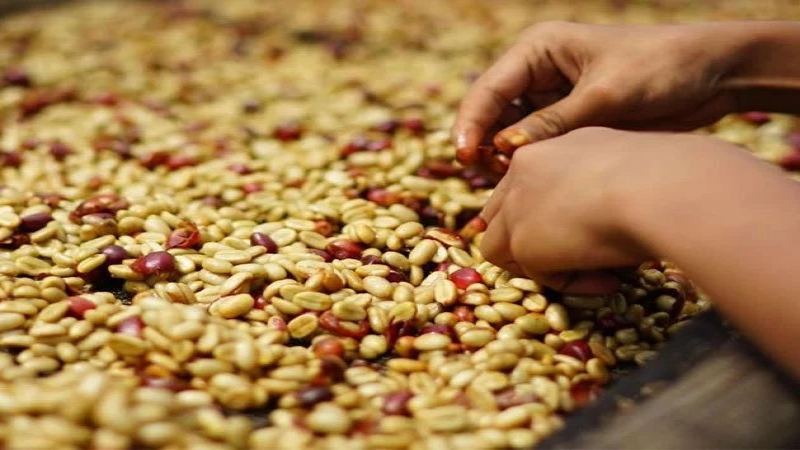
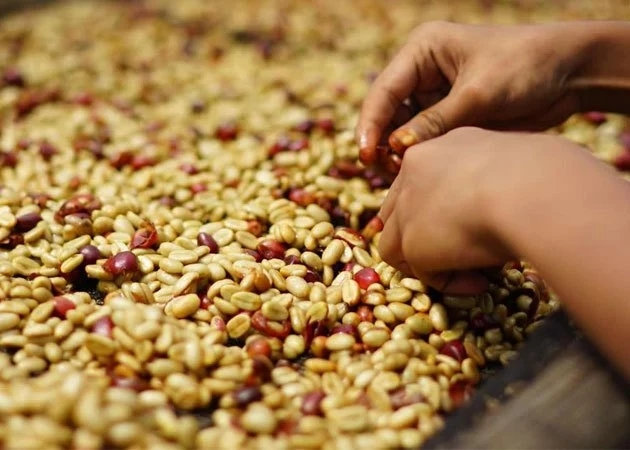
The natural processing method is the simplest and lowest-cost traditional method in coffee bean processing. During processing, the harvested cherries need to be spread on cement ground, brick ground, or straw mats, and can also be placed on raised beds or drying beds in the sun to dry, and frequently turned evenly with a rake to prevent over-fermentation. If it rains or the temperature drops, the cherries must be covered to prevent damage.
After processing, the moisture content of each cherry will drop to about 12%.
Honey Method
The skin and pulp are removed by machine, and the mucilage is retained for sun drying.
▶ White Honey: 80%-90% of the mucilage is removed.
▶ Yellow Honey: 50% of the mucilage is retained, with no fermentation. It receives the most sunlight for drying, lasting about 8 days.
▶ Red Honey: 25% of the mucilage is removed, with no fermentation. Sun drying lasts about 12 days, and shade covers may be used during the process.
▶ Black Honey: Basically all the mucilage is retained, and drying is carried out under conditions of low altitude and slightly higher temperature. It is covered for the first 24 hours for slight fermentation, then transferred to African drying beds to complete drying.
▶ Gold Honey: Basically all the mucilage is retained, and drying is carried out under conditions of high altitude and low temperature, extending the drying time.
Individual estates will make different adjustments according to the specific processing needs of each batch.
Washed Method
The traditional washed process is used to process freshly picked coffee beans. The pulp needs to be stripped off as soon as possible, and the shorter the interval, the better. The coffee beans are then soaked in water for 12 to 36 hours. This process softens the skin and makes it easy to rinse off. After that, the coffee beans are sorted and selected, then placed in the sun to dry.
The final product of both methods is: green coffee beans with parchment.
The main difference lies in whether the mucilage is removed directly by machine or through a fermentation tank to remove the mucilage layer.
Semi-washed: After the coffee cherries are stripped of skin and pulp, they do not go through a fermentation tank, but instead the mucilage is removed through a specialized demucilaging machine.
Fully washed: After the coffee cherries are stripped of skin and pulp, they enter a fermentation tank and undergo 1 to 2 days of fermentation (the time depends on the on-site temperature and humidity) to remove the mucilage layer. Fermentation methods can also be further divided into different forms such as with water or without water, and with enzymes or without enzymes.

Ethiopian-style washed: This belongs to the traditional wet fermentation processing method. After the coffee cherries are washed and peeled, they are put into a fermentation tank and fermented with water at a level that submerges the cherries, then washed, and then placed in a clean water tank to soak overnight, and dried on raised drying beds the next day. Fermentation with water lasts as long as three days, requires a large amount of clean water, and the pH value must be monitored and cannot fall below four or five.
Kenyan-style washed: The famous K72 model. After the coffee cherries are washed and peeled, they undergo dry fermentation for 24 hours, are washed, then undergo dry fermentation again for 24 hours, are washed, and then undergo dry fermentation again for 24 hours. This cycle is repeated, accumulating to a 72-hour fermentation effect. After washing, they are soaked in a water tank overnight, and sun drying begins the next day.
The above content is compiled by CoffeeHunters, a coffee news website.


