








Which Costa Rica Coffee Producing Regions Shape the Musician Series?
Costa Rica's eight coffee producing regions each bring different conditions, and the Musician Series shows how much that matters. Mozart, Beethoven, and Bach all come from Canet Estate in the Tarrazu region, yet variety, altitude, and processing differences give each bean a distinct cup. All three are brewed as pour-over and are known for floral, fruity aromas and honey-like sweetness.
Honey processing explains much of that sweetness. It is an adaptation of Brazil's semi-washed method, and it spread across Costa Rica partly because of limited water and local climate. The amount of mucilage left on the bean before drying sets the sweetness level, and the categories run from black honey through golden, yellow, red, and white honey, with raisin honey as a further variation.
Costa Rica is renowned for its honey processing and is called by many coffee lovers the sweetest producing region in the Americas. Front Street Coffee's Musician Series—Mozart, Beethoven, and Bach—all come from Canet Estate in the Tarrazu region, yet present completely different flavors due to differences in variety, altitude, and processing method. This article systematically reviews Costa Rica's eight major producing regions, explains the difference between honey processing and raisin honey processing, and introduces the regional information, flavor characteristics, and pour-over performance of the three beans one by one, with Front Street brewing parameters and tasting notes, suitable for enthusiasts who want to understand Costa Rican coffee in depth.

For more specialty coffee knowledge, welcome to follow our WeChat official account: Front Street Coffee (FrontStreet Coffee)
If you were to ask which coffee producing region in the Americas has the sweetest flavor profile, the answer would most likely point to Costa Rica. Front Street Coffee currently offers a set of Costa Rican Musician Series coffee beans, most of which use honey processing, and many customers comment after drinking them that they have "prominent floral and fruity aromas, with sweetness like honey."
Honey processing itself is quite nuanced. Front Street will now walk you through it: constrained by water resources and climate conditions, honey processing has been increasingly adopted throughout Costa Rica. This processing method, which brings high sweetness, is actually an improvement on Brazil's semi-washed method, with the core idea being to retain as much of the mucilage layer on the parchment beans as possible. This is a method that requires meticulous operation: the final color of the coffee beans depends on how much sticky mucilage remains on the bean surface before drying. The amount of mucilage retained directly determines the level of sweetness; traditional experience holds that the more mucilage (the so-called "honey") left behind, the stronger the sweetness and body of the final product. According to different mucilage retention ratios, honey processing is further divided into categories such as black honey, golden honey, yellow honey, red honey, and white honey.
We mentioned the Costa Rican Musician Series above. Actually, the "Costa Rica Musician Series" has four coffees in total: "Mozart," "Beethoven," "Bach," and "Chopin." However, green beans for "Chopin" cannot be obtained in the short term, so we won't go into detail here. Just to briefly mention: this "Chopin" has excellent rose floral aromas, tea-like notes, and sweetness, giving a feeling of drinking floral tea.
Front Street's "Costa Rica Musician Series" comes from Canet Estate (Canet), located in the highest-altitude coffee-growing area of Costa Rica's Tarrazu region. Canet is the name of a small farm in this area, covering only 5 hectares, located in the town of San Marcos in the Tarrazu region, jointly owned by the three Robles brothers Leo, Elian, and Melvin. They have been engaged in cultivation and production together for over ten years and share a small processing plant (Beneficio).
By adjusting machine parameters, the estate can produce coffee with different degrees of honey processing. At the same time, this area also has the highest density of fruit cultivation in Costa Rica. The estate owner mainly grows passion fruit, with very little coffee cultivation, planting only in specific plots with special management, picking only ripe red cherries; therefore, the coffee produced receives more meticulous care, picking, and processing, ultimately presenting better quality and flavor.
Below, we will focus on introducing "Front Street Mozart," "Front Street Beethoven," and "Front Street Bach," and use them to give you a brief understanding of Costa Rica's coffee producing regions.
Front Street Costa Rica Mozart Region: Tarrazu Variety: Caturra, Catuai Altitude: 1950 Processing: Raisin honey processing Flavor: Osmanthus, berries, fermented wine aroma, raisins
Front Street Costa Rica Musician Series Bach Country: Costa Rica Region: Tarrazu Altitude: 1950m Processing method: Raisin honey processing Grade: Strictly Hard Bean SHB Variety: Caturra Flavor: Tropical fruits, nuts, cream, fermentation aroma
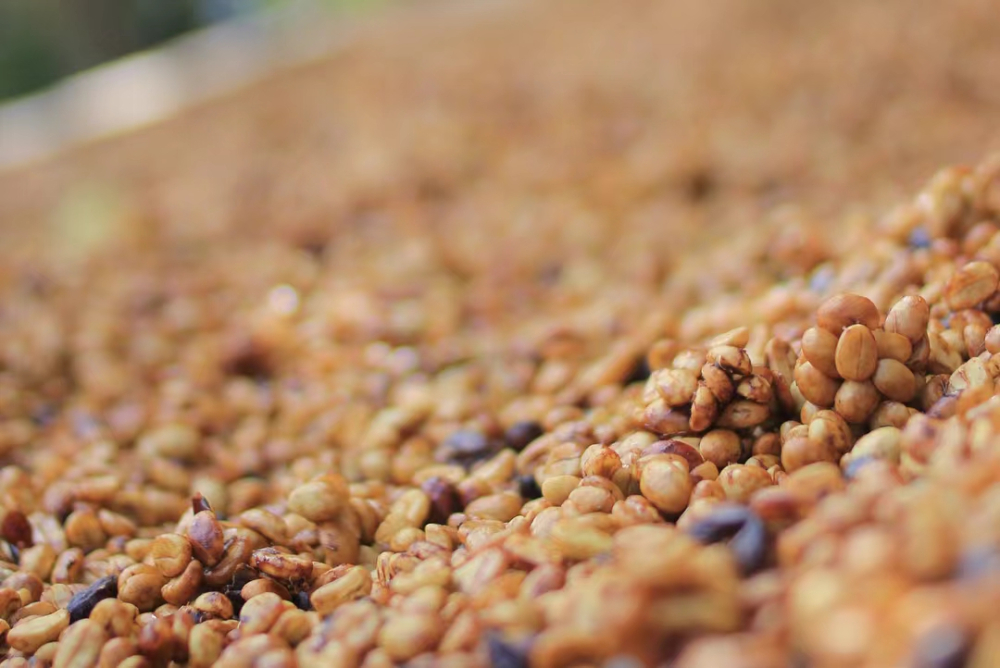
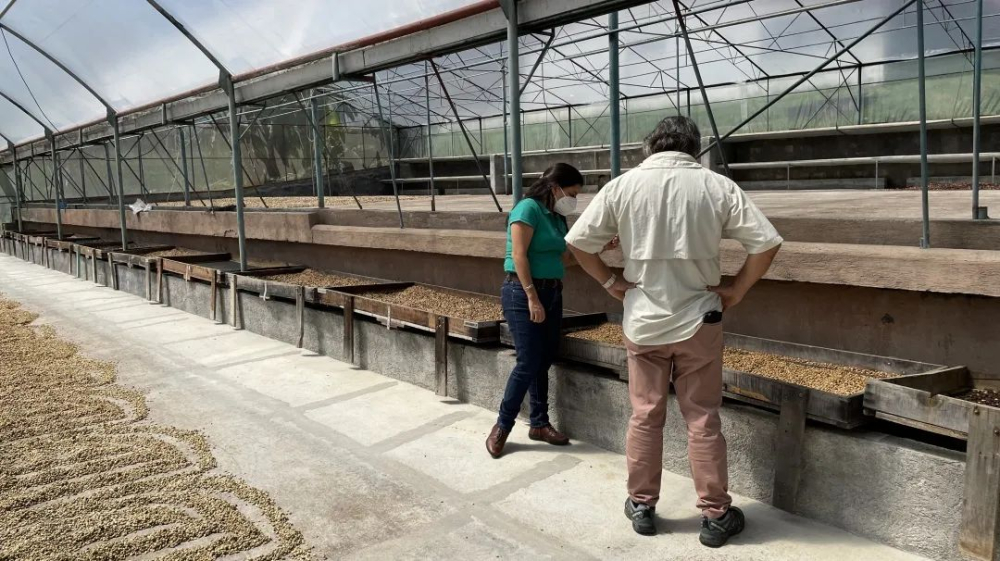
Both Front Street Mozart and Front Street Bach use raisin honey processing, which differs slightly from the honey processing mentioned earlier. So-called raisin honey processing is actually a double fermentation method. On the day of harvesting the coffee cherries, the harvested fruit is first poured into a large water tank to remove defective beans, then the selected coffee cherries are spread on raised beds to dry for at least three days, after which the cherry skin is removed while retaining the coffee mucilage, followed by drying. During drying, the beans must be constantly turned to ensure even drying, and the turning frequency must be well controlled to avoid over-fermentation. This process, which retains 100% mucilage and uses zero water throughout, not only increases the difficulty of honey processing but also imposes strict requirements on timing.
Next is Beethoven, which uses a different processing method within the Musician Series:
Front Street Costa Rica Musician Series Beethoven Region: Tarrazu Region (Tarrazu) Estate: Canet Estate (Finca Canet) Variety: Yellow Catuai Altitude: 1900m Grade: Strictly Hard Bean SHB Processing method: Washed Flavor: Citrus, black tea, caramel
Front Street Beethoven uses the washed processing method. After harvesting, it first undergoes a sorting process to pick out underripe or overripe beans again, then the pulp is removed, and a centrifugal washer is used to remove the sticky mucilage from the bean surface to avoid fermentation, then it is rinsed with clean water, and finally dried on shaded raised beds for 12 to 14 days, during which it is constantly turned to achieve even drying. The washed Front Street Bach has a cleaner and brighter mouthfeel, suitable for pour-over and cold brew.
Although the processing methods differ, you may have noticed that all three coffees come from the Tarrazu region. After consulting materials, Front Street found that Costa Rica has a total of 8 coffee producing regions, including West Valley, Central Valley, Tarrazu, Tres Rios, Orosi, Brunca, Turrialba, and Guanacaste. And Tarrazu is one of the world's major coffee producing regions.
Front Street's Musician Series coffee beans come from this region, and Tarrazu can be said to be one of Costa Rica's most valued coffee growing areas. The coffee of "La Minita Tarrazu" is a local specialty, but production is limited, at about 72,600 kilograms per year. It is grown on a piece of land called "La Minita," owned by the McAlpine family of the UK for the last three generations, with the La Minita Estate in the Tarrazu region producing only 160,000 pounds annually. In fact, this land can produce more than 450 tons of coffee each year.
However, it should be noted here that Tarrazu coffee cultivation does not use artificial fertilizers or pesticides, and harvesting and sorting are all done by hand, in order to avoid the air-jet sorting method causing some degree of damage to the coffee beans. At the same time, the high altitude above 1,500 meters means that nearly 95% of the coffee beans grown in Tarrazu are Strictly Hard Bean (SHB).
Many customers who come to Front Street think that coffee beans from the same region and the same estate in the Costa Rica Musician Series should taste similar! Actually, this is not the case. Even within the same estate, it is impossible to guarantee that the coffee growing environment is completely identical; altitude and bean variety are both factors affecting coffee flavor. If you don't believe it, then buy the complete Front Street Musician Series and do a comparison yourself! Of course, you can also follow Front Street now and do a "cloud experiment."
Front Street brewing parameters:
V60 dripper
Water temperature 91℃
Water-to-coffee ratio 1:15
Dose 15g
Grind size (80% passing rate on China No. 20 standard sieve)
Front Street brewing method: Use 30 grams of water for a 30-second bloom, pour in a small circular stream until 125 grams for a staged pour, and when the water level is about to expose the coffee bed, continue pouring to 225 grams and stop. When the water level is about to expose the coffee bed again, remove the dripper. (Timing starts at the beginning of the bloom.) Total extraction time is 2'00".

Front Street Costa Rica Mozart dry aroma: berry aroma and fermentation aroma. Wet aroma: raisins, sweet orange on the palate, with fermented wine aroma and osmanthus aroma becoming more prominent as the temperature changes.
Front Street Costa Rica Beethoven dry aroma: berries, tea aroma. Wet aroma: citrus, black tea on the palate, with caramel and tea notes becoming more prominent as the temperature changes.
Front Street Costa Rica Bach dry aroma: fermentation aroma. Wet aroma: tropical fruits, fermentation on the palate, with cream, nuts, and caramel becoming more prominent as the temperature changes.
In terms of mouthfeel, Front Street Mozart and Front Street Bach have more prominent fermentation and fruit notes, with a fuller body and ample sweetness; "Beethoven" has more prominent citrus and black tea notes, with a cleaner, more refreshing mouthfeel.
In terms of aroma, Front Street Mozart's aroma is prominent and relatively rich and complex; Front Street Beethoven's aroma leans toward tea-like notes and is more refreshing; Front Street Bach's aroma has complex and intense fermented fruit notes.
Of course, for some people, the Musician Series is not the best choice. At Front Street, we also offer Blueberry coffee beans from the Brunca region, using anaerobic heavy honey processing. In the dry aroma, there is a faint rose floral note and a slight fermentation character, with an overall blueberry gummy candy mouthfeel and a hint of minty coolness in the finish. It is a coffee that is very enjoyable both hot and iced.
The above content is compiled by CoffeeHunters, a coffee news website.


