







Geisha Coffee: One Variety, Many Expressions
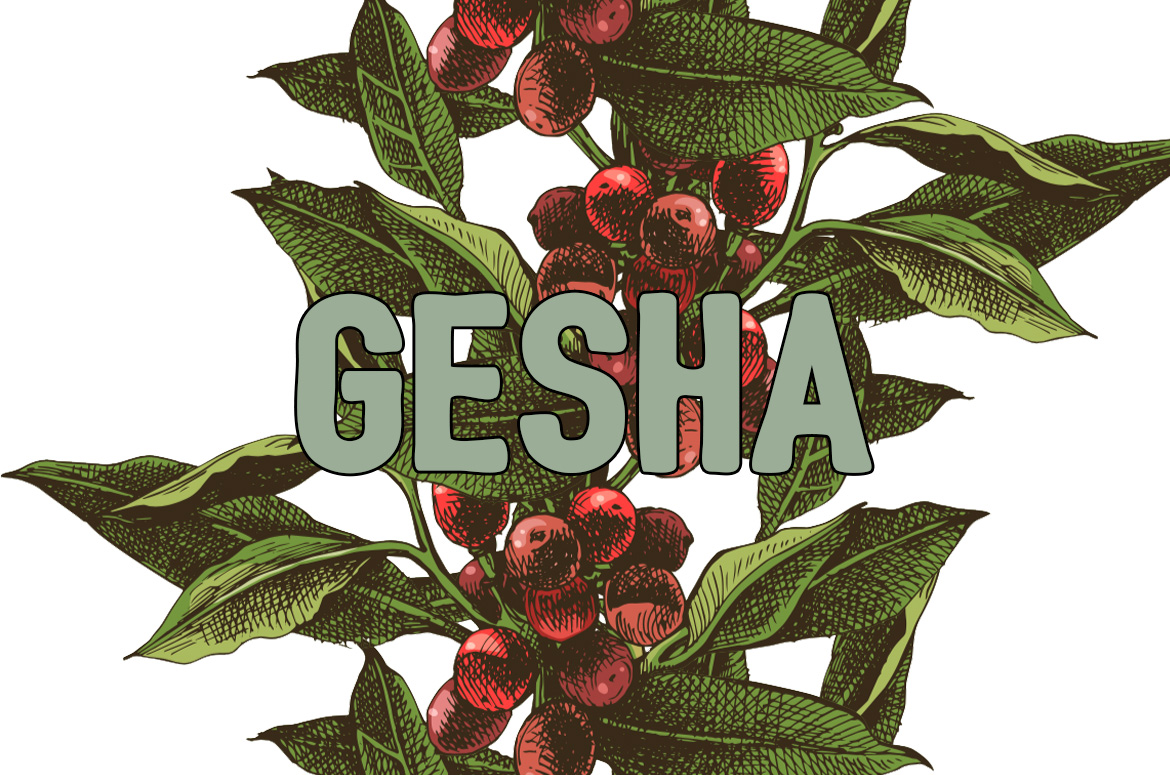
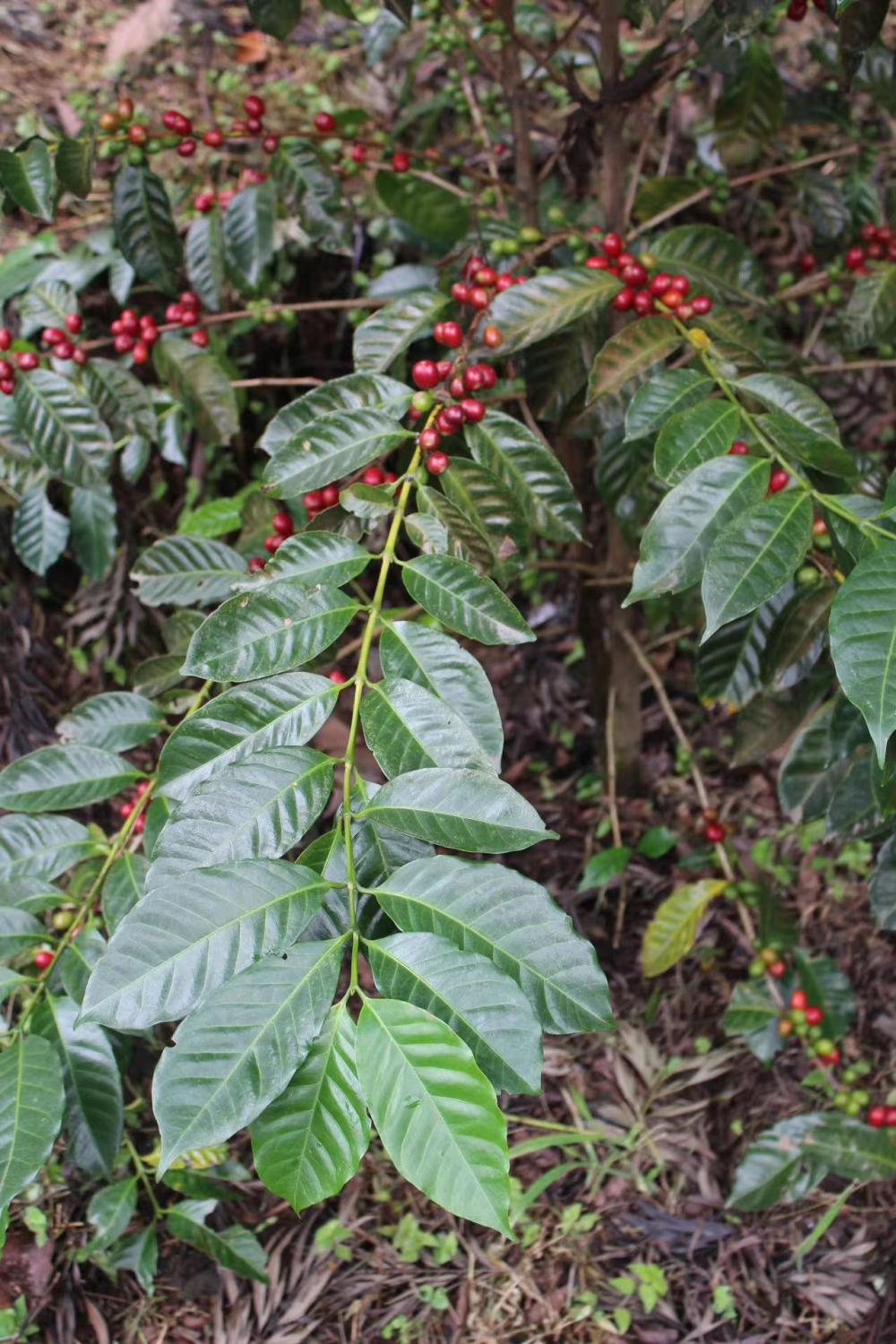
Geisha, often spelled gesha, is a single coffee variety with roots in Ethiopia. It arrived in Panama by way of Costa Rica in the mid-twentieth century and became famous after a farm in Boquete won a major competition with it. The plant is tall and thin, with long leaves, and it yields relatively little fruit, which is one reason the beans command high prices at auction.
The same variety grows in Colombia, but the cup differs. Panamanian geisha from high-altitude Boquete tends to show jasmine, bergamot, and stone fruit, with a light body and a long finish. Colombian geisha often tastes sweeter and rounder, with more red fruit and a fuller mouthfeel. Processing and terroir, not the name alone, explain most of the gap between them.
Geisha coffee is one of the most sought-after varieties in today's specialty coffee scene, but even though they share the name Geisha, the price and flavor of Panamanian and Colombian Geisha differ dramatically. Behind this lies both the historical journey of the variety's spread and the profound influence of terroir. This article will start with the origins of Geisha, tracing its legendary journey from Ethiopia's Kafa forest all the way to Central and South America, and analyze the flavor differences between Panamanian and Colombian Geisha. At the same time, Front Street Coffee will take you through a practical brewing comparison to experience the respective flavor expressions of washed Geisha from the two regions, and share pour-over parameter recommendations for high-altitude Geisha.
"Geisha coffee is really so delicious!!! But I want to ask, both are in Central and South America, why is there such a big price gap between Panama's Geisha coffee and Colombia's Geisha coffee? Are they the same kind of Geisha coffee bean?" That's right, they are indeed the same Geisha variety. Just as the land and water of one place nurture its people, coffee cultivation works the same way. With different altitude, climate, soil and other natural conditions, the Geisha coffee produced by the two countries also shows its own distinctive characteristics in flavor.
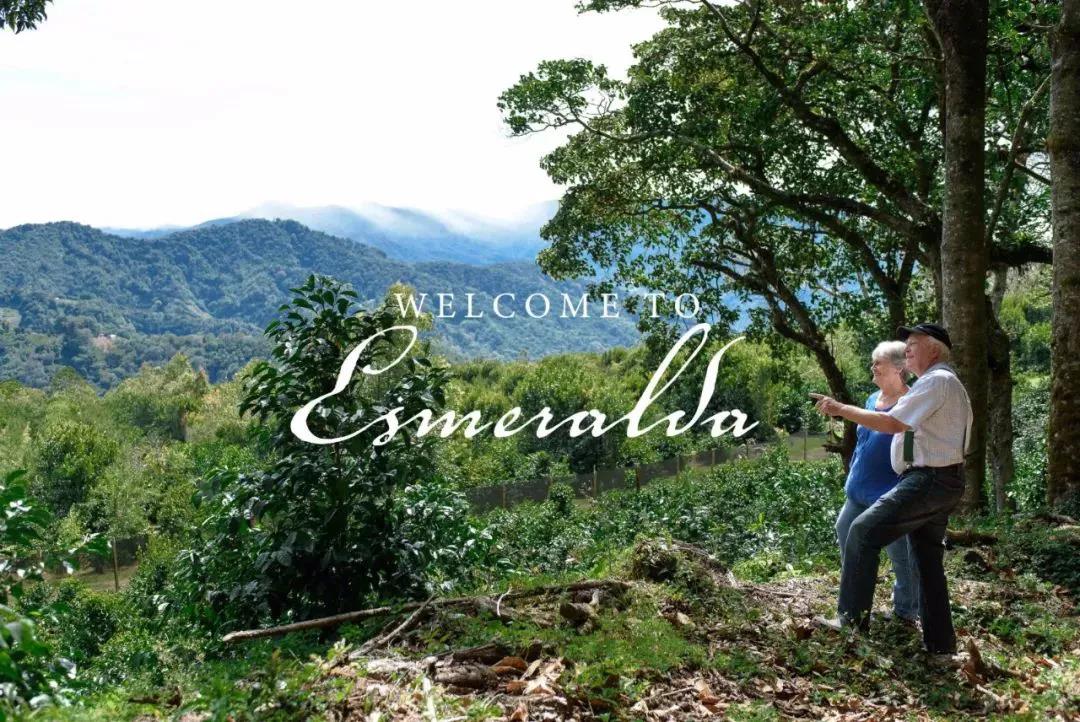
Although Geisha coffee beans became famous because of Hacienda La Esmeralda in Panama, the variety did not originate in Panama but comes from Ethiopia's Kafa forest. In 1930, British colonial explorers, in search of coffee varieties resistant to leaf rust, went to southwestern Ethiopia to collect local wild coffee varieties. At the time, other yet-unnamed coffee varieties were sampled alongside it, so this batch of samples was not named separately and was simply labeled as a coffee variety discovered in the Gesha Mountains of the Kafa forest.
These seeds labeled Gesha were sent in batches to Kenya in 1931 and 1932 for selection and sample investigation, and in 1936 the selected varieties were passed on to Uganda and Tanzania. By 1953, Costa Rica's Tropical Agricultural Research and Higher Education Center introduced the variety further tested in Tanzania into the local area, registering it under the number T2722.
Entering the 1960s, the owner of Panama's Hacienda La Esmeralda introduced T2722 from Costa Rica's Tropical Agricultural Research and Higher Education Center in order to improve the leaf rust resistance of local coffee trees, and shared some with other coffee estates. However, after receiving it, the other estates found that this variety's coffee trees had far too low a fruit yield, so none of them paid it much attention and sold it mixed with other varieties at harvest.
It was not until the son of Hacienda La Esmeralda's owner noticed that this variety had a captivating aroma that it was separated out and processed on its own, then sent to competition, ultimately winning the Best of Panama (BOP) green bean competition in 2004. The outstanding performance of Geisha coffee beans made the specialty coffee industry immediately realize its value. But the name T2722 was not impressive enough, so the estate owner finally traced through clues that this variety was one of the samples from Ethiopia's Gesha Mountain, and named it the Geisha coffee variety.
After the Geisha variety became famous overnight, Hacienda La Esmeralda also stated that only Geisha grown above 1,600 meters can display a more captivating coffee flavor, while Geisha grown at around 1,500 meters, although also possessing a captivating aroma, lacks complexity. Most coffee estates in Panama enjoy the advantage of high altitude, so they began planting Geisha one after another. Even neighboring Colombia, seeing such an alluring variety, believed it had a similar geographical environment and introduced the Geisha variety for cultivation.
For example, Colombia's Hacienda La Esperanza, Finca White Mountain, Hacienda San Pedro and other locally well-known coffee estates all grow the Geisha coffee variety. To enable the Geisha coffee variety to display an even more outstanding flavor, these estates plant Geisha in areas above 1,625 meters in altitude, with cloud and mist shade, fertile soil and a suitable climate. But the Geisha coffee produced in Colombia is not as outstanding in flavor as the Geisha produced in Panama's high-altitude regions; it always lacks some complexity and has more caramel-like tonalities.
This also proves that no matter how special a coffee variety is, the characteristic flavor a region should have will not be absent. And the formation of a region's flavor is closely related to its geographical environment; what seems to people like there is not much difference can be very different for crops. Although both regions are blessed with fine mountains and waters and fertile soil, Front Street Coffee, through cupping assessment and comparison of multiple coffee beans of different varieties from these two regions, found that coffee from the Panama region shows a distinct tea-like body with floral and fruity aromas, while coffee from the Colombia region shows a delicate berry-like acidity and a caramel-like finish.
For a more intuitive comparison, Front Street Coffee brewed washed Geisha coffee beans grown at 1,600-1,800 meters in altitude from Panama's Hacienda La Esmeralda and washed Geisha coffee beans grown at 1,700-1,800 meters from Colombia's Hacienda La Esperanza for a brewing comparison.
Because Geisha coffee grows in high-altitude regions, the temperature difference between day and night gives the coffee beans enough time to grow and develop flavor, so Geisha variety beans are relatively hard and tend to sink and clog the drainage holes. Therefore, Front Street Coffee recommends using a grind size with a 78% pass rate on the China standard No. 20 sieve (about the size of fine granulated sugar).
15g of coffee grounds, paired with a Hario V60 small filter cup, then brew using a 1:16 coffee-to-water ratio. On one hand, use one extra portion of water to maintain the coffee's extraction rate; on the other hand, lower the coffee concentration to between 1.15%-1.25%, as this concentration is the best for experiencing the coffee's flavor. For water temperature, maintain 91°C.
Once everything is ready, use a three-stage pouring method: start the timer, pour the first time to 30g of water, and let it bloom for 30s; then begin the second stage, pouring in a small stream in circles to 125g, wait for the water level in the coffee bed to drop to half before pouring again, then continue pouring in a small stream in circles to 225g, and after all dripping is complete, the total extraction time is about 2 minutes 10 seconds to 2 minutes 20 seconds.
Flavor of Hacienda La Esmeralda washed green-label Geisha coffee beans: ginger flower, jasmine, berry, sweet orange, honey, Tieguanyin
Flavor of Hacienda La Esperanza washed Geisha coffee beans: lime, jasmine, ginger candy, oolong tea
For professional coffee knowledge exchange and more coffee bean information, please follow Coffee Workshop (WeChat public account: cafe_style)
For more specialty coffee beans, please add the private WeChat of Front Street Coffee, WeChat ID: kaixinguoguo0925
The above content is compiled by CoffeeHunters, a coffee news website.


