







How does the three-pour method work in pour-over coffee?
The three-pour method splits the total water into three batches with two pauses, which shifts the balance of front, middle, and back flavors in the cup. For 15 grams of washed Yirgacheffe in a Hario V60, the bloom uses about 30 milliliters of water, roughly twice the grounds weight, and is held for around 30 seconds.
The key distinction is whether a pause follows the bloom. Blooming plus two more pours makes three stages; blooming plus one continuous pour is a single-cut flow. Staged pouring lets the barista change each segment's water share, so the finished coffee lands more even and layered. Any coffee enthusiast can practice the sequence with a scale and a timer.
The three-pour method is one of the most classic and highly regarded extraction methods in pour-over coffee. By splitting the total water volume into three pours, with two pauses in between, it adjusts the proportion of flavors from the front, middle, and back segments of the coffee. This article starts from the principles of staged pouring, breaks down the blooming step and the logic of water distribution for each stage in detail, and uses 15 grams of Front Street Coffee washed Yirgacheffe with a Hario V60 dripper as an example to fully demonstrate the operating process and parameter settings of three-pour pour-over, helping coffee enthusiasts master this brewing method that balances both evenness and layering.
The so-called three-stage extraction refers to splitting the total water volume in the entire pour-over process into three batches, including one blooming pour and two subsequent extraction pours. This method is also called the "three-cut flow." During the whole process, there will be two "water break" pauses. By adjusting the water proportion of each stage, the barista changes the weight of the front, middle, and back flavors in the overall taste, making the final coffee more balanced and harmonious.
What is the significance of staged pouring?
If you have paid attention to baristas while brewing, you will notice that they often stop after pouring a certain amount of water, wait for the water level in the dripper to drop, and then continue pouring. This is the practical operation of staged extraction.
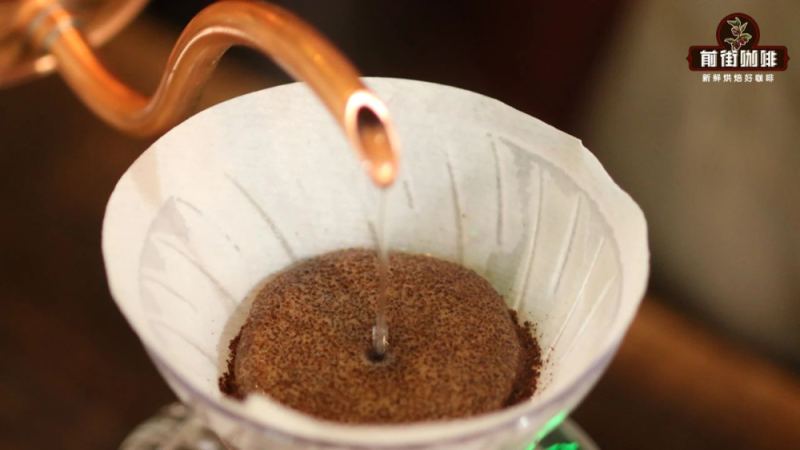
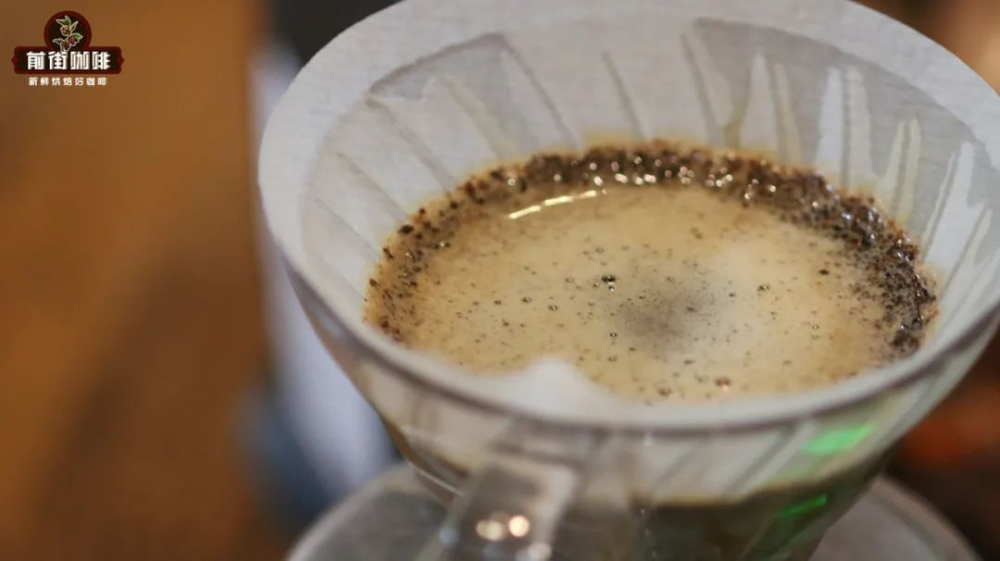
The first pour usually uses less water. The purpose is to wet the coffee bed with hot water and allow carbon dioxide gas in the grounds to escape so that it does not interfere with the subsequent extraction process. This step is the "bloom." The most common approach is to pour water at twice the weight of the coffee grounds and control the blooming time at 30 seconds. For example, with 15 grams of grounds, pour 30 milliliters of water for blooming. This is the bloom formula easiest for beginners to master. The key to determining whether it counts as staged pouring is whether there is a pause after blooming: if after blooming you finish pouring in two more additions, including the bloom itself, that counts as "three-stage"; if after blooming you finish pouring in one go without pausing again, that is "one-cut flow."
The reason baristas choose staged extraction is that the various substances in coffee dissolve into hot water at different rates. The flavor release order is roughly sour first, then sweet, then bitter. When using staged pouring, under the same coffee-to-water ratio, the more stages there are, the less water there is in each stage. The number of times hot water washes and agitates the coffee bed increases accordingly, and the extraction yield also rises correspondingly.
At the same time, increasing the number of stages lengthens the overall extraction time. More coffee substances dissolve at each stage, and the flavor layering also becomes richer. But Front Street wants to remind everyone that as the number of stages increases, the operation time becomes longer, and the risk of over-extraction rises as well. In the later extraction stage, large-molecule substances are more easily released, and sweetness is instead suppressed. So more stages is not always better. Then how should the water volume for each stage be calculated?
The universal three-pour method
Based on past brewing experience, Front Street suggests that beginners new to pour-over start with three-stage pouring. Three-stage extraction helps dissolve flavor substances more fully during brewing, enhances the layering of the taste, and at the same time avoids over-extraction caused by too long a steeping time. If using 15 grams of coffee grounds, with a coffee-to-water ratio of 1:15 and a total water volume of 225 milliliters, the three-stage water distribution can be: 30 milliliters, 95 milliliters, and 100 milliliters. The corresponding readings on the scale are 30 grams, 125 grams, and 225 grams in sequence.
Here Front Street selects its own roasted Front Street washed Yirgacheffe Gedeb Cooperative coffee beans and brews with a Hario V60 dripper. The V60's spiral rib design helps the coffee grounds release gas more smoothly and maximizes the volatilization and dissolution of aromatic acidic substances. Because Front Street Yirgacheffe is a light roast with relatively hard beans, it needs high-temperature water of 92°C to 93°C to fully bring out the floral and fruity notes.
For grinding, Front Street recommends a medium-fine grind (78% passing through a Chinese standard No. 20 sieve), with a particle size close to fine granulated sugar. If ground too coarse, the rich and rounded flavor substances are difficult to extract, and the coffee will taste thin. If ground too fine, it is easy to over-extract at high temperature, and the coffee may taste bitter and astringent.
For the coffee-to-water ratio, Front Street believes that 1:15 to 1:16 is within a reasonable range. If you prefer a stronger taste, you can use 1:15. If you want to perceive floral and sweet notes more clearly, you can use 1:16 to let the flavors open up more.
First place the folded filter paper into the dripper and fit it against the wall, pour in 15 grams of ground coffee, then tare the scale to zero.
For the first stage, pour 30 grams of water for blooming. Start timing as you pour, using a small stream throughout and circling from the center outward to ensure the entire coffee bed is moistened.
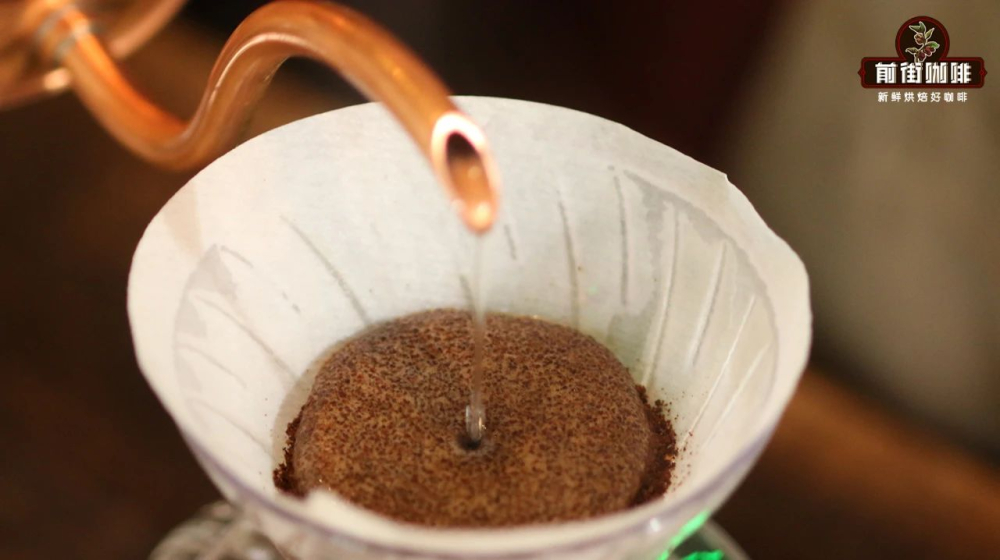
After 30 seconds, increase the flow slightly and steadily pour the second stage of 95 grams of water. The purpose is to lift the entire coffee bed. The stream should be vertical and even. At this point the scale shows 125 grams, and the pour is completed at around 55 seconds.
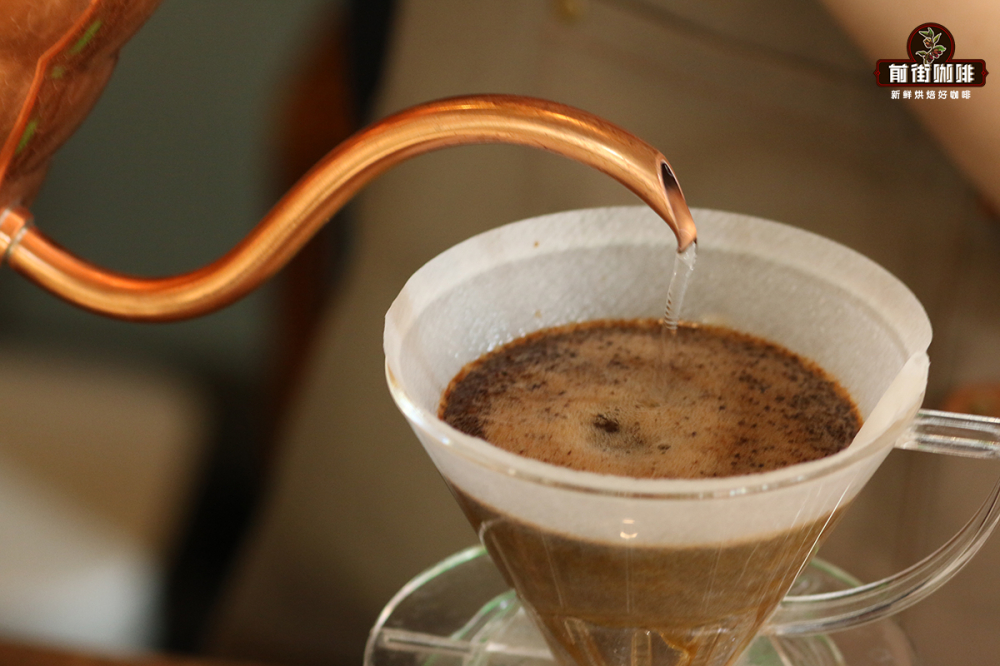
When the liquid level drops to the halfway point, switch to a small stream and pour the third stage of 100 grams in a small circle. Be careful not to circle too widely, otherwise it is easy to disrupt the coffee bed and cause under-extraction. The final total water volume is 225 grams, and the drip finishes in about 2 minutes. Remove the dripper, swirl the coffee liquid in the server to mix it evenly, and it is ready to drink.
The water volume for each stage is not fixed. You can adjust it flexibly according to your accumulated brewing experience and your understanding of the coffee beans. Front Street believes that there are countless paths to brewing a delicious cup of coffee. As long as you study and practice more, it is not difficult to easily master the various pour-over parameters.
For professional coffee knowledge exchange and more coffee bean information, please follow Coffee Workshop (WeChat public account: cafe_style)
For more specialty coffee beans, please add the private WeChat of Front Street Coffee (FrontStreet Coffee), WeChat ID: qjcoffeex
The above content is compiled by CoffeeHunters, a coffee news website.


