







How do canephora and c arabica differ in the cup?
Coffea canephora, better known as robusta, is the second of the two species that dominate global coffee consumption, alongside Coffea arabica. Robusta carries more caffeine and resists pests and disease better, while arabica, roughly 80 percent of world production, grows at 1,000 to 2,300 meters and tends to show finer acidity and aroma.
The definition of arabica coffee rests on both botany and growing conditions: Ethiopian origin, high altitude, and the volcanic soils of the Coffee Belt. Robusta has long been dismissed as filler for instant coffee, but specialty-grade lots from estates in India and roasters such as London's Black Sheep Coffee are changing that view for everyday drinkers.
The coffee world boasts a vast array of varieties, yet only two core species truly dominate global consumption—Coffea arabica and Coffea canephora (robusta). Many enthusiasts harbor prejudices against robusta, believing it suitable only for instant coffee or cheap blends, while rarely understanding its botanical characteristics and quality potential. This article begins with the definition of Coffea canephora, clarifies its equivalence to robusta, compares arabica and robusta in terms of growing conditions, flavor expression, and resistance to pests and diseases, and through practical cases from London's Black Sheep Coffee and India's Sethuraman Estate, explores how specialty-grade robusta is breaking stereotypes. Whether you are a daily drinker or a coffee professional, understanding the true nature of these two major species is an important step toward more mature tasting.
Coffee has traveled a long journey, and it was not until the third wave of coffee swept in that people began to eagerly trace the complete path of a cup of coffee from origin to cup: how growers cultivate, how pickers harvest, how green beans are processed, and how roasters tailor roasting curves for each bean.
Beauty from a seed
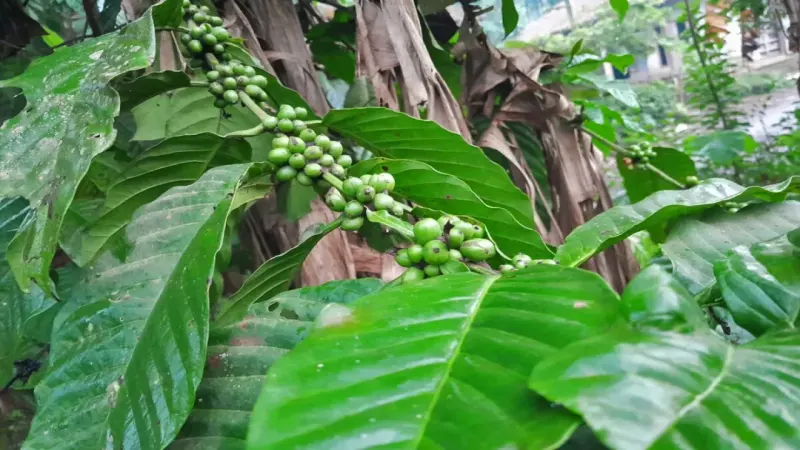
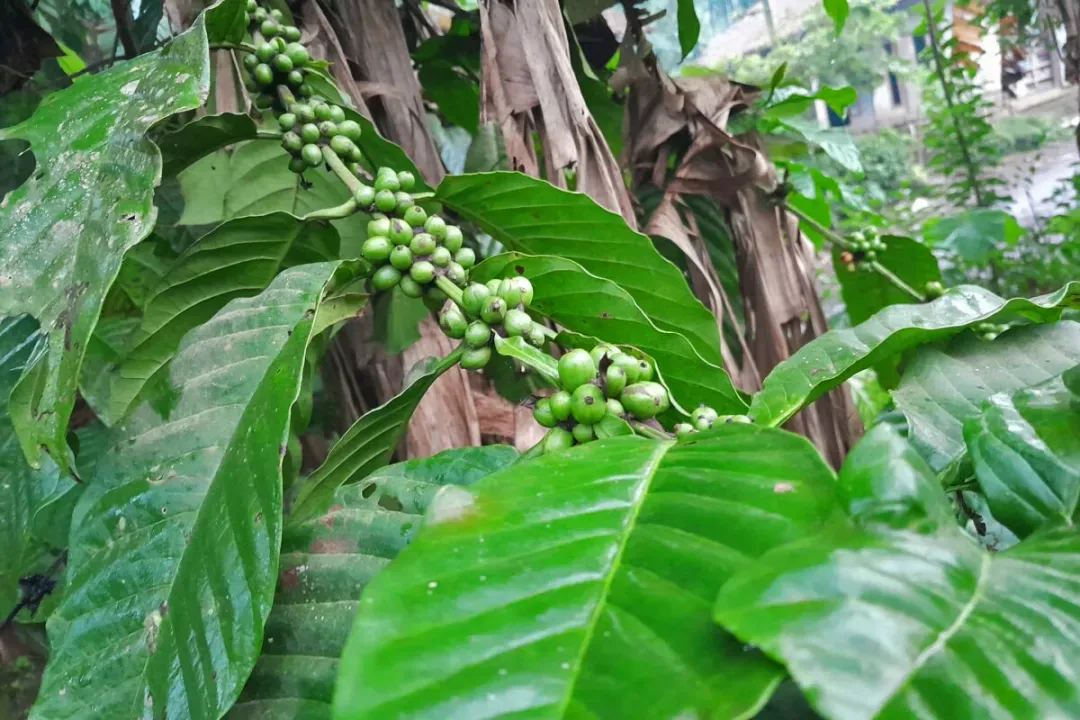
Every story begins with a seed, originating from a tree with white blossoms that emit a jasmine-like fragrance. The fruit this tree bears resembles a cherry, and the small seed at the very center of the fruit is what we call a coffee bean.
The Royal Botanic Gardens, Kew in London is tasked with identifying over a hundred species of Coffea, many from Madagascar, Asia, and Australia. Within such a rich pedigree, Coffea arabica and Coffea canephora (robusta) constitute the two main cultivated species and are the coffee sources most frequently encountered by global consumers daily. Although other members of the Coffea genus exist, so far none have proven to have value for large-scale commercial production.
What exactly is arabica?
Arabica accounts for roughly 80% of total global coffee production. This species originated in Ethiopia and is typically grown at altitudes between 1,000 and 2,300 meters, distributed within the "Coffee Belt" where tropical and subtropical zones meet. This region often features mineral-rich volcanic soil, regular rainfall, and abundant sunshine—conditions that precisely meet the needs for growing quality coffee.
Arabica is quite particular about its growing environment, and its plants are susceptible to pests and diseases. Take coffee leaf rust, for example: fungal infection causes orange spots on the leaves, hindering photosynthesis and ultimately leading to defoliation or even the death of the entire plant; if not controlled effectively, an entire estate could be devastated. Additionally, the coffee berry borer is a common threat; this pest lays eggs inside coffee cherries, and after the larvae hatch, they feed on the pulp, causing a significant decline in coffee quality.
Despite these disadvantages, arabica remains firmly in consumers' favor due to its smooth mouthfeel and rich flavor complexity. A cup of arabica coffee is aromatic and captivating, with flavor descriptions often involving floral, fruity, citrus, earthy, creamy, chocolate, caramel, honey, or sugary notes. The specific expression ranges from crisp and sweet to full-bodied, depending on origin terroir and processing method.
What exactly is robusta?
Robusta is native to West Africa and is suited to cultivation in lower-altitude, warmer areas. It accounts for essentially the remainder of global coffee production. Robusta beans are smaller and round, but their caffeine content is nearly twice that of arabica. This high caffeine naturally provides pest-repellent effects, helping the plant resist most pests, so robusta is cheaper to grow and easier to manage. Additionally, because it produces a thicker crema during extraction, it is often blended into coffee blends.
Even though robusta has its own quality merits, it is not well-received in the market. In fact, most coffee enthusiasts reject it, because robusta is often used in instant coffee or low-quality blends, with both product price and quality at the low end. After roasting and brewing, robusta is often described as prominently bitter, sharp, with woody and rubbery notes. Even though it is unpopular among most enthusiasts and not the first choice for mass consumption, robusta still has its own advocates.
Left without human intervention, the one that survives in the end will be robusta
Gabe Shohet is the co-founder of London's Black Sheep Coffee, focusing on providing specialty-grade robusta coffee. This café was founded by Shohet and a few friends who wanted to make coffee that stood out, favoring robusta's intense, full-bodied, high-caffeine characteristics. As the shop's name suggests, they have already departed from the track of mainstream coffee culture.
However, Shohet's advocacy for robusta is not without basis. In his article "Fairness and E-Quality: The Case for Robusta," he argues that robusta's poor reputation should not be blamed on the bean itself. The problem is that robusta is typically machine-harvested, meaning the harvest contains impurities such as rotten fruit, unripe fruit, insects, and even twigs; such a combination of raw materials is destined to produce only a bad cup of coffee.
So Shohet set out to verify: if robusta received the same care and attention as arabica, what flavor would it express? After months of repeated trials, Shohet and his team found the world's first specialty-grade robusta farm. India's Sethuraman Estate implements hand sorting, double washing, and raised-bed drying for robusta, ultimately obtaining coffee with flavor characteristics even more distinctive than arabica. This high-caffeine beverage helps people stay energized all day while displaying clear walnut and chocolate flavors.
Arabica may still be consumers' first choice, but robusta is gradually proving its worth, because people like Shohet are working hard, with the goal of giving consumers a reason to give it another chance.
The above content is compiled by CoffeeHunters, a coffee news website.


