







Which mistakes spoil French press coffee brewing?
French press coffee brewing goes wrong most often through three overlooked variables: grind size, water temperature, and coffee-to-water ratio. The device is simple enough that brewers stop measuring, yet those three settings decide how much flavor lands in the cup. Front Street Coffee recommends specific parameters for different roast levels, including lighter and darker beans.
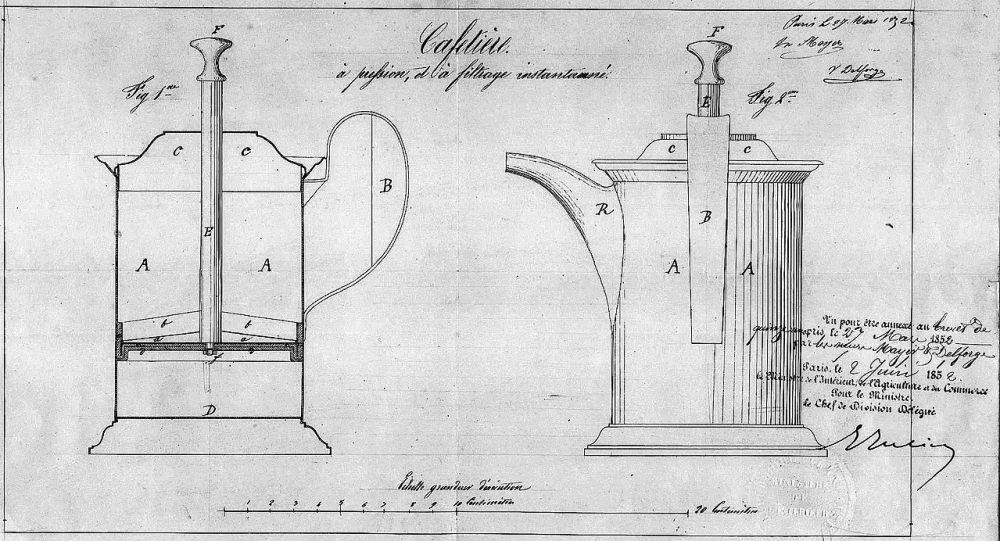
The French press dates to an 1852 patent filing by Henri-Otto Mayer and Jacques-Victor Delforge, whose container could not form a proper seal. In 1929, Italians Attilio Calimani and Giulio Moneta secured a US patent, establishing the modern prototype now found in many household catalogs. A borosilicate glass body, durability, a reasonable price, and almost no learning curve explain why French coffee culture keeps the press on the shelf.
The French press is simple to operate and widely applicable, making it the go-to device for many coffee enthusiasts starting their journey into specialty coffee. But precisely because it's so easy to use, people tend to overlook key variables like grind size, water temperature, and coffee-to-water ratio during brewing. This article begins with the history and working principle of the French press, outlines three common mistakes in brewing, and combines Front Street Coffee's practical experience to offer specific parameter recommendations for coffee beans of different roast levels. Finally, using the Huakui coffee bean as an example, it walks through a complete French press brewing process, helping readers extract the fullest flavor possible while preserving that rich, full-bodied taste.
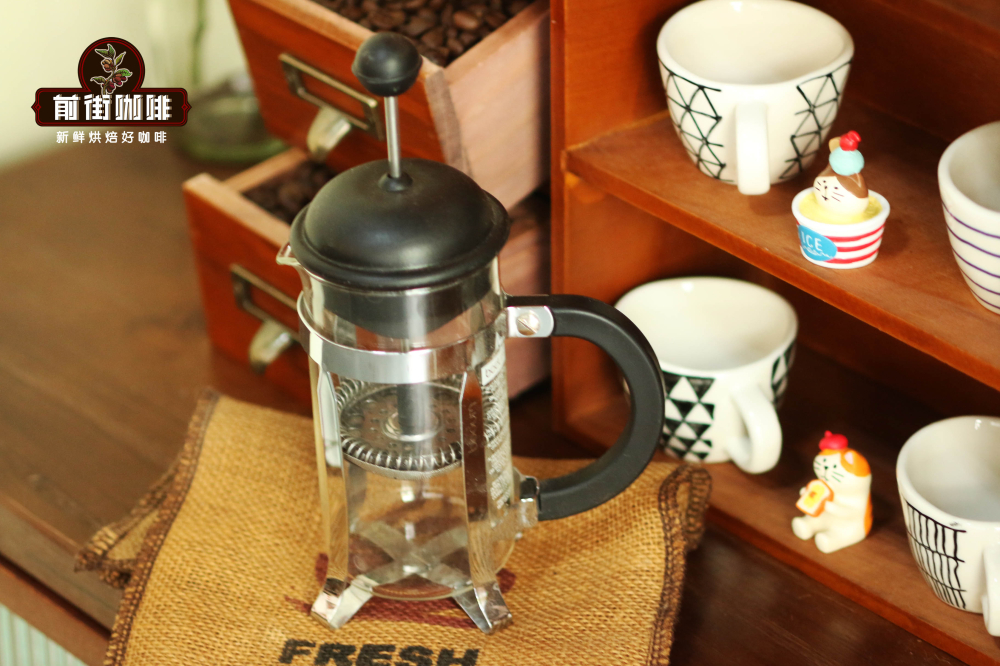
Among the many coffee brewing devices out there, the French press is probably one of the most widely recognized and popular. Whether it's someone who rarely drinks coffee or a seasoned enthusiast deeply into flavor profiles, chances are you'll find a French press tucked away in some storage corner at home.
A friend who had just gotten into coffee once came to Front Street for help—she wasn't confident in her pouring technique but wanted a cup with more layers and richer detail. Faced with this situation, Front Street suggested she practice her pouring more while also digging out that French press that had been sitting unused on the shelf for ages.
Everyone uses a French press differently—some brew tea with it, some brew coffee. No matter what you're brewing, the French press's core function is the same: keeping the grounds out. Every coffee device has its own origin story, and the French press is no exception.
The earliest known written record of the French press dates back to 1852, when two Frenchmen, Henri-Otto Mayer and Jacques-Victor Delforge, filed a patent application. However, that design had flaws—the container couldn't form a proper seal—which ironically gave later designers room to improve and introduce their own versions.
In 1929, Italians Attilio Calimani and Giulio Moneta obtained a US patent for the French press, and the prototype of the modern French press was established. Today, French presses can be found in the product catalogs of many household goods companies. With a borosilicate glass body, sturdy durability, reasonable price, and an almost zero learning curve, it really is as reassuring as a doting mother for someone just getting into specialty coffee.
How the French Press Works
When making coffee with a French press, you first put the ground coffee into the carafe, pour in hot water to fully submerge the grounds, then use the plunger with its metal mesh filter to separate the coffee liquid from the grounds. This immersion-style extraction path delivers an outstanding body, adding considerable points for texture and oils.
Things to Watch Out for When Using a French Press
The steps for a French press aren't complicated, giving many beginners that comforting, motherly embrace from the coffee world. Still, there are details to pay attention to during brewing. After all, the French press relies mainly on immersion extraction, so there are particular considerations for grind size, water temperature, and coffee-to-water ratio.
【Grind Size】
The French press is an immersion-type device, so the grind is usually coarser than for pour-over. But fine particles are also an important source of coffee flavor—if the grind is too coarse, flavor compounds are hard to extract and the resulting cup tastes weak. Conversely, if the grind is too fine, or the proportion of fines is too high, the metal filter may not be able to keep the grounds out, resulting in an unpleasant gritty texture that ruins the mouthfeel.
The French press, like cupping, is an immersion-style extraction. Front Street recommends a grind size with a 70% to 75% pass-through rate on a Chinese standard No. 20 sieve. Since different grinding equipment has different specs, burr types, and maintenance conditions, the resulting grind will vary. That's why when Front Street describes grind size, we generally use the standard sieve pass-through rate as a reference, and you can then calibrate your own grinder based on that data.
【Water Temperature】
Friends who regularly read Front Street Coffee (FrontStreet Coffee) articles have probably noticed that Front Street uses different water temperatures for coffee beans of different roast levels.
The reason is that the darker the roast, the more efficiently the coffee particles absorb water and the faster flavors dissolve—and higher water temperatures further accelerate these reactions, easily bringing out bitterness and burnt notes. So Front Street recommends using 86 to 88 degrees Celsius for medium-dark roasted coffee beans.
As for lighter roasted coffee beans, Front Street recommends keeping the water temperature at 90 to 93 degrees Celsius, using the higher temperature to fully extract the aromatic compounds and quality acidity from light-roasted beans.
【Coffee-to-Water Ratio】
The coffee community has long been talking about the concept of "Golden Cup extraction." Golden Cup extraction refers to coffee concentration falling between 1.15% and 1.35%, with an extraction yield between 18% and 22%. Front Street Coffee (FrontStreet Coffee) once conducted a comparison using the same coffee bean, the same water temperature, and the same grind size across several ratios—1:13, 1:14, 1:15, and 1:16—and found that a 1:15 ratio achieved the concentration and extraction yield required for Golden Cup extraction.
Although an extraction yield of 18% to 22% is widely recognized, people from different regions have different culinary cultures and preferences for coffee strength—some prefer it bold, others light. Front Street suggests that, starting from 1:15, those who like it stronger can adjust toward 1:13 or 1:14; those who prefer it lighter can try 1:16 or 1:17, or even the 1:18 ratio commonly used in cupping.
Below, Front Street has selected the Huakui coffee bean from a menu of over fifty coffee beans for a demonstration—brewing a cup of Huakui with a more substantial juicy character. First, Front Street needs to explain Huakui Coffee Taste Introduction .
Huakui Coffee This bean comes from the Hambela sub-region of the Sidama producing area in Ethiopia. Since winning the champion of the TOH Ethiopia regional natural group in 2017, Huakui Coffee has won the favor of many coffee enthusiasts in China with its intense berry notes and lingering creamy finish.
When Front Street designs roast profiles for African coffee beans, we typically use a medium-light roast to highlight the bright fruit acidity of African beans. Therefore, when brewing with a French press, Front Street recommends a grind size with a 75% pass-through rate on a Chinese standard No. 20 sieve, paired with a higher water temperature.
Equipment: French press
Water temperature: 90 degrees Celsius
Coffee dose: 15 grams
Coffee-to-water ratio: 1:15
Time: 4 minutes
First, preheat the carafe, then pour the ground coffee into the French press. Add 90-degree Celsius hot water at a 1:15 coffee-to-water ratio. Pull the lid's plunger stem up to its highest position, then place the lid on. After a four-minute steep, slowly press the plunger down to the one-quarter mark, then pour out the coffee and it's ready to drink.
The Huakui Coffee that Front Street brewed following the above parameters and steps has a clear mixed berry aroma on the entry, a complex juicy character, a hint of orange blossom, a distinct creamy silkiness, and an overall full, rich body.
For professional coffee knowledge exchange and more coffee bean information, please follow Coffee Workshop (WeChat public account: cafe_style)
For more specialty coffee beans, please add the personal WeChat of Front Street Coffee (FrontStreet Coffee), WeChat ID: qjcoffeex
The above content is compiled by CoffeeHunters, a coffee news website.


