







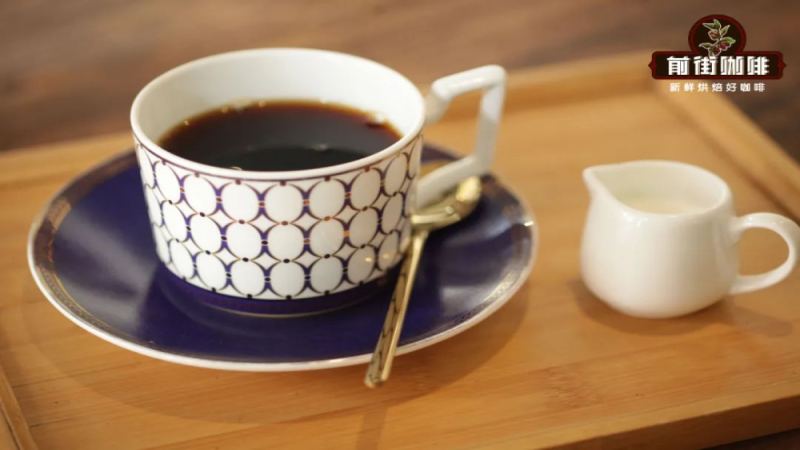
How is golden mandheling processed and brewed?
Golden Mandheling is an Indonesian coffee known for deep, heavy bitterness and full body, standing in contrast to the bright citrus acidity of African origins. The wet-hulling process, called giling basah, gives green beans that low-toned profile. Brewing leans on pour-over parameters suited to dark roasts, including the three-stage pouring technique, because the beans extract differently from light-roasted lots.
Dutch colonists brought coffee to Indonesia in 1699, and wet-hulling developed because sun-drying or washing takes two to three weeks while the humid archipelago spoils beans before they dry. Farmers remove the pulp, ferment about three hours, rinse the mucilage, then dry parchment only two to three days. At 20 to 24 percent moisture the beans are hulled and dried further to roughly 13 percent.
Indonesian Mandheling stands apart with its deep, bitter aroma and full body, forming a sharp contrast to the bright fruity acidity of African beans. This article, from the perspective of Front Street Coffee, systematically sorts through Mandheling's wet-hulling process, the grading standards of Golden Mandheling, variety tracing, as well as pour-over parameters and the three-stage pouring technique suited to dark-roasted beans. Whether you are a beginner just getting to know Mandheling, or a seasoned connoisseur wanting to delve deeper into PWN Golden Mandheling, you will find practical brewing advice and flavor references here.
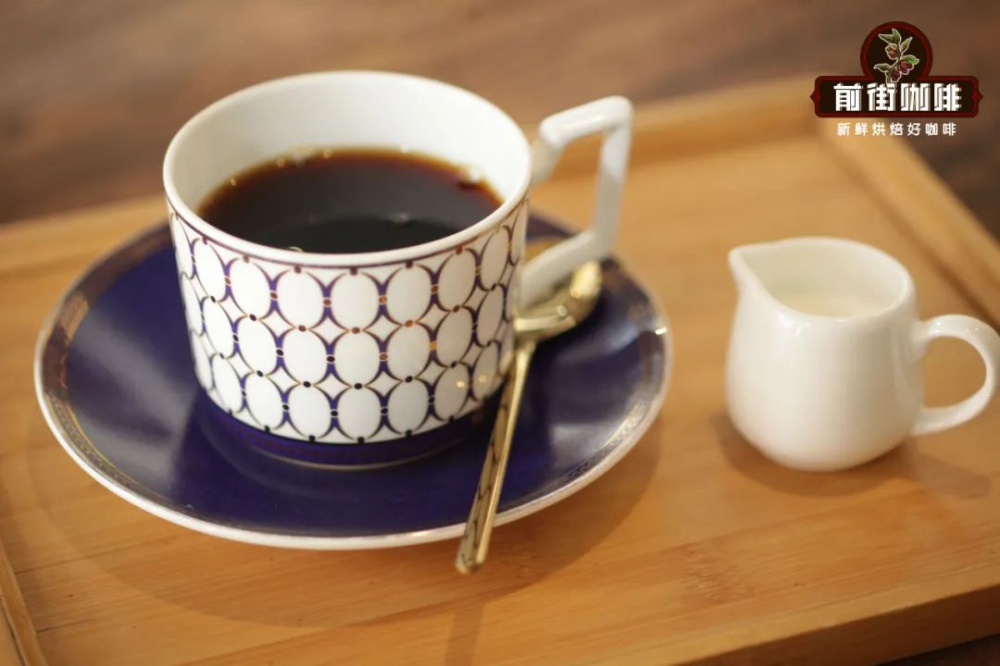
Coffee beans from African origins often carry a bright citrus acidity, while Indonesian Mandheling takes a completely different path—it is known for its deep, heavy bitterness and full-bodied richness, with an overall low-toned flavor profile. So, faced with such a heavy-textured coffee, how exactly should it be brewed? Front Street Coffee (FrontStreet Coffee) plans to start with the characteristics of Mandheling itself, and step by step break down how to hand-brew a satisfying cup of Front Street Mandheling.
The wet-hulling process unique to Indonesian Mandheling
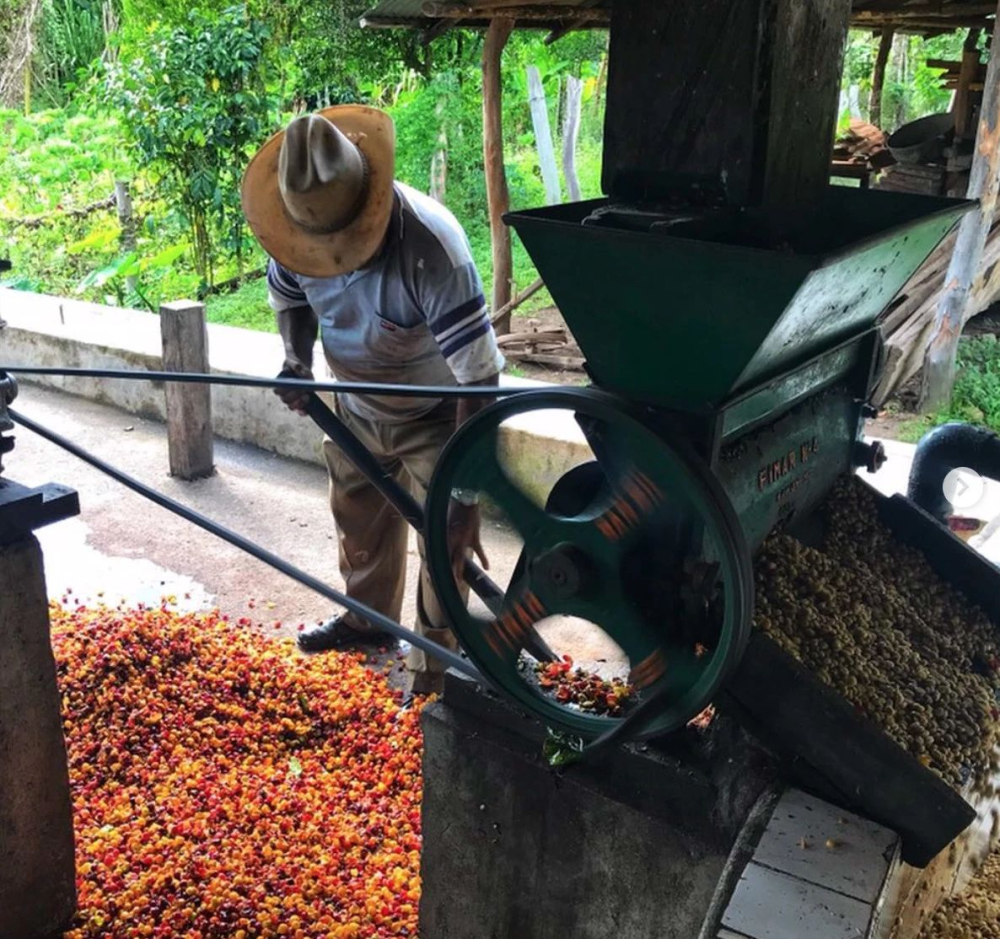
After Dutch colonists brought coffee to Indonesia in 1699, this crop gradually became the main source of livelihood for local farmers. If the traditional natural processing method were followed, the coffee cherries would need to go through a long drying cycle and could not be quickly turned into cash and sold to collectors; sun-drying or washing usually takes two to three weeks. What is more troublesome is that the Indonesian archipelago is plagued by wind and rain all year round and the air is humid, so the green beans often become moldy and spoiled before they can even dry.
The wet-hulling process is basically the same as the washed method in the early stages: Indonesians first remove the pulp of the coffee cherries, let the beans ferment in water for about three hours, and rinse off the surface mucilage. At this point, the green coffee beans with parchment still on them have only undergone a short initial drying of two to three days, and their moisture content is still in a semi-soft, semi-hard state of 20% to 24%. They are then directly hulled to remove the parchment and continue drying until the moisture content drops to around 13%, at which point they are bagged and packed.
Because the hulling equipment generates strong friction during operation, the parchment layer tightly attached to the green beans is forcibly torn open, and the beans are easily cracked or crushed during repeated friction, especially at both ends, often forming small gaps; these are the so-called goat-hoof beans. The naked beans, having lost their parchment layer, dry extremely quickly, but at the same time are directly exposed to humid air, giving various fungi a chance to grow, which gives Indonesian coffee that unique intertwined aroma of wood, spice, and herbs—what people often call the taste of place.
Some friends may already be unable to contain their curiosity and want to try this Southeast Asian flavor. If you have not yet tasted Front Street Mandheling, Front Street suggests starting with the small-package wet-hulled Front Street Lintong Mandheling daily beans. This bean brews into the classic Mandheling character and is very suitable for a first attempt at home. And if you are already a veteran who has been drinking coffee for years and want to appreciate Mandheling's finest aroma performance, Front Street believes that Front Street PWN Golden Mandheling coffee would be a more ideal choice.
What does Golden Mandheling mean?
The key reason Mandheling was able to make a name for itself is that Pwani Coffee Company (PWN) successfully promoted it to the Japanese market. Unlike many local Indonesian green bean traders, PWN is the exclusive supplier of high-quality Golden Mandheling, holds resources from Indonesia's finest Mandheling-producing regions, and its Mandheling beans are all of superior quality. The Front Street Golden Mandheling coffee that has long occupied the upper right corner of Front Street's bean list comes precisely from PWN, and the Dongshankou store also displays the burlap sacks used for green bean packaging as well as certification certificates.
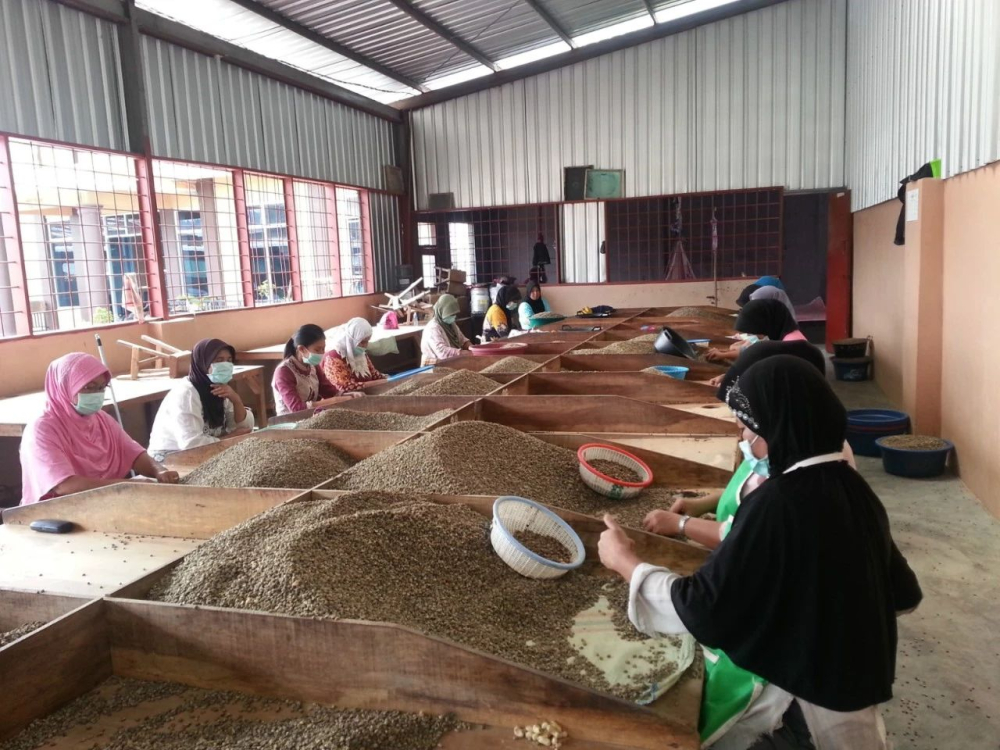
Although the wet-hulling process saves a great deal of time and labor in green bean processing, its speed also means a relatively high defect rate, so only strict manual sorting can remove defective beans that machines cannot screen out. PWN implements one mechanical sorting plus three manual hand-sortings for the Mandheling green beans it purchases, with quality control far higher than Indonesia's local highest G1 grade. To meet the standard of Front Street PWN Golden Mandheling, the following conditions must all be satisfied:
1. Green bean screen size: above 18-19 mesh after one hand-sorting
2. Fewer than 3 defective beans in a 300-gram green bean sample
3. Green coffee bean grade is G1
4. Darker green color, uniform particle size, regular shape
Before Front Street releases any coffee bean, it evaluates the bean through cupping. Cupping is a systematic evaluation of coffee quality and flavor; unified standards allow a more objective judgment of the bean's strengths and weaknesses as well as its own characteristics.
Cupping results show that Front Street Lintong Mandheling daily beans have a rich nutty base, with a hint of melon aroma at the finish; after the temperature drops, herbal flavors gradually emerge, with a full mouthfeel and饱满 aroma. Front Street PWN Golden Mandheling, in addition to aromas of dark chocolate, nuts, and caramel, also carries notes of herbal spice and pine wood; its dark chocolate sweetness returns persistently, the aftertaste is long, cleanliness is outstanding, and after cooling it reveals a gentle fruit acidity.
What variety is Front Street Golden Mandheling?
The coffee varieties grown in Indonesia are quite diverse. The earliest coffee planted in Indonesia was Typica, recognized for its excellent flavor, introduced by the Dutch at the end of the seventeenth century. However, in 1877 leaf rust swept across all of Indonesia, and large areas of Typica trees withered one after another. To deal with this crisis, the Indonesian government introduced more disease-resistant Robusta varieties from Africa and elsewhere, and to this day Robusta remains the mainstay in Indonesia.
In order to further increase production, Indonesia continued to introduce various disease-resistant varieties from abroad. Among them, the Robusta-Arabica hybrids Tim Tim, Bor Bor, and the Ateng series of Catimor, because of their outstanding disease resistance and their adaptation to Sumatra's terroir, present a unique cedar aroma. At present, Ateng and Tim Tim already account for seventy percent of Sumatra's coffee cultivation. Front Street Indonesian Lintong Mandheling daily beans are a blend of Tim Tim and Ateng, while Front Street Golden Mandheling is selected from Ateng, which is what we commonly call Catimor.
The best pour-over method for Front Street Golden Mandheling
Front Street Golden Mandheling coffee has a complex aroma layering. If you want to taste it at its best flavor and mouthfeel, Front Street suggests using freshly roasted coffee beans for brewing. Coffee beans enter their best flavor period on the fourth to seventh day after roasting; beyond this window (about a month and a half), the aroma gradually dissipates and a woody defect flavor appears. Front Street has always believed that freshness is the lifeline of coffee, so the beans shipped are all freshly roasted within five days;加上 logistics transit time, they can be brewed directly upon arrival.
Dark-roasted coffee beans have a relatively loose structure and very strong water absorption. If you are not careful, excessive water absorption can cause over-extraction, making the brewed Front Street Golden Mandheling both bitter and astringent. Therefore, Front Street will set the grind coarser and use a lower water temperature for brewing.
Suggested brewing parameters: water temperature 87–88°C, 15 grams of coffee powder, powder-to-water ratio 1:15, grind size medium (70% passing rate on China standard No. 20 sieve).
Use a three-stage pouring technique; pouring in three stages can better showcase Front Street Golden Mandheling's full-bodied mouthfeel and caramel sweetness. In the first stage, pour 30 ml for blooming, so that all the coffee powder is moistened and gases are released, paving the way for subsequent extraction of flavor compounds; in the second stage, pour 100 ml, focusing on bringing out Front Street Golden Mandheling's golden foam while raising the coffee bed; in the final stage, gently pour 95 ml at the center, and after all the coffee liquid has dripped through, remove the dripper and gently swirl the coffee in the server to even it out.
The hand-brewed Front Street PWN Golden Mandheling tastes very rich, exuding aromas of spice and herbs, with a solid full-bodied mouthfeel overall, accompanied by caramel sweetness and flavors of chocolate and nuts.
For professional coffee knowledge exchange and more coffee bean information, please follow Coffee Craftsman (WeChat public account: cafe_style)
For more specialty coffee beans, please add the private WeChat of Front Street Coffee (FrontStreet Coffee), WeChat ID: qjcoffeex
The above content is compiled by CoffeeHunters, a coffee news website.


