







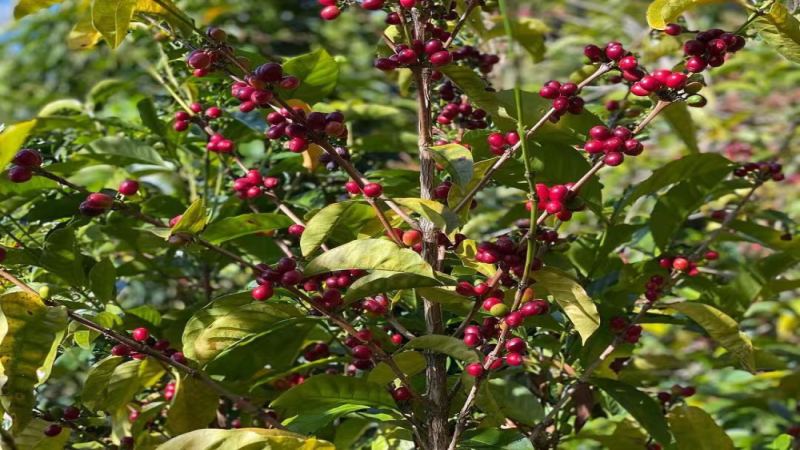
How Do These Coffee Producing Regions Differ in the Cup?
Honduras Lychee Orchid and Panama 90+ Lychee Blue are different coffees despite similar names. The Honduran bean is fermented in brandy barrels and shows a rich vinous aroma with lychee sweetness. The 90+ Lychee Blue is a washed Geisha from Panama, with floral and citrus notes plus green tea, musk, basil, soft lemon, and cashew-like nuttiness.
The two differ in origin, variety, and processing, so roasting curves and brewing parameters also diverge. The 90+ series carries 13 flavors; Lychee Blue appeared in 2016, and its name, y-cello, combines lychee with the cello. The estate sits at 1,250 to 1,650 meters. Tasting side by side clarifies how coffee producing regions shape flavor.
Front Street Coffee is often asked by customers whether the Lychee Orchid coffee beans in the shop and the 90+ Lychee Blue are the same coffee. In fact, their origins, varieties, and processing methods are completely different. Honduras Lychee Orchid is fermented in brandy barrels, presenting a rich vinous aroma and lychee sweetness; Panama 90+ Lychee Blue is a washed Geisha, with a flavor profile dominated by floral and citrus notes. This article will comprehensively analyze the flavor differences between these two coffee beans whose names differ by only one character, from origin background, variety characteristics, processing method differences, roasting curve comparison, to brewing parameters, and share Front Street Coffee's practical experience and brewing suggestions.
Front Street Coffee often encounters customers asking: Are the Lychee Orchid coffee beans sold in the shop the same as the 90+ series Lychee Blue? The answer is of course no. This Lychee Orchid coffee bean in the Front Street Coffee shop comes from Honduras and uses a barrel fermentation process; while Front Street 90+ Lychee Blue is a washed Geisha variety from Panama. Although their names differ by only one character, their flavor directions are very different. Today, Front Street Coffee will guide everyone through a comparison of the differences between these two beans one by one.
Front Street 90+ Lychee Blue Coffee Beans Origin: 90+ Panama Geisha Estate
Variety: Heirloom
Level: 21
Altitude: 1250m-1650m
Processing Method: Washed
Flavor: On the basis of the flavor of the Geisha variety itself, it also displays rich aromas of green tea/musk and basil herbs. On tasting, there is a soft lemon flavor, a sweet and sour taste similar to lychee, and also a nutty flavor similar to cashew.
About 90+ Lychee Blue
90+ refers to a top-tier coffee series containing 13 flavors. Lychee Blue, which appeared in 2016, is one of this series. Its English name is "y-cell-o", representing "lychee and cello". "ly" comes from the prefix in the word lychee, while "cello" comes from David Darling's Cello Blue. Isn't that exactly the combination of lychee and cello? However, Front Street Coffee does not initially let the name influence it too much, since in the end one still has to see whether the product lives up to its name.
During the cupping process, Front Street Coffee even pretentiously played David Darling's Cello Blue to suit the occasion, and carefully tasted its flavors against the background of piano music. Front Street Coffee sensed the soft citric acidity of this Front Street 90+ Lychee Blue, the alluring thyme, and the memorable flavors of basil, rose, and jasmine. The bright, uplifting flavor unique to the Geisha variety was expressed very well. After the uplift came the leisurely gentleness of rose and jasmine, the sweetness brought by the oolong Earl Grey tea note, the smooth mouthfeel like hazelnut cream, and as it cooled, the lychee flavor became more and more obvious, with a very lasting sweetness.
Ninety Plus Coffee
90+, Ninety Plus Coffee, is a specialty coffee supplier from the United States, founded in 2006. Ninety Plus is an internationally renowned coffee bean production and sales company, famous worldwide for providing rare and unique green coffee beans. In 2007, Joseph Brodsky officially founded Ninety Plus, and from the following year until now, we can see traces of Ninety Plus winning awards in coffee competitions large and small around the world. In last year's 2013 WBC World Barista Championship, among the six finalists, there were contestants from Italy, South Korea, and Canada using Ninety Plus green beans. Refined green bean cultivation and processing, excellent coffee varieties, and a unique grading system have made Ninety Plus a top and uniquely styled representative of green beans in the green bean market. Ninety Plus's refined green bean cultivation and processing, the Profile Processing system, establishes the Profile Processing system, tailor-made for each bean, covering planting, harvesting, processing, and other processes, and through repeated cupping and calibration, ensures that each bean variety fully expresses its unique fruit flavors.
Ninety Plus's unique flavor grading and code grading
For this W2 level39 Front Street 90+ Lychee Blue among the Ninety Plus coffees, perhaps a brief explanation of Ninety Plus's processing method expressions and grading methods is needed here. Ninety Plus coffee is classified according to "fruit flavor intensity", which is different from the traditional classification of Washed, Honey, and Natural processing methods. It is also divided into three categories, W2, H2, and N2, but different processing methods create different fruit flavor levels, so it is possible that within the honey-process flavor "H2" category you may drink coffee beans processed by natural or washed methods:
W2=(Low) Lower fruit tone, emphasizing brightness, acidity, and floral aroma
H2=(Moderate) Moderate fruit tone, emphasizing sweetness, fruit mouthfeel (not aroma), and tea flavor
N2=(High) Stronger fruit tone, emphasizing bold flavor expression, sweet and sour, jammy notes, and dried fruit
"Ninety Plus", in addition to processing methods, also comes with grading, the so-called level. The grades are represented as follows:
Level 7: Single-origin harvest. Rare varieties with delicate flavors and special characteristics are hand-selected and then processed through Ninety Plus's unique processing methods to reach a standard exceeding "Ninety Plus".
Level 12: Single-origin harvest. Beans of this grade are certainly a flavor every coffee person will never forget in their lifetime, and Hachira is a very good representative.
Level 21 (L21), Level 39 (L39) These are mostly Geisha varieties grown by "Ninety Plus" on Panama estates. The specially Red-processed Ethiopian Nekisse Red also belongs to Level 39 (L39).
Level 95 (L95), Level 195 (195) are both beans from high-level micro-environments on Panama estates, processed through a long screening process using patented drying technology. They reach the highest flavor standard in the design. Most are also processed under the personal supervision of founder Joseph. Annual production may reach only around ten to several dozen kilograms. They are collector's items.
For this Front Street 90+ Lychee Blue, some friends may be a little confused. Among the new bean varieties in 2016, a total of 4 beans were upgraded and improved, and Lychee and Cello is one of them. On tasting, there is a soft lemon acidity, a sweet and sour taste similar to lychee, and also a nutty flavor similar to cashew, so Front Street 90+ Lychee Blue was only renamed accordingly later. Moreover, its level was also changed from the original 21 to 39.
Front Street Coffee: Honduras Lychee Orchid Coffee Beans
Region: Marcala
Estate: Moka Estate
Altitude: 1500-1700m
Variety: Caturra and Catuai
Processing Method: Refined washed and brandy barrel processing
Honduras is located in northern Central America, bordered by the Caribbean Sea to the north, the Gulf of Fonseca of the Pacific Ocean to the south, Nicaragua and El Salvador to the east and south, and Guatemala to the west. It is mostly mountainous and plateau terrain. It covers an area of 112,492 square kilometers, with a coastline of about 1,033 kilometers. Except for the coastal plains, the entire territory is mountainous, with the highest altitude in the northwest reaching 3,000 meters and the south also reaching more than 2,400 meters.
Front Street Honduras coffee can be divided into six major producing regions, mainly located in the western and southern Copan, Opalaca, Montecillos, Comayagua, Agalta Tropical, and El Paraiso regions. However, this Front Street Lychee Orchid on the Front Street Coffee bean list does not come from these six major regions, but from Moka Estate in the Marcala producing region. The average altitude of this area is 853 meters, with high-altitude areas above 1,500 meters. Moka Estate is a small estate located in the high-altitude area of Marcala.
Coffee Variety
This Front Street Honduras Lychee Orchid coffee bean from Front Street Coffee is of the Caturra and Catuai varieties. Caturra is a natural mutation of Bourbon, discovered in Brazil in 1937. Its tree is not as tall as Bourbon, but shorter. Because it inherits Bourbon's lineage, its resistance is relatively weak, but its yield is higher than Bourbon. Although it was discovered in Brazil, Caturra is not suitable for growing in Brazil, so it was not planted on a large scale in Brazil, but became widely popular in Central and South America, such as Colombia, Costa Rica, and Nicaragua.
Catuai is a coffee variety artificially hybridized from Caturra and Mondu Novo. Catuai has relatively good resistance to natural disasters, especially wind and rain. The Catuai tree is relatively short. Compared with other coffee trees, Catuai's fruit grows more firmly and is not easy to pick. The fruit can be either red or yellow.
Processing Method Front Street Honduras Lychee Orchid is a specialty coffee bean carefully selected by Front Street Coffee, and has a similar excellence to Front Street Sherry coffee beans. Both use barrel fermentation processing, which gives the coffee beans a very rich vinous flavor. The difference is that Front Street Sherry uses whiskey barrels, while Front Street Lychee Orchid uses brandy barrels.
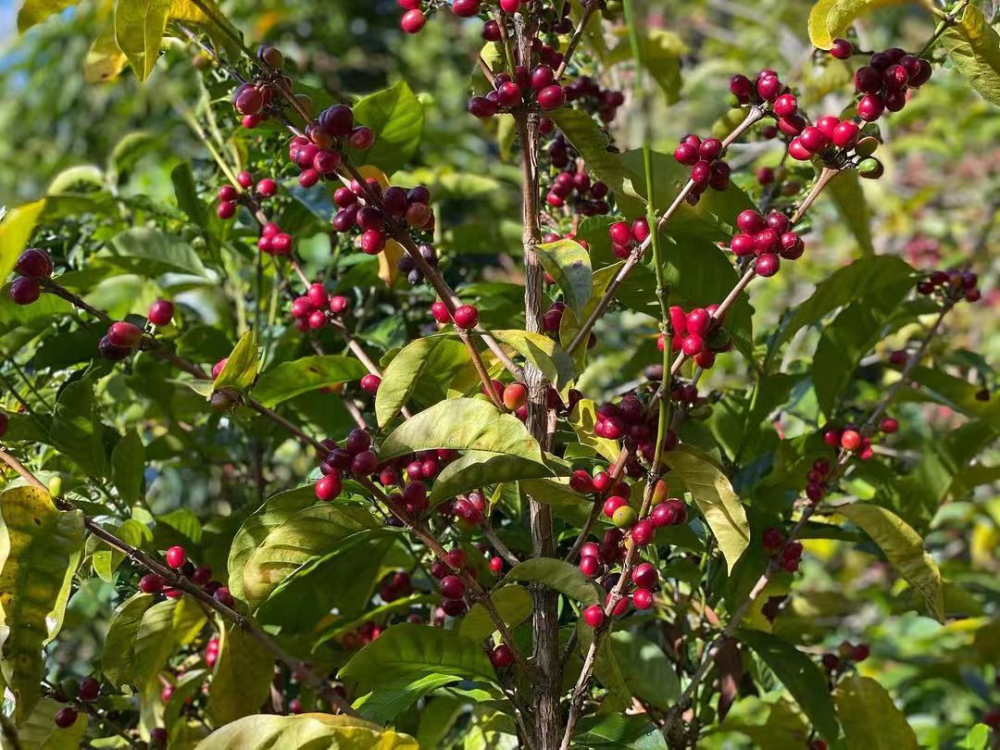
Front Street Coffee's Lychee Orchid coffee beans have a strong vinous aroma, with a solid chocolate flavor in the aftertaste, leaving a deep impression. In recent years, many processing stations have launched various innovative processing methods. When the various processing methods of early 90+ were still a novelty, now there are anaerobic processing, red wine processing, and now oak barrel processing. It can be said that more and more new processing methods have greatly enriched the flavors of beans. This Front Street Lychee Orchid, refined washed and fermented in brandy barrels, first undergoes refined washing of freshly picked coffee cherries, then is placed in brandy oak barrels for low-temperature fermentation for 30-40 days (at a temperature of about 15-20°C), allowing the green coffee beans to absorb the flavor of the barrels, and finally is dried in the shade. Beans processed by brandy barrel fermentation have a soft sweetness of lychee and honey, while also incorporating the vinous aroma of brandy and the aroma of oak barrels.
Roasting Suggestions
Front Street Coffee carried out two different roasting adjustments for this Front Street Honduras Lychee Orchid coffee bean, aiming toward a light roast. This is an essential step for Front Street Coffee every time it receives a new coffee bean. Roasting not only tests the coffee roaster's understanding of the bean's producing region, but also requires cupping, pour-over, and other tasting steps to determine whether the roasting curve is appropriate. Therefore, this phenomenon often occurs at Front Street Coffee: even a single cup of coffee will have multiple items requiring evaluation. Although it takes time, Front Street Coffee believes it is necessary. Without a process of repeated trial and adjustment, Front Street Coffee will not easily put a coffee bean on the shelf.
[Front Street Honduras Lychee Orchid Roasting Curve One]
Bean drop temperature: 220°C, turning point: 6'30", 151.6°C, first crack: 9'53", 183°C, development after first crack 1'40", discharged at 196°C.
[Cupping Report]
Dry aroma: chocolate, berries
Wet aroma: floral, vinous
On tasting: chocolate, berries, honey, lychee. On the palate, the berry acidity is obvious, and as the temperature changes, sipping reveals a faint vinous aroma.
[Front Street Honduras Lychee Orchid Roasting Curve Two]
Bean drop temperature: 220°C, turning point: 5’50", 152.6°C, first crack: 9'15", 183°C, development after first crack 2'10", discharged at 195°C
[Cupping Report]
Dry aroma: honey, chocolate
Wet aroma: vinous
On tasting: cream, dark chocolate, honey, lychee, brandy. The mouthfeel is relatively mellow, with obvious sweetness, and as the temperature changes, the vinous note becomes obvious when sipping.
After cupping these two curves, Front Street Coffee also conducts a brewing tasting. Front Street Coffee's pour-over parameters are: Hario V60 dripper, 90°C water temperature, 1:15 coffee-to-water ratio, fine granulated sugar grind size (80% passing through China standard No. 20 sieve). The grind size will be different for each coffee bean because of factors such as variety, altitude, processing method, and roasting. Therefore, when Front Street Coffee receives a newly roasted bean, it will first sift it once to determine the appropriate pour-over grind.
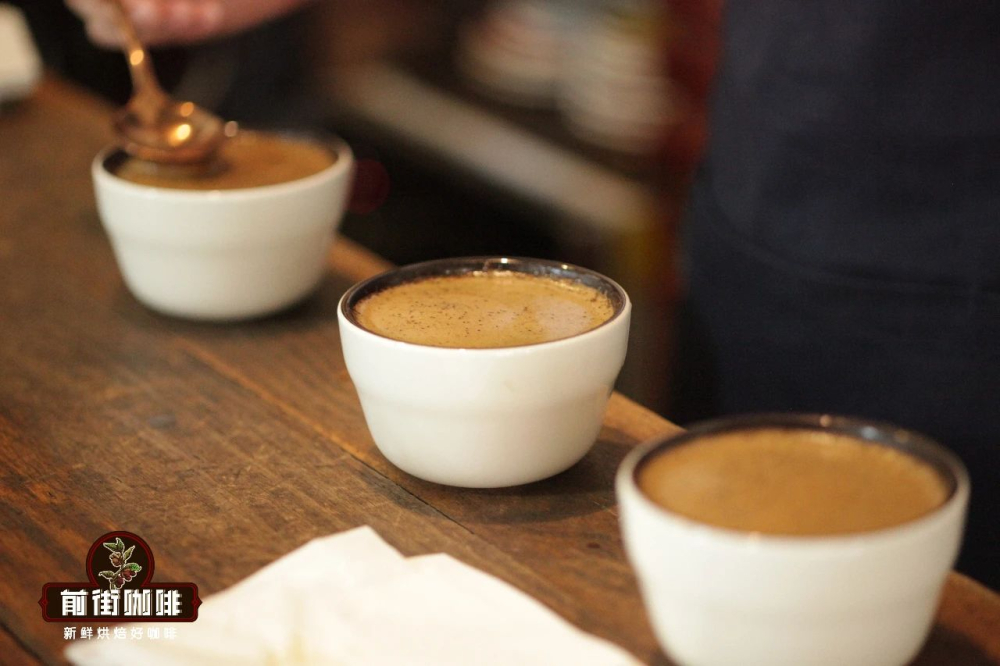
[Brewing Technique]
Front Street Coffee uses staged extraction, that is, three-stage pouring. First pour: bloom (to help degassing)
During the roasting process in which green coffee beans become roasted beans, a series of chemical reactions and physical changes occur. After reaching a certain degree of roasting, a large amount of gas (mostly carbon dioxide) accumulates inside the coffee beans.
Generally speaking, the fresher the beans and the closer to roasting, the more bubbles usually appear during blooming. Dark-roasted beans also release more gas during blooming than light-roasted beans. Front Street Coffee's coffee beans are all freshly roasted, so customers are generally advised to rest the beans for three days first, letting the coffee beans release carbon dioxide first, so that instability and under-extraction problems can be avoided during brewing.
After the bloom releases gas, the coffee particles can absorb water evenly, allowing the later extraction to be uniform. A good bloom can allow the coffee grounds to quickly and fully degas evenly while also allowing the coffee grounds to fully and quickly contact water, helping the coffee grounds be extracted evenly.
Second Pour
The second pour starts from the center, injecting a small stream of water into the bottom of the coffee bed. In order for the penetrating force of the water stream to be concentrated, the range of circular movement should be small, about the size of a 1-yuan coin, and then spiral outward. From the start of the second pour, pay attention to the water volume and try not to exceed the height of the coffee bed. In other words, when the water stream circles to near the filter paper, you can stop pouring.
Third Pour
As the originally thicker coffee bed near the edge of the filter paper becomes heavier from absorbing water, it slides down and becomes thinner as the water level drops. When the water level drops to halfway, the third pour can be carried out.
From the start of the third pour, observe the extent of the water level drop. Similarly, start pouring from the center in circles, and do not let the water volume exceed the height of the coffee bed. At this time, you will also observe that the foam has already covered the surface. The third pour should increase the tumbling of the coffee particles, causing all the settled particles to tumble, thereby dissolving soluble substances.
The rolling particles will begin to stop when water is no longer added. At this point, it depends on the flow rate caused by the dropping water level to create friction among the coffee particles. Therefore, once water addition stops, the coffee particles sink downward, causing clogging, so special attention must be paid to the rhythm of pouring. If pouring is interrupted too many times, it is equivalent to letting the coffee particles stay soaked in water all the time. In this way, it will cause astringency and miscellaneous flavors in the final stage of coffee extraction.
Summary:
Front Street Coffee brews this Front Street Honduras Lychee Orchid coffee bean. The overall process is: use a bloom water amount that is twice the amount of coffee grounds, that is, 30g of water for blooming, with a bloom time of 30 seconds. Pour in a small stream in circles until 125g, then pause. When the water level drops and is about to expose the coffee bed, continue pouring until 225g and stop. When the water level drops and is about to expose the coffee bed, remove the dripper. (Start timing from the beginning of the bloom.) The extraction time is 2 minutes.
[Front Street Honduras Lychee Orchid Roasting Curve One]
Brewed flavor: On tasting, there are berries, floral notes, honey, and as the temperature changes, brandy vinous aroma and creamy flavors gradually appear. On the palate, when hot, the berry acidity is clearly noticeable, but there is a green astringency.
[Front Street Honduras Lychee Orchid Roasting Curve Two]
Brewed flavor: On tasting, there are lychee, brandy, dark chocolate, cream. As the temperature changes, the vinous note and dark chocolate become obvious. The mouthfeel is mellow, and the lingering sweetness is obvious.
Summary
Curve One: The sweetness and berry aroma are not bad. On tasting, there is berry acidity, but the cleanliness is slightly poor and there is astringency. The aftertaste is not enough. Although there are flavors, the fruit acidity is obvious when drinking, and the vinous aroma of this bean is not fully highlighted, proving that this bean is not suitable for light roasting or fast roasting.
Curve Two: The flavors are distinct, and the mouthfeel is thick and smooth. From entry to aftertaste, the vinous aroma and dark chocolate flavors are obvious, with some honey sweetness as well.
Because Curve One showed a flavor leaning toward fruit acidity and had a green astringency, the bean's flavor was not fully displayed. Therefore, the Front Street Coffee roaster extended the bean's development time in Curve Two to develop more flavors, making this bean's overall performance more balanced.
Front Street Coffee continuously explores coffee beans from around the world, with as many as hundreds of coffee categories. Front Street Coffee frequently makes comparisons among different coffee producing regions, and Front Street Coffee believes that through comparison one can better understand regional flavors. The flavor presentation of coffee beans has a time limit, so Front Street Coffee has always insisted on fresh roasting. The reason for emphasizing fresh roasting so much is that as time passes, once coffee has been roasted for more than 50 days, it basically has little aroma left. Therefore, Front Street Coffee recommends resting the beans for 3 days before brewing and drinking.
For more specialty coffee beans, please add the private WeChat of Front Street Coffee, WeChat ID: kaixinguoguo0925
The above content is compiled by CoffeeHunters, a coffee news website.


